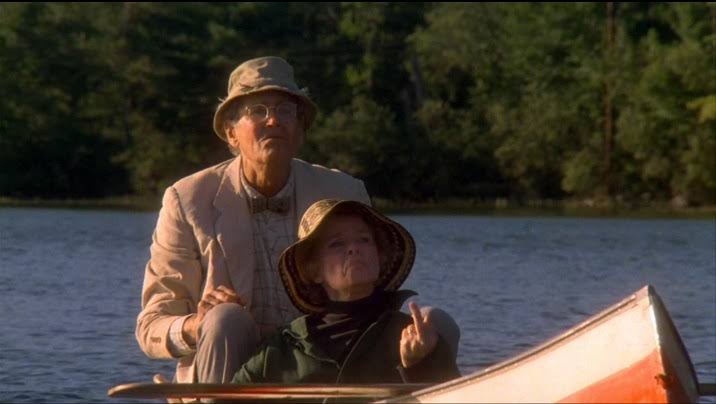
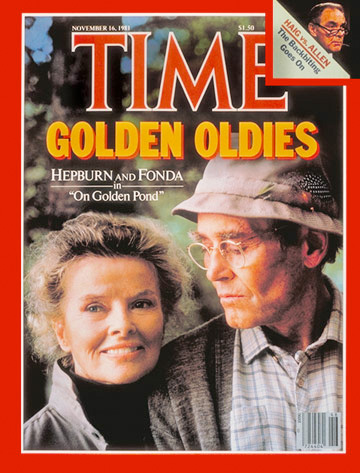
ON GOLDEN POND was visited by a huge chunk of the moviegoing public in 1981, throngs whose $119,285,000 worth of tickets made it the year’s second most popular show, topped only by the allowance annihilating asteroid Raiders Of The Lost Ark. That rip-roaring adventure was set in the 1930s, while this close quarters relationship drama centered around two legendary stars who’d been around since the 30s. Katharine Hepburn and Henry Fonda were now in their 70s, Kate in the twilight of her career (she appeared in two more feature films and five TV flicks before retiring in 1994), Hank in his feature swan song; his final role came at the tail end of the year in a 50-minute TV drama with Myrna Loy, 76 in her next-to-last part. Ernest Thompson adapted the script from his successful play and Mark Rydell (The Reivers, The Cowboys, The Rose) directed, shooting in central New Hampshire at Squam Lake, 6,791 bucolic acres posing as the title loch.
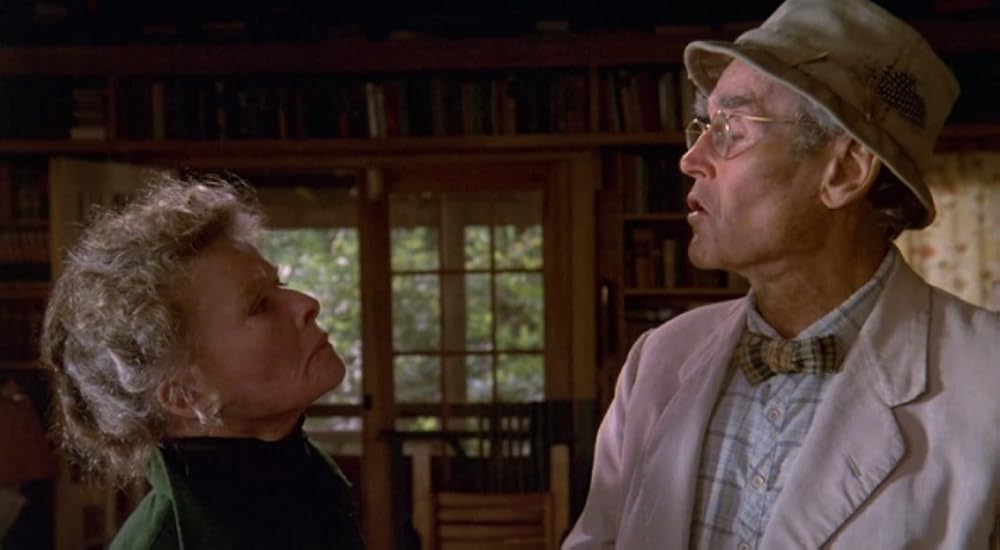 BILL: “Well, how does it feel to turn 80?” NORMAN: “Twice as bad as it did turning 40.”
The peaceful backwoods of northern New England. Elderly couple ‘Ethel and Norman Thayer’ (Hepburn, 73, Fonda, 76) traditionally spend summer in their comfortably rustic cottage on a lake called ‘Golden Pond’. A retired English professor, Norman, his 80th birthday approaching, is having memory issues; Ethel dotes on him and takes his crusty persona in stride, as an affectation: others aren’t so charmed. Arriving for a birthday visit is daughter Chelsea (Jane Fonda, 43), an only child who has lifelong issues with her emotionally isolate father. Chelsea doesn’t just bring her attitude (and the worked out Jane bod, bikini fit enough to shame an 18-year old gymnast) but her new beau, genial dentist ‘Bill Ray’ (Dabney Coleman, 49) and his 13-year old boy ‘Billy Jr.’ (Doug McKeon, 14): they want to leave him with the old folks while they take a trip to Europe. The surly kid isn’t overjoyed with the prospect, not least since Norman takes surliness to a level that would vex a saint.
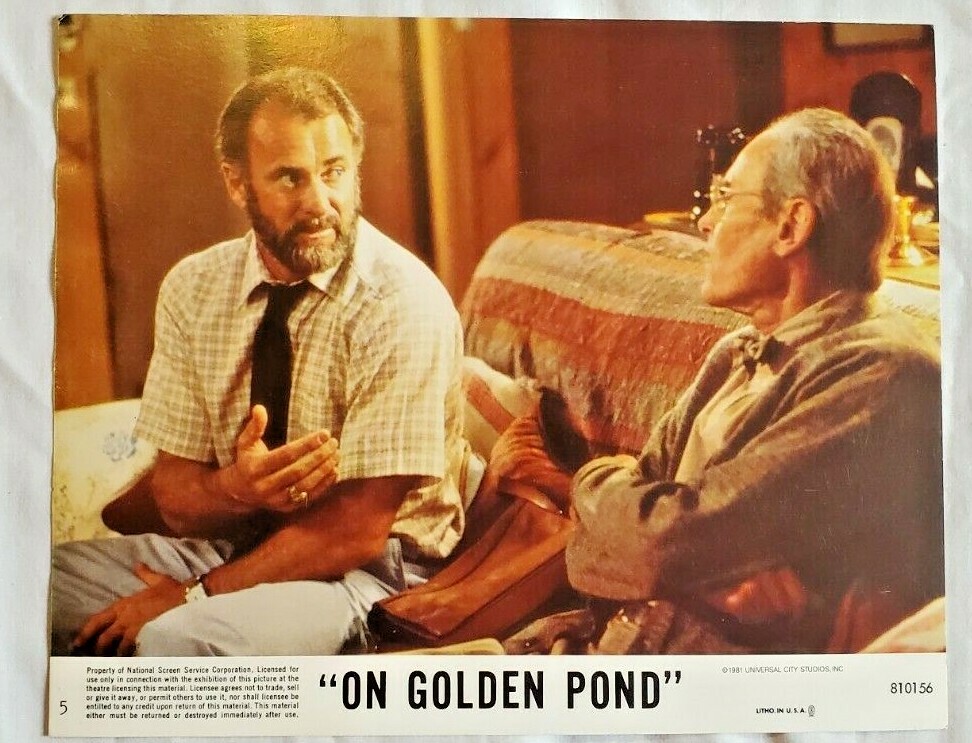 Bill the father is easily the most approachable character and Coleman’s is the most honest, unforced acting—speaking of dentists, I’d rather have ‘Dr. Szell’ probe me over whether a molar was ‘safe’ than agree with Pauline Kael on anything other than gravity, but I have to stand with her take on this movie as a confection from start to finish. Seen first in a theater late in 1981, I didn’t love it but liked it well enough, having longtime respect and affection for the leads, plus my emotions were freshly jarred by the sudden, unexpected death of my mother a few months earlier, killed at 66 by inept doctors. The family was devastated, I was 26 and receptive to sentiment. The main thing a fresh revisit sold me on was that apparently I’ve grown up a little.
Jane purchased the rights to Thompson’s play specifically as a vehicle that could put her and her dad together on screen for the first time and hopefully address their own difficult relationship; Chelsea quivers and sulks throughout, with Hepburn’s sucrose-of-the-Earth mama finally telling her—Chelsea, Jane and the audience— “Oh, for the Lord’s sake, here we go again. You had a miserable childhood. Your father was overbearing. Your mother ignored you. What else is new? Chelsea, you have a great big chip on your shoulder,,,which is very unattractive. It is. It is. You stay away for years at a time, you never come home unless I beg you to…and then when you do all you can do is be disagreeable about the past. What’s the point? Don’t you think that everyone looks back on their childhood with a certain amount of bitterness and regret about something? You’re a big girl now. Aren’t you tired of it all? Bore, bore. It doesn’t have to ruin your life, darling. Life marches by, Chels. I suggest you get on with it.”
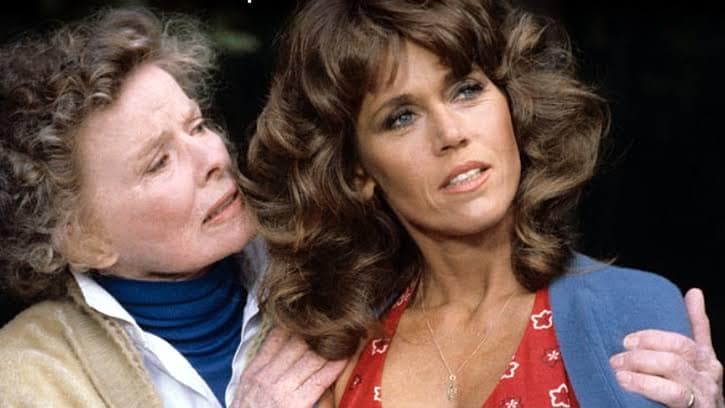 No kidding, Jane…er…Chelsea. While Coleman drew smiles, the other characters, as written and played, are off-putting, forced, inauthentic. The venerated senior Fonda was frequently superb, and almost always at least good, certainly watchable and interesting even when miscast (The Fugitive,War And Peace, Sex And The Single Girl) or in paycheck junk (Welcome To Hard Times, The Swarm, Meteor): his delivery here was fine, but there’s almost nothing to like about Norman Thayer. We’re supposed to accept that underneath he’s something special—nearly brilliant—because Ethel insists it’s so, yet all we get is the old fart (the words “old poop” are preciously run into the ground harder and more often than a jackhammer) being a B+ S.O.B. from one end to the other.
As the arrogant kid, McKeon arouses little more than the hope that he’ll run into a bear. Thirty-five years later he played Hubert Humphrey in LBJ; at least Hubert was personable. ‘Me Tarzan’, perhaps, but strident daughter Fonda rarely convinces as an ordinary person, and instead of drawing tears of sympathy the whole ‘Rich, Spoiled Actress Working Out Her Dad Issues In Front Of The Courage-Applauding World’ jazz leaves me doing deep breathing exercises and hand clenches. Hepburn of course was unique, her array of grand performances daunting, but even the greats strike out once in a while, and Kate’s earnestly effusive Ethel is so over-emphatic it almost feels like she’s doing an impression of herself.
Nearly every scene feels calculated—duh, of course they are, but the trick is making it seem organic. Ordinarily sure-footed Rydell, who coaxed director-eating Duke out of one of his best hurrahs in The Cowboys and tamed Bette Midler to a career high as The Rose, didn’t manage to get Kate to rein back on the flutters and gushing. We do give her nervy credit for diving into that fridge cold water—Yankee revolutionary war veins run red, white & blue blood. Dave Grusin’s score alternates between touching and syrupy. In toto, the awards-baiting package comes across as one of those where you’re supposed to find ornery (him) or burbling (her) somehow endearing (oh those wise, adorable Old People).
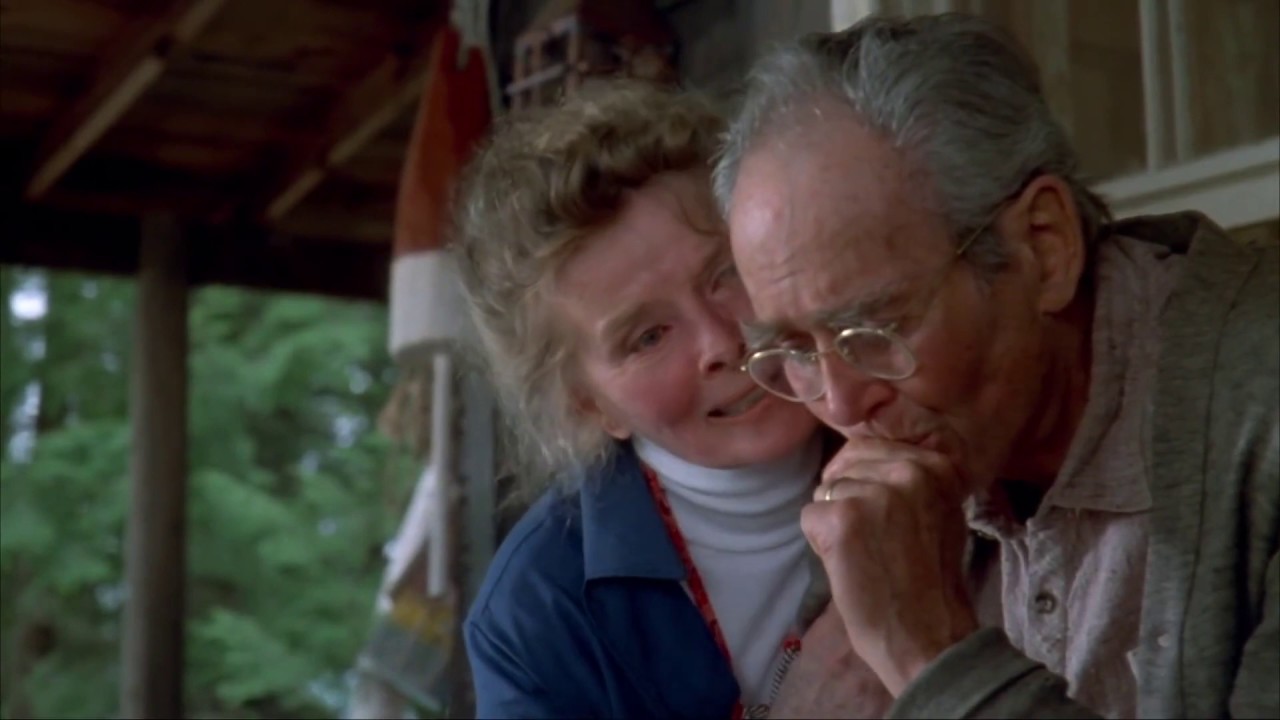 The Academy herd unleashed one of their stampedes. Henry was anointed as Best Actor, a career win and final salute situation (we’d go for Lancaster in Atlantic City), the soapy Screenplay won (we cry foul for Prince Of The City) and Hepburn was given her fourth, a nice gesture but as undeserved as the one they gave her for the popular fluff of Guess Who’s Coming To Dinner; the much better pick was Diane Keaton for Reds. The golden gimmes were accompanied by nominations for Best Picture, Director, Supporting Actress (Jane), Cinematography, Film Editing, Music Score and Sound, none warranted. In a year when Prince Of The City drew one nomination, the following were missing in action: Gallipoli, Cutter’s Way, Body Heat and Das Boot. Oh, right, this was when Chariots of Fire beat ‘Raiders‘ and Reds. Ah, well, “The loons! The loons!”
Okay, we’re in the decided minority (stuck in an elevator with Empress Pauline) on this much-adored film, and that’s a disappointment, given the talents involved: Senor Ala’s nixing amounts to a hanky in a hurricane. However, since your striving scribe has had to endure a goodly number of instances when films I really care about are ripped from here to Ceti-Alpha V and back, we reserve the right to return volley every so often, quids being pro to a quo. *
Produced for $7,500,000, running 109 minutes, also featuring William Lanteau.
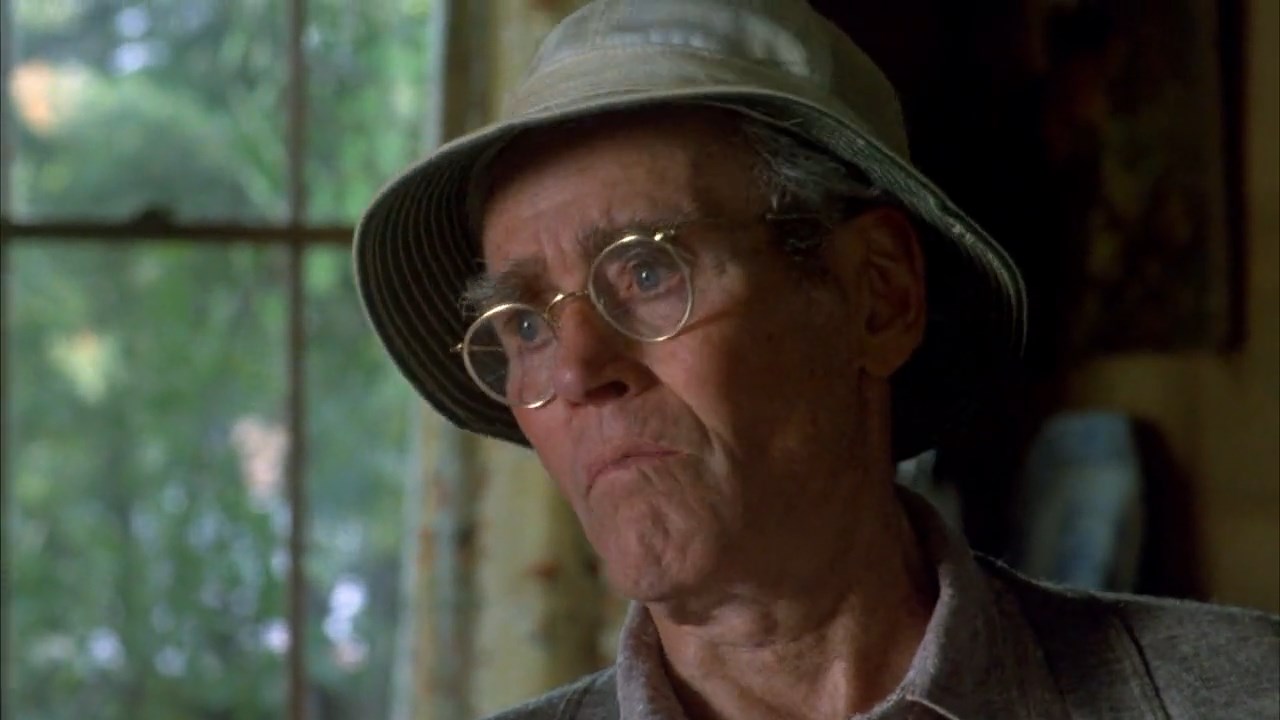
* Just to show that, other than misty ancestry, I’m not a Norman (Thayer or Bates)—–we humbly bow to Kate for Stage Door, Bringing Up Baby, Holiday, The Philadelphia Story, Woman Of The Year, State Of The Union, Adam’s Rib, The African Queen, Pat And Mike, Summertime, The Rainmaker, Long Day’s Journey Into Night and The Lion In Winter. We proudly salute Hank in Jesse James, Young Mr. Lincoln, Drums Along The Mohawk, The Grapes Of Wrath, The Lady Eve, The Ox-Bow Incident, Fort Apache, 12 Angry Men, How The West Was Won, The Best Man, Fail Safe and Sometimes A Great Notion. And, yes, we appreciate foxy & forthright Jane in Period Of Adjustment, Cat Ballou, They Shoot Horses, Don’t They?, Klute, Julia, Coming Home, California Suite, The China Syndrome, and The Morning After, even Grace and Frankie. Plus we’re on her side with issues, even if she probably wouldn’t notice a peasant like me if I was being baton-bashed and tear-gassed.



I have such a lovely movie memory of the first time I watched ON GOLDEN POND, that it warms my heart when I see it mentioned. Thanks for writing this!
(Thank you for reading, commenting, and sharing your memories with me on my SUMMERTIME write-up. With or without being in love with a particular person, what a romantic memory to have experienced!)
Best,
Dominique