KANSAS CITY BOMBER, over-hyped and undervalued in its day, has emerged from languishing in “oh, that?” territory to re-evaluation as a sleeper. Missing it back in 1972, taking a mere 44 years to catch up, we were prepared to be bored, but found yet another instance to be surprised out of our lazy preconceptions. Not a great movie by any stretch, but other than massaging awake our indifference zone it successfully accomplished (1) a pretty good show about…roller derby?, (2) allowed some backbench players a chance to shine, (3) captured a slice-of-Americana-life in time, place and milieu and (4) made an actress out a ‘star’.
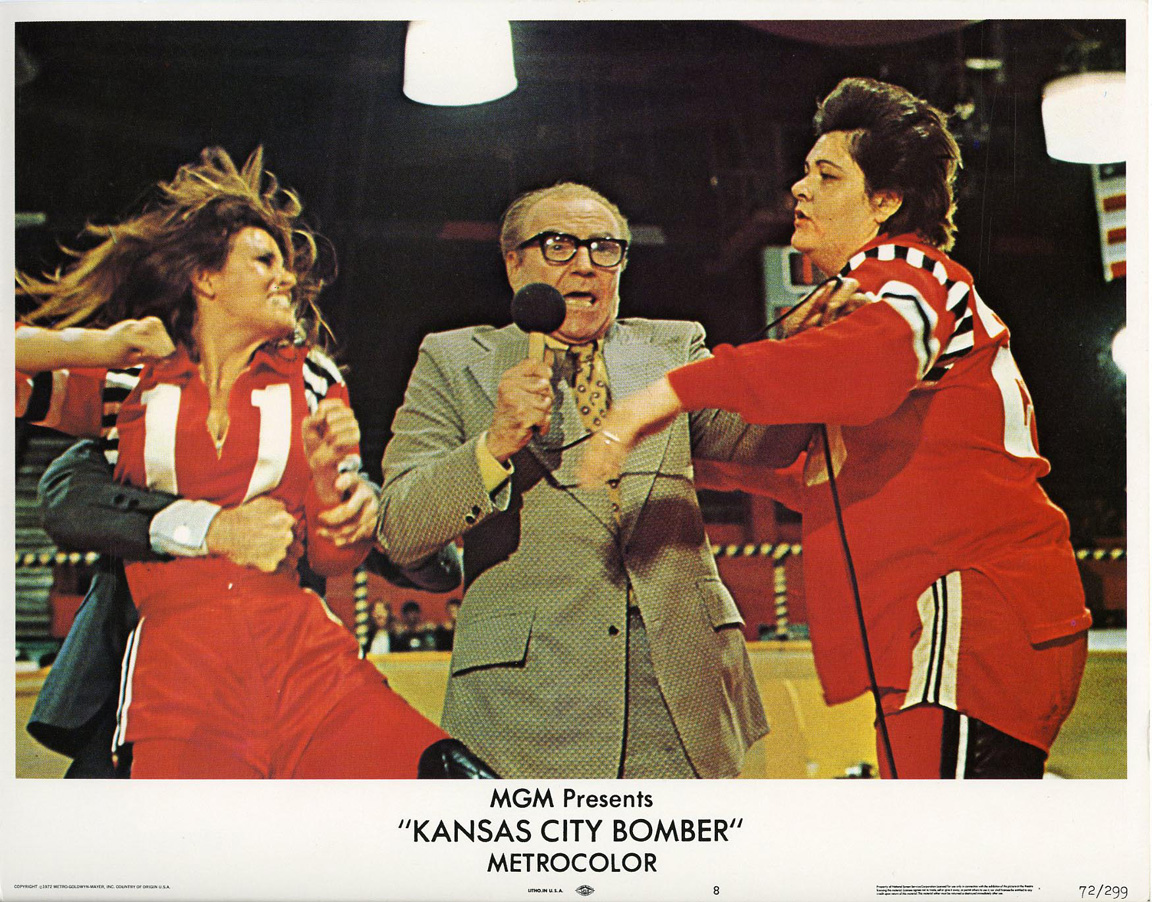
Portland, Oregon, the lower-middle class slab. Playing for a Kansas City outfit, roller derby bombshell ‘Katherine “K.C.” Carr’ (Raquel Welch) is traded to the ‘ ‘Portland Loggers’, run by talent-hungry ‘Burt Henry’ (Kevin McCarthy, in smart-sleaze mode) who has plans for ‘using’ her in a variety of ways. Leaving her two little kids (one of them played by nine year old Jodie Foster, in her second film) behind with her disapproving mother, Katherine impresses the fans (shown as vapid/rabid like Romans slavering over gladiators) but fights to win acceptance from her teammates, who range from curious and warm to jealous and spiteful. Rough game, tough town, hard life.
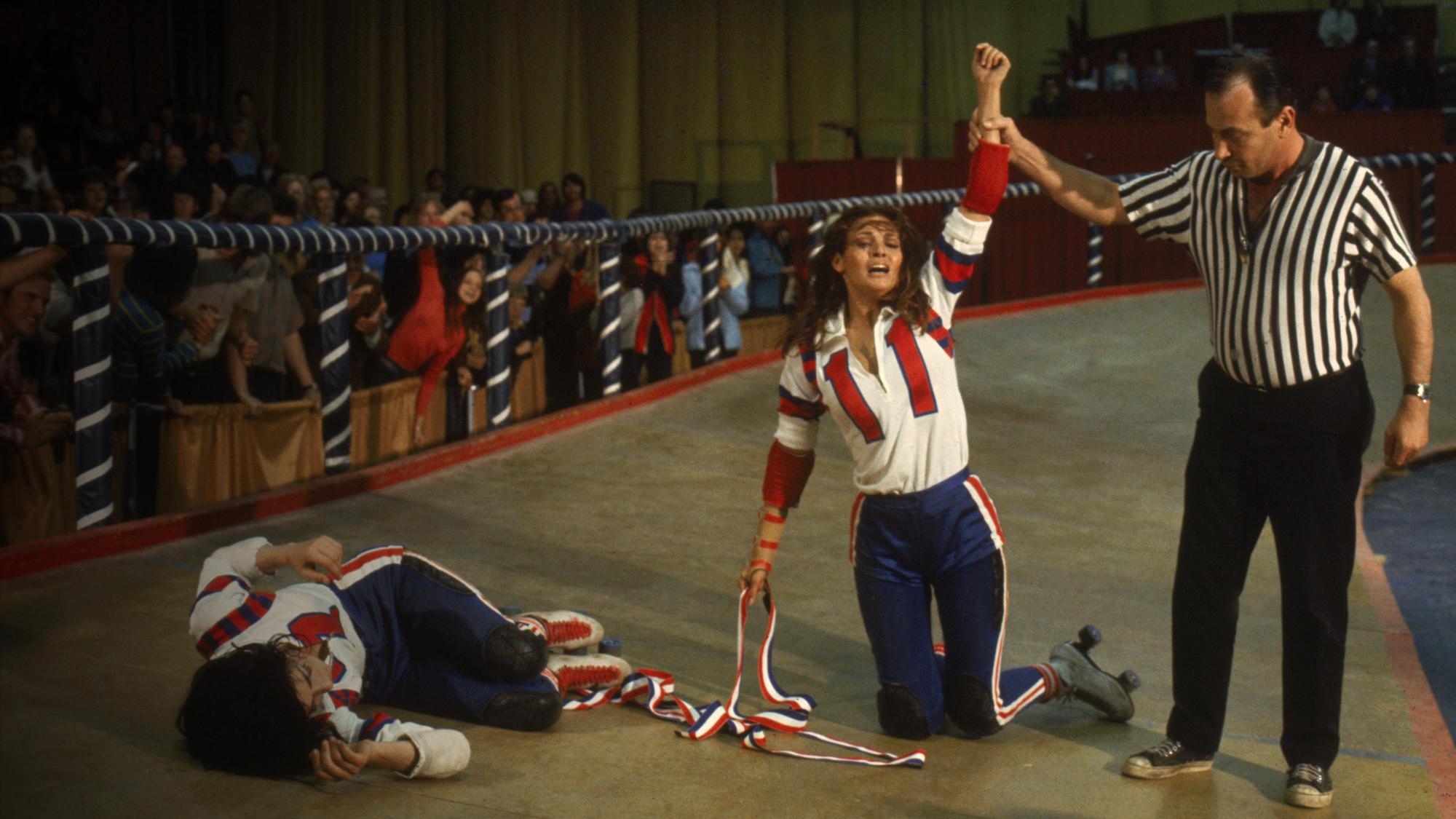
Thomas Rickman (Hooper, Coal Miner’s Daughter) and Calvin Clements (Firecreek) wrote the script, toning down a harsher story drawn up by Barry Sandler. His idea had been more of a ‘Sweet Smell of Non-Success’ downer, poison for box office; Sandler’s lame screenwriter credits (The Duchess And The Dirtwater Fox, Gable And Lombard) indicate that producer Martin Elfand (Dog Day Afernoon, An Officer And A Gentleman) was right to go with Rickman-Clements. Direction went to Jerrold Freedman (Borderline, Native Son), shooting on location in Portland with some brief stops in Fresno and Kansas City. Freedman did better with the interpersonal end and the background coverage than with the action footage: the wacky sport had been lazily amusing to watch on TV (or at a noisy, party-like venue) but on the big screen, even with the advantage of cinema-level camerawork and a film editor, the rolling, brawling and spills (there’s plenty of it) fails to light the fun fuse, self-defeated by faking something that was staged to start with (and us knowing the heavy-duty spills were done by someone— pro roller Judy Arnold, 28—wigged up to pretend to be K.C/Raquel). Grasping that this was under production Roger Corman tried to crash the party by churning out Unholy Rollers, baited with Playboy Playmate-turned-exploitation-flick-hot number Claudia Jennings: that one’s developed a loyal fan base, the knowledge of which making it easier to side with the devil’s view of humanity, perhaps as presented by Vincent Price (in The Story Of Mankind, as long as we’re digressing to death).
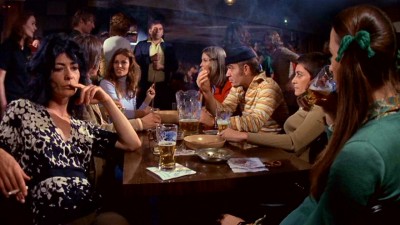
Talk about a loaded screenshot
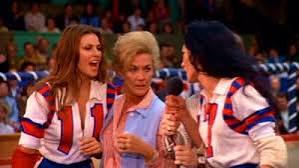
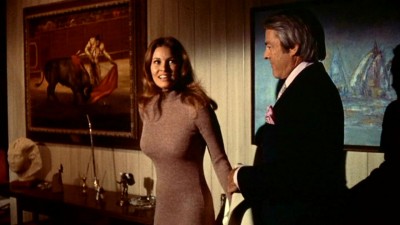
McCarthy is his typical assured self, and looking not bad for 58: Raquel’s kisses attack him like she’s run a 440 on a hot day and he’s a watermelon. The most prominent Logger on K.C.s side is kindly, sorta slow-on-the-draw “Horrible Hank”, movingly done by ever-dependable Norman Alden, 48, in maybe the best role he ever had, or at least since Man’s Favorite Sport back in 1964. Leading the anti-faction is the team’s fading dark princess ‘Jackie Burdette’, a dose of f-all bitterness from Helena Kallianiotes, 34, commanding attention as she’d famously done in Five Easy Pieces, looking disgusted with everyone and everything, especially the hot (and nice) new girl in class. Kallianiotes was nobody’s wimp; beyond being a compelling screen presence (in the psycho-ex category) she was a renowned belly dancer and club owner, a resident doyen of L.A.’s well-heeled nightlife. Portland would eventually shine its apple as a city-to-move-to, but in the early 70s it had plenty of rough edges, and the movie gets the less-Rosy Festival side down, as well as expertly capturing the crowd reactions to the athletic/heroic/pathetic derby deeds.
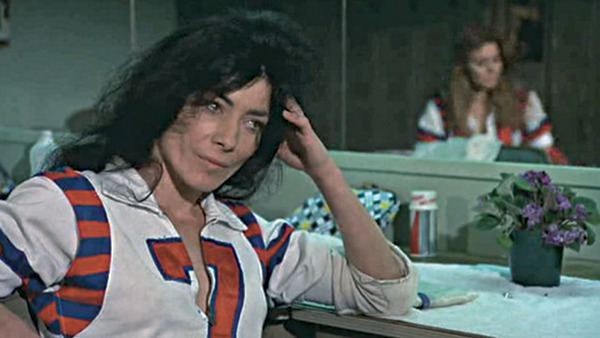
Reminding me of someone I’d rather forget
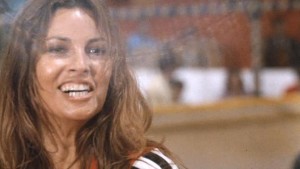
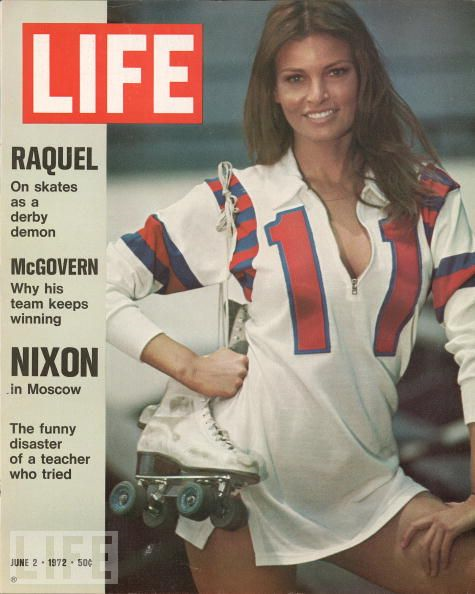
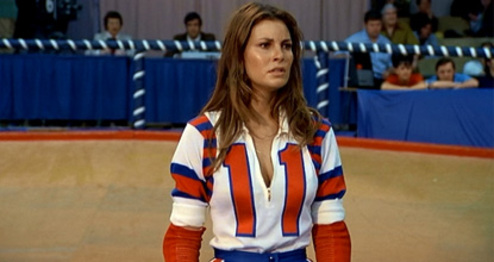
Thirty one, with eight years and nineteen films under her hair, Raquel Welch finally delivered a good performance: some of the previous pictures had been entertaining (One Million Years B.C., Fantastic Voyage, Bedazzled) and she always looked sensational but her line delivery was flat (Fathom, Bandolero!, Lady In Cement), pretty much Kansas-upon-Iowa. After surviving the brutality idiocy of Hannie Caulder and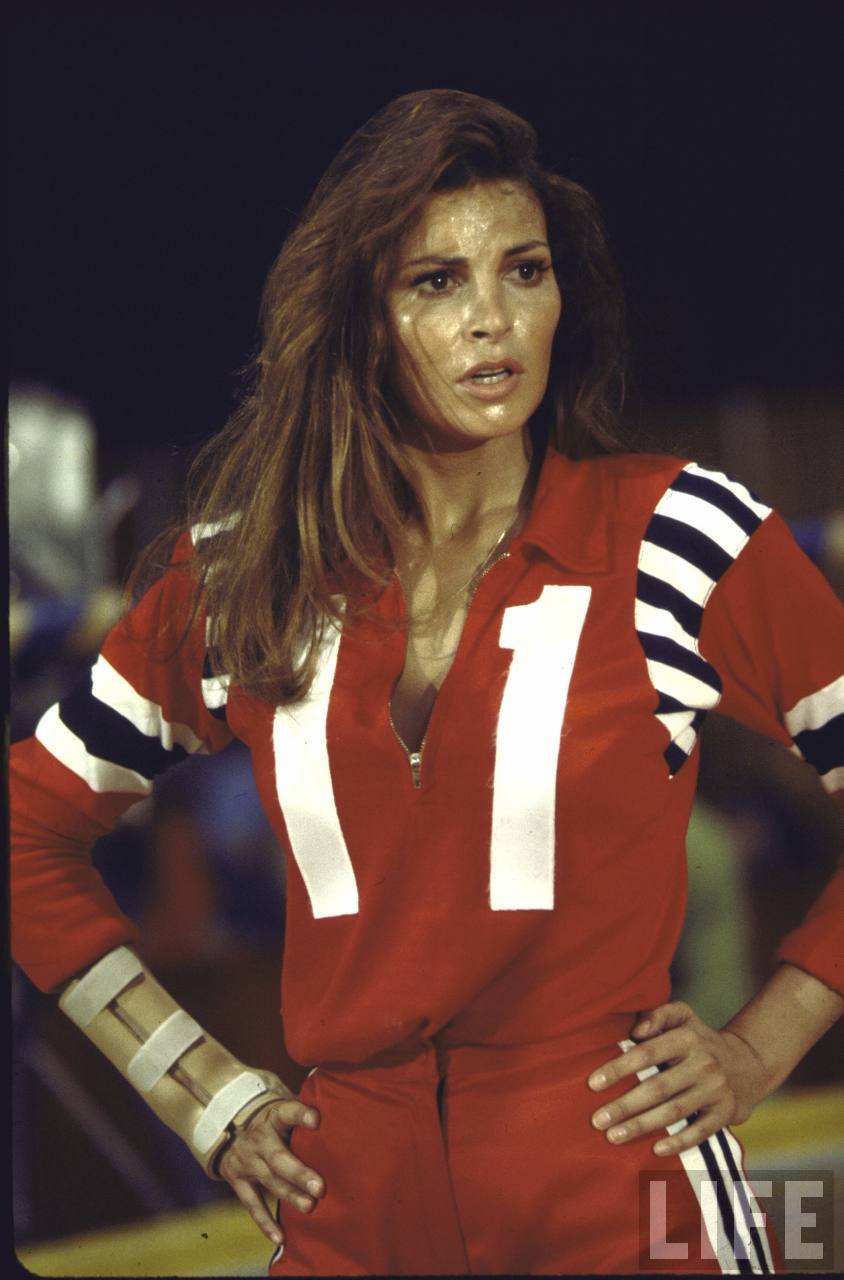 the toxic cesspool of Myra Breckinridge, she surprised both naysayers and form appraisers by following this with a delightful comic performance in The Three Musketeers. As K.C. her delivery is smoothed down into natural, and her expressions and demeanor ably convey the sense of isolation, loss, worry and survival desperation that the character demands. Though de-glammed from the perfectly coiffed and adorned Raquel we’d plastered on walls, panted over and/or dismissed from Kentucky to Khe Sahn, she’s still about three times prettier than anyone you’d likely find in roller derby arenas (cue hate mail reflex), but she skates well (training extensively) and convinces in the part.
She related “The motivation of the character I play is simply to make a buck in life and to attain a sense of identity. There’s a futility in what she does. The shape of the track is her life, round and round, going nowhere. But the pros, the real skaters who worked with me, they were terrific. Most of them suffer from the same image I do. They’re on skates, they’re padded up, they’re on a raised track. Most people tend to think of these girls as Amazons. But most of them are even smaller than me. They’re not as muscular or as butch as you’d expect. I have a similar problem. Most people are disappointed if the door hinges don’t shatter off when I walk into a room…”It’s all set up, as everyone knows….It’s too bad it couldn’t be a more legitimate sport. The skaters have great athletic ability. I’m not much of an athlete … For the film I had to learn to skate again. I hadn’t skated since I was seven.”

Norman Alden, 1924-2012, 254 credits
MGM’s chief James Aubrey (aka ‘The Smiling Cobra’ ) reported that the gross of $8,400,000 (47th place) was the third-best for the company that year, after Shaft and Skyjacked. Yep, the glory days of Ben-Hur, How The West Was Won and Doctor Zhivago were gone with the wind. With Jeanne Cooper (in bitch mamasan tone), Martine Bartlett (the soured mother stuck with the disaffected kids), Patty “Moo Moo” Cavin (genuine roller derby icon), Bill McKinney (uncredited bit, same year as grotesque immortality via Deliverance) and Cornelia Sharpe (28, debut). 99 minutes.
* She said/She said—finally, giving the glamorously hot (and consistent crew & co-star vexer) Raquel grief for taking a while to find her form with dialogue doesn’t discount her noteworthy work in this, the Musketeer epic, and her later stage/TV/video/talk show reformation. Fair is fair. That said, the era’s thrust-forth booby prize will always belong to another sex-flauntess, Jill St. John, who could never manage to say ‘Hello’ convincingly.
Extra extra, read alla but ‘er—-https://www.hollywoodreporter.com/lifestyle/style/hollywood-nightlife-queen-helena-kallianiotes-finally-tells-all-1165363/