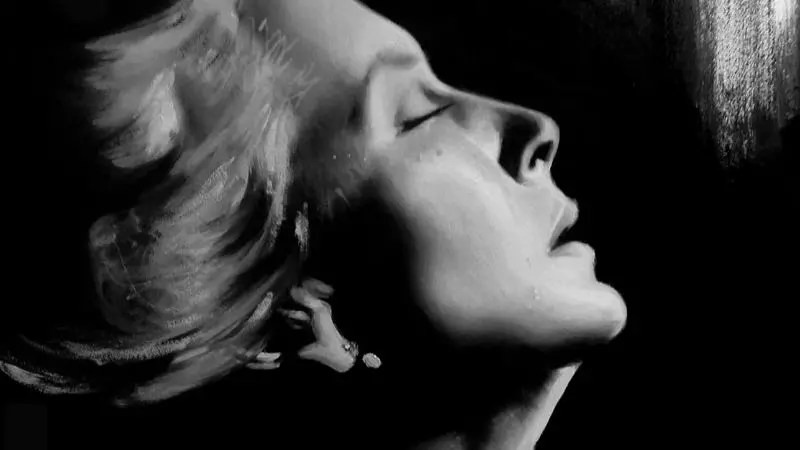
THE INNOCENTS—“What shall I say when my lord comes a calling? What shall I say when he knocks on my door? What shall I say when his feet enter softly? Leaving the marks of his grave on my floor. Enter my lord. Come from your prison. Come from your grave, for the moon is a risen. Welcome, my lord.”
From England in 1961 comes top-drawer spookiness in a superbly rendered interpretation of Henry James classic 1898 novella “Turn Of The Screw.” James 120 pages of Victorian era psychological distress were adapted into screenplay form by William Archibald from his 1950 play version, also titled The Innocents, and Truman Capote, who took a break from writing “In Cold Blood” to retool Archibald’s work at the behest of director Jack Clayton. John Mortimer further polished some of the dialogue. Burnished by his breakout success Room At The Top, this time producing as well as piloting, Clayton’s picks for cast and crew created a dream team for weaving a grand mal nightmare.

“Because they are both playing, or being made to play some monstrous game. I can’t pretend to understand what its purpose is. I only know that it is happening. Something secretive and whispery and indecent.”
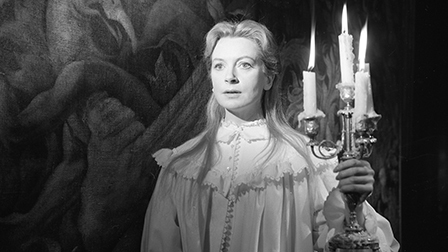
A wealthy bachelor has no room in his carefree existence for his orphaned nephew and niece, tucked away in a country estate, out of sight and mind. Their previous minder having come to a sudden tragic end, he hires ‘Miss Giddens’ (Deborah Kerr), thrilled to take on her first position as a governess, eager to bring her fondness for children to bear. Dazzled by the sumptuous setting, pleased to find a merry companion in longtime housekeeper ‘Mrs. Grose’ (Megs Jenkins), she’s charmed by the bright and lively siblings, ‘Miles’ (Martin Stephens, 12), who’s been away at school and ‘Flora’ (Pamela Franklin, 11), and they in return appear delighted with her. Odd discordant threads: kindly Mrs. Gross is guarded about what she knows of the previous attendant, Miles has had some sort of ‘trouble’ at school and the twinkle in Flora’s eyes sometimes switches to an unreadable distancing. Piqued, then flustered, at length disturbed, Miss Giddens is determined to solve the little mysteries. The closer she gets the more they accumulate.

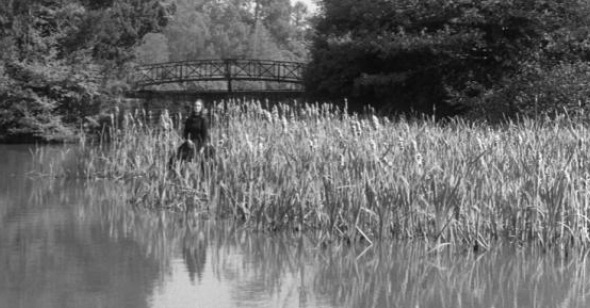
Immediately arresting, progressively absorbing, decidedly unsettling, it’s elegantly precise in detail and execution yet purposely puzzling so as to invite interpretation. Braced (literally kissed) with a subtext theme of sexual corruption and repression both subtle and daring, the delivered jolts are built by shared unease (characters and viewers fuse) instead of fastened in for cheap and easy scares. Atmosphere and effect are mood crucial: the lighting and focus choices of cinematographer Freddie Francis work a black & white triumph in capturing the exteriors (lush Sheffield Park in East Sussex and a country mansion in the Gothic style) and interior sets that are simultaneously capacious and claustrophobic; Jim Clark’s expert editing does wonders with dissolves between scenes; the sound crew excels, thanks to John Cox (The Bridge On The River Kwai, Lawrence Of Arabia) and Daphne Oram (the weird electronic effects—she next amped the oddness for Dr. No); the music is scored with subdued eeriness by Georges Auric (Moulin Rouge). That ‘haunting’ song that accompanies the titles, “O Willow Waly”, was sung by folk artist Isla Cameron (1927-1980).
“There’s things I’ve seen, I’m ashamed to say. Rooms used by daylight as though they were dark woods.”
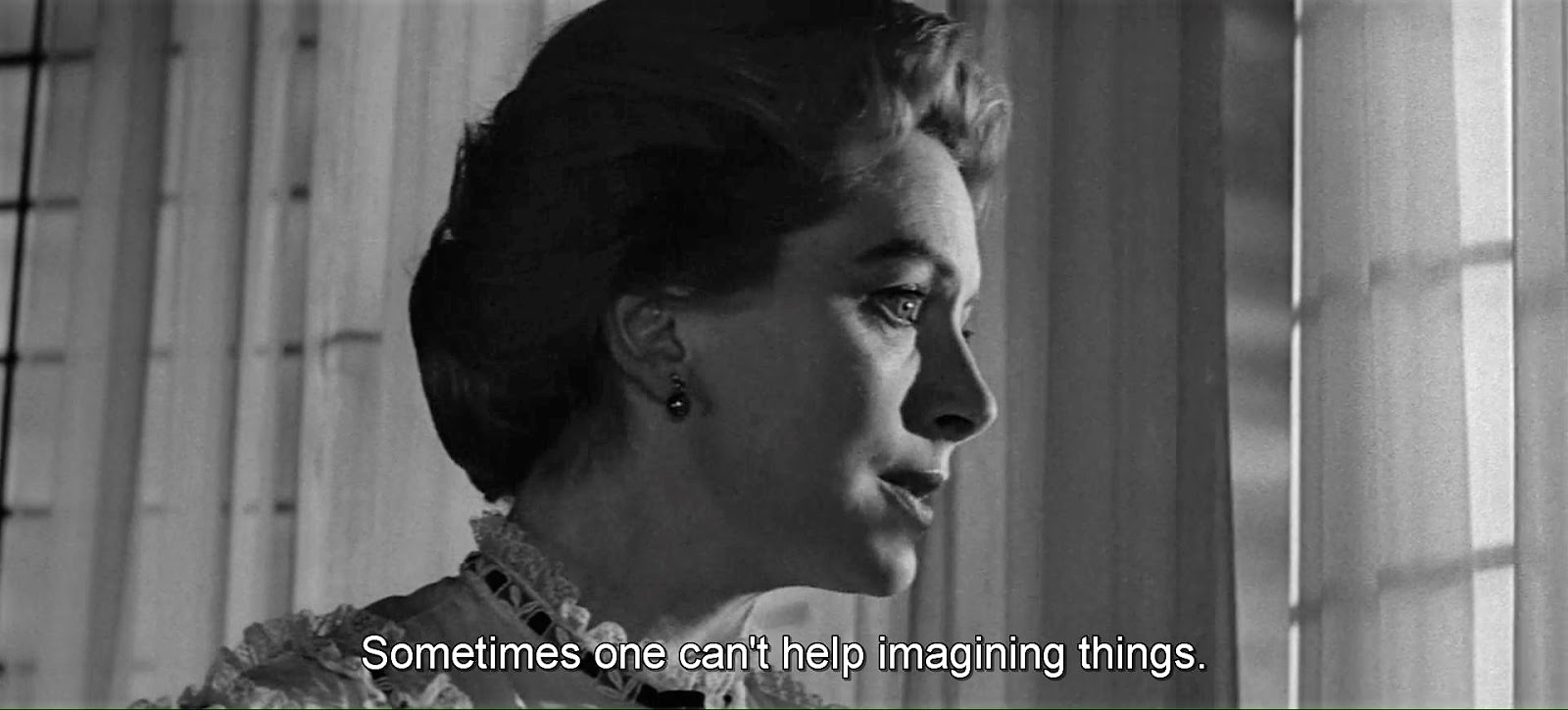
In films since he was five, preternaturally aware Stephens made a spooky mark a year earlier as the leader of the spaced-out kid brood in Village Of The Damned. In an impressive debut, Franklin intuitively skips between sunny and cloudy, mixing pixieness with perplexion. At 39, with twenty years in gracing 35 movies, a number of them classics, carrying six Best Actress Oscar nominations, Kerr was at the top of her game. She was always good, even if the pictures fizzled (Marriage On The Rocks, Casino Royale); after this she’d make nine more feature films, including winners The Chalk Garden and The Night Of The Iguana, but the challenging role of the tormented ‘innocent’ Miss Giddens was her last great performance, one she was rightly proud of.
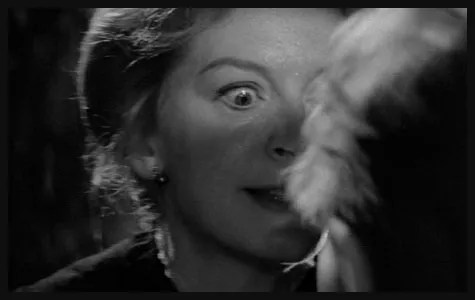
“Oh, look, a lovely spider! And it’s eating a butterfly.” The production cost came to £430,000/$1,000,000, about 40% of that allotted to nab the international star power of the luminous leading lady. The US box office of $3,400,000 placed as #67 for the year, which saw imaginations lit by fantastique offerings that ranged from silly—Babes In Toyland, Voyage To The Bottom Of The Sea, Atlantis, the Lost Continent—to smashing—Gorgo, Mysterious Island.
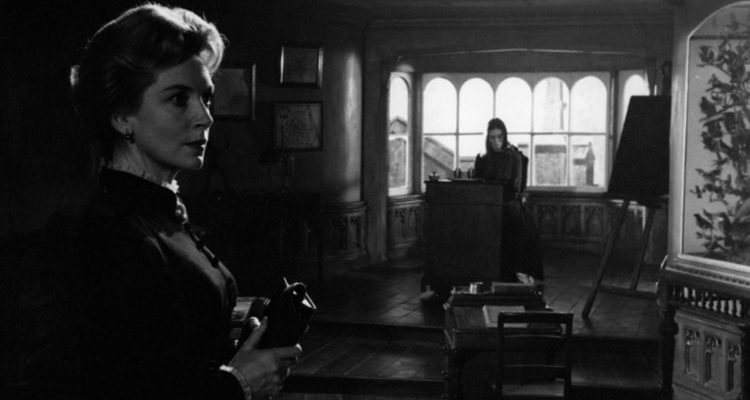
100 minutes, with a opener cameo from Michael Redgrave as the determinedly distant employer, and fleeting appearances (or manifested apparitions) from Peter Wyngarde as ‘Peter Quint’ and Clytie Jessop as ‘Miss Mary Jessell’. One of those movies in which the expertise was essentially taken from granted at the time, taking years to sink in and be fully appreciated. Toss in a paddle of shame to the Academy Awards bestowers, traditionally snooty about fantasy (so were ‘serious’ critics), guilty of missing the boat by not nominating Kerr, the cinematography, film editing and sound.
* Confluence—besides his stage version of The Innocents, Archibald had co-written the screenplay for Hitchcock’s 1953 entry I Confess. Clayton went from this to probing relationship pain in The Pumpkin Eater. Capote drew further attention in 1961 from Breakfast At Tiffany’s, the hit film version of his novella. Kerr was fresh off her sixth Oscar nomination, as a much more grounded lady, in The Sundowners. Camera master Francis blessed Sons And Lovers, The Elephant Man and Glory, editor Clark cut Charade, Marathon Man and The Killing Fields. Stephens made two more movies (The Battle Of The Villa Fiorita and The Witches), then left acting for architecture. Franklin would go on to good roles in The Lion and The Prime Of Miss Jean Brodie.


 Movies ala Mark