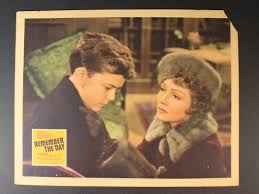
REMEMBER THE DAY is a forgotten 86-minute gem. A distinct pleasure to retrieve from obscurity, it features one of Claudette Colbert’s most winning performances, directed by 20th Century Fox’s reliable hit-maker Henry King. Warm and funny, honest and touching, ultimately a heartfelt tearjerker, it’s humanistic Americana with nostalgia served straight, without syrup. In an age when the national crypto-currency is cynicism and cruelty, the sincerity and decency of this oldie is particularly refreshing, especially considering the dire state of fate at the time it was made. *

Attending a political rally for a former student now running for President, aged veteran teacher ‘Nora Trinell’ (Colbert, 37) thinks back on the year 1916, when young ‘Dewey Roberts’ (Douglas Croft, 14, debut) was a headstrong pupil. One of her fellow teachers, handsome ‘Dan Hopkins’ (John Payne, 29), coaches Dewey in baseball but shortly has his head turned to home base with Nora. Meanwhile, the bright and impressionable boy idolizes Dan and develops a serious first-crush on Miss Trinell. World War One is Europe’s affair…
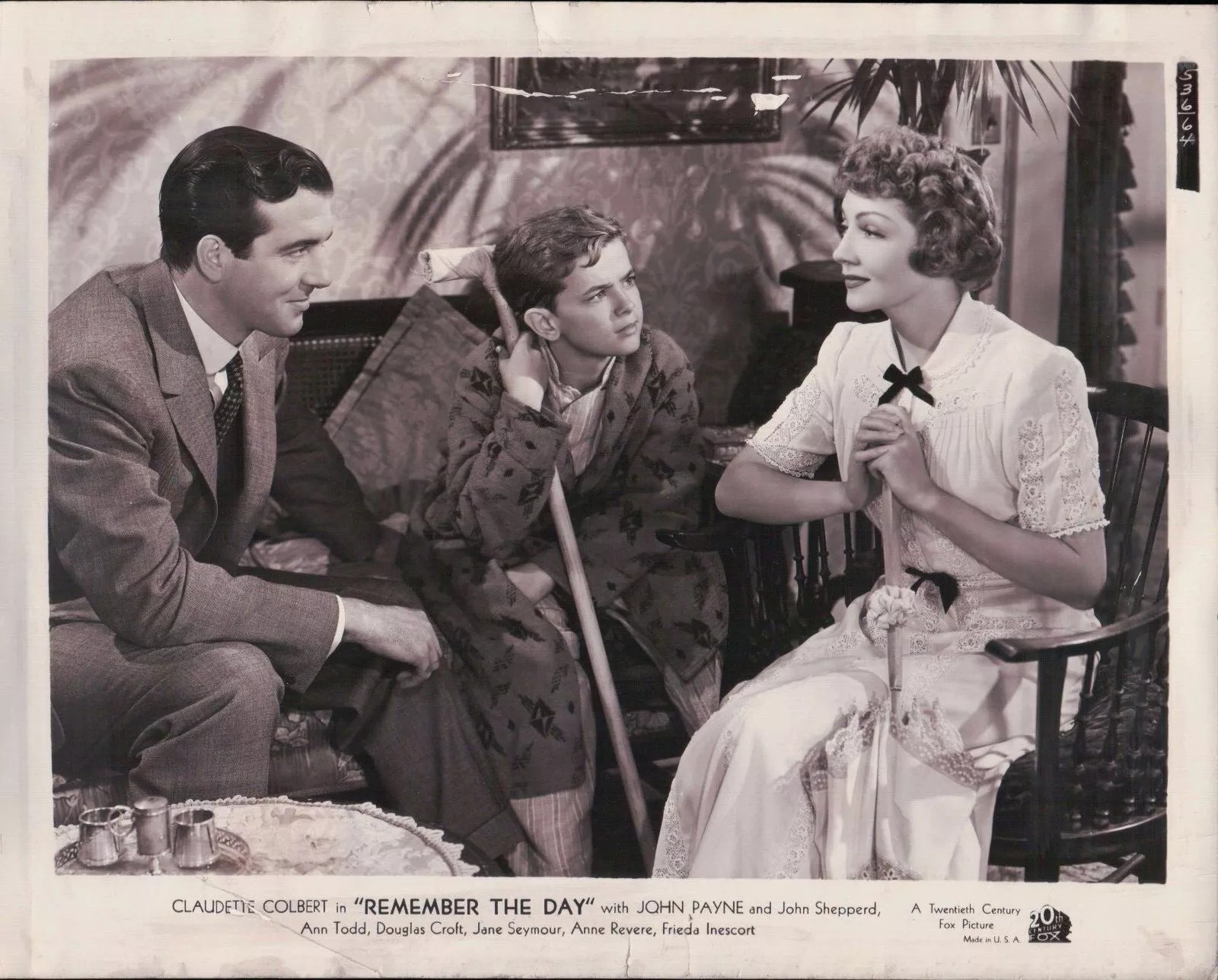
Sensitively steered by King with an eye for small but telling details, the excellent screenplay by Tess Slesinger (The Good Earth, A Tree Grows In Brooklyn), Allan Scott (Top Hat, So Proudly We Hail!) and Frank Davis (The Train) was based on the 1935 play by Philip Dunning and Philo Higley. Nostalgia for an earlier period (roughly 1890-1920), which was aplenty in movies of the war-besieged 40’s, is present but it’s not the key to the story, which is centered on personalities, their kindnesses and concerns and very human reactions to wins and slights. The laughs aren’t cornball, the hurts are not synthetic, and if the finale leaves you with a lump in your throat, it’s not because you’ve been falsely manipulated but instead genuinely moved. Being groomed by Fox, chiefly as a hunky swain in musical-comedies, Payne proves fully at ease with light drama. The kids are cute without being saccharine, the supporting adult players keyed to naturalism. Colbert is charming and grounded, without ‘star’ affect, as the understanding educator/quiet heroine whose influence extends and lasts outside of and beyond the classroom. She’d have a number of better known, more successful pictures after this (Since You Went Away, with another Oscar nomination, and The Egg And I smash hits) but this is one of her most appealing characters and most persuasive performances.

Released on Christmas Day in 1941, the hope-affirming picture was blunted in box office appeal by the startling entrance of the country into the war (Pearl Harbor & associated disasters clobbering happiness since December 7th) and the gross, though a respectable $3,500,000 (63rd place when the year was tallied) was less than Fox expected.
Fans of film music composers will be impressed by the roster who made contributions to the scoring overseen by the studio’s maestro Alfred Newman: Hugo Friedhofer, Cyril J. Mockridge, David Buttolph, David Raksin.
With Anne Revere, Frieda Inescort, Harry Haden, Ann E. Todd (great as the girl who has a crush on Dewey in grade school), Shepperd Strudwick (Dewey as an adult), Marie Blake, Thurston Hall, Jody Gilbert, Irving Bacon, George Chandler, Byron Foulger, Mae Marsh.

* Fame is The Name of the Game—knowledgeable film buffs draw a blank on Remember The Day, yet even though it wasn’t a big hit, at the time it out-earned the now-cherished High Sierra, The Maltese Falcon, The Wolf Man, Never Give A Sucker A Even Break and, yes, Citizen Kane.
Douglas Croft (1926-1963) was on a streak. He played young George M. Cohan in Yankee Doodle Dandy and youth Lou Gehrig in The Pride Of The Yankees. In 1943 he became the first screen incarnation of ‘Dick Grayson/Robin’ in the serial Batman, battling Japanese spies in chapters like ‘Slaves Of The Rising Sun’ and ‘Nipponese Trap’. After Army service in WW2 he only landed small roles in a couple of B-pictures. Booze claimed him; he died at 37 from acute alcohol intoxication and liver disease.
After school homework—there was another 1941 movie about a teacher recalling her past, Cheers For Miss Bishop, with Martha Scott, set in the 1880s. More successful were the reminiscences of 1955’s Good Morning, Miss Dove with Jennifer Jones. ‘Great teacher’ movies invariably fall in line behind the 1939 version of Goodbye, Mr. Chips. In the emergent wake–or is it tsunami?—of the dystopian Project 2025 and a top-down ill-educated blitzkrieg on teachers, schools, learning and thought processes in general, stories that show appreciation for those who labor to pass on knowledge, skills and hope to those who will need them to survive, let alone thrive, are more than mere classes in Sentiment 101. They’re approaching the status of relics, similar to such apparently bothersome subjects as Democracy and Freedom. Subtle hint: Read! Think! Act! FIGHT!

 Movies ala Mark