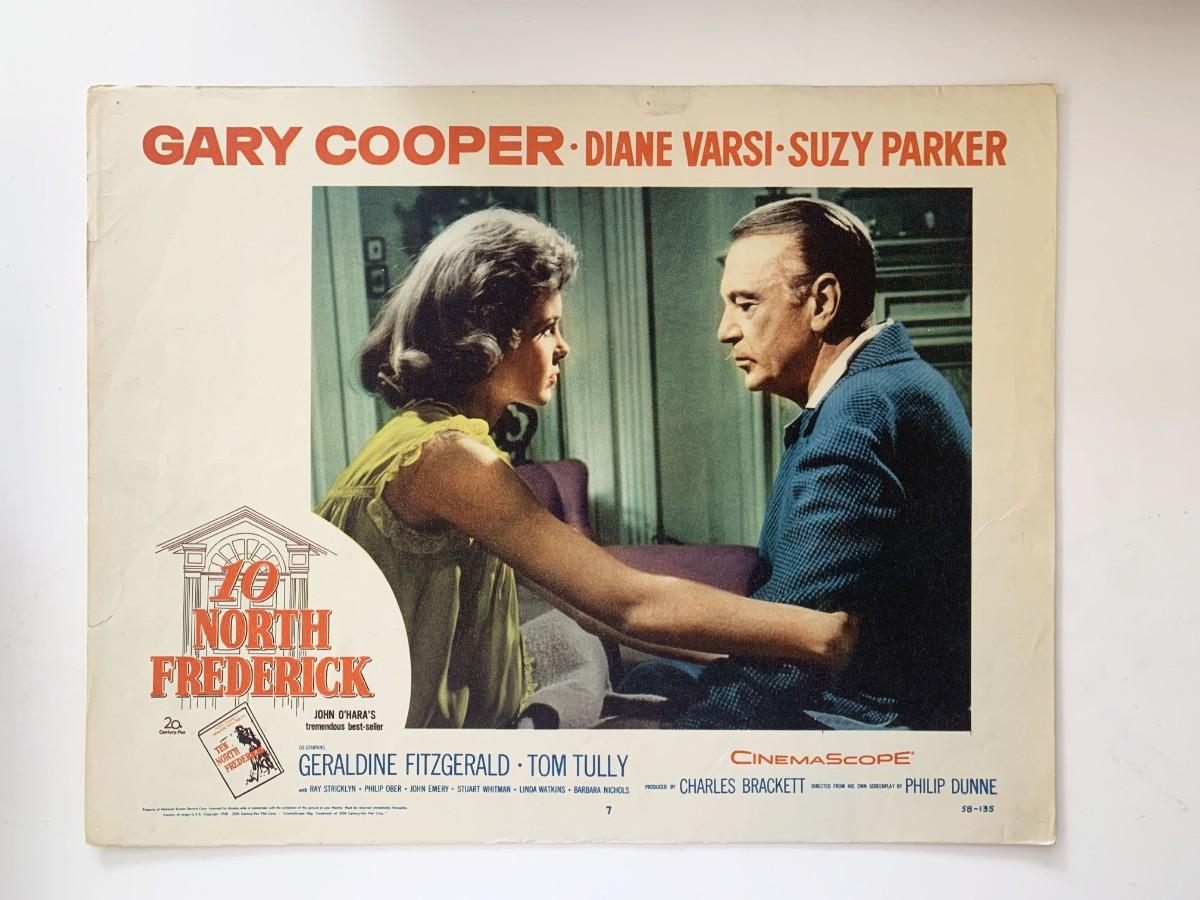
TEN NORTH FREDERICK was one of 1958’s two dozen pictures adapted from famous novels or hit plays. Here 102 minutes of family fragmenting/social strata drama was wrested from John O’Hara’s prize-winning 1955 bestseller. This was written & directed by Philip Dunne, who boasted a solid track record especially with adapting weighty novels (How Green Was My Valley, The Robe, The Agony And The Ecstasy). The results are uneven; top notch work from Gary Cooper and Geraldine Fitzgerald makes it worthwhile.
“I frequently hurt people without meaning to. It’s my specialty.”
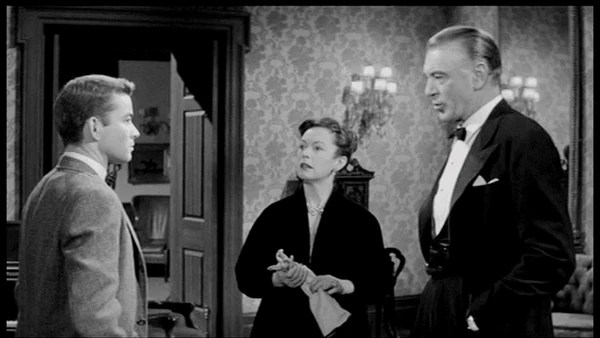
‘Gibbsville’, Pennsylvania, 1945. At the funeral of high-profile attorney ‘Joseph Chapin’ (Cooper), daughter ‘Ann’ (Diane Varsi) recalls events five years earlier that led to this strained sendoff. In 1940 Joe is set to run for lieutenant governor, with an eye toward the highest national office. Pushed by calculating wife ‘Edith’ (Fitzgerald), Joe’s trajectory to power runs over Ann’s dreams, scuttling her marriage to ‘low-class’ trumpet player ‘Charley Bongiorno’ (Stuart Whitman) and also wrecking the plans of rebellious son ‘Joby’ (Ray Stricklyn), a budding musician. After due damage has been done all around, fate has Joe meet and fall for Ann’s roommate, model ‘Kate Drummond’ (Suzy Parker) but the May-December romance has a built-in shelf life.

Dunne focused his script on a small section of the novel’s 408 pages, with the first half’s political gamesmanship and relationship sundering giving way to the doomed age-difference fling and Joe’s decline (alcoholism, defeat, despair). Happiness lies somewhere other than 10 N Frederick, Gibbsville, PA. Streamlining the events has it feel rushed, often pat, and the production design is slick but superficial, period feel notably absent.

The younger players were all being boosted by Fox at the time, with mixed success. Offbeat, high-strung Varsi, 19, had made an Oscar-nominated splash in Peyton Place but suffered a nervous breakdown during this shoot. Stricklyn, 29 playing 18, nicked parts in The Last Wagon and The Lost World but his soon career faded; he later had success as a publicist. The first ‘supermodel’, Parker, 25, wasn’t expressive enough to fare well on screen, her private life also had a rocky path. Better is Whitman: after seven years toiling in bit parts at 29 he rose from the ranks with decent roles in this and three other ’58 releases (Darby’s Rangers, The Decks Ran Red, China Doll) that led to higher profile projects in the 60s.

Considerably more impressive is Fitzgerald, excelling as the shrewish, embittered wife & mother. This was one of just two films she made during the decade (she’d been off-screen for seven years) and she’d only make three in the 60’s. With the exception of two knockoff actioners (Springfield Rifle, Blowing Wild) every part Cooper, 56, took on after High Noon dealt with men caught in quandaries over morality and honor, often at considerable cost. His instinctively decent but ambition-ensnared character in this story features some of his best late career work, marked by some pretty raw moments of anguish and regret.
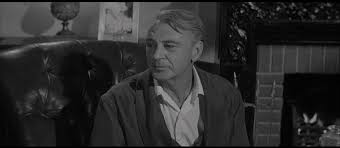
“You know what his trouble was? He couldn’t take advantage. He was a gentleman, in a world that has no further use for gentlemen.”
Produced for $1,550,000, grossing $5,700,000, placed 43rd at the year’s box offices. With pro work as assorted bastards (no-one is warm & fuzzy in this claw-to-ruin saga) from Tom Tully, Philip Ober and John Emery and a quick shot from Barbara Nichols doing one of her brassy bimbo specialties.
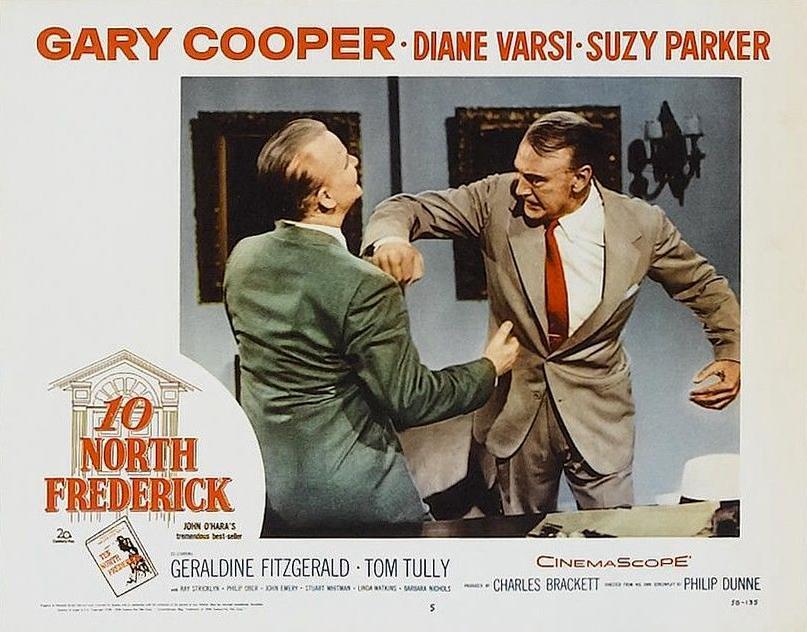
* Coop, facing outward, looks inward—Return To Paradise, Garden Of Evil, Vera Cruz, The Court Martial Of Billy Mitchell, Friendly Persuasion, Love In The Afternoon, Man Of The West, The Hanging Tree, They Came To Cordura, The Wreck Of The Mary Deare, The Naked Edge.

 Movies ala Mark