
GOODBYE, MR. CHIPS whispered “we’ll call you” at the box office in 1969, when crowds failed to say “Good morning, Sir” to a tune-deaf remake of the fondly recalled 1939 classic. Polite applause to stars Peter O’Toole and Petula Clark was wan consolation for a woeful 76th place, the $2,900,000 gross buried under a $9,000,000 cost. The previews bore a hint when they announced “truly something new in musical motion picture entertainment“. They neglected to add that ‘new’ meant “without a single song you can remember.”
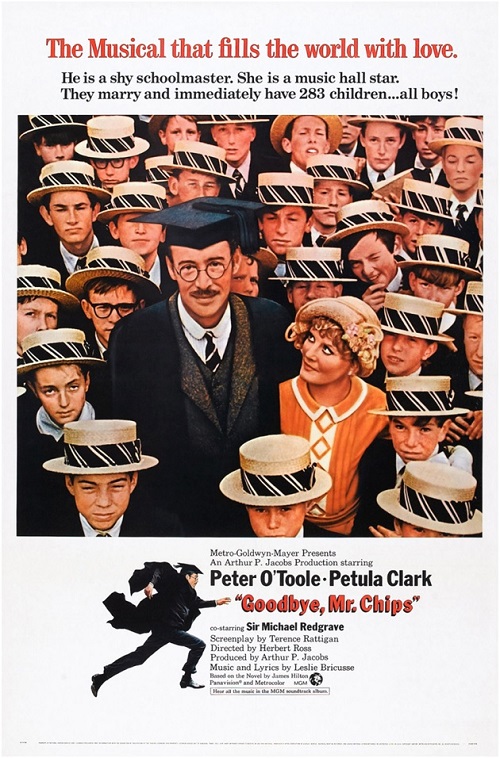 Terence Rattigan’s script updated James Hilton’s story of the timid teacher who somehow attracts a feisty looker. The ’39 version began in 1870 and concluded in 1933. This one starts in the 1920s, takes in WW2, slurps on a few decades. Herbert Ross directed, his first: he’d improve, so would his material. Other than the costuming, a sense of period is absent, and it’s awash in gauzy camera work, complete with the mod era’s trendy zoom shots repeatedly jarring acceptance. Leslie Bricusse wrote the songs, John Williams the score. There are 17 numbers if you include the Overture, Entr’Acte and Exit Music. The tunes are performed with due diligence, but none rouse spirits. Williams scoring is big, loud, busy and bland as sugarless pudding.
The show has three things going for it: the always interesting O’Toole, the ever-charming Clark and some eternally glorious scenery. The last is via Italian interludes showing off Naples, Positano, Campania, Capaccio, Paestum and Pompeii. This garnered the 4th of O’Toole’s eight Oscar nominations, and while he’s customarily fine, Chips is the iffiest in the lot. His place in ’69’s lineup would’ve been better taken by William Holden’s harsher taskmaster of The Wild Bunch. The year before, Clark (a World treasure) had been the best element in another bloated musical misfire, Finian’s Rainbow: she does as well as anyone could with what’s she given to work with.
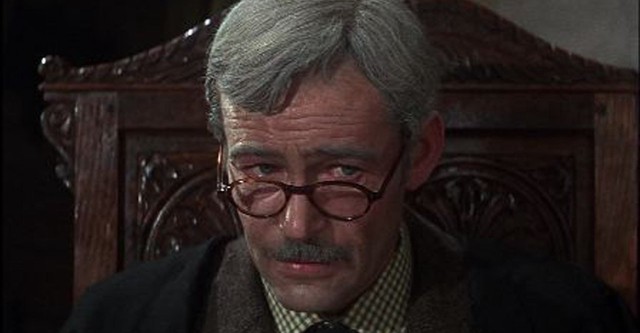
Roadshow length taxed 152 minutes; that was cut by twenty, but trims didn’t summon audiences who were more taken by Midnight Cowboy, Easy Rider and On Her Majesty’s Secret Service. How much ‘Nam & Nixon relevance was left over for soft focus boarding school ballads?
A second Oscar nomination went up for the scoring. With Michael Redgrave, Sian Philipps (then halfway thru being Mrs. O’Toole), George Baker, Michael Bryant and Jack Hedley.
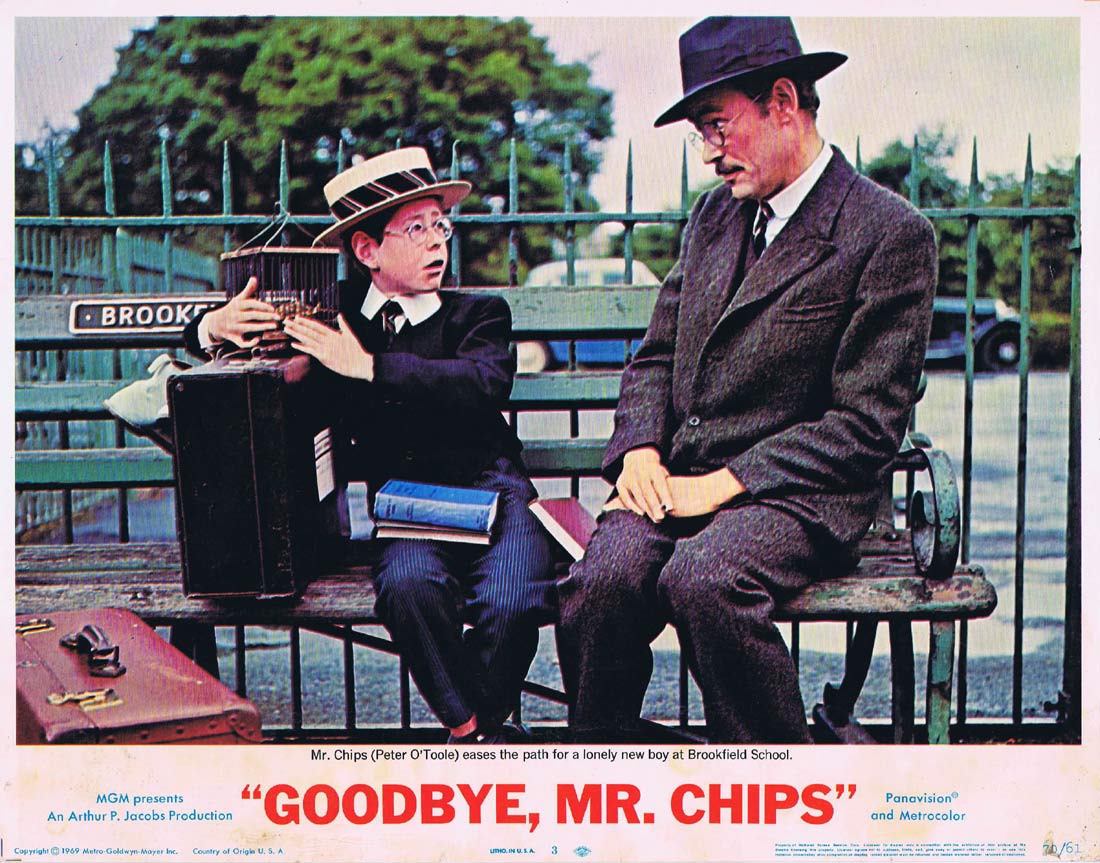
* This was the weakest performer of five expensive musicals that year. Hello, Dolly! and Paint Your Wagon made a lot of money but were so absurdly costly they still bled red. Sweet Charity and Oh! What A Lovely War both lost a bundle.
Musicals weren’t the only casualties: 1969 witnessed a notable number of money thuds: Marooned, The Secret Of Santa Vittoria, Che!, Battle Of Britain, Staircase, Castle Keep, The Great Bank Robbery, Those Daring Young Men In Their Jaunty Jalopies, Gaily Gaily, The Red Tent, The Battle Of Neretva, The Gypsy Moths, The Illustrated Man, Alfred The Great.

 Movies ala Mark