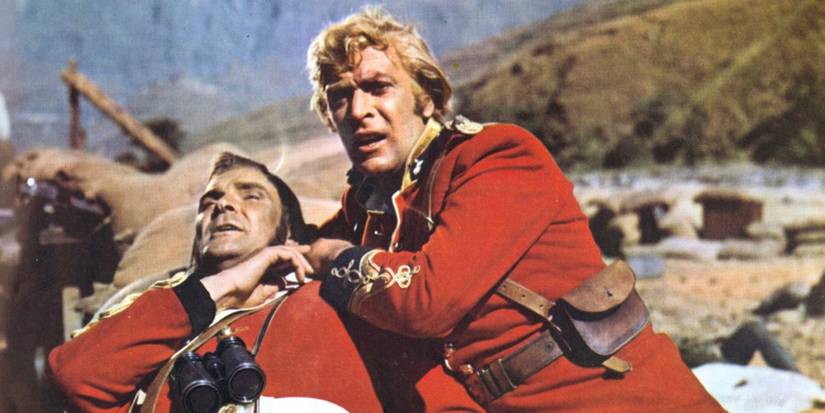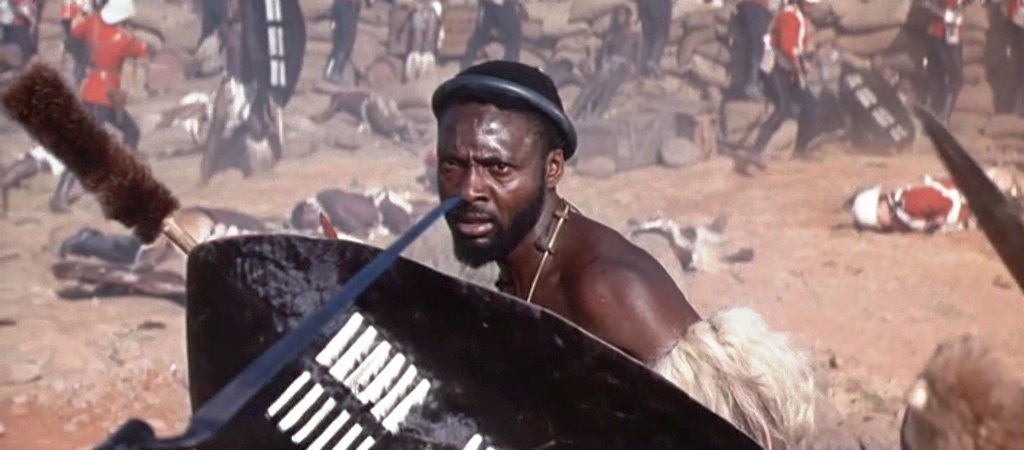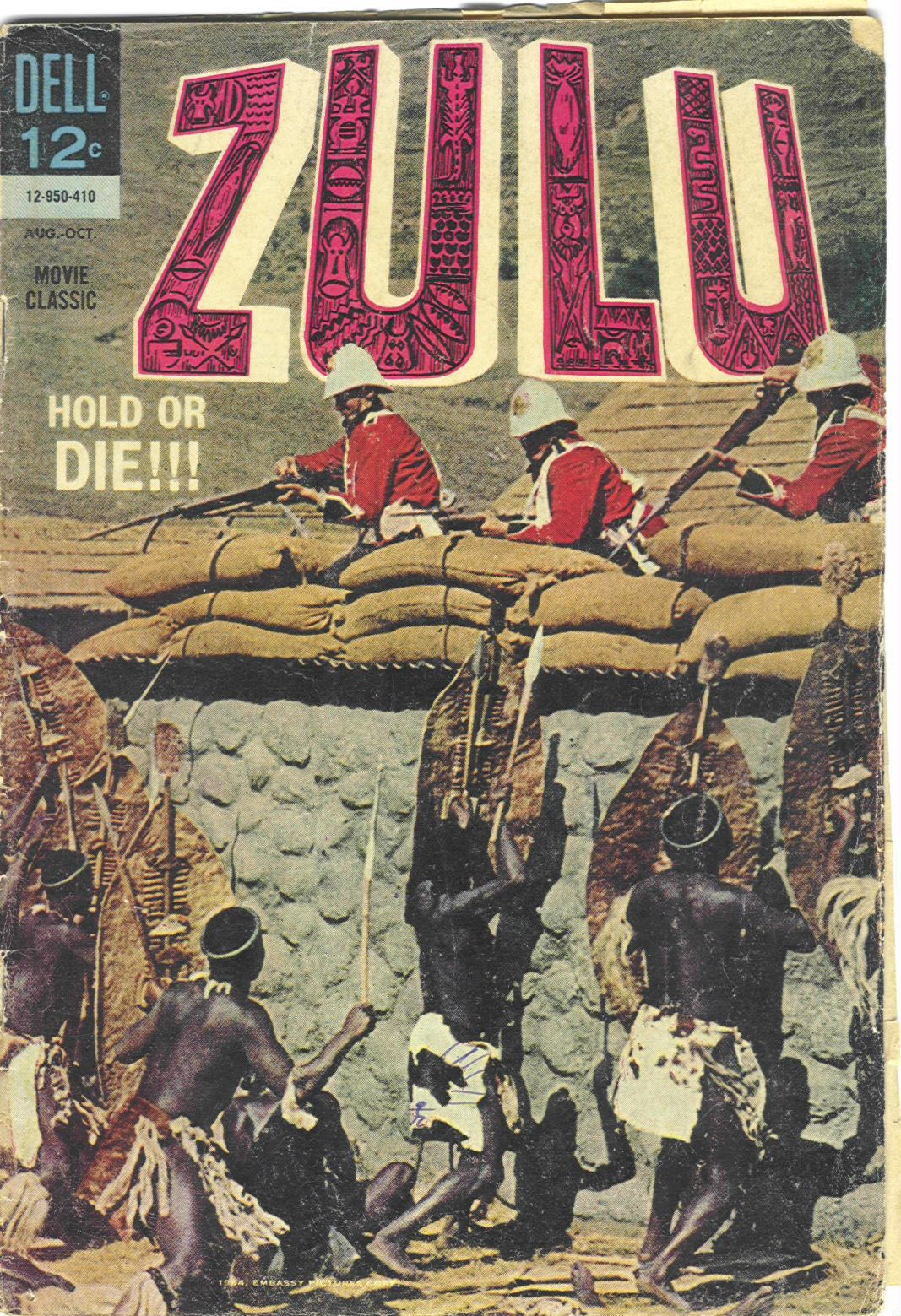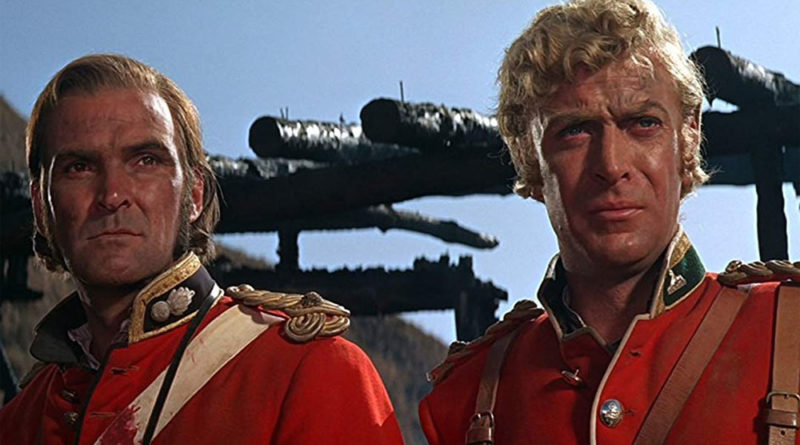
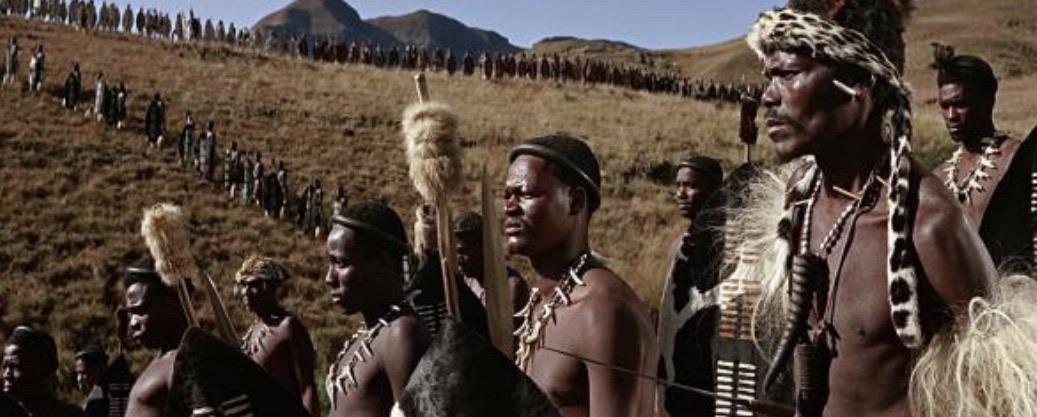
ZULU—“The sentries report Zulus to the southwest. Thousands of them.” Fans of historical actioners know what that means: yet another recliner chair visit to the 1964 battle classic, one of the great ‘few against many’ sagas whose legends blaze to life on film. Rather than Ancient Greece (The 300 Spartans), Old Mexico (The Alamo) or WW2 mid-Pacific (Wake Island), this overwhelming odds rouser takes place in the Natal colony of South Africa during January of 1879. While the rest of their army has marched off to engage Zulu tribesmen led by King Cetshwayo, a company of British troops are left back, posted at an isolated mission station—Rorke’s Drift. They shortly receive two pieces of dire news. Six miles off, a large part of their army has been wiped out by a huge force of Zulus. And a sizable number of warriors (as many as 4,000) are about to descend on the small garrison of 150, commanded by Lt. John Chard (Stanley Baker) and Lt. Gonville Bromhead (Michael Caine), neither of whom have any combat experience.
Beyond its gallantry/desperation and the subsequent awarding of a record 11 Victoria Crosses, though a major event in the lives of those who participated, historically Rorke’s Drift was a minor action: the immediately preceding disaster at Isandlwana was a big deal, spectacularly recreated in the 1979 prequel Zulu Dawn. That excellent film, about a defeat, suffered the same fate at the box office, and, fervent fan base aside, remains in the long shadow cast by the 1964 stunner. Stanley Baker, along with being a dynamic actor, was fervent about being Welsh, and the script for Zulu plays up what amounts to another tribal angle besides the Zulus, making it seem as though the small band of Britons were mostly from Wales (in truth they composed 15%), and there are a number of other aspects to the fight (and the characters) invented for storytelling purposes. So, like any other based-on-fact action picture it’s not a documentary, but a roughly beautiful interpretation, filtering fact and legend thru the lens of mythic drama. Thrillingly.
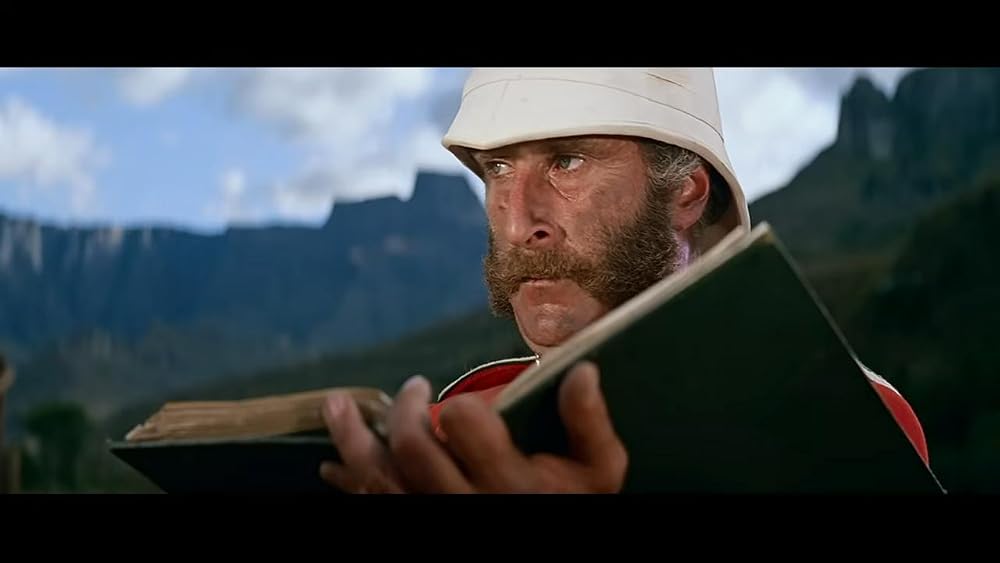
Baker, 35, co-produced with director Cy Endfield, US blacklist expat, who’d aced the kid-fave Mysterious Island. They’d worked together four times—Child In The House, Hell Drivers, Sea Fury, Jet Storm—and would later do the unsung adventure Sands Of The Kalahari. Endfield wrote the screenplay with journalist/novelist John Prebble. Caine, 30, is billed with “introducing” but he’d actually logged two dozen TV bits and had small parts in sixteen films; seven years earlier his feature debut in A Hill In Korea co-starred Baker.
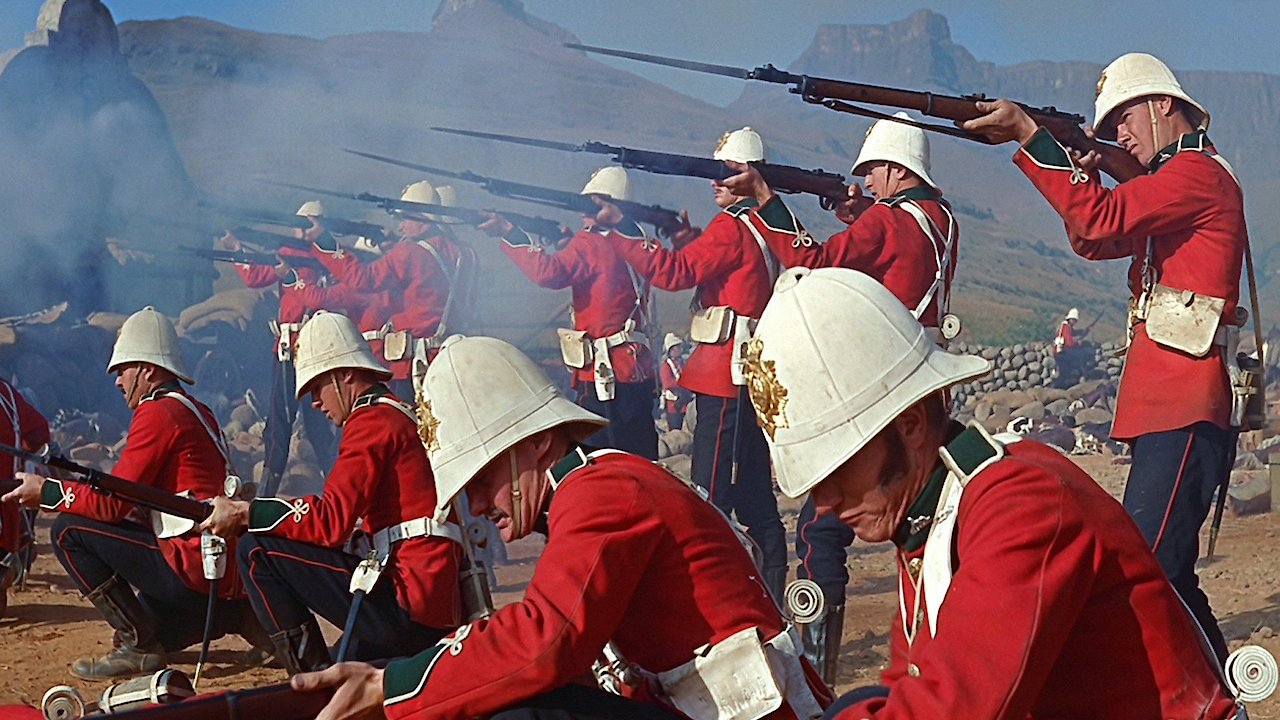
Executive producer Joseph E. Levine helped spin up $1,600,000 for location shooting in South Africa’s Kwa-Zulu Natal Province, in the shadow of the Drakensberg escarpment’s dramatic Amphitheater cliffs, more pictorially striking than the actual Rorke’s Drift site, about 100 miles distant. Lensed in 70mm, Stephen Dade’s cinematography holds a pristine clarity, and John Barry’s powerful score, done between his instant must-have soundtracks to From Russia With Love and Goldfinger, echoes with a heroic grandeur. Likewise stirring are the massed chants from the Zulus, hurled first as hair-raising challenges and later as a soul-gripping salute. At one key instance they’re answered by a defiant rendition of “Men Of Harlech”, an invention of the screenplay that turns the movie from exciting to immortal. The irony that helps make the music extra effective is that around manly dares and expressions of brotherhood the opposing groups of men are doing their level best to kill each other. The wild charges, full frontal bravery and savage hand-to-hand melees are pulse-pounders, expertly choreographed: in the real deal the Zulus attacked a dozen times, the film telescopes that down, both for brevity’s sake and so that audiences could handle it.
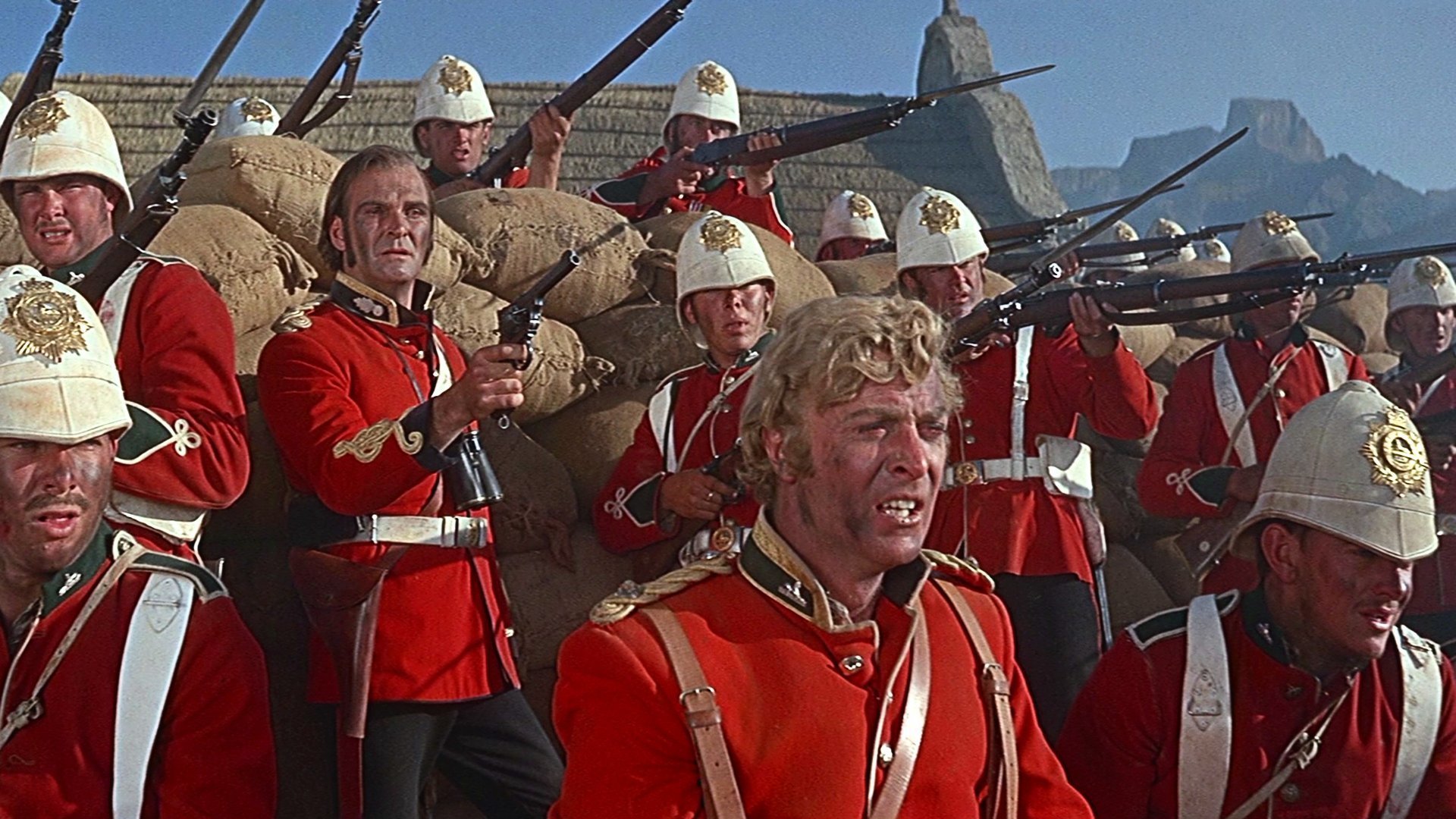
From 1943 until his untimely death at 48 in 1976, Baker did a lot of solid work (often as a bad guy) thru 54 features (check out Yesterday’s Enemy) and numerous TV productions, but none bested his anchoring of this epic, a dream project he cherished. Hired almost as an afterthought, this made Caine’s career, opening the gate to The Ipcress File and Alfie. Though billed third and fourth, Jack Hawkins, 53, and Ulla Jacobsson (34, known in Europe for One Summer Of Happiness and Smiles Of A Summer Night) do what are essentially cameos as a missionary and his daughter. James Booth as Pvt. Henry Hook handles a cynic anti-hero part (fitting for the early 60’s) and there is invaluable oak-tough support from Nigel Green (also a fave as Hercules in Jason And The Argonauts) as Colour Sgt. Frank Bourne. For drama’s sake, the screenplay takes liberties with these characters: it’s a testament to the grip of storytelling on film that even when we uncover facts under the fiction it still doesn’t detract from the immediacy of emotional impact or lessen lasting resonance.
A huge hit in England, business in the States was moderate, $4,000,000 and 71st place; as time went by it developed much the same loyalty as that commanded by The Magnificent Seven, which similarly grew into treasure stature after its initial release.
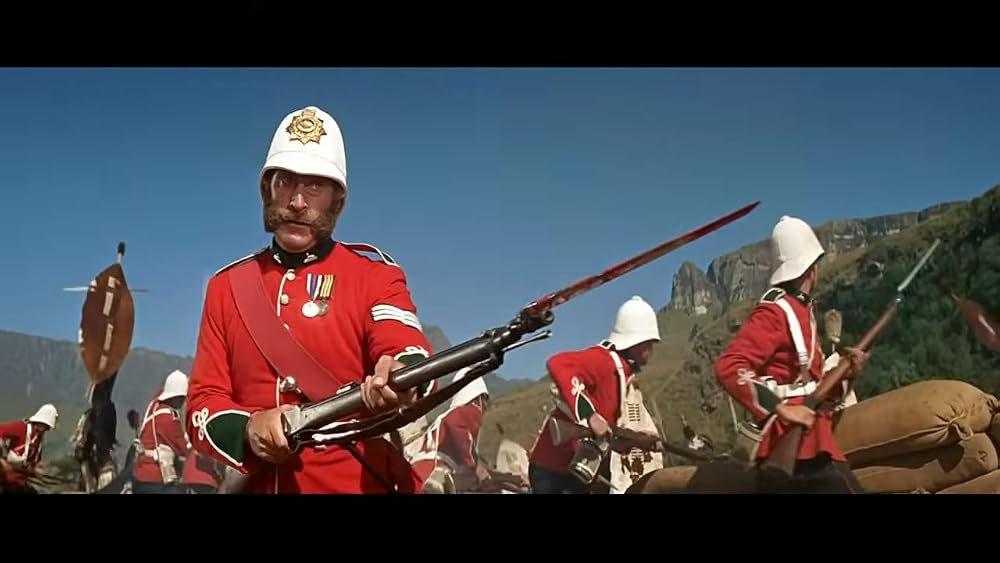
BOURNE: “It’s a miracle.” CHARD: “If it’s a miracle, Colour Sergeant, it’s a short chamber Boxer Henry point 45 caliber miracle.” BOURNE: “And a bayonet, sir, with some guts behind.”
Fellow Welshman and Baker drinking mate Richard Burton delivers the brief narration that opens and closes the story. Chief Mangosuthu Buthelezi (1928-2023) impersonates Cetshwayo (1826-1884), who was his great-grandfather. In the ranks: Ivor Emmanuel (leading the singing), Patrick Magee (the surgeon), Neil McCarthy (worried about a calf), David Kernan, Gert van den Bergh, Dickie Owen (wielding a mean crutch) and Simon Sabela (he would later play Cetshwayo in Zulu Dawn). 139 minutes. *
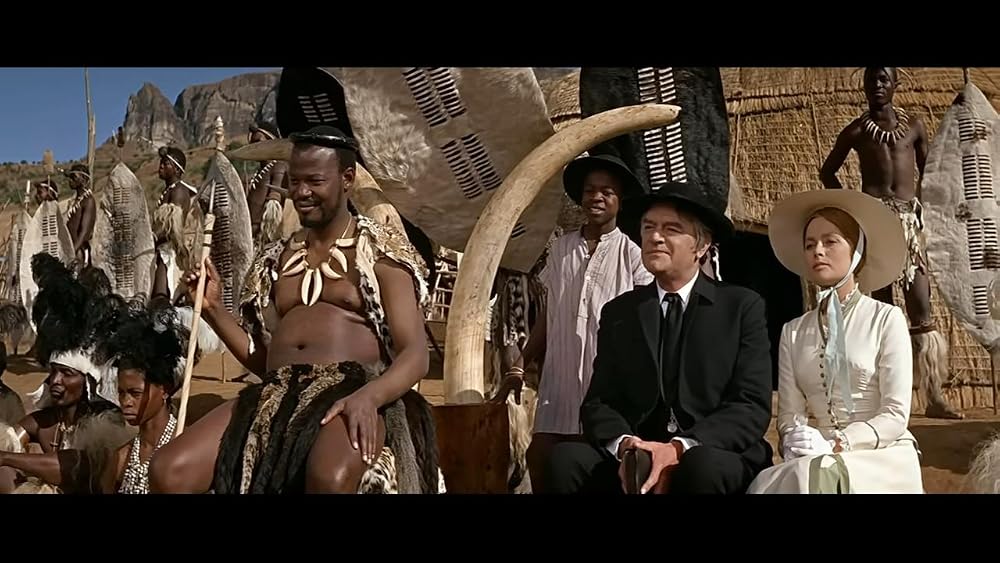
* Looking back to look forward—Chief Mangosuthu Buthelezi, who went on to become an important political leader: “In a sense we forgot we were in this country at the time. Whites and blacks could mingle without any fuss. You might say it was a very small thing but for this country, which was so racist at the time, it was something of great significance for us. The film helped restore to pride about where we come from – about how our people resisted the mightiest army in the world at the time, even though we were poorly equipped with cow-hide shields and spears.” “that epic production, which became a milestone event, not only in cinematic history, but within the Zulu nation”…found themselves re-enacting the deeds of their own grandfathers. Somehow this drew the audience into what was, in the end, a very human experience.”