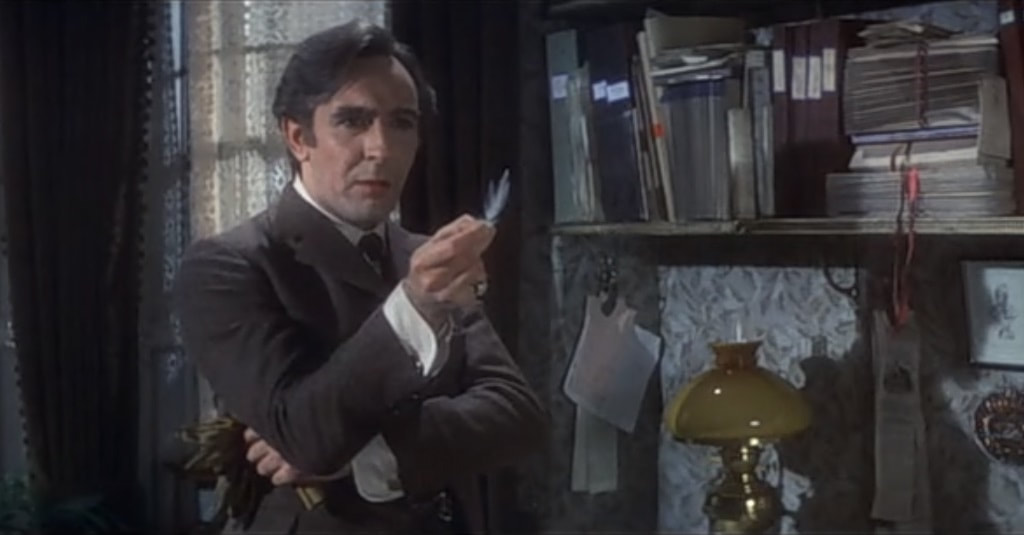
THE PRIVATE LIFE OF SHERLOCK HOLMES, or The Case Of The Undeserved Yet Not Unsurprising Flop. For a variety of reasons the first year of the 1970’s played host to a large number of big-budget bombs. A few asked for it because they were lousy, others were quality offerings crippled by expense and/or limited audience demographic appeal. Conceived, produced, co-written and directed by the venerated Billy Wilder, this witty valentine to the famously snippy snoop was one of the good ones that got away. *
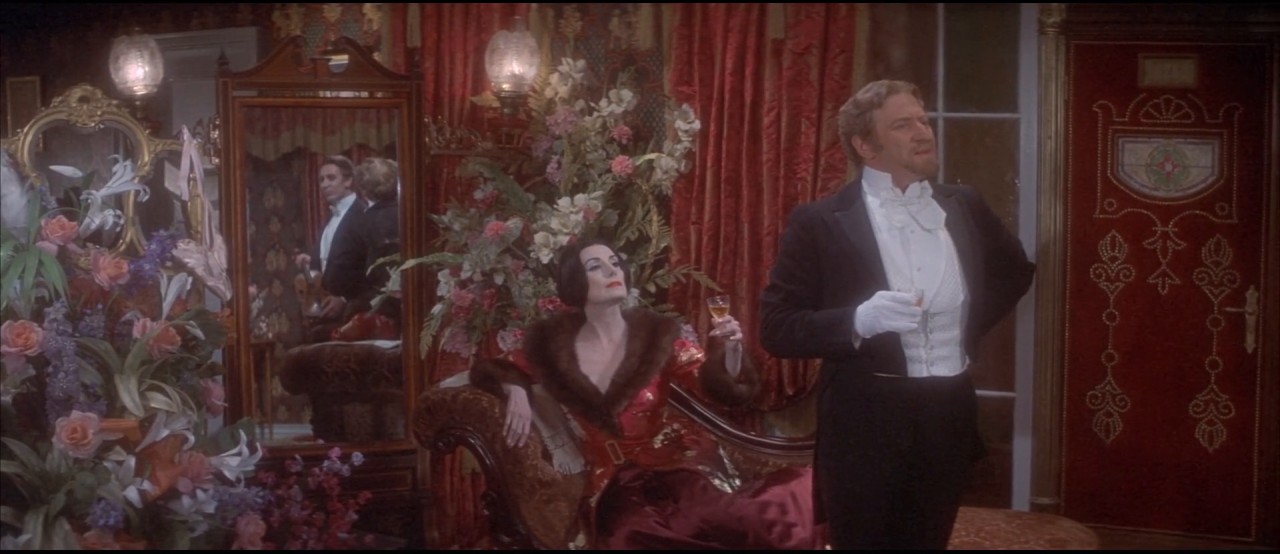
221B Baker Street, London, 1887. Restless without a mystery to solve, renowned private detective Sherlock Holmes (Robert Stephens, 38) banter-badgers his loyal friend and flat-mate Dr. John Watson (Colin Blakely, 38), who manages to remain chipper when Holmes is in a funk. Temporary reprieve from stewing comes with “The Singular Affair of the Russian Ballerina”, when an imperious Russian dandy named ‘Rogozhin’ (Clive Revill, enjoying accent mirth) approaches Holmes with the gift of a treasured Stradivarius if he will consent to father a child for famed ballerina ‘Madame Petrova’ (Tamara Toumanova, 50, famed ballerina and a good sport) who wants to retire and pass on her select artistic genes mixed with those of a donor male of intellectual prowess. Women not really Sherl’s, uh, ‘thing’, he drops the anvil hint that the ‘relationship’ with his Doctor is more to his preference. This outrages Watson, who is having a grand time galloping the light fantastic with other ladies in the ballet troupe. When their civilized tiff over le diff tamps down, the team is next presented with The Adventure of the Dumbfounded Detective, a Who’s What & What is That? puzzler, again begun with a lady awaiting, this one for her memory. Belgian lovely ‘Gabrielle Valladon’ (French treasure Geneviève Page, 42), rescued from the Thames, has amnesia gradually restored by our Baker Street boys, whose deductions uncover her vanished husband, mysterious dwarfs, Trappist monks, Holmes spy service brother ‘Mycroft’ (Christopher Lee, in haughty form), Imperial German subterfuge, a revolutionary new war machine. a trip to Scotland—and the Loch Ness Monster. Sherlock’s wariness of feminine guile is tested by the intriguing and distressed Gabrielle. Fetch the syringe.
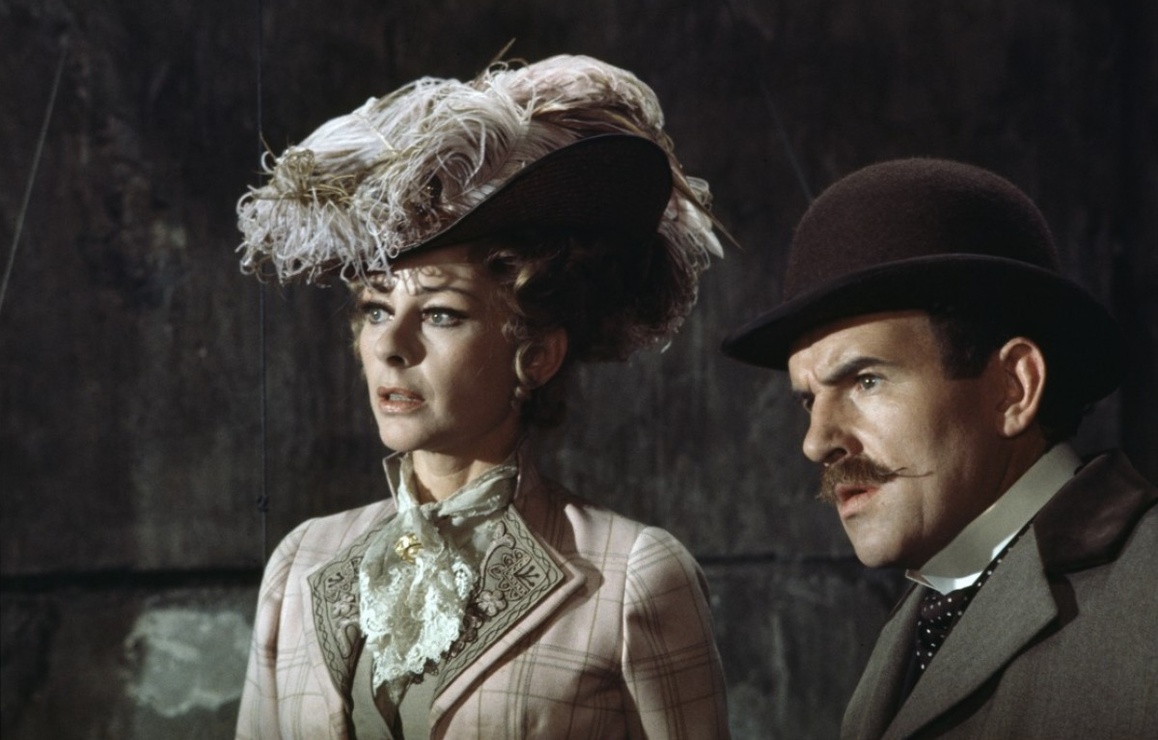
Clues to be revealed—as far back as 1955 Wilder wanted to do a Holmes story—as a musical. Co-writing with I.A.L. Diamond (their eighth of twelve collaborations) he’d nursed this eventual iteration for four years, during which he’d been unable to secure Peter O’Toole and Peter Sellers as the leads. In his memoir “Knight Errant” Robert Stephens related that upon his casting he “was more elated than I had ever been in my life”, believing the part might catapult his modest screen career (he was highly regarded on stage). Instead, he grew so unnerved by Wilder’s perfectionism (at the same time Stephens marriage to Maggie Smith was tanking over his multiple misbehaving with booze and affairs) that he had a breakdown and nearly succeeded in killing himself: the production shut down for 47 days due to his ‘illness’. Intended as a ‘roadshow’ presentation, the first cut ran 200 minutes, but digesting the huge losses recently incurred by ‘sure thing’ properties and with $10,000,000 invested and no big stars as bait, United Artists panicked, and Wilder was himself dissatisfied with how it came together; entire sections were whacked out, 75 minutes worth. Reviews were muted, marketing was flubbed, receipts stalled at 59th place for 1970, only $4,500,000. **
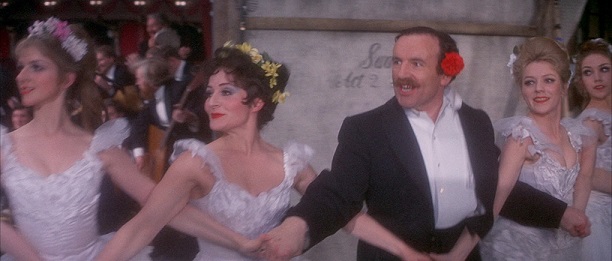
Wilder: “I structured my film in four parts, like a symphony:one for drama, one for comedy, one for farce, and one for romance.” “I should have been more daring. I have this theory. I wanted to have Holmes homosexual and not admitting it to anyone, including maybe even himself. The burden of keeping it secret was the reason he took dope.” With linking segments removed, the incomplete telling feels lopsided, yet keeping in what was cut would have taxed audience patience to the cocaine point. Plus, while some were/are titillated/gratified/vindicated? by pushing Sherlock out of a perceived closet, others were less enamored, not just by Stephens catching the fey ferry with mannerisms and intonations but with the payoff making Holmes not only depressed but revealed as outsmarted. The unwieldy framework and convention-tweaking portrayal kept Wilder’s intended masterpiece in the ‘close, but no cigar’ (or Calabash pipe) region.
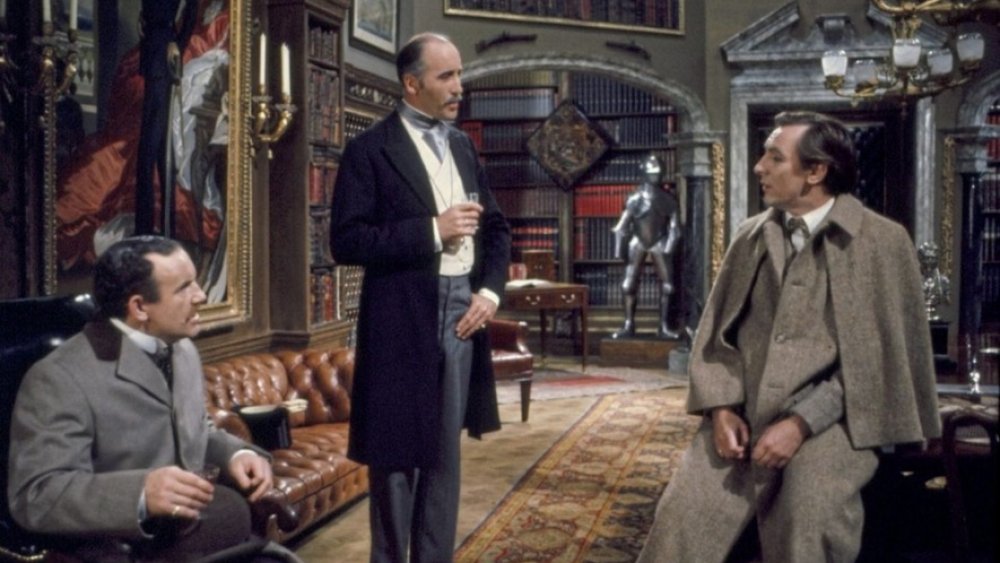
Flaws notwithstanding, the show is still quite enjoyable. Blakely’s high-spirited Watson is a vital comic counterpart to Stephens languor: we love those dance moves with the ballerinas—and ballerinos. Page smolders with promise (our swoon for her be-careful allure commenced back in El Cid with her evil Urraca), Lee strides with arrogant certainty, Revill is droll, Toumanova delightful. The elaborate production design includes not just detailed set dressing but a couple of impressive full-scale props (watch to find out). Photographed by Christopher Challis (Sink The Bismarck!, Arabesque, The Deep), with fine views of the Scottish countryside around Loch Ness and the castles Urquhart, Eilean Donan and Stuart. Locations in England use assorted spots in Berkshire, Worcestershire and London, with plush sets constructed at Pinewood Studios. Fans of master composer Miklós Rózsa will recognize his ‘sound’ and appreciate his lush score.
125 minutes, with Irene Handl (flustered housekeeper Mrs. Hudson), Mollie Maureen (an odd Queen Victoria), Catherine Lacey (cackling canary crone), Stanley Holloway (throwaway cameo as a gravedigger) and Peter Madden (as Von Tirpitz—those dratted Jerries are up to some Kaiser mischief that calls for a Royal Navy reply, or at the very least a tart upbraid from Grand-mama to Willy).
* Money out of thin air, blood in the water—Tora! Tora! Tora!, Catch-22 and The Adventurers all made a lot of dough but not enough to square their war-sized costs. Allow a director’s ego to run amuck with fluff, you get Darling Lili. Just for history buffs with patience between cavalry charges, mortgage the crown jewels on Waterloo and Cromwell. Good casts in hard sell’s torpedoed by cost v. value—The Molly Maguires, There Was A Crooked Man, Too Late The Hero, Flap, The Great White Hope. Hapless bungling—Song Of Norway. Utter crap—Myra Breckinridge.
** Case of the Missing Links—-cut loose were a Prologue and an Epilogue, some flashback material, and full episodes The Curious Case of the Upside-Down Room and The Dreadful Business of the Naked Honeymooners. Presumably, since it was a three-hour roadshow there would have been Overture and Intermission Music as well.
Billy, fencing: “I’ve loved the stories from boyhood, and the last thing I would want to do is parody them in any way.” “a very, very well-done picture. It was the most elegant picture I’ve ever shot. I don’t shoot elegant pictures. Mr. Vincente Minnelli, he shot elegant pictures.”
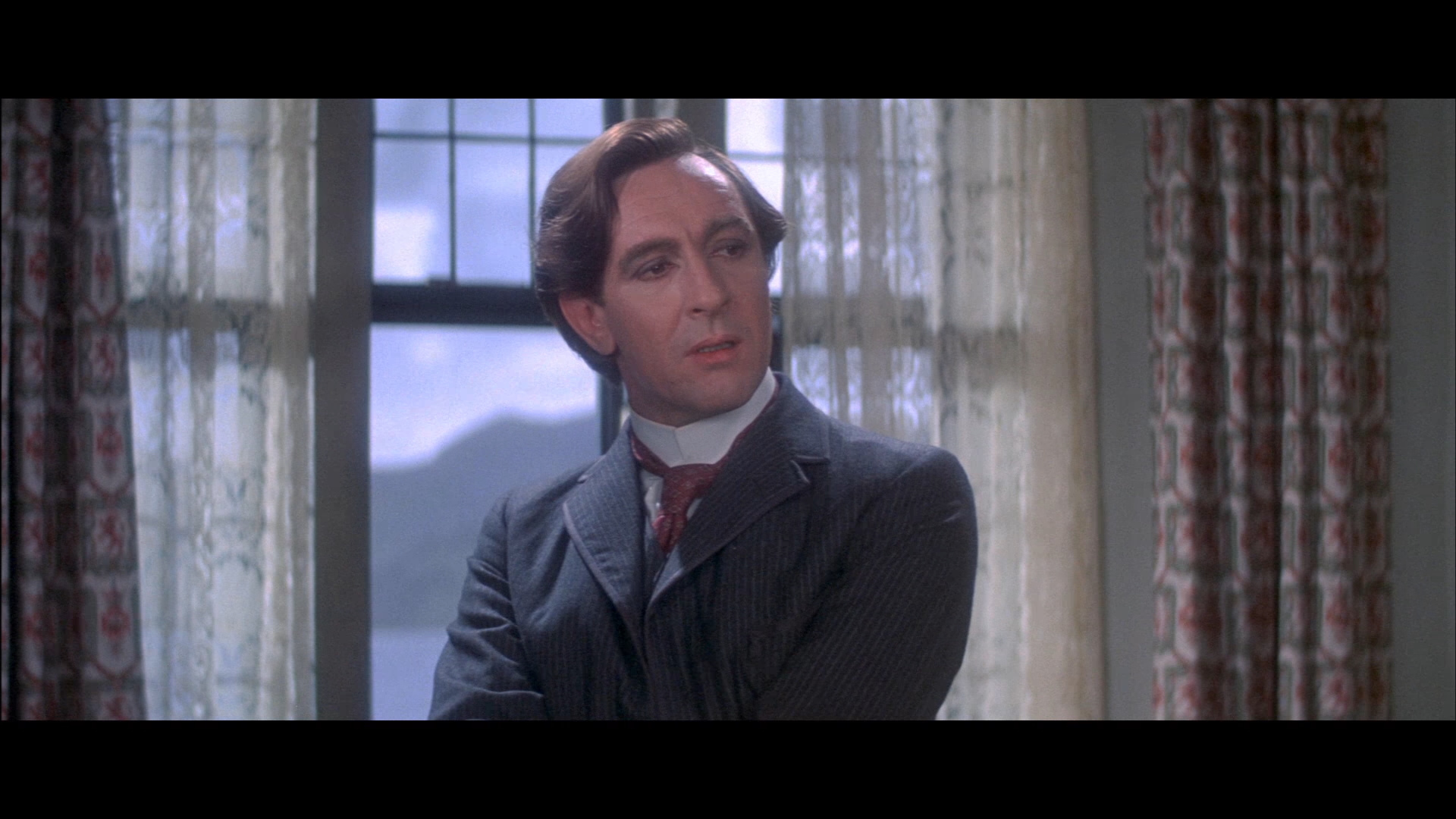
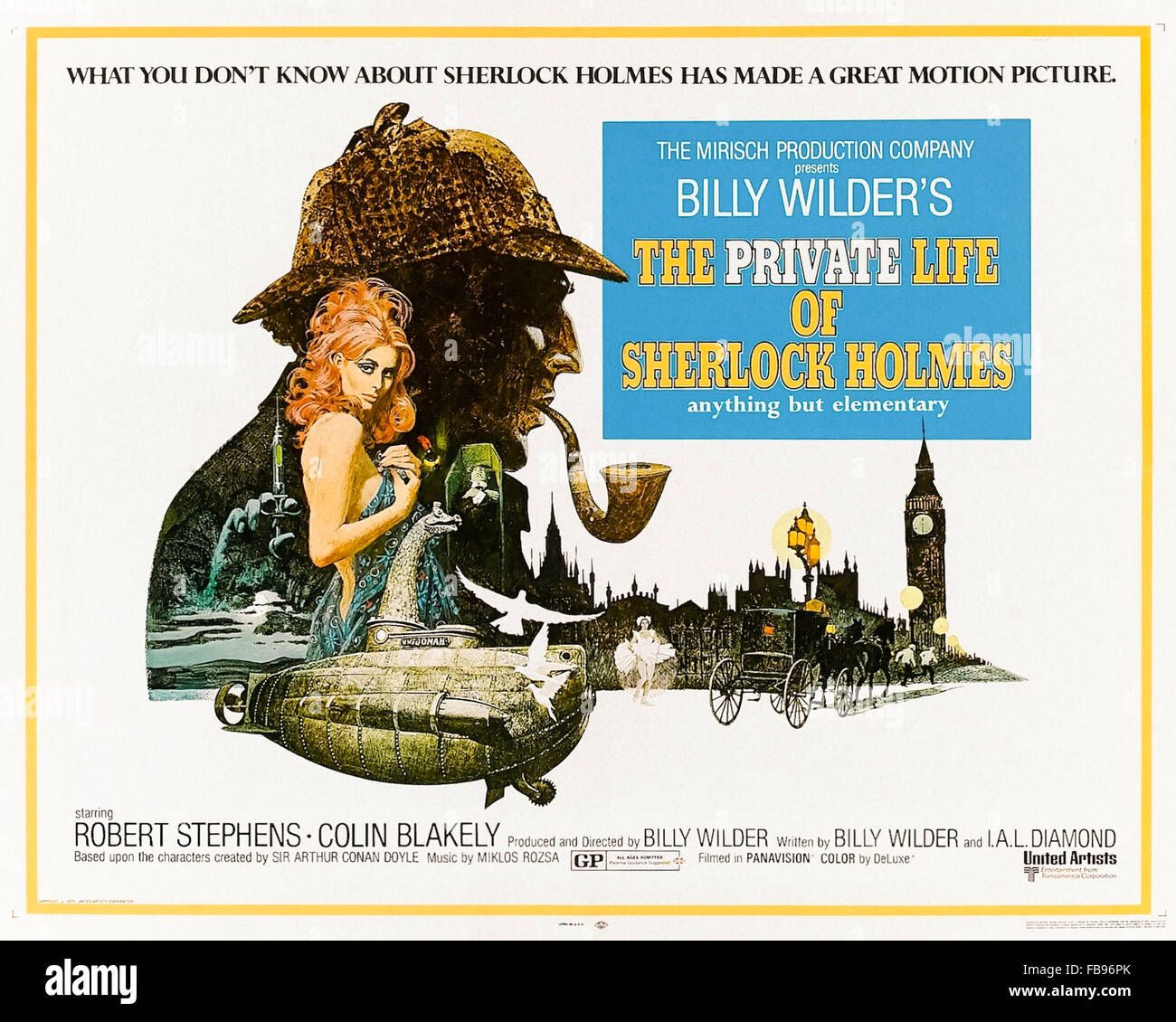


I couldn’t stand this on my first viewing(I’m a Holmes purist who likes her screen adaptations serious and accurate)but a few years later I fell for it. Love Robert Stephens’s performance. The score is gorgeous.
Maddy