
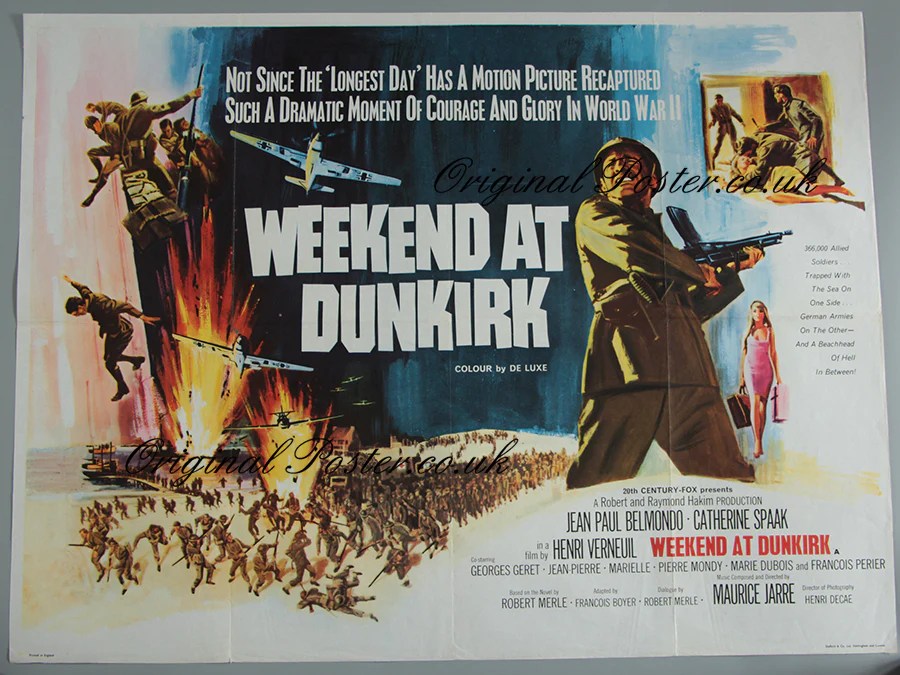
WEEKEND AT DUNKIRK, from France in 1964, was the 9th most popular picture in its home country, buoyed by the star-power of Jean-Paul Belmondo, but when it finally made it to the States in 1966, this impressive, large-scale WW2 drama didn’t muss a hair, grossing a mere $200,000. For the French industry at the time this was a quite elaborate production, made for the US equivalent of about $2,000,000. The script was adapted by Francoise Boyer from Robert Merle’s acclaimed 1949 novel, based partially on his own experiences during the event portrayed, the massive defeat/evacuation of Allied troops from the French coastal city in mid-1940.
“You know, Father, your Hell, I just got a close look at it. All your stories, priest, they’re true. It’s full of flames, with 2,000 ways to twist on the grille.”
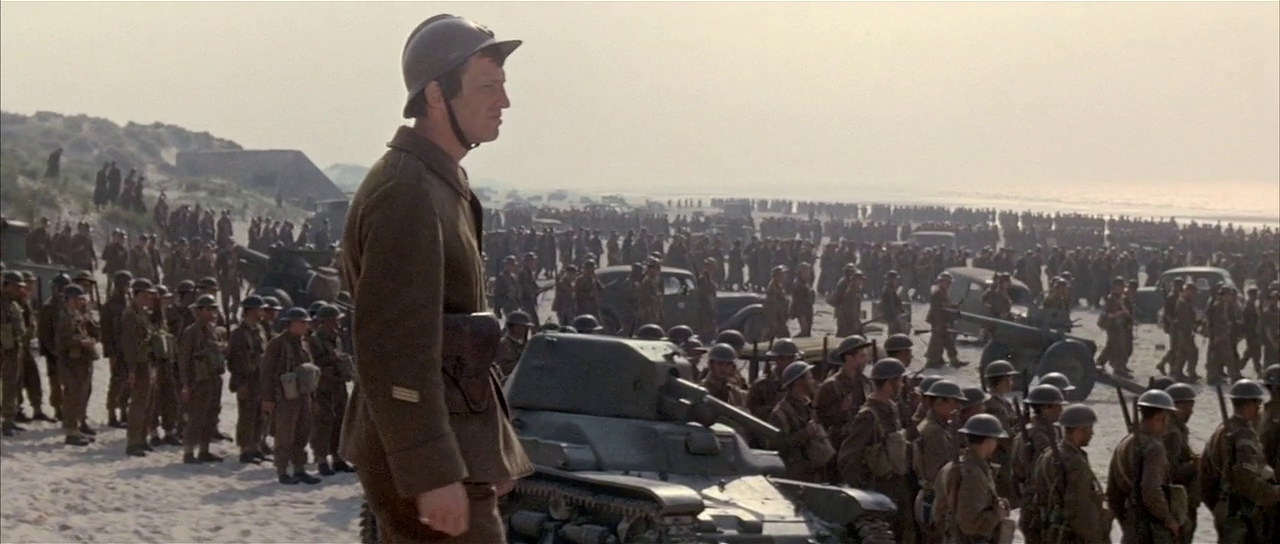
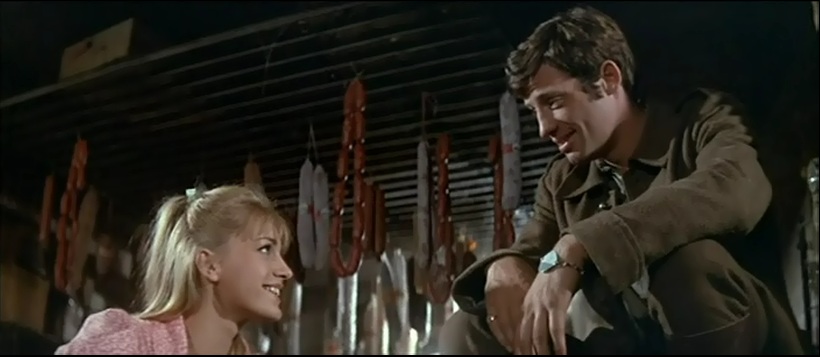
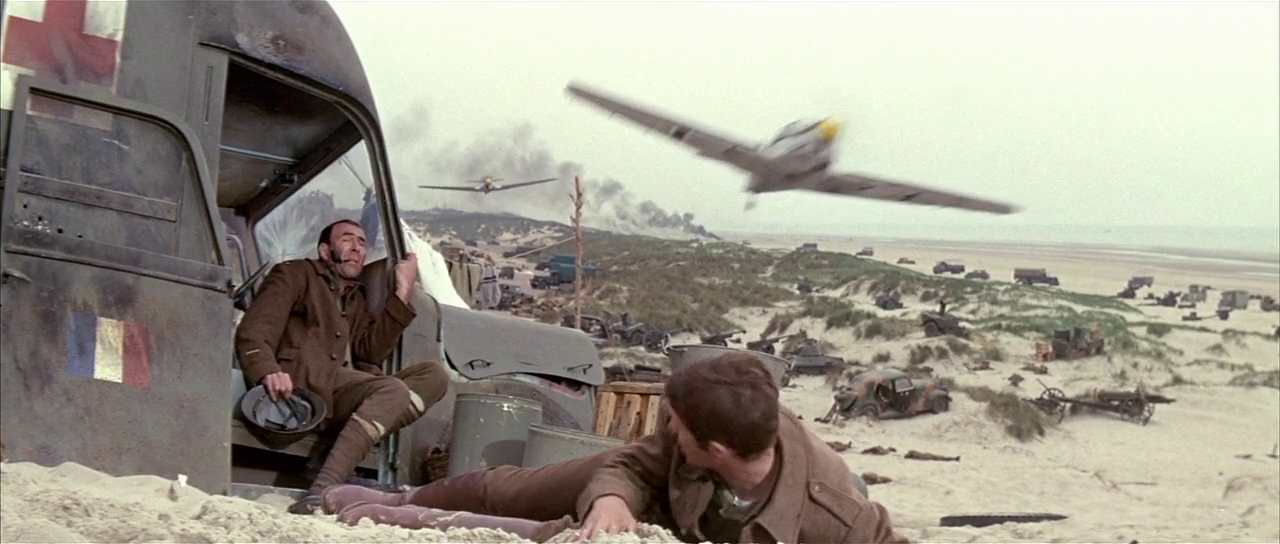
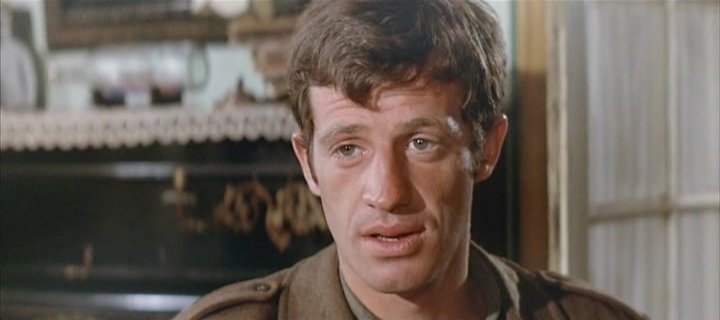
Over the first two days in June, 1940, ‘ Julien Maillat’ (Belmondo, 31), a sergeant in the French Army, makes a determined effort to join the cross-channel escape of hundreds of thousands of British and French troops, trapped in the port of Dunkirk by the blitzkrieging Germans, who pummel the city, the beaches and the milling mass of soldiers with artillery and constant air raids. Only a certain number of the French will join the British on the ships and boats trying to rescue them, and some of Julien’s comrades elect to stay behind, facing capture. During his back & forth attempts to get away, among the people he encounters is ‘Jeanne’ (Catherine Spaak, 19), a local civilian, determined to sit it out and guard her house. Confusion, disbelief and desperation are manifest, and with the Luftwaffe strafing from above and Wehrmacht howitzers pounding them, things don’t look hopeful.
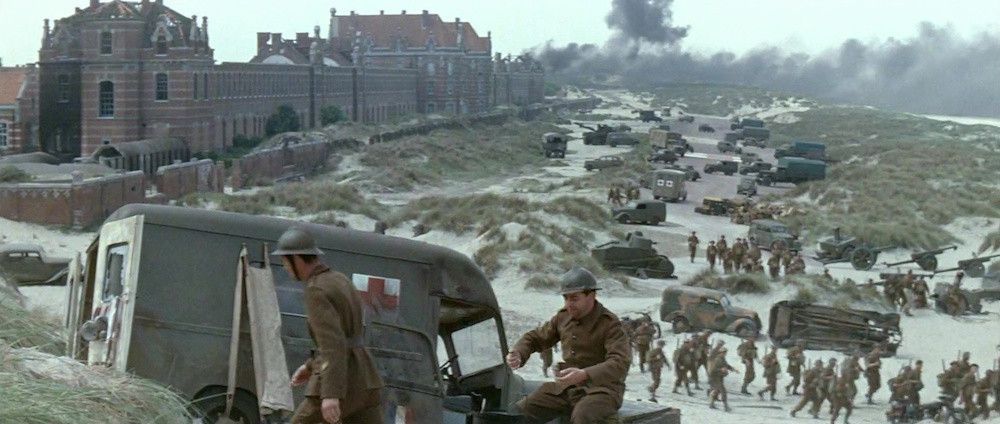
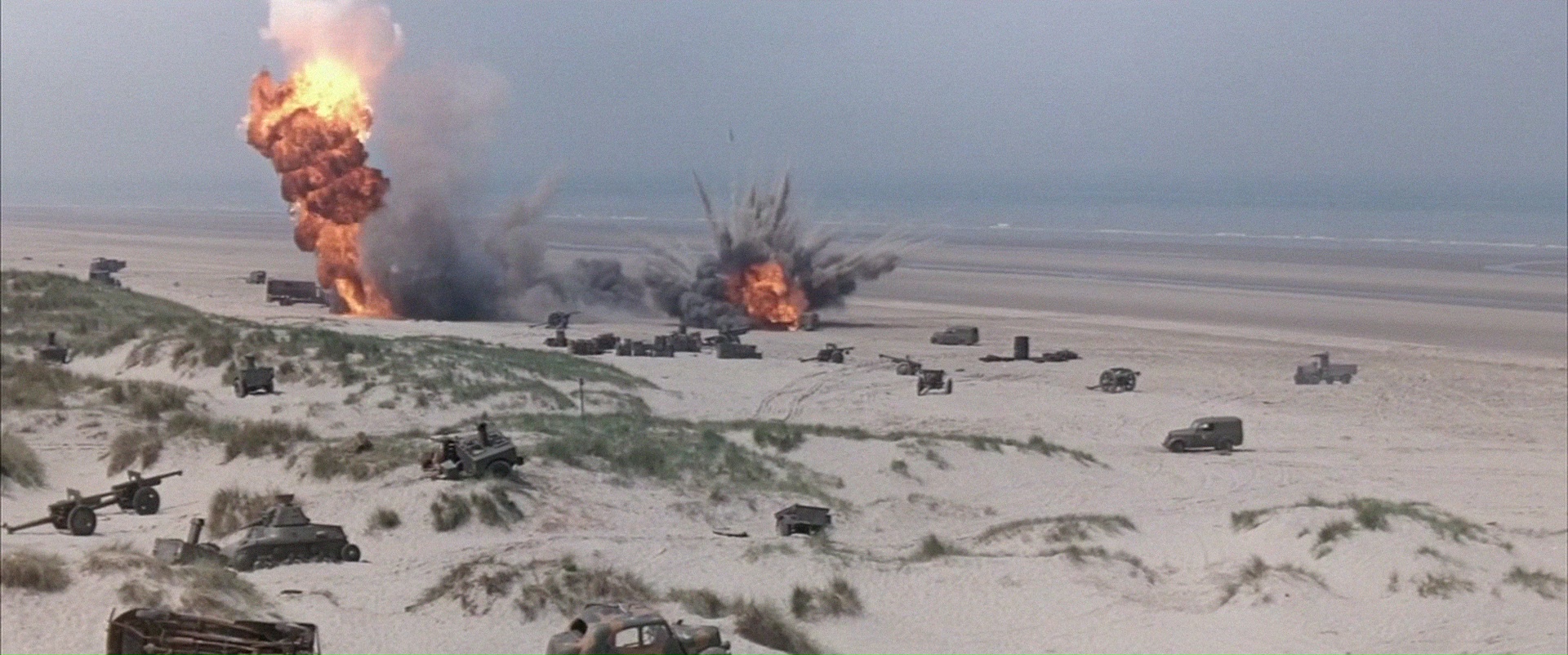
Slow going at first, and talky all the way through, the episodic treatment of the chaotic and surreal scene becomes more interesting as it progresses, although in the restored prints there is a curious retrenchment of the dialogue (see * below) that doesn’t sit too well. Throughout, the production is exactingly detailed, and frequently spectacular: the 2nd unit crew and assistant directors did a splendid job orchestrating the swarms of extras and a host of props and vehicles, with special effects tyro Karl Baumgartner (The Blue Max, Kelly’s Heroes, Das Boot) rigging up a copious display of awesome explosions. Henri Verneuil was already a well established director and screenwriter in France, and on the (native) success of this moved on to other large-scaled international adventure pics with The 25th Hour, Guns For San Sebastian and The Burglars. Shot on the actual locations, the camerawork from Henri Decaë (Viva Maria!, The Boys From Brazil) is first rate and Maurice Jarre did well on the scoring. Give the nervy Belmondo extra credit for doing his own stunt work on a startlingly violent tumble down a staircase.
For such a hefty film, it’s odd that the US distributor, 20th Century Fox, didn’t give it much of a push, even with Jean-Paul’s cachet from his popular That Man From Rio and its sequel Up To His Ears. History and/or war movie buffs will find it of definite value, and can add its period piece take to the better known treatments centered around the disastrous yet miraculous event: 1958’s excellent Dunkirk, the critical and commercial success Atonement from 2007 and the stylish, highly praised Dunkirk, a huge hit in 2017.
With Jean-Pierre Marielle, Georges Gerais, Pierre Mondy, François Périer, Ronald Howard, Donald O’Brien, Kenneth Haigh, Marie Dubois, Nigel Stock and Marie-France Boyer. 119 minutes.
* WTF? Observation of French F-words: the amount of profanity present in the subtitles of the restored print goes way beyond what foreign films would allow back in 1964 (and of course they were considerably ahead in that regard to English-language pictures): it’s jarringly obvious someone re-titled the dialogue to suit more crass modern sensibilities. Poetic license? More like artistic arrogance. Sorry, but no-one, anywhere, used “motherfucker” in a script back in 1964.

 Movies ala Mark