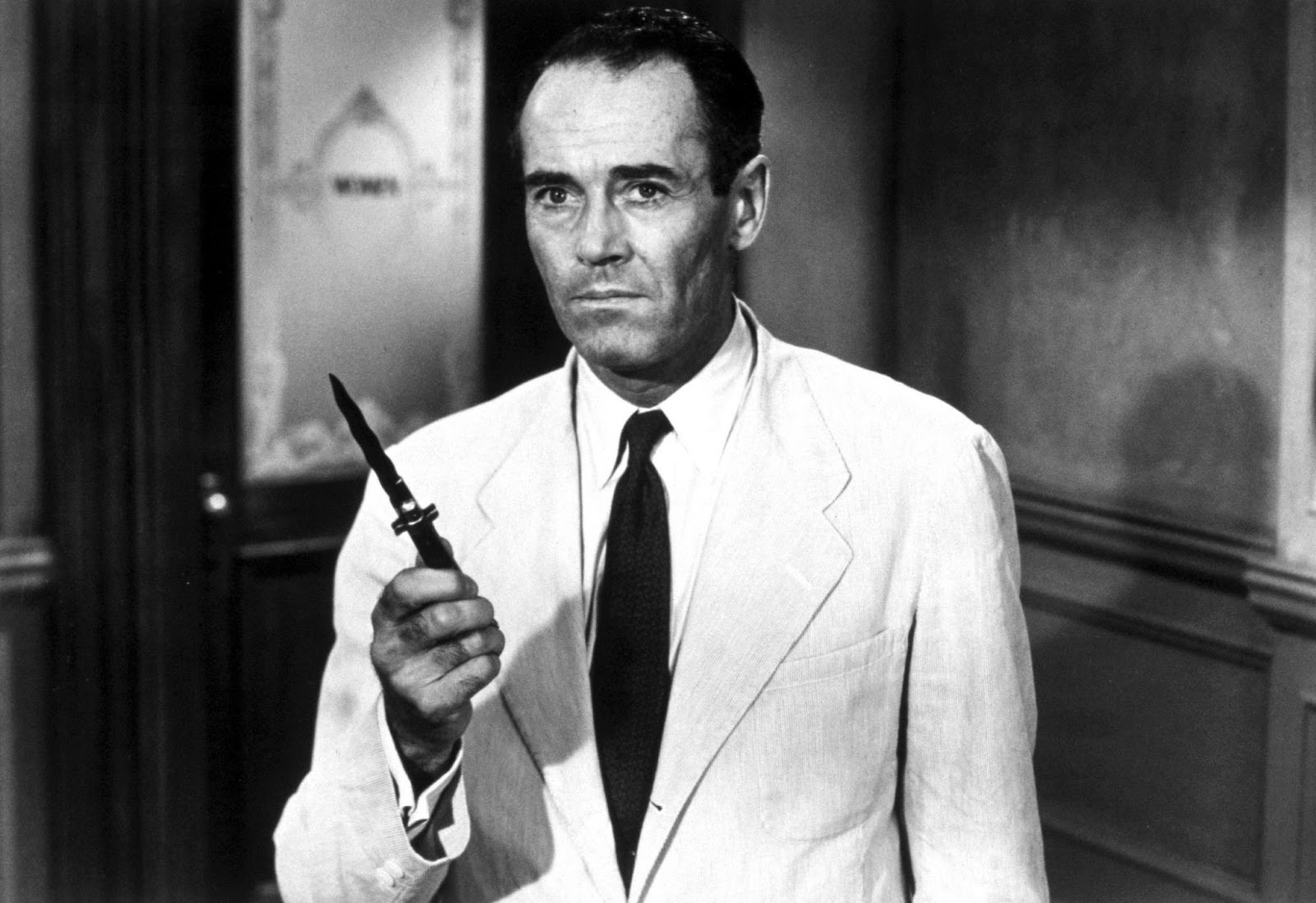
12 ANGRY MEN, classic make-up-their-minds (and yours) drama from 1957 delivers captivating ensemble acting, superb writing, the feature bow of a major directing talent and a gripping civics lesson that reminds us that Democracy is participatory, Justice often walks a knife edge and there’s more to Truth than scattered facts presented as evidence. Prolific theater & television helmsman Sidney Lumet, 32, showed big league skill guiding one treasured star (Henry Fonda, 51), and a case-closed gallery of character actors, some established, others gaining traction. Reginald Rose adapted the script from his teleplay, which three years earlier registered a smash on live TV.
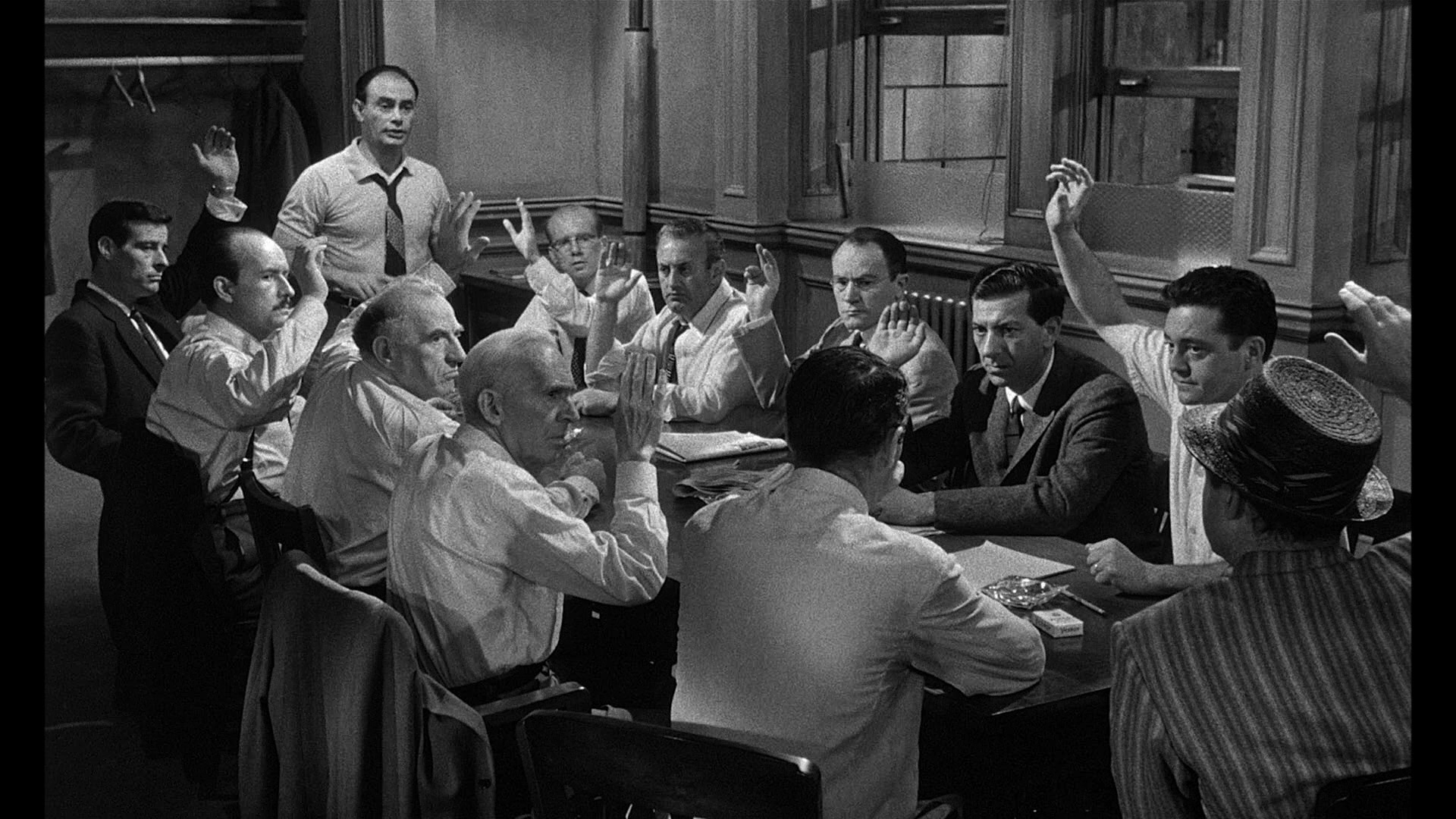
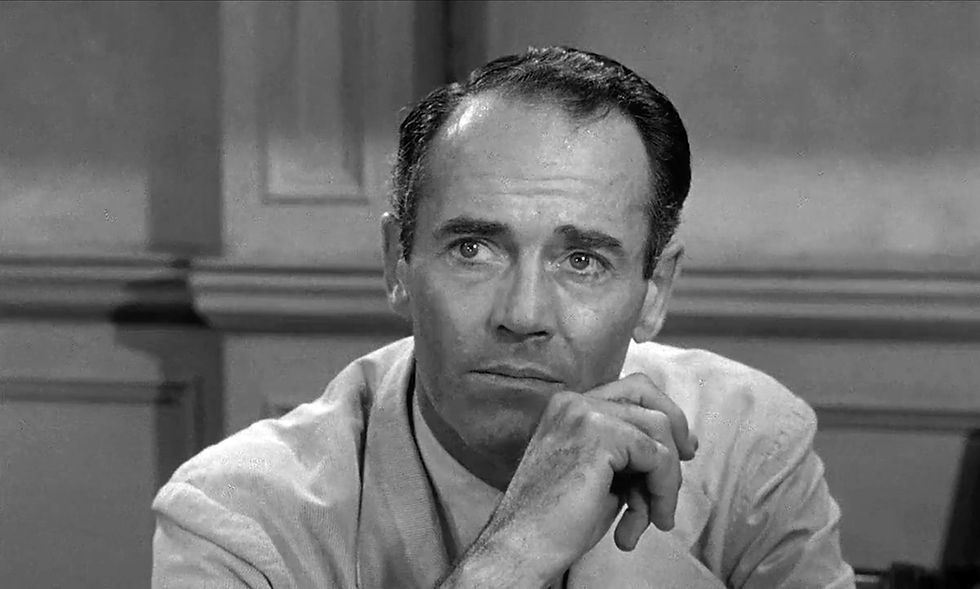
New York City. A teenager is facing the chair for stabbing his dad to death. The ‘jury of his peers’ (only one anywhere close to being a peer) settle in for a quick verdict. Surprise arrives when eleven go for ‘guilty’, with a lone holdout. Not completely convinced, ‘Juror #8’ (Fonda) wants to calmly re-examine what they know (and don’t) before he votes to have someone fry alive.
“Bright? He’s a common ignorant slob. He don’t even speak good English.”
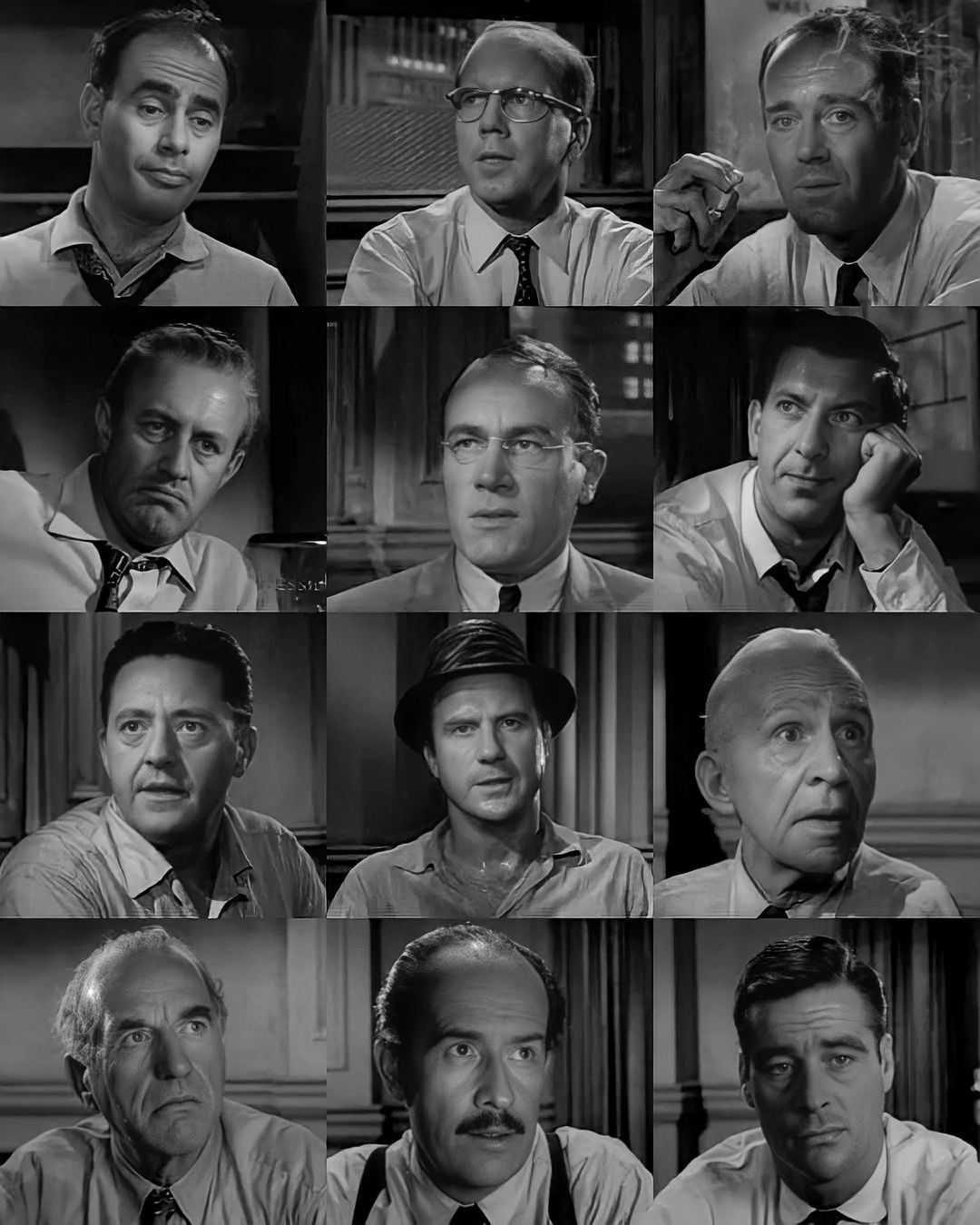
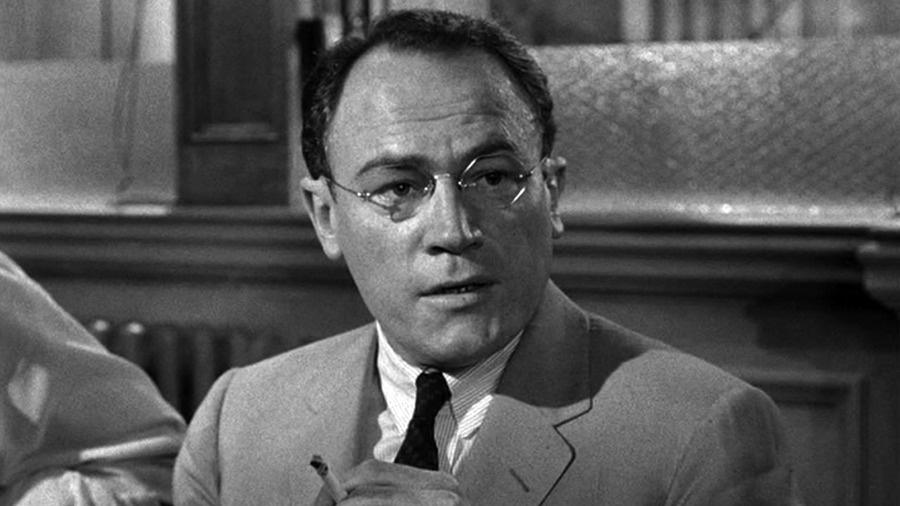
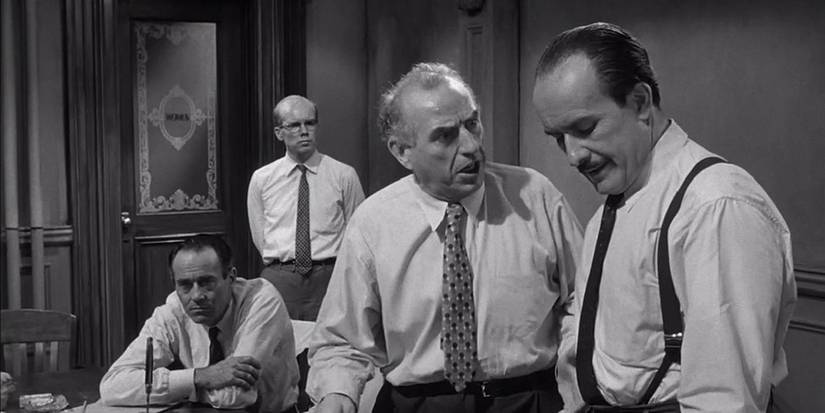
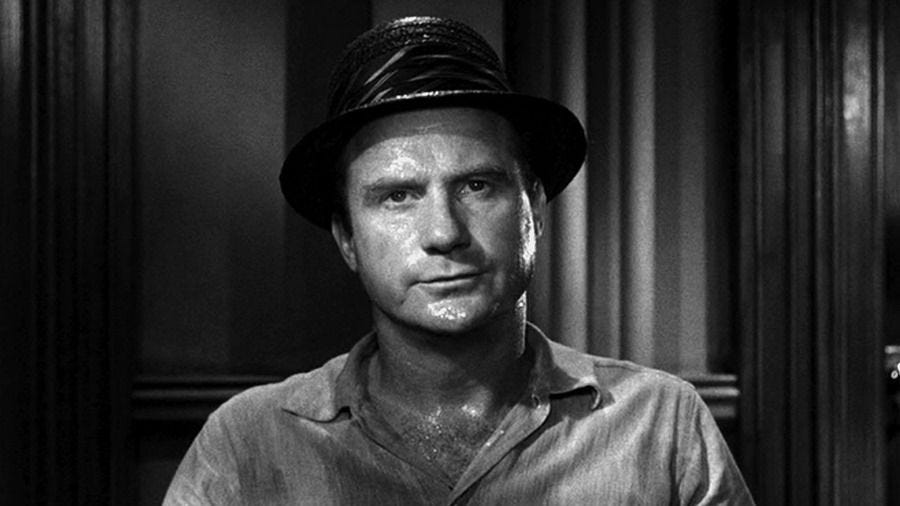
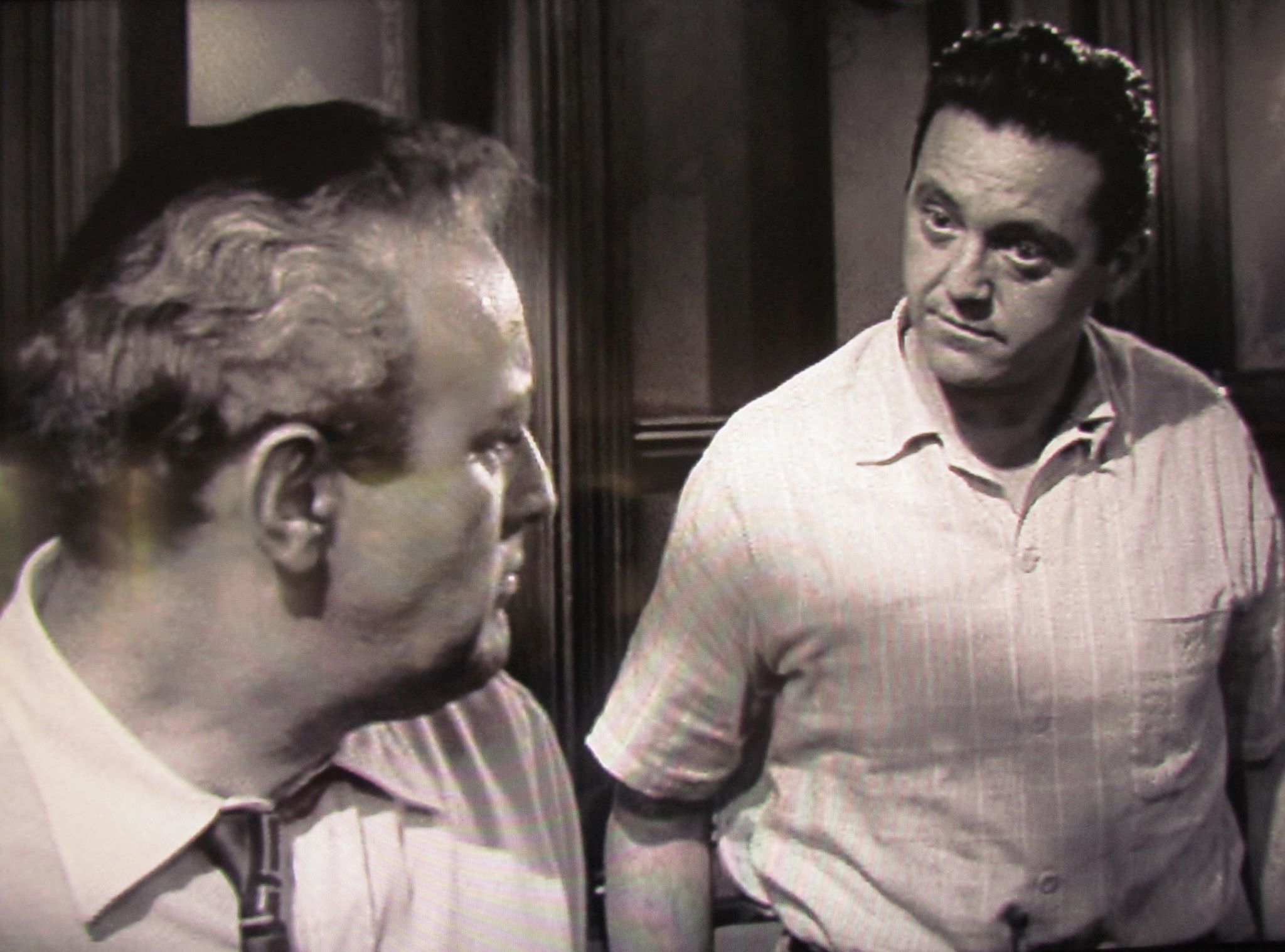 His questions and possible answers are posed to #1, the foreman, trying his best to keep the process methodical (Martin Balsam, 36, second film, first credited); #2, a polite, seemingly meek clerk (John Fiedler, 31, feature debut); #3, boiling with anger, not only at the accused (Lee J. Cobb, 44); #4, fastidious, detail-savvy, with a superior air (E.G. Marshall, 42); #5, pensive, up from a rough background similar to the defendant (Jack Klugman, 34); #6, reassuringly solid blue collar Everyman sort (Edward Binns, 39); #7 impatient wiseass salesman (Jack Warden, 35); #9, observant elderly gentleman who resents being sidelined (Joseph Sweeney, working as an actor since 1910, at 80 this was his best-known role); #10, obnoxious bigot who thinks he’s neither (Ed Begley, 55); #11, polite Austrian immigrant who respects the system (George Voscovec, 51); and #12, a jokey ad-man who doesn’t seem to grasp the gravity of the decision at hand (Robert Webber, 31).
 “What’s the matter with you guys? You all know he’s guilty! He’s got to burn! You’re letting him slip through our fingers!”
After 1948’s Fort Apache, Fonda was off-screen for seven years, returning with two high profile pictures, Mister Roberts and War And Peace (he was unhappy with how both turned out) and one that he did like but was little-seen, Hitchcock’s unsung goodie The Wrong Man. His liberal sensibilities aligned with Rose’s play, which along with its sharp characterizations and plea for caution in the legal deliberative process over life & death, was also a veiled swipe at McCarthyism’s rush to judgement that had plagued the era. Impressed with Lumet’s stage & TV work, Fonda signed on as producer, and his cool yet impassioned and persuasive performance in the crucial lead role is among his best.
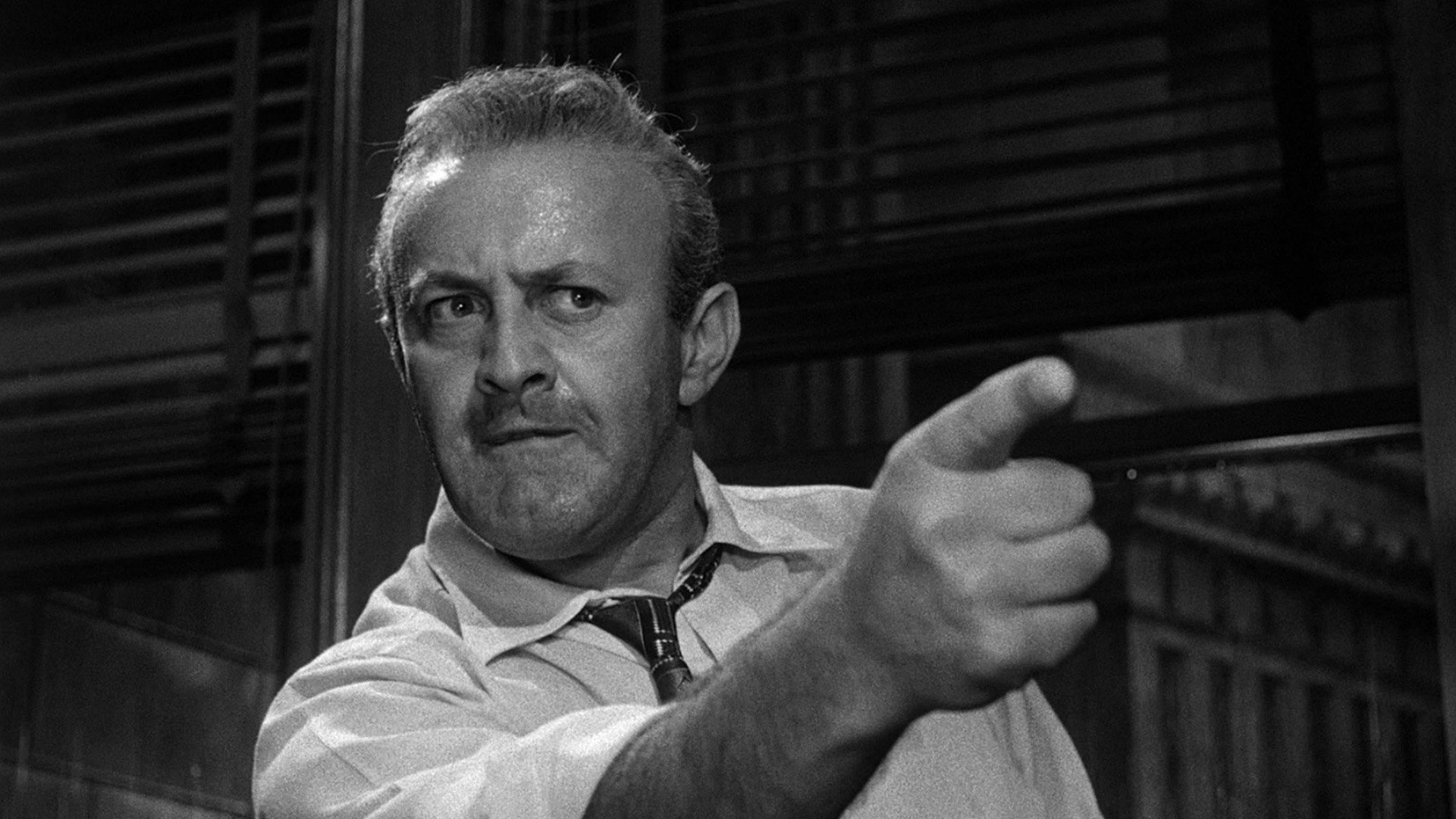 Everyone gets their turn to show the right stuff (several in characters who don’t possess it); there’s no weak link. True, the rants from Cobb and Begley are show-pieces, exaggerated for effect, but they power-lift as drama (I often have a tough time with Cobb in parts where he bellows theatrically, but his intensity works here). Marshall’s chilly precision is unshakable until the great moment when his essential honesty trumps his certainty. You can never go wrong with the naturalism of Balsam, Warden and Binns. Lumet’s staging in the confines of a small set was beautifully managed, complicated coverage done with such fluidity, the accelerating tension levels felt thru Boris Kaufman’s sensory-acute camera-placement.
Reviews extolled and Oscar nominations came for Best Picture, Director and Screenplay. That praise didn’t guarantee a big money hit, but even ranking a low 80th place for the year, the $2,900,000 gross more than erased a lean layout of just $337,000. 96 minutes, also featuring Rudy Bond (the disinterested judge) and John Savoca as the defendant.
* Jury pooling—Innocence or Guilt was put on trial in 1957 by the clever turnabouts of Witness For The Prosecution, the fully stacked decks in Paths Of Glory and Saint Joan and the fate-of-humanity fantasy duel in The Story Of Mankind. While the slam dunk 12 Angry Men is often presented as part of a Fonda legality & morality trifecta (Young Mr Lincoln, The Ox-Bow Incident), few among the pool of reviewer jury rejects take note of a hint of similarity to be whiffed from Perfect Strangers, a forgotten 1950 item with Ginger Rogers, Dennis Morgan and Thelma Ritter, based on Ladies And Gentlemen, a 1939 play written by Ben Hecht and Charles MacArthur. Objection!
Sustained? Reginald Rose—12 Angry Men was his crowning achievement. Later work ran the gamut from provocative (Whose Life Is It Anyway?) to putrid (The Wild Geese). Go figure.
Overruled!—the youth (shown for 15 seconds in a sympathy-prodding closeup) is presumably Puerto Rican, which fits with the era’s influx immigrants from that territory, mostly to New York City—spotlighted by West Side Story, whose stage run began that year. The jurors may be different types but they’re all male and all are white. Part of the surefire viability of the piece is its adaptability to changing times and demographics, which allow for opening up the racial/gender/social makeup of the jury, and with bigotry remaining a lousy feature among a given populace, a different minority can change to suit a contemporary undercurrent. Seven decades after Rose, Fonda and Lumet made their case, some of the darkest minds in the country are working on it, but “Beyond a reasonable doubt” is still in place. So far.
“I’ve known a couple who were OK, but that’s the exception, y’know what I mean? Most of ’em, it’s like they have no feelings! They can do anything!”