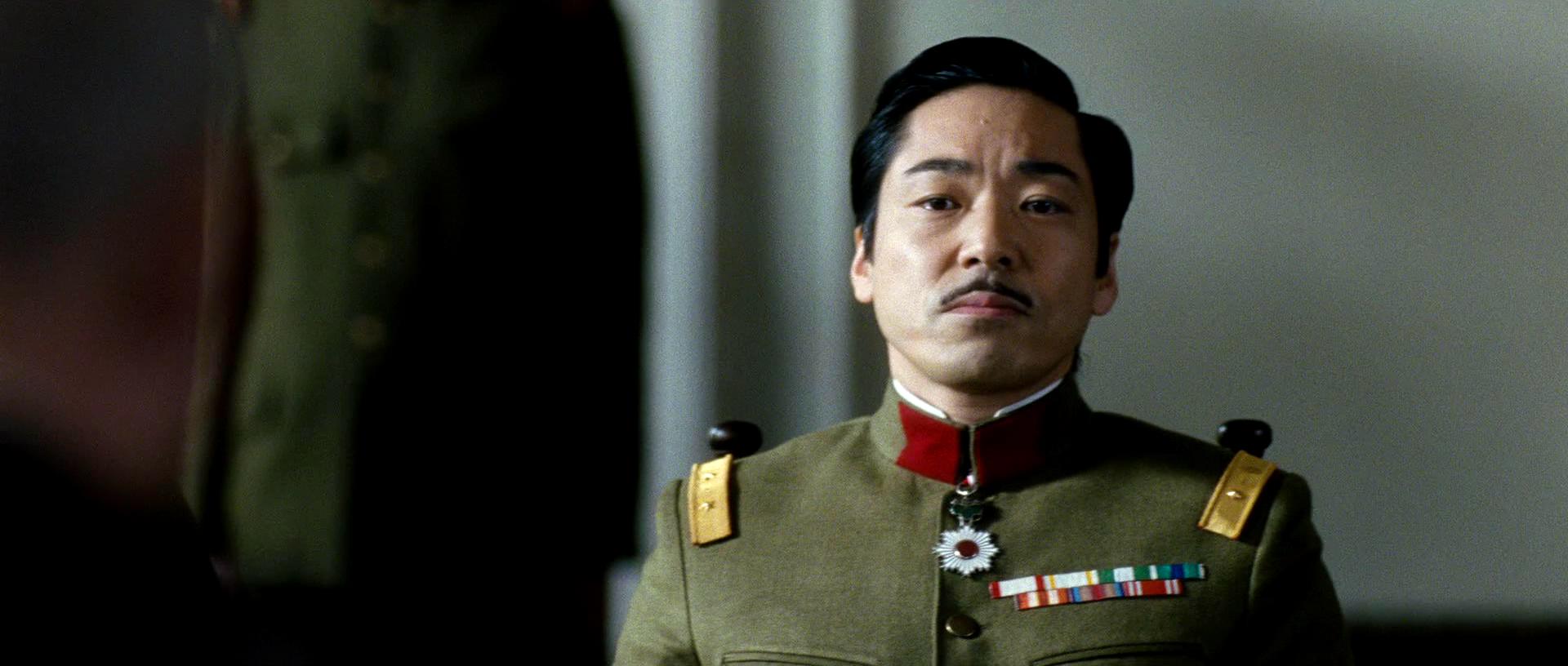
JOHN RABE was a German businessman who spent 28 years in China, becoming head of the Siemens corporation operation there, located in the Republic’s capital Nanking. In July, 1937, Japan invaded. After razing Shanghai, they took Nanking in December. For two months as their victorious soldiers went on a horrendous rampage, the 55-year-old Rabe oversaw a precarious Safety Zone. As a member of the Nazi party, and with Germany and Japan as allies, Rabe, aided by other international personnel, used his status to protect over 200,000 Chinese civilians from the slaughter, rape and pillage in the rest of the city. The 800-page diary he kept during the siege was uncovered by author Iris Chang (1968-2004) when researching her devastating 1997 book “The Rape Of Nanking.” The book’s success not only reacquainted the world with one of the worst events of the 20th Century (or ever), but spurred a number of films. Written & directed by Florian Gallenberger, 2009 presented John Rabe, a $20,000,000, 134-minute look at “China’s Oscar Schindler”.
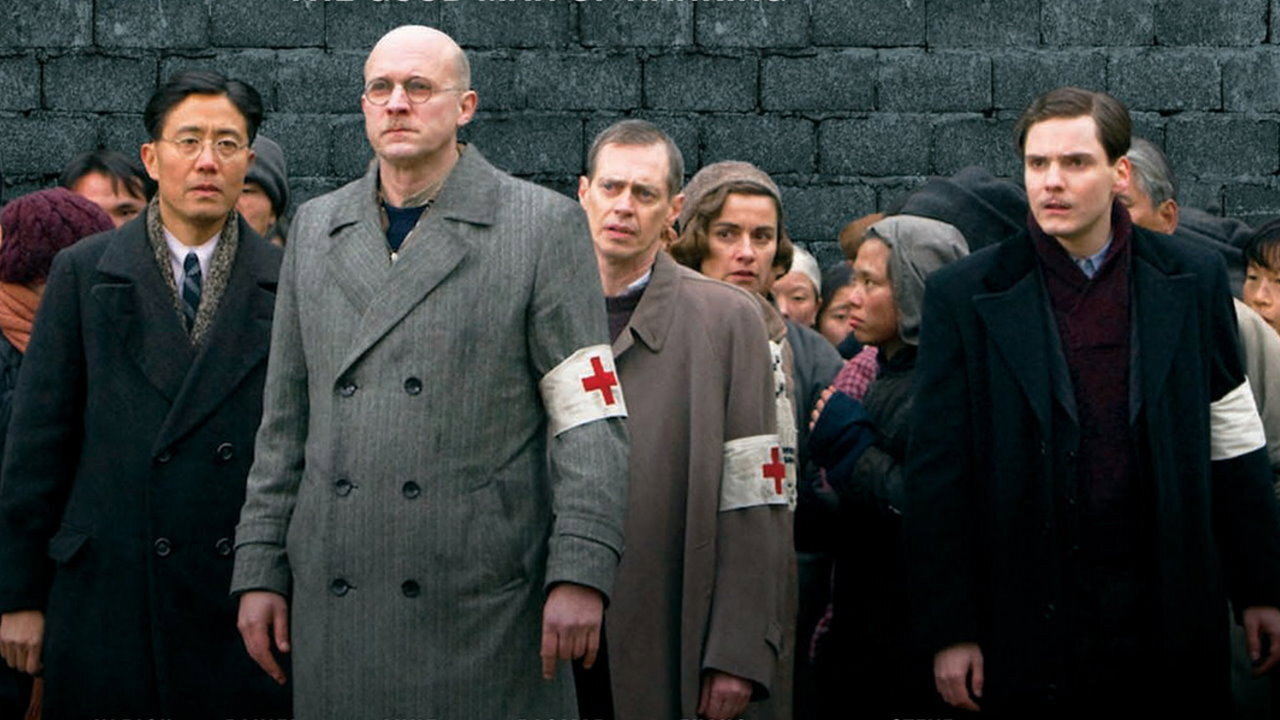
What Rabe (played with dogged restraint by Ulrich Tukur) and his brave associates in the Safety Zone did was remarkable, and certainly their story and its awful setting deserve whatever coverage they can finally get. Yet the handsomely produced movie mostly comes off as safe and dutiful, interesting rather than compelling, and apart from some passages of tension and violence (a barest hint of the event’s enormity and ghastliness) passion is absent, impact muted. Dramatic license too often intrudes—for example a quite incorrect portrayal of the sinking of the US gunboat Panay, shown as a large ocean liner and with Rabe’s wife aboard (she was safe elsewhere), done to provide extra melodrama for a situation that didn’t require any padding. Heartstrings reverberate best when plucked gently, allowing emotions to well up without their being over-goaded by invented actions or cued upswells in the music score. The cinematography, art direction, and visual effects are all laudable, and shooting in China ensured that casting calls had plenty of extras available; one source says a total of 30,000 were employed.

Reviews were mixed, and the only revenue figure we can locate for John Rabe is $1,486,000 worldwide (we would assume it may have done well in China and Germany). The release came just a few weeks before the outstanding City Of Life And Death. That one, along with the 2025 epic Dead To Rights, are the strongest, most detailed and affecting of the half-dozen feature dramas made about Nanking’s agony. 2011’s The Flowers Of War is very good, 2009’s The Children Of Huang Shi a regrettable disappointment. Though flawed, John Rabe is considerably better than the last one, and is certainly worth seeing.
With Steve Buscemi (as cynical and overwhelmed Dr. Robert O. Wilson, a casting quirk that feels out of place), Anne Consigny, Dagmar Manzel (Rabe’s wife Dora), Daniel Brühl (as Dr. Georg Rosen), Jingchu Zhang, Teruyuki Kagawa (as vile Prince Asaka), Matthias Herrmann, Arata, Togo Igawa, Ming Li and Gottfried John. *
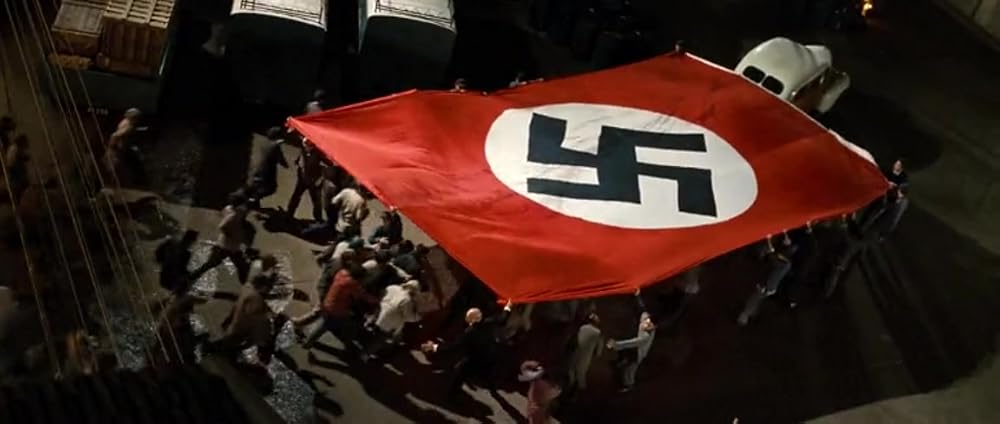
* Anne Consigny plays ‘Valérie Dupres’, a disguised version of the historical American missionary Minnie Vautrin, who committed suicide in 1941, her trauma over Nanking too much to bear. Her story can be examined in Hua-ling Hu’s book American Goddess at the Rape of Nanking: The Courage of Minnie Vautrin. Prince Yasuhijo Asaka, issuer of the “kill all captives” order, was a man who deserved a noose—at the very least—but instead escaped his portion of responsibility and lived to be 93. Hirohito’s uncle, he became quite a golfer. So much for justice.