Don’t look at me
THE CHILDREN OF HUANG SHI was mostly dismissed by critics and abandoned at the box office in 2009, the $40,000,000 Chinese-Australian-German production making only $7,785,000 worldwide, a mere 13.3% of that in the US. This one is a major case of squandered potential. How do you make a movie about China in which Chow-Yun Fat and Michelle Yeoh seem out of place?
The true-life material for a gripping, informative and inspiring historical adventure drama was right there. In 1937, 22-year-old Oxford grad/hopeful journalist/pacifist George Hogg took the Queen Mary across the Atlantic, hitchhiked around the United States, stopped in Tokyo and ended up in China just as Japan was unleashing war on the country (or restarting it—they’d already attacked and seized part of China in 1931). What George intended as a brief visit to Shanghai turned into an eight-year commitment as the conflict morphed into WW2. He took charge of an orphanage of 60 boys and eventually led them on a 700 mile journey across mountains (in the winter) and into the Gobi Desert to find a safe and secure place far away from the merciless fighting.
Speaking for citizen reviewer
Though Hogg’s saga was one footnote among numberless, his valiant work was enough to see a statue erected to him in Shandon (on the border with Mongolia). That piqued journalist James MacManus in 1985, who came up a screenplay, then two decades y later a book, “Ocean Devil: The Life And Legend Of George Hogg”, published one month before the film was released in 2008. Though his name shares screen credit with Jane Hawksley, MacManus related that after numerous hands took his original and eviscerated it, MacManus offered “Needless to say, nothing of my script – not even the original title – has survived four different writers and the many film companies that have developed the film over the years.” He added “His entry to China was February 1938. He did not go to Nanjing. The movie has been dramatized. It’s not the fact.” *
1940’s channeled thru 2000’s via the 60’s
How much of the eventual seen/heard screenplay that Jane Hawksley (or any of the others) type up is for some other detective to unearth, but the collective results are pitiful; the most interesting character is a pet goat. Roger Spottiswoode had a mixed bag as a director (The Best Of Times, Tomorrow Never Dies, Air America); early on he did his one great job with a timely adventure about reporters embroiled in a danger zone, the dictator & revolt riven Nicaragua of Under Fire. So his mostly flat handling here is a decided let-down. With a weak script’s anachronistic dialog and lazy exposition not enough trouble, you’d hope that in a story involving so much death, the people wouldn’t feel so lifeless.
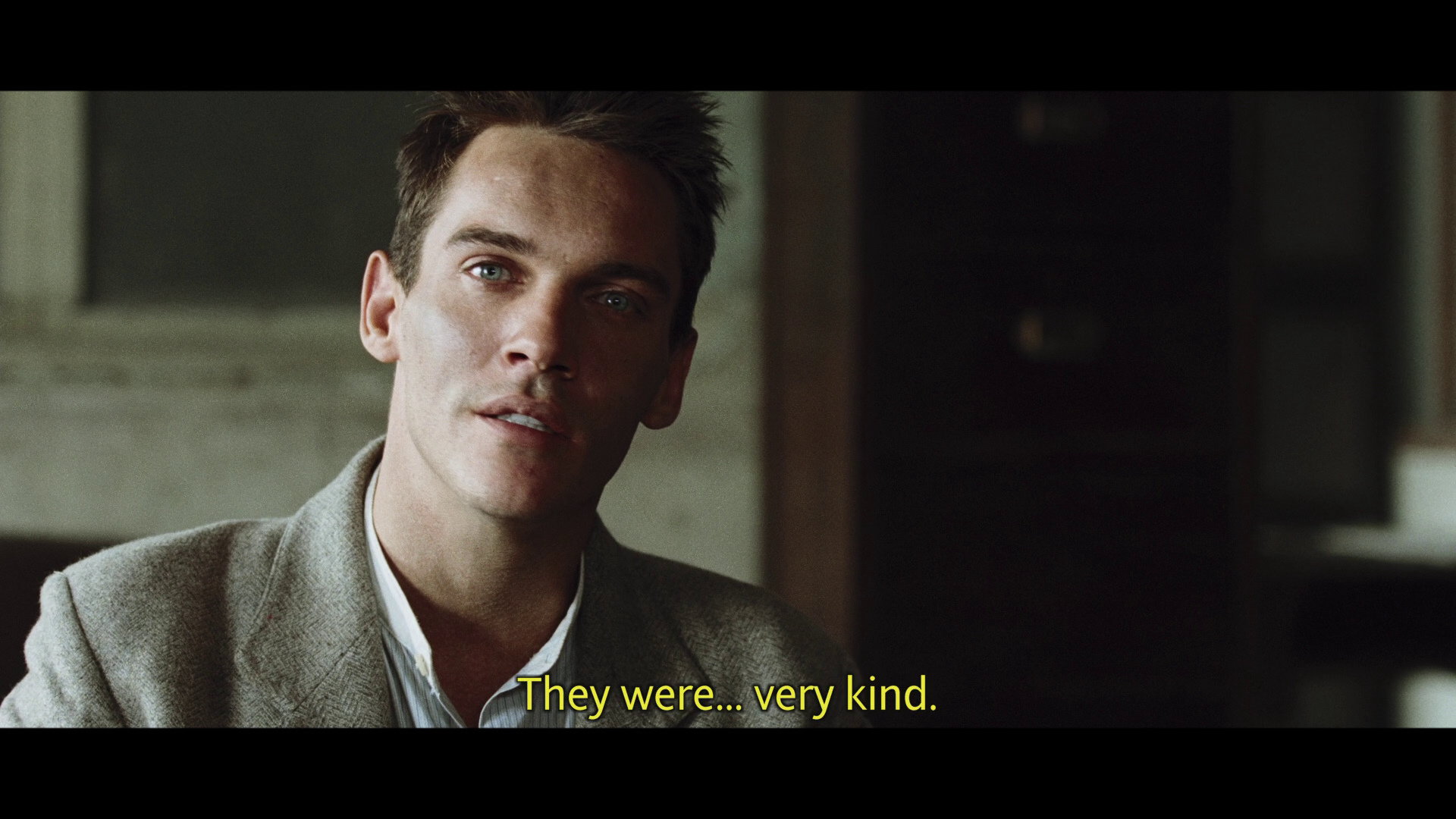
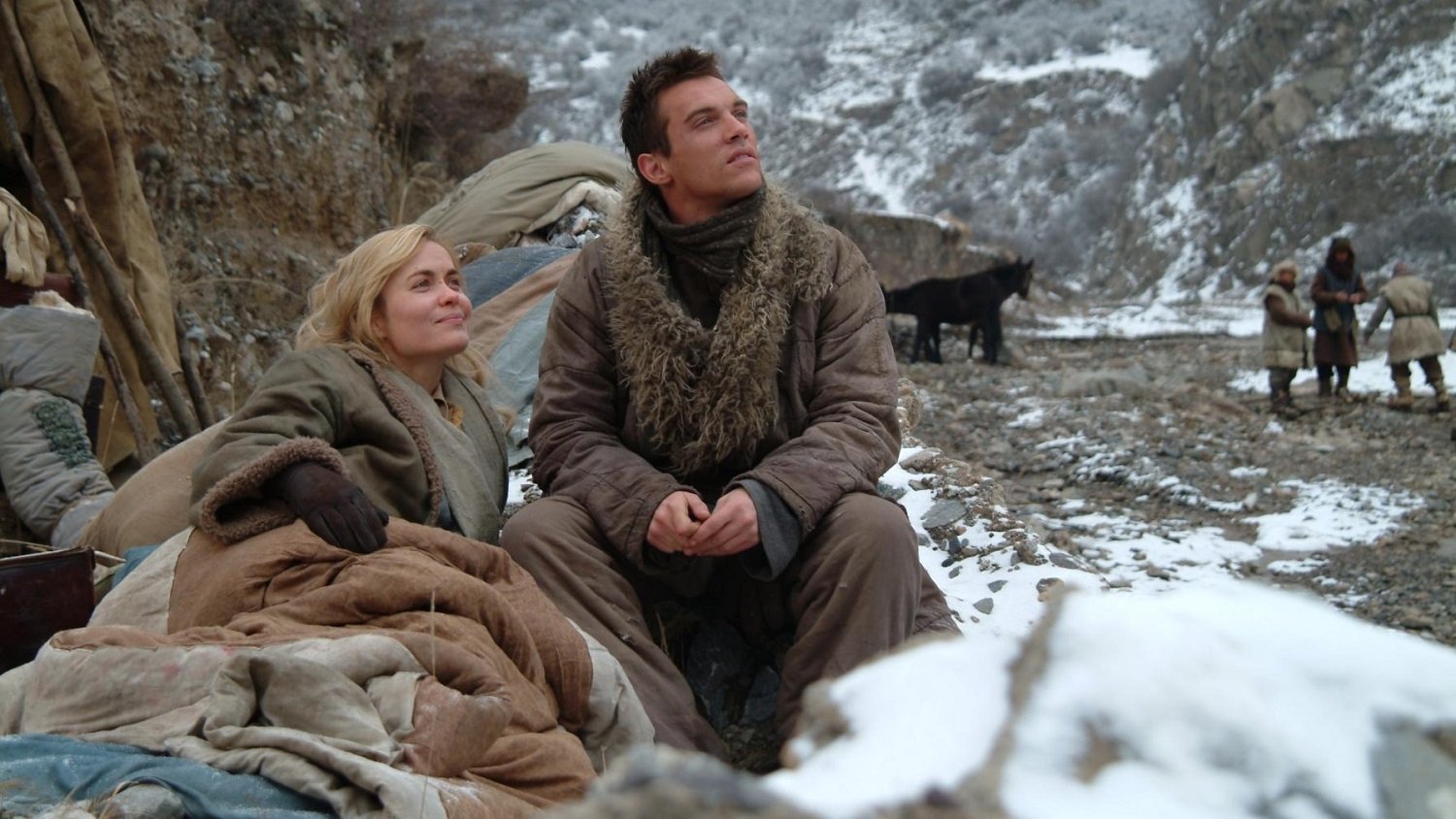
Trying to summon interest in Rhys Meyers
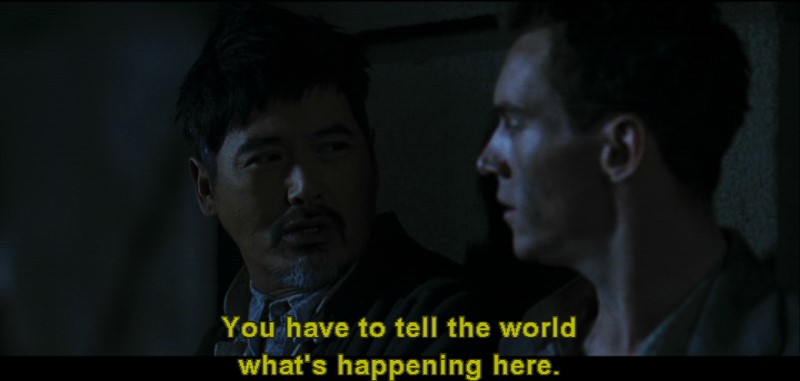
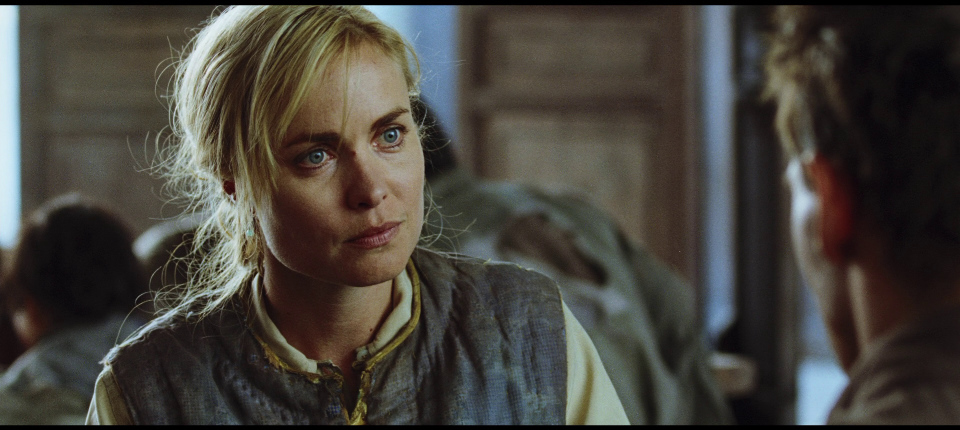
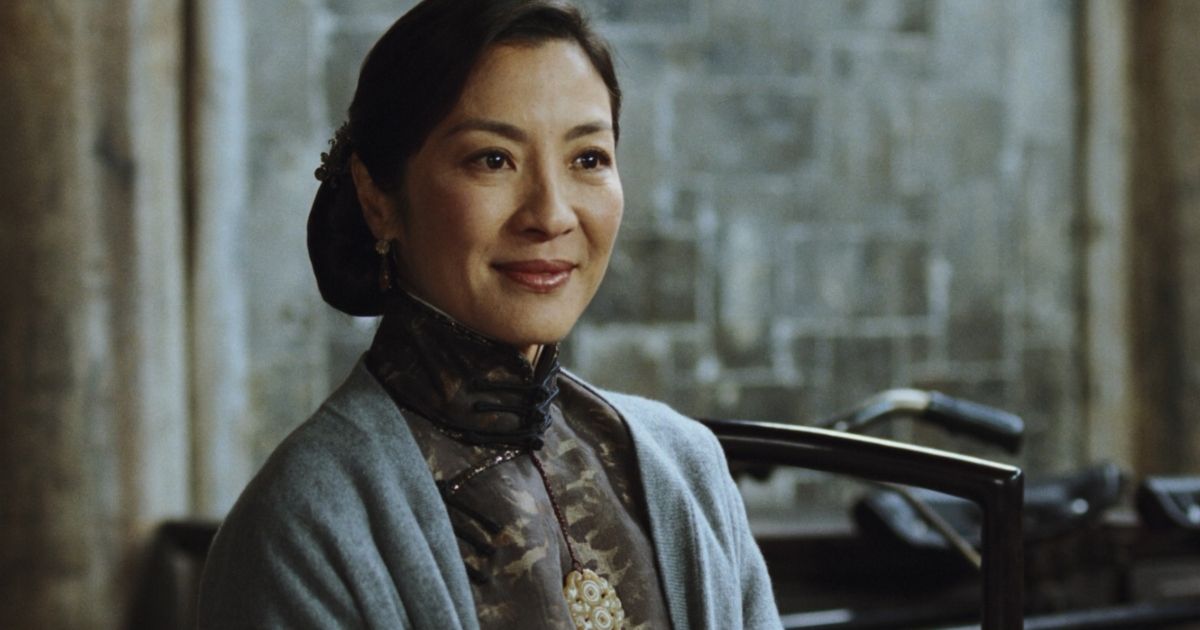
Hogg is played by Jonathan Rhys Meyers. His chief assistant, New Zealand nurse Kathleen Hall, becomes American nurse ‘Lee Pearson’, played by Radha Mitchell, Australian (this doubly pissing off the Kiwis). Big stars Yun-Fat (a Mao guerrilla) and Yeoh (wealthy opium seller) weave in and out. He’s lackadaisical, his English pronunciation a liability, she is serenely lovely as always but distant here. Mitchell may as well have stepped out of a magazine; her characterization feels as close to WW2 as her astronaut from Pitch Black. The lack of chemistry with charmless Rhys Meyers is palpable; he’s so aggressively bland it’s doubtful any other co-star could get much going. Their line readings are bad, frequently atrocious.
Lush production values are always present and the cinematography from Zhao Xiaoding (House Of Flying Daggers, The Great Wall) is superb, showcasing location work in Gansu, Zhejiang and Shanghai. David Hirschfelder provides a commendable music score.A great story and impressive visuals rendered trite, obvious and dramatically inert by faulty writing, slack direction, miscasting and rehearsal quality acting.
With Guang Li (locked in a perpetual sneer) and David Wenham. 125 minutes.
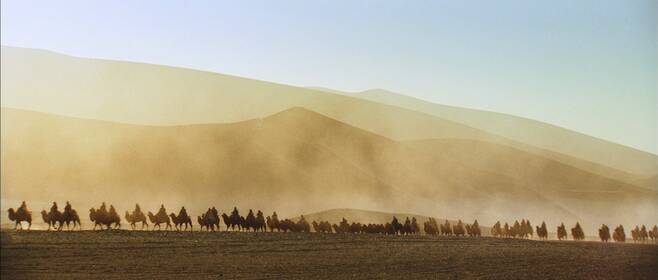
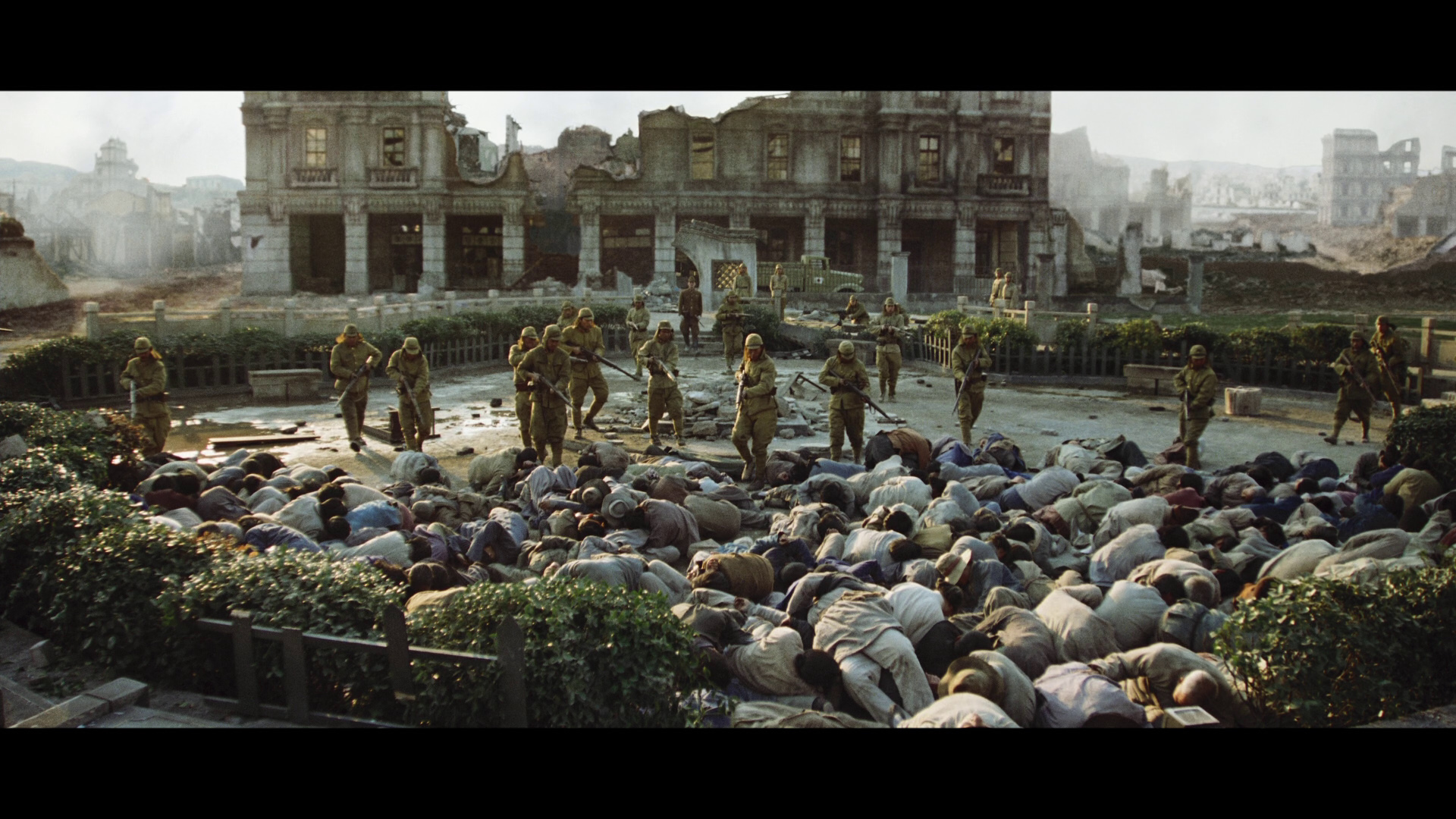
Numerous excellent shots like this are thrown away, impact diluted.
* Histo-facto—even in China, where you would assume interest would be significant, response was moot, their piece of the total take stopped at 20%. Our guess is that did not indicate audience indifference but instead demonstrated education and sophistication. James MacManus has written numerous novels and is the Managing Director of the Times Literary Supplement of London. As he mentioned, Hogg never went to Nanking, so the fictional inclusion of his witnessing some of that slaughterhouse comes off as an exploitative calculation, further undercutting the film (and a marvelous true story) compared to the good movies centered on the unforgivable Nanking horror, notably The Flowers Of War, John Rabe and the stunning City Of Life And Death and Dead To Rights. The trek with the kids brings to mind Ingrid Bergman’s missionary Gladys Aylward, leading children to safety in the 1958 hit The Inn Of The Sixth Happiness. That chestnut had its issues, but you could count on the acting prowess of Bergman, Curt Jurgens and Robert Donat. Plus “The Children’s Marching Song”. Besides some striking imagery, at least this run at Mr. Hogg’s story serves to introduce a great character, someone who did his very best for others in dire need of help.