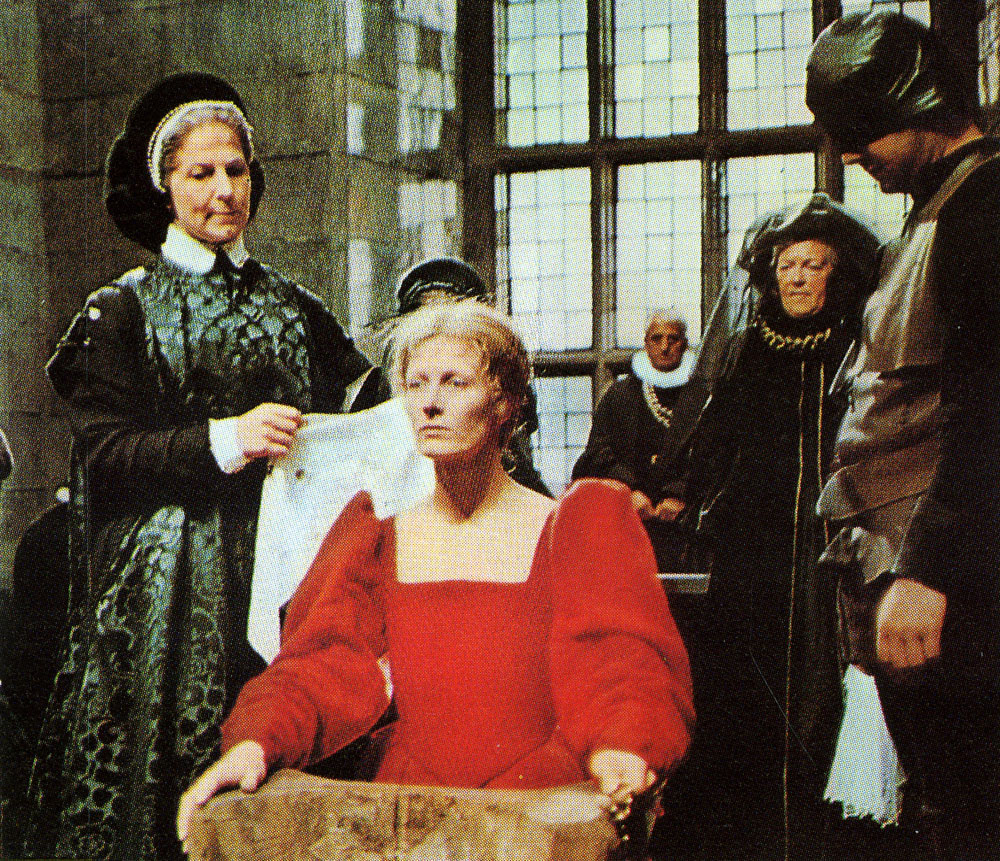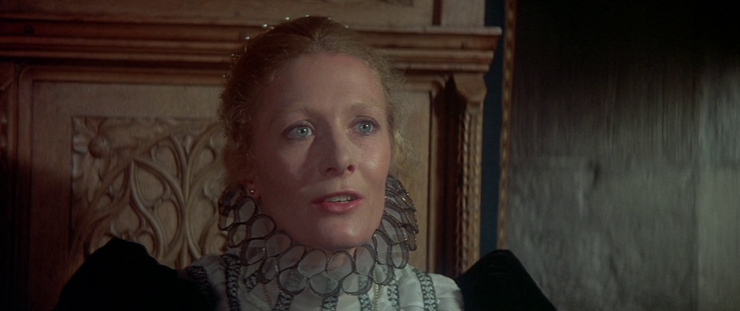
MARY, QUEEN OF SCOTS, subject of one of history’s more famous political power struggles and poignant personality clashes, has had her story related in at least six dozen books and a number of feature films and TV series. Of the three best known big screen ventures, this handsome 1971 telling remains the standout, bettering the underrated Mary of Scotland done by John Ford in 1936 and the woke-soaked Mary, Queen Of Scots from 2018.
“Any Queen who could be gulled by such a wicked, pretty fellow and take him to her bed and put a crown upon his head does not inspire fear. She inspires pity. You have my pity, madam, as you had it on the day I sent Darnley north, knowing you to be without wisdom, discretion or any of the attributes of a Queen. I see you have learned nothing since. It is not surprising that you are spoken of in the courts of Europe as an infamous royal whore!”
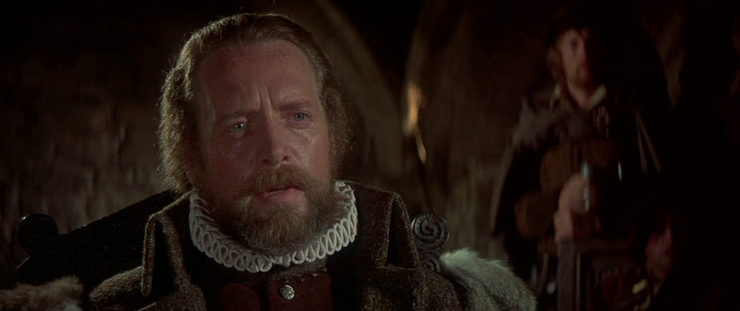
Mary Stuart (1542-1587), the granddaughter of England’s Henry VII, was Queen of Scotland for 25 years (much in absentia across the Channel in France) until multi-party skulduggery and her own ill-advised choices forced her to abdicate in 1567. The abused but determined 25-year old still posed a threat to her cousin Elizabeth I, Queen of England. Nine years older, less attractive, childless (Mary had a son, in line for the top throne in England as well as Scotland), smarter and more cunning, globe shaker Elizabeth (1533-1603) managed to get Mary confined for eighteen years before finally bringing their relationship to a dead ending. Severed, as it were.
“Madam, if your head had matched your heart, I would have been the one awaiting death.”
Hal B. Wallis produced, completing his Brit History Triple begun in 1964 with Becket, followed by 1969’s Anne Of The Thousand Days. Charles Jarrott directed: he’d successfully steered the marital tragedy of ‘Anne‘. The screenwriter for that one, John Hale, tackled the sparring and spite in Mary‘s $4,500,000 interpretation of a castletop catfight, one whose claw marks produced screeches that have resounded over five centuries. Most of the costume dramas of times ancient or medieval made room in their budgets for scenes of action spectacle. The leave-the-kids-at-home clique that were courtyard-set and built over idea clashes (Becket, A Man For All Seasons) in leaving out big battles and parades saved enough money to effectively suggest scale and a lost time by judicious use of marginal numbers of extras (maybe two or three hundred), lush camerawork (Christopher Challis here), convincing sets and exactingly detailed costume design. A well-considered music score helped, in this case a fine example was provided by John Barry. *
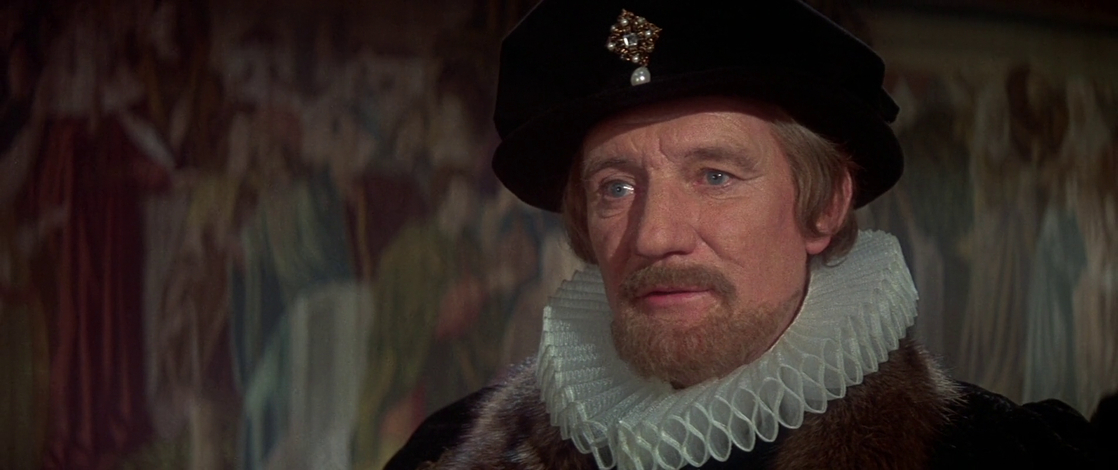
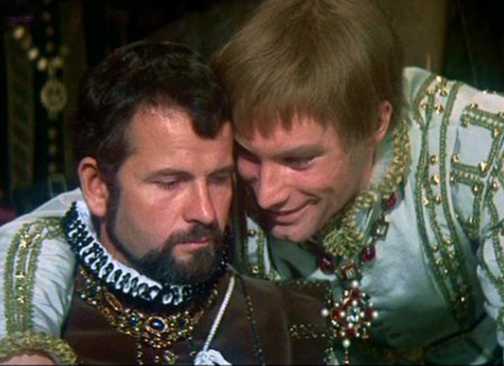
Those worthy elements are woven around an excellent cast. Vanessa Redgrave is Mary, countering Glenda Jackson’s Elizabeth. Mary’s few stalwarts of decency and honor—the Earl of Bothwell and David Riccio—are given flair from Nigel Davenport and Ian Holm. Mary’s woes are piled on by Patrick McGoohan as her ice-blooded brother James, and Timothy Dalton, energetically venomous husband Darnley, a ferrety cur. Elizabeth’s chief whisperer Sir William Cecil is paged by Trevor Howard.
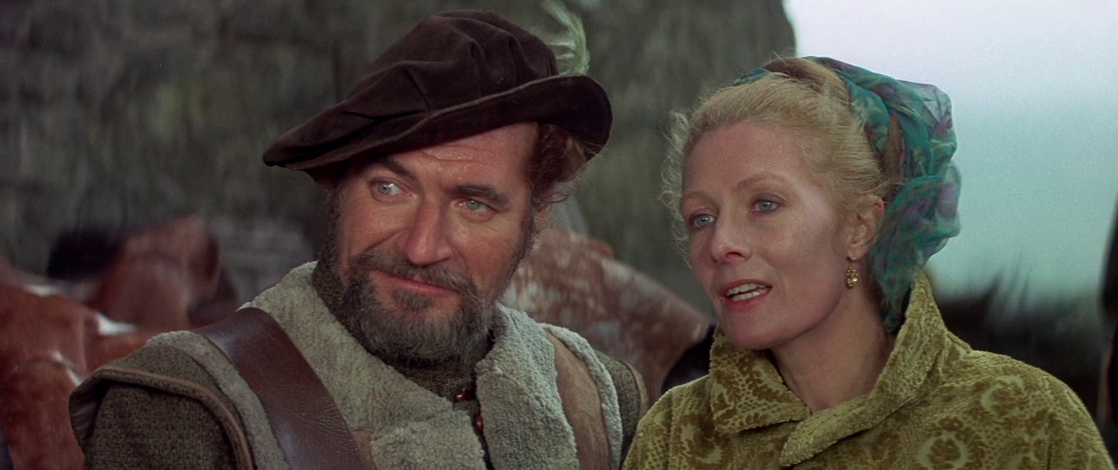
Fortunately, they have a good script to work with, after a long gestation period begun in 1961 went thru several writing, directing and cast changes before Wallis took over as producer and called the shots. Public interest had been primed by Antonia Fraser’s best-selling bio “Mary, Queen Of Scots”, 862 pages published to acclaim two years earlier. Hale’s screenplay takes expected liberties, and like the other film versions it has the quarreling queens meet up, twice; good drama even if they actually never did (Khartoum notably had the same its antagonists). Jackson had already played her character in the very successful BBC mini-series Elizabeth R. *
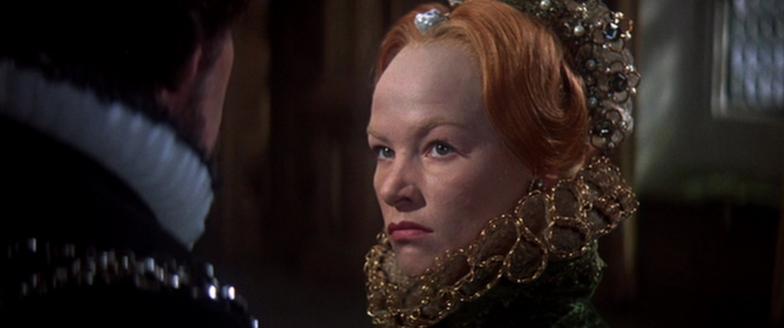
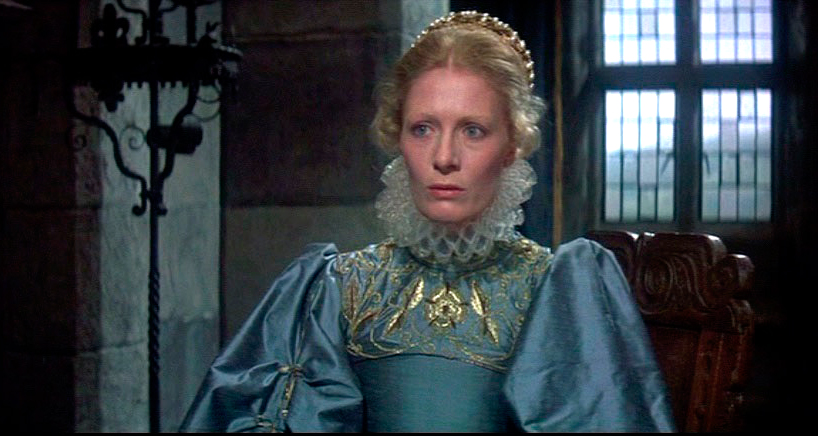
With most of the focus on the maligned Mary, Jackson’s fierce, barbed take on Elizabeth gets secondary coverage and is less sympathetic than those done by Bette Davis and Cate Blanchett (the all-time best). Redgrave is marvelous, her concentration so acute that the passion, hope and hurt feels immediate and real so that we’re not conscious of watching a glowing actress but an alive, flesh & blood historical person. She not only secured an Oscar nomination as Best Actress but generously used her salary to build a nursery school in London that she donated to the nation. The year Vanessa the First also did stellar work as a same-century nut job nun in The Devils and went further back into antiquity for Hector’s widow Andromoche in The Trojan Women, paired with previous royals Katharine Hepburn and Genevieve Bujold.
Along with Redgrave’s, Academy Award nominations went to Music Score, Art Direction, Costume Design and Sound. Though big screens were awash in mod-trendy nastiness, there was some room shouldered aside for stately portraits of bygone shenanigans; Mary‘s two indomitable women won 36th place and a US gross of $10,600,000, contesting with #17, the epic Romanov tragedy Nicholas And Alexandra. **
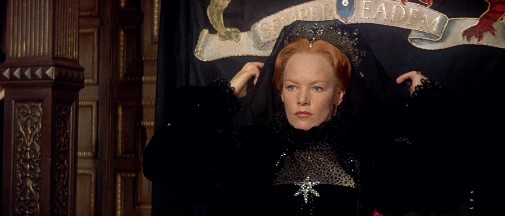
128 minutes, with Daniel Massey (as Robert Dudley, plaything squeeze of Elizabeth), Andrew Keir, Robert James (as piety-poisoned John Knox), Katharine Kath (as Catherine de Medici—the tangled connections of medieval backstabbers setting the template for the multi-national corporations and idiot billionaires ruling the peasantry of today), Brian Coburn and Vernon Dobtcheff. Shot in Scotland, England and France.
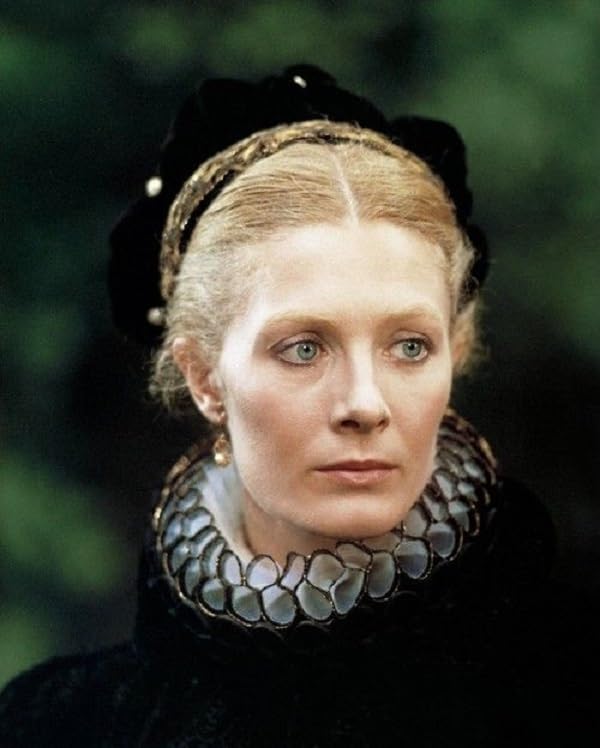
“Elizabeth ruled England for another sixteen years. She died as she had lived, unmarried and childless. The Thrones of England and Scotland passed to the only possible claimant…a man, King James the First–only son of Mary Stuart…Queen of Scots.”
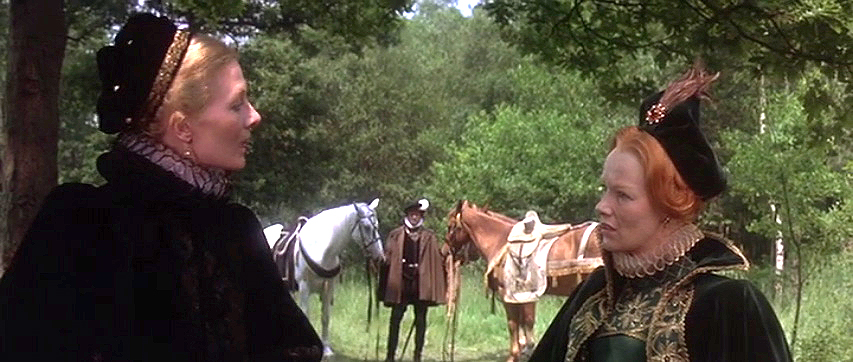
* Hal Wallis: “We (he and director Jarrott) worked well together, our only disagreement coming about because he wanted he wanted to emphasize the religious aspects of the story—Mary’s Cathlocism against Elizabeth’s Protestantism. I felt this was too heavy for general audiences, and he later agreed. John Hale’s script was excellent but complex and hard to follow. There was endless crosscutting between the lives of Mary and Elizabeth. I knew the long dissertations on Scottish law would mean little to American audiences. The problems seemed insurmountable, but Charles Jarrott was anxious to overcome them. He flew to Hollywood and we had several good sessions cutting and rearranging sequences. After two weeks we had a workable script.”
** John Barry’s name was on four more credit scrolls in 1971—Diamonds Are Forever, Walkabout, They Might Be Giants and The Last Valley, also set in the 1600’s, re-imagined in scales and notes by the irreplaceable Mr. Barry. His other time travels to the Middle Ages can be heard in The Lion In Winter and Robin And Marian. Speaking of medieval, the makers of Mary, Queen Of Scots showed not just good taste but mercy with their presentation of her exit: in actuality it was a good deal grislier. Isn’t it nice that we live in a time when heads of state don’t use lies, treachery and violence to get what they want?