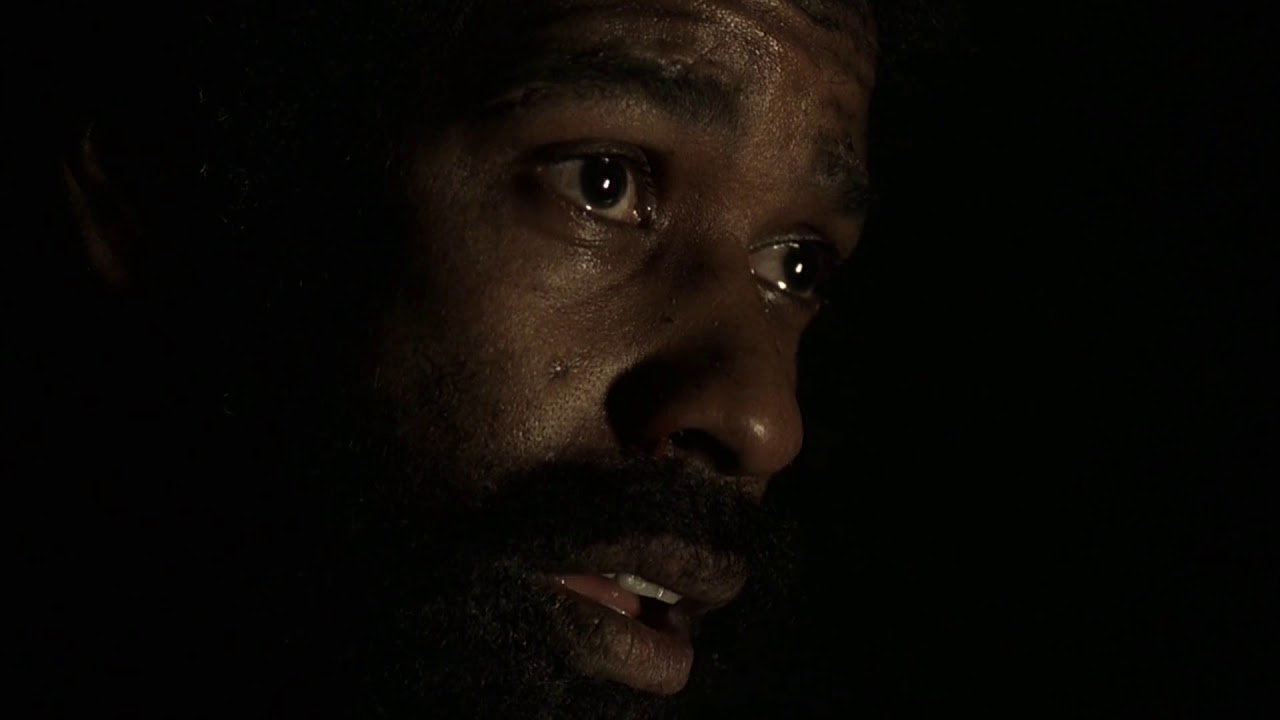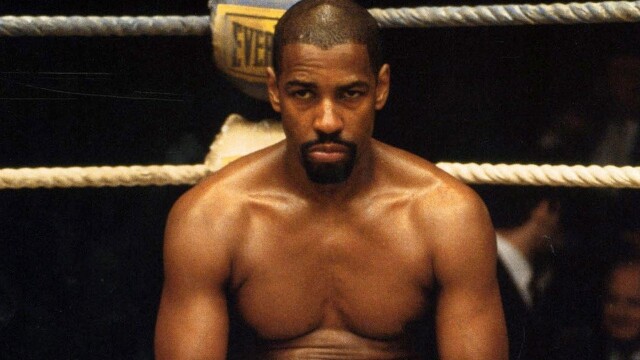
THE HURRICANE howls thru its gripping tale of gross injustice and raw determination, powered by the force-of-nature performance torn from Denzel Washington as the story’s tempest tested protagonist, a survivor of combined elements hurled against him. As it sometimes does when nearly all appears lost, fate blows in. The overarching epic of the drama is also reflective of a storm’s course-driven indifference as to who and what is in its path. Like unflattering facts, for example. Superbly directed by Norman Jewison, the 1999 production is a hell of a show, but it’s also a Hollywood movie bio, and while flick history offers many masterworks of inspiring entertainment, exciting renewals of myths and plenty of food for thought, the conveniently overlooked dossier of accuracy provides ample evidence for the prosecution. *
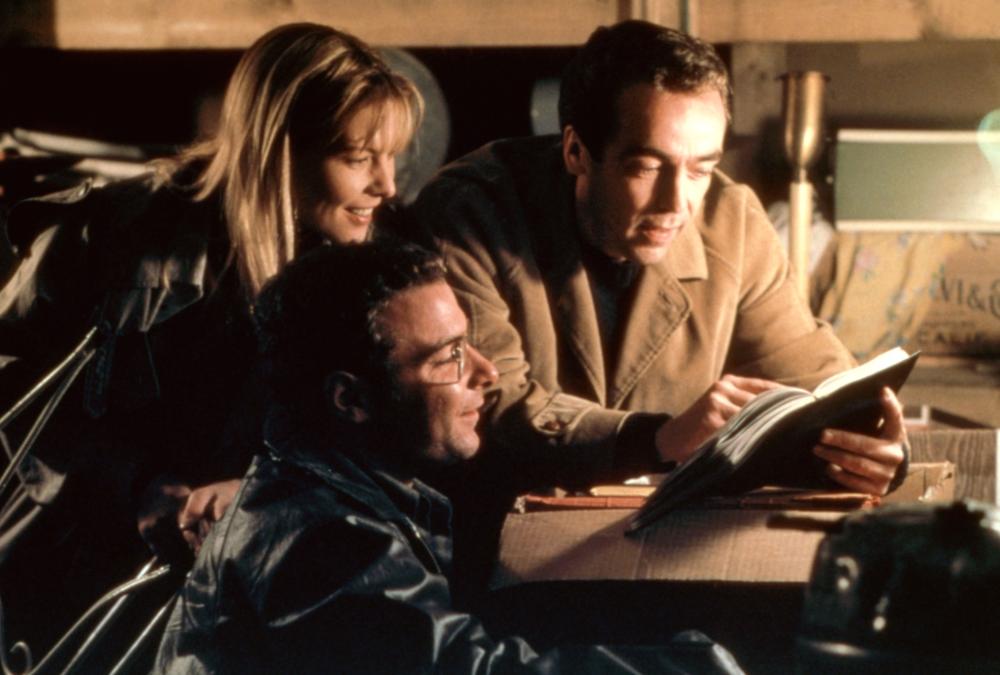
In 1966, three people are shot and killed, late at night, in a bar in Paterson, New Jersey. The victims are white. Picked up as suspects are two ‘colored’ men, one of whom happens to be notable prizefighter Rubin Carter, nicknamed “Hurricane” for his cyclonic fury in the ring. No stranger to rough stuff, Carter had brushes with the law since childhood, but his companion that night, 20-year-old John Artis, had no criminal record. Despite conflicted evidence, race factors in and conviction is rammed thru, with both men sentenced to life. During his stretch in prison Carter self-educates himself and even writes an autobio. Celebrities campaign for his release, Bob Dylan writes a stirring ballad that becomes an iconic hit, but the sentences are upheld. In 1980, 17-year-old Lesra Martin (Vicellous Reon Shannon, 27, looking ten years younger) discovers a used copy of Carter’s book. Martin, an African-American kid being tutored by a trio of (white) Canadian activists, meets Carter and their relationship turns into a cause, with Martin and his mentors fighting to re-open Carter’s case. The Toronto trio are Lisa Peters (Deborah Kara Unger), Sam Chaiton (Liev Schrieber) and Terry Swinton (John Hannah): Swinton and Chaidon later wrote a book on the subject.
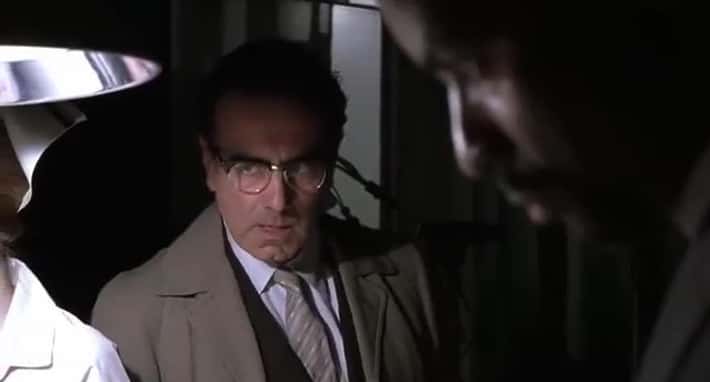
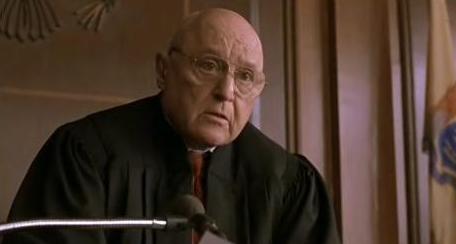
Well-paced at an unhurried 146 minutes, the third of socially minded Jewison’s unofficial ‘racism trilogy’ (In The Heat Of The Night, A Soldier’s Story) makes a compelling package as a handsomely produced period piece covering several decades and tackling injustice, prejudice, sport (boxing), the effects of incarceration, the value of inspiration, transcendence of circumstances, the overcoming of overwhelming odds. Christopher Young undercoats the somber tone with a fine, low-key music score and there are effective insertions of period tunes (among them Dylan’s “Hurricane”, Etta James “In The Basement”, “I Don’t Know” from Ruth Brown and Gil Scott-Heron’s “The Revolution Will Not Be Televised”). In smaller but telling roles there is vivid nastiness from Dan Hedaya as a vengeful cop named ‘Della Pesca’ (more on that below), a shot of decency from Clancy Brown as a sympathetic guard—a welcome 180° from his brute jailer in another saga of wrongful imprisonment The Shawshank Redemption—and some subtle scene-stealing by wily old pro Rod Steiger, 73, as Judge H. Lee Sorokin. There are effective turns from Debbi Morgan, David Paymer, Harris Yulin, Vincent Pastore, Badja Tjola, Al Waxman, Beatrice Winde and Mitchell Taylor Jr. (as the eleven-year-old Rubin.)
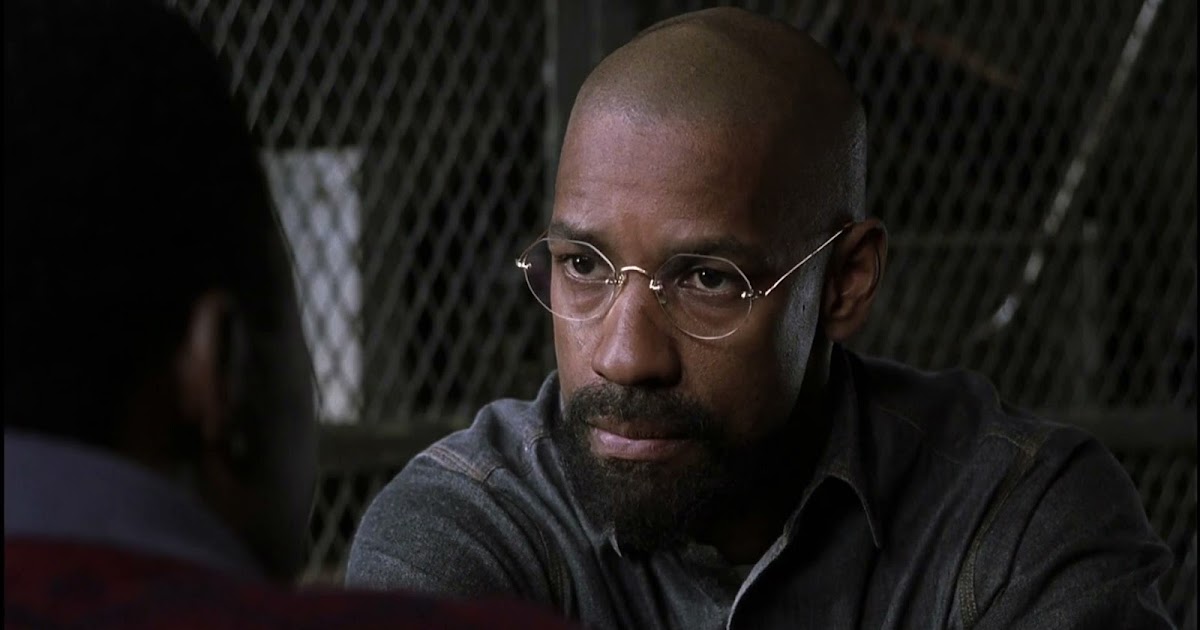
Dominating all is Washington’s coiled ferocity as the caged but not subdued Carter, a muscle-deep immersion that earned him an Oscar nomination as Best Actor. Though reviews were strong and Washington’s nomination was a cinch, the film didn’t recoup its costs ($50,669,500) at the box office. The US take was just $50,700,000 (48th place) and foreign receipts were only $23,257,000. As tastes would have it, Denzel’s other movie in ’99, The Bone Collector, was more successful with the public. Though Washington is always worth watching (as is co-star Angelina Jolie) that one’s an absurd serial killer foray that doesn’t come within a rustled breeze of The Hurricane.
Part of Washington’s morph magic was (a) grueling hard work and fidelity to craft; shedding over fifty pounds and spending a year getting into convincing ring trim, and (b) time-honored What They Won’t Know rusing: Carter, 28 at the time of his homicide fall, was a stocky 5’8″ and Washington was 44 and 6’1″. As such Denzel joined the ahistorical likes of Peter O’Toole’s 6’2″ vs. T.E. Lawrence’s 5’5″ and Khartoum‘s Charles Gordon at 5’9″ done by 6’3″ Charlton Heston (in The Agony And The Ecstasy Chuck painted Michelangelo, who was 5’2″). Hardly a deal breaker, as dramatic license is perfectly acceptable. Within reason.
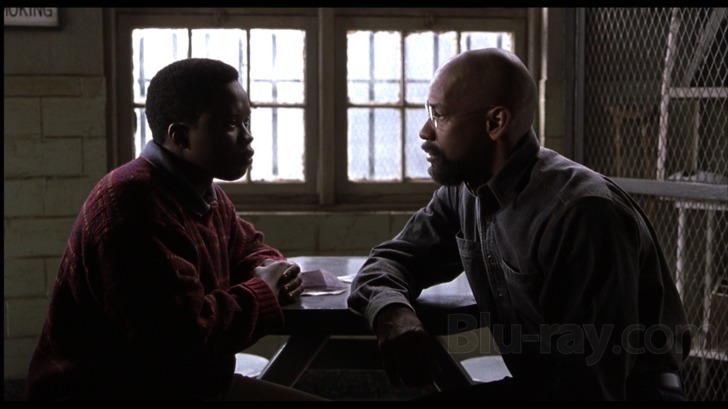
Alas, height-sleight of hand wasn’t the weightiest re-calculation. The script for the Jewison/Washington version of Carter’s saga was drawn up by Armyam Bernstein (Thank God It’s Friday, Cross My Heart) and Dan Gordon (Tank, The Celestine Prophecy)—-those credits not inspiring much faith in anything beyond deal-making—was spun chiefly from the 360 pages of Carter’s 1974 autobio The Sixteenth Round: From Number 1 Contender To 45472, written while he was in the seventh year of his sentence (one of them), and 1991’s 344-page non-fiction account Lazarus and the Hurricane: The Freeing of Rubin “The Hurricane” Carter by the aforementioned Swinton and Chaidon.
Most (but hardly all) info points to Carter and Artis being railroaded, but the script and direction go overboard stacking the deck, in commission (as in deliberate falsification) and omission (a lot). Left out are Carter’s sidelines as a mugger, a five-year stretch for armed robbery, four separate courts martials in the Army before being dishonorably discharged, serial cheating on his wife, shooting at people “for fun” (his words), and losing celebrity support after beating the hell out of a woman who was his defense fund’s organizer. The script blithely smears boxing opponent Joey Giardello (who sued and won), and the character of racist detective Della Rosa is a total fiction, callously impugning real-life Detective Vincent DeSimone, who later wrote his own 354 page riposte “Media Meddlers: The Real Truth About The Murder Case Against Rubin ‘Hurricane’ Carter”. The Canadian hippies segment is wildly overblown insofar as their actual importance to Carter’s ultimate clearance: the work done his lawyers is sidelined. Carter married Lisa Peters: it didn’t last: the Toronto commune turned out to be a good deal less than idyllic. And what of that other young man? John Artis gets but a few moments of screen time. He was a local athlete, a choirboy, a Boy Scout and an honor student with no prior arrests, yet got jammed into the slammer for years. He barely rates an “oh, him” in the script.
Great acting. Good film. But the truth?
* Fact Vs. Truth in a global-stage knockdown dragout. Cheer your champ, but watch where you lay your bet—Braveheart, They Died With Their Boots On, Lawrence Of Arabia, The Alamo, Gladiator, Napoleon, Bonnie And Clyde, The Patriot, Battle Of The Bulge, My Darling Clementine, Gunfight At The O.K. Corral, The Last Samurai, The Wind And The Lion, any Bible movie; the list is longer than the Tokyo phone book. As fact-fudger John Milius put it (into Teddy Roosevelt’s/Brian Keith’s mouth) “Why spoil the beauty of a thing with legality?”