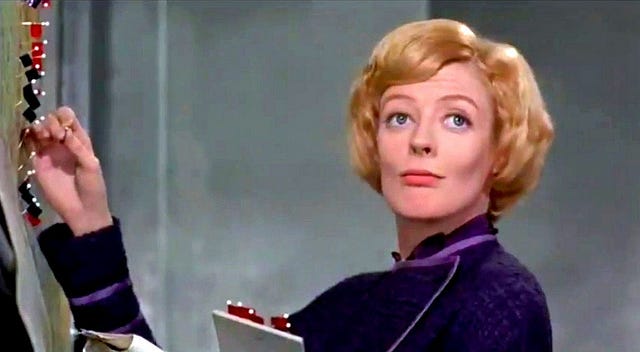
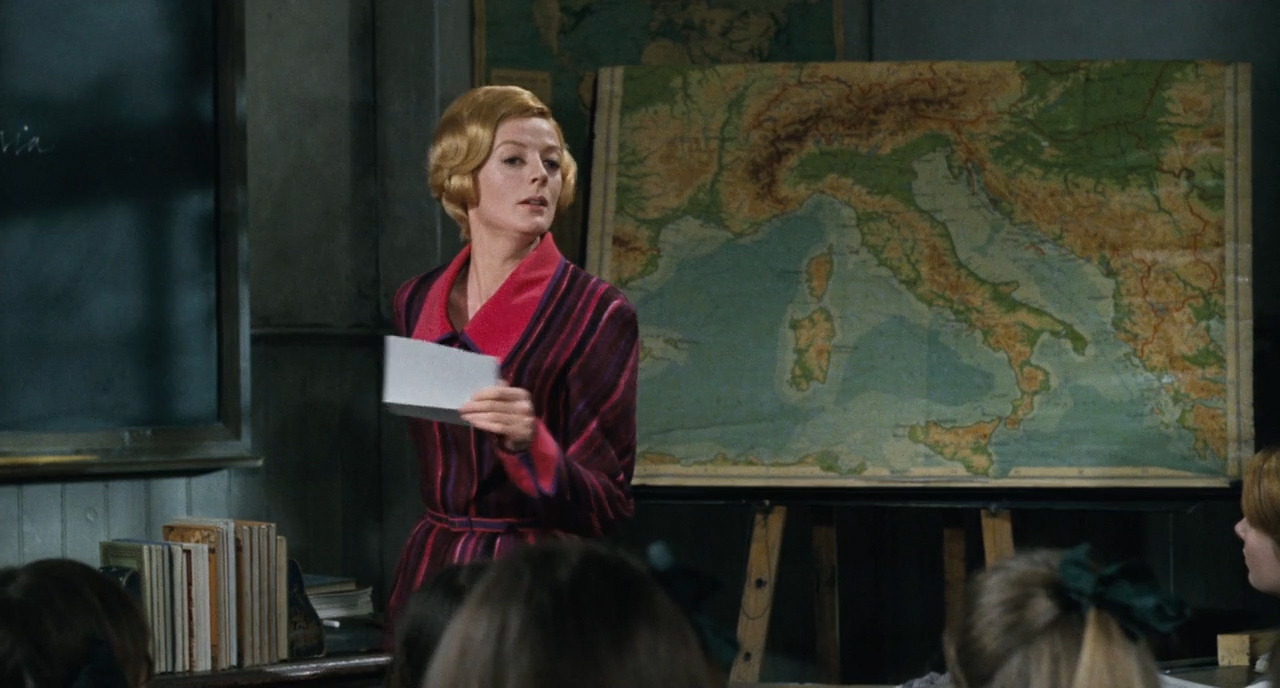
THE PRIME OF MISS JEAN BRODIE, in ringing tones of certainty from the melodious magnificence of Maggie Smith, declares curriculum vitae with “Little girls! I am in the business of putting old heads on young shoulders, and all my pupils are the creme de la creme. Give me a girl at an impressionable age and she is mine for life. You girls are my vocation. If I were to receive a proposal of marriage tomorrow from the Lord Lyon, King of Arms, I would decline it. I am dedicated to you in my prime. And my summer in Italy has convinced me that I am truly in my prime.” A warning that everyone in her way best watch out!
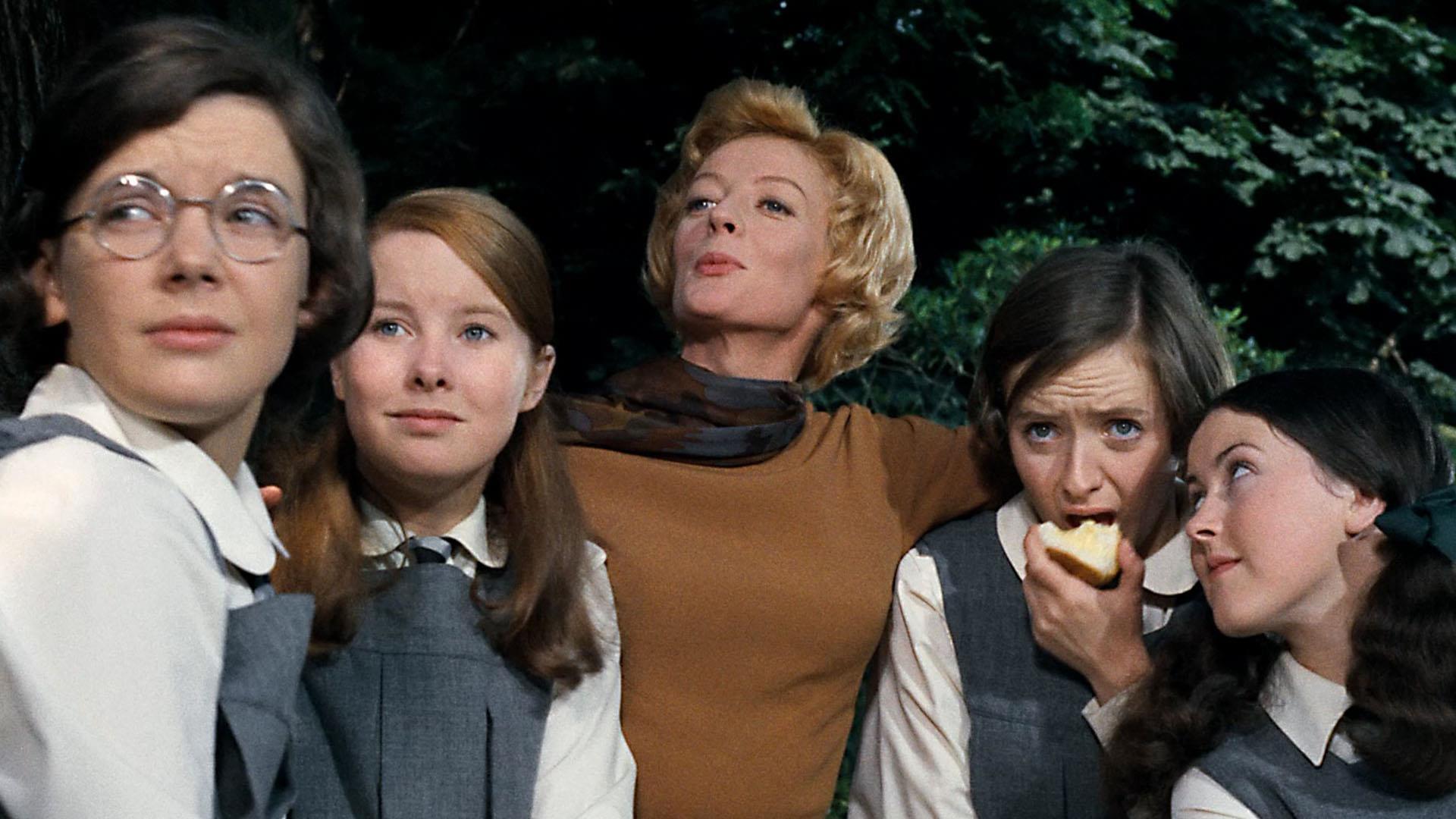
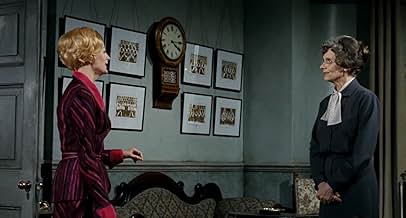
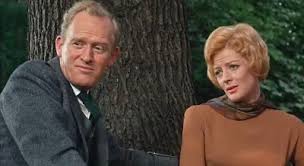
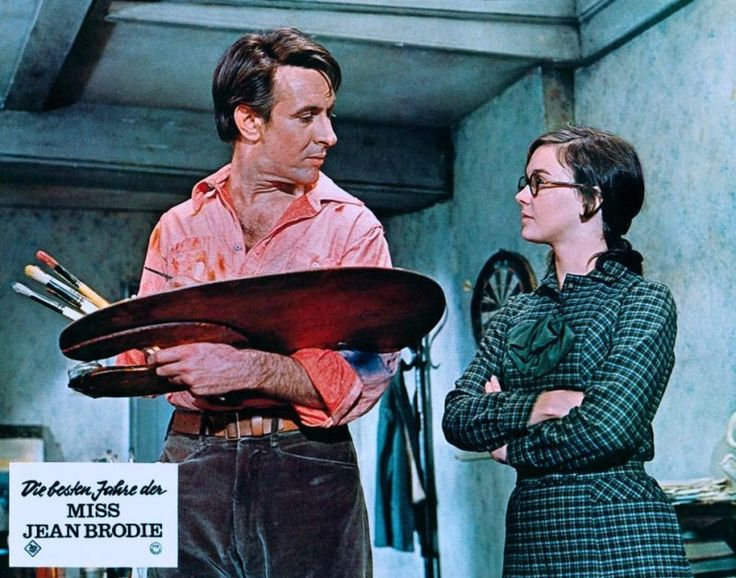
1932-36, at ‘Marcia Blaine’, a girls school in Edinburgh. Though stern headmistress Emmaline Mackay’ (Celia Johnson) is nominally in charge, the roost seems to be ruled by tenured ‘Jean Brodie’ (Smith), who is ostensibly a history teacher, but in rather brazen fact is a free-spirited dispenser of ‘culture’, as filtered thru her own predilections, adventures and biases. She’s wildly romantic in outlook, predatory in her pursuits, equipped with a razor wit and a lofty shell seemingly impervious to dictum or direction, let alone criticism or control. Her interest in ‘her girls’ as they move thru their teens isn’t just proprietary but egocentric and manipulative, couched in vivacity and a rule-tweaking sensuality that’s essentially conspiratorial. The kids learn a lot from her, but what and how they learn is more to the point. Flamboyant, passionate and fun, Brodie is also dictatorial (like many at the time, she admires Mussolini and the emergence of fascism), indulgent and careless with the feelings of others in the faculty, including two men she’s carried on with. Art teacher ‘Teddy Lloyd’ (Robert Stephens) is a married libertine; choirmaster ‘Gordon Lawther’ (Gordon Jackson) is a besotted pushover. The smartest, most aware of ‘The Brodie Set’, a quartet of students who Jean focuses on, is ‘Sandy’ (Pamela Franklin), who gets a rocky but sobering head start on adulthood by wising up to Jean’s motives and the hypocrisy of the other ‘educators’.
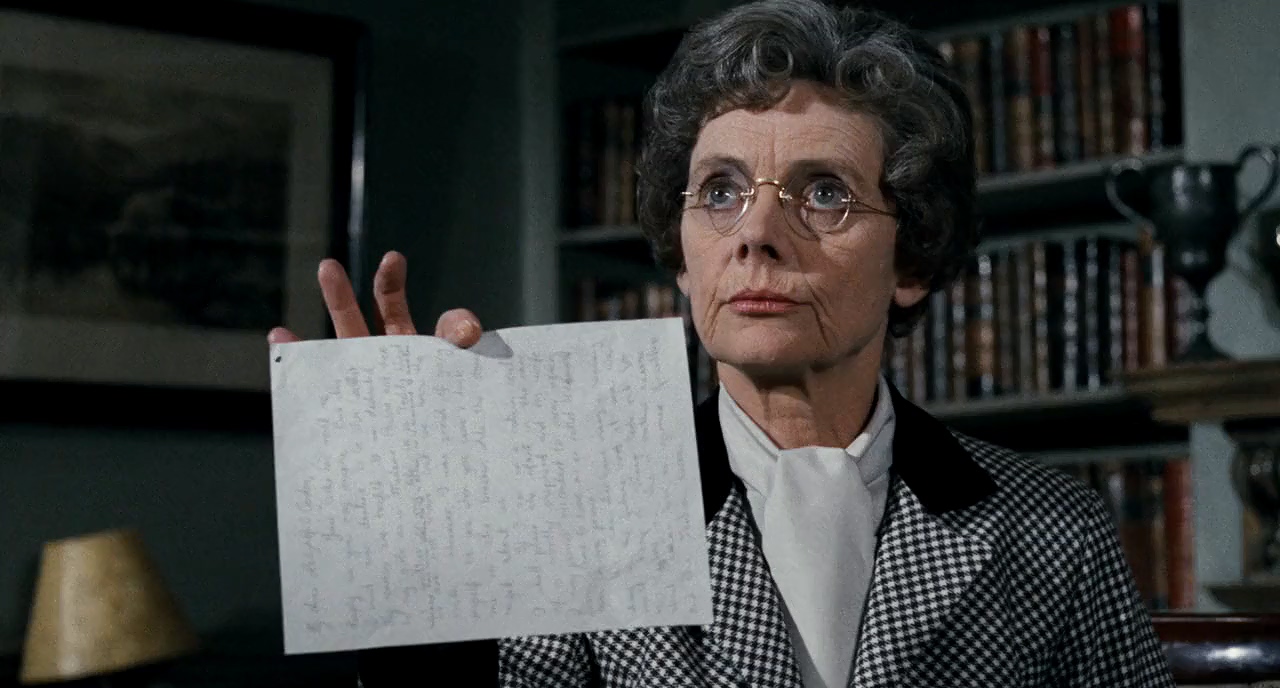
Smith was 34 when she took the role that had been done by Vanessa Redgrave on stage. Jay Presson Allen (Marnie, Cabaret) wrote the play and the screenplay, freely adapting from Muriel Spark’s 1961 novel. The book was partly based on Christina Kay, a teacher of Sparks at James Gillespie’s School For Girls in Edinburgh. Shooting there (the Edinburgh Academy serving as Marcia Blaine), with steady hand Ronald Neame (Tunes Of Glory, The Chalk Garden) directing, the 116 minute film version was released early in 1969. The resultant A-grade report card was miles ahead of the year’s other visit to school, the musical remake of Goodbye, Mr. Chips, which we in the boiler room red mark a C-minus.
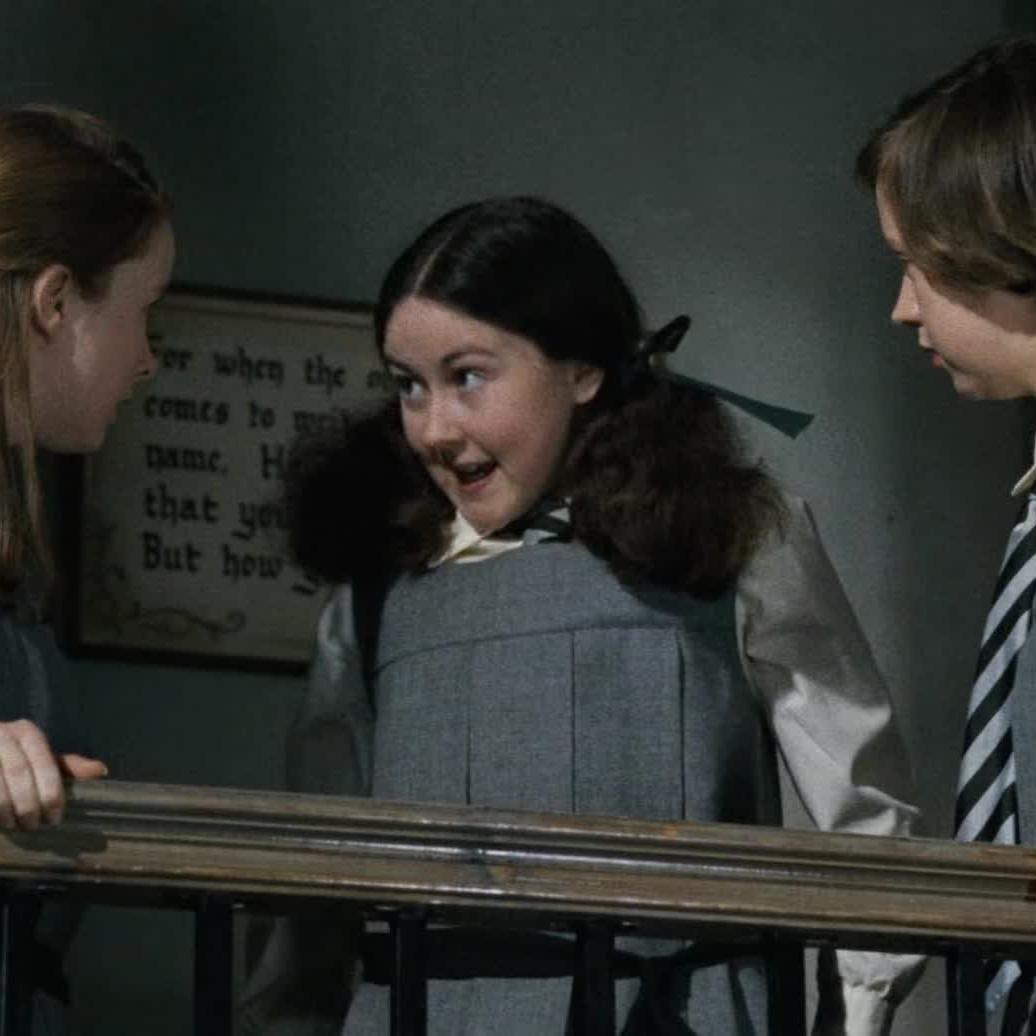
In the lee of the galvanic leading lady, the acting is uniformly excellent. Stephens (37, Smith’s real-life husband at the time) shades the conflicted and infatuated Teddy as both vital and weak, passionate and cynical (plus he toys with a student). The kindly, naive dullard Mr. Lawler may not be the reliably likable Jackson’s best-known role (The Great Escape on the big screen, Upstairs, Downstairs on the tube) but at 45 it was one of his best in a 47-year career. Like Stephens, Jackson’s wife Rona Anderson, 42, was in the cast, too, as ‘Miss Lockhart’. In the last of her eleven roles in feature films (most famously Brief Encounter), Celia Johnson, 70, exits the big screen with dignified elan, her Jean-vexed headmistress stern but reasonable. The girls are all well drawn, with the sympathy vote going to Jane Carr (debut, 18) as the naif ‘Mary McGregor’, awkward and slow-witted, pathetic clay in the hands of the others, especially master moulder Brodie. Franklin, 18, emerged from being a remarkably assured child actress into a fully confident adult as the observant, eventually independent Sandy, even doing a quick nude scene (natural, non-sensational other than who her character was exposing herself to–and why), joining another era peer, Hayley Mills, who’d ‘shocked’ some when she went buff two years earlier for The Family Way. Franklin was conspicuously overlooked when Oscar time rolled around: she should have been in the Supporting Actress lineup.
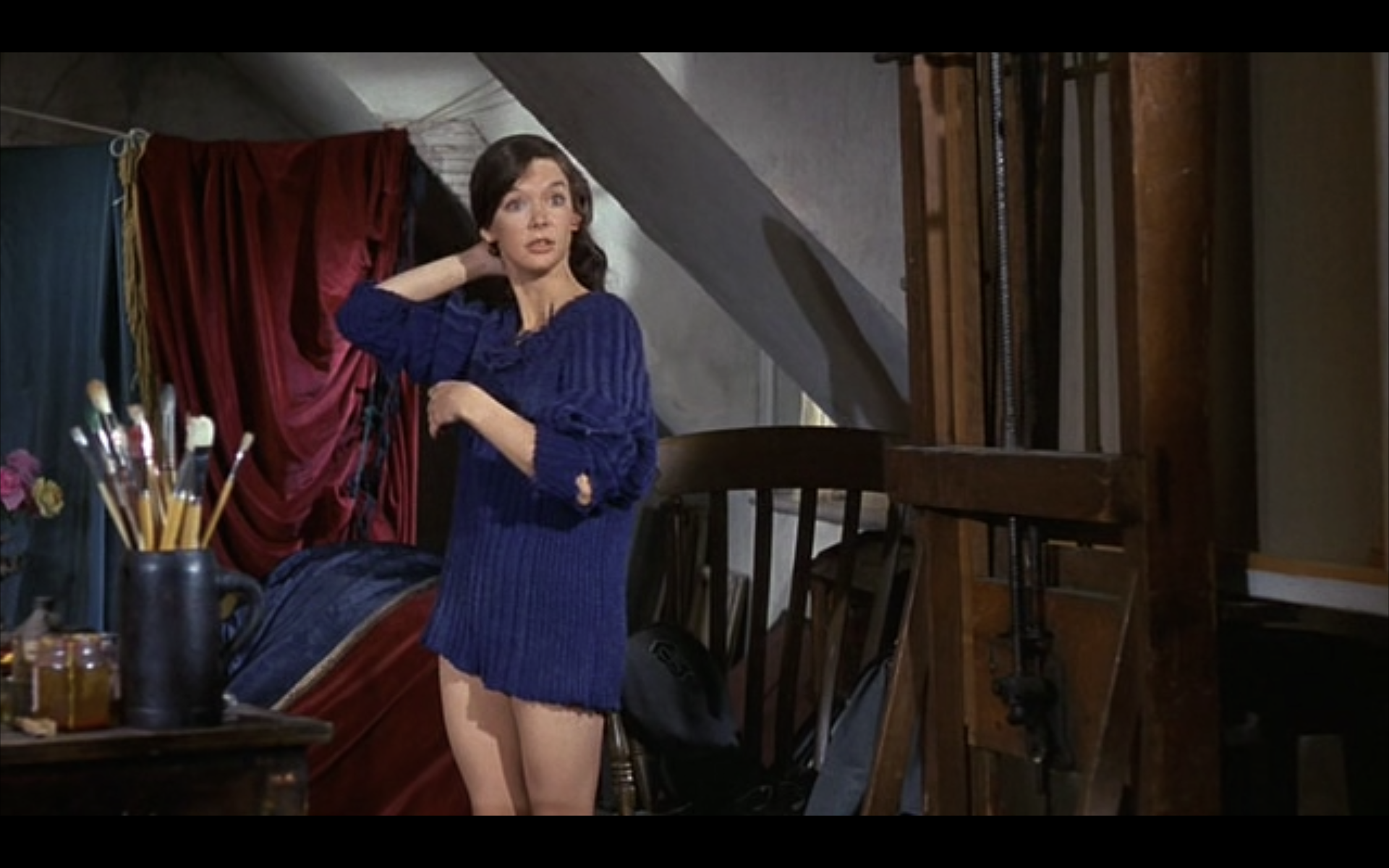
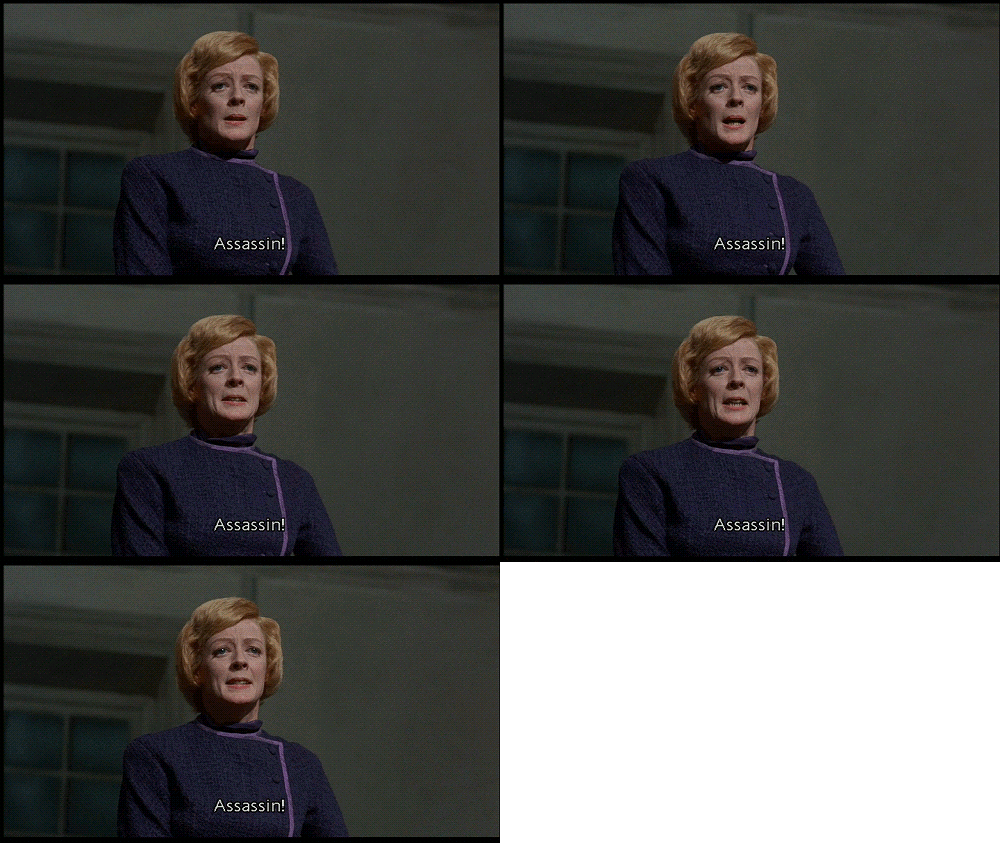
Fine as they all are, they bow to the irreplaceable Dame Maggie, who scooped the role of a lifetime and went at the complex Brodie with a will, making every syllable and the slightest gesture and expression count like a whip stroke. She crafts Jean into a charmer who turns elocution into execution, a sensual spinster who plies favors for control more than carnality, a vital advocate of appreciating the grace and depth of art while also boldly admiring the imagined purity of purpose espoused by fascism’s herders and their sleepwalking sheep. She’s witty and merry, sneaky and mean. Unlike the harried yet selfless teachers from The Miracle Worker, Up The Down Staircase and To Sir, With Love, who turn adversity into victory, Jean’s dogged self-deception takes security and strangles it. The trouble with playing God/Goddess is that the Devil also makes his/her own best advocate. Lesson? Learn in order to discern.
Rod McKuen’s thoughtful score includes the song “Jean”, which was Oscar-nominated—and should’ve won over the insipid “Raindrops Keep Falling On My Head”. Produced for $2,760,000, in the States/Canada The Prime Of Miss Jean Brodie ranked 46th at the box office with a gross of $5,700,000 and it did well in foreign markets, 25% better than expected.
JEAN: “It was you who betrayed me.” SANDY: “I didn’t betray you! I simply put a stop to you!”
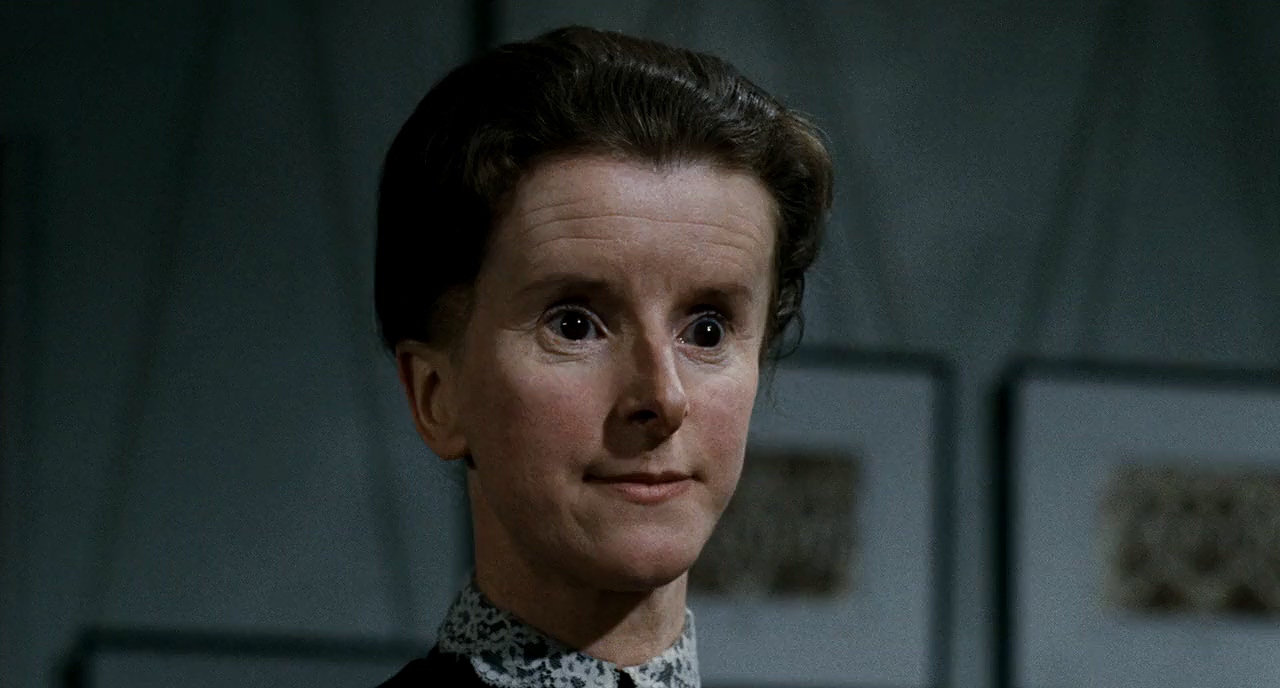
With Diane Grayson as ‘Jenny’, Shirley Steedman as ‘Monica’ and Ann Wray as the onyx-eyed ‘Miss Gaunt’.
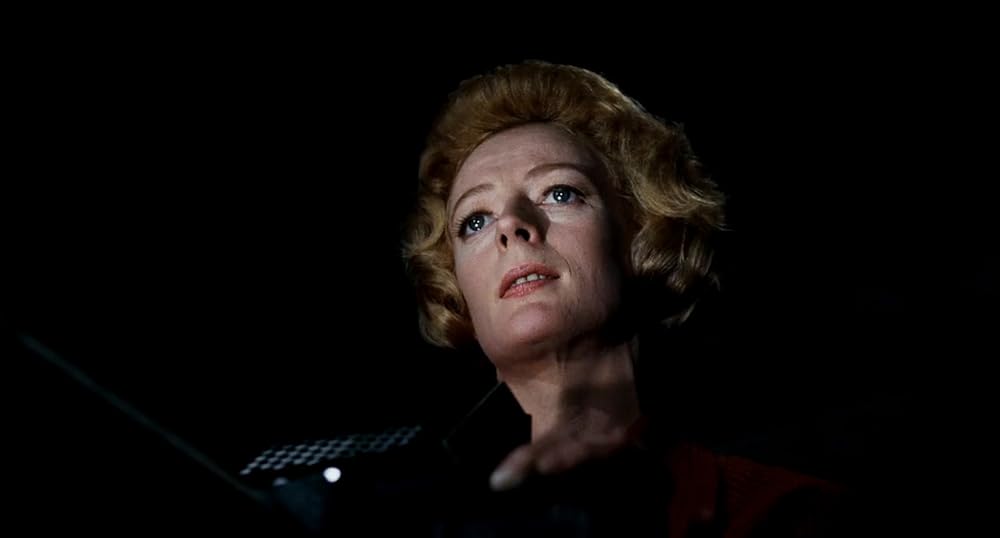
* Maggie: “Jean Brodie was exhausting. You could never quite relax into her. She was always ‘on’, so sure of herself, so certain of her influence. It took a toll, but it was worth it.”
Mea culpa—toiling in the boiler room, I was a way-latecomer to this excellent film (ya can’t see ’em all) and as a result of applying myself to homework am now aware that the production and its performances were/are a touchstone for many people. As with the two bits worth on For Love Of Ivy, we respectfully direct the reader to the much more erudite and incisive write up done by Kenneth Anderson for the site ‘Dreams Are What Le Cinema Is For…’ His post cued a flood of responses from fans who were, well, primed—and he does a stellar job in answering each & every. Kudos, sir. https://lecinemadreams.blogspot.com/search?q=the+prime


One of my favourite films. Possibly Maggie’s finest screen hour(and that’s saying something).
Loved reading this one.
Hope all good with you.
Maddy
It really impressed me. Had to smack myself for waiting a mere fifty-seven years to get around to seeing it. Maggie and Pamela were wonderful.