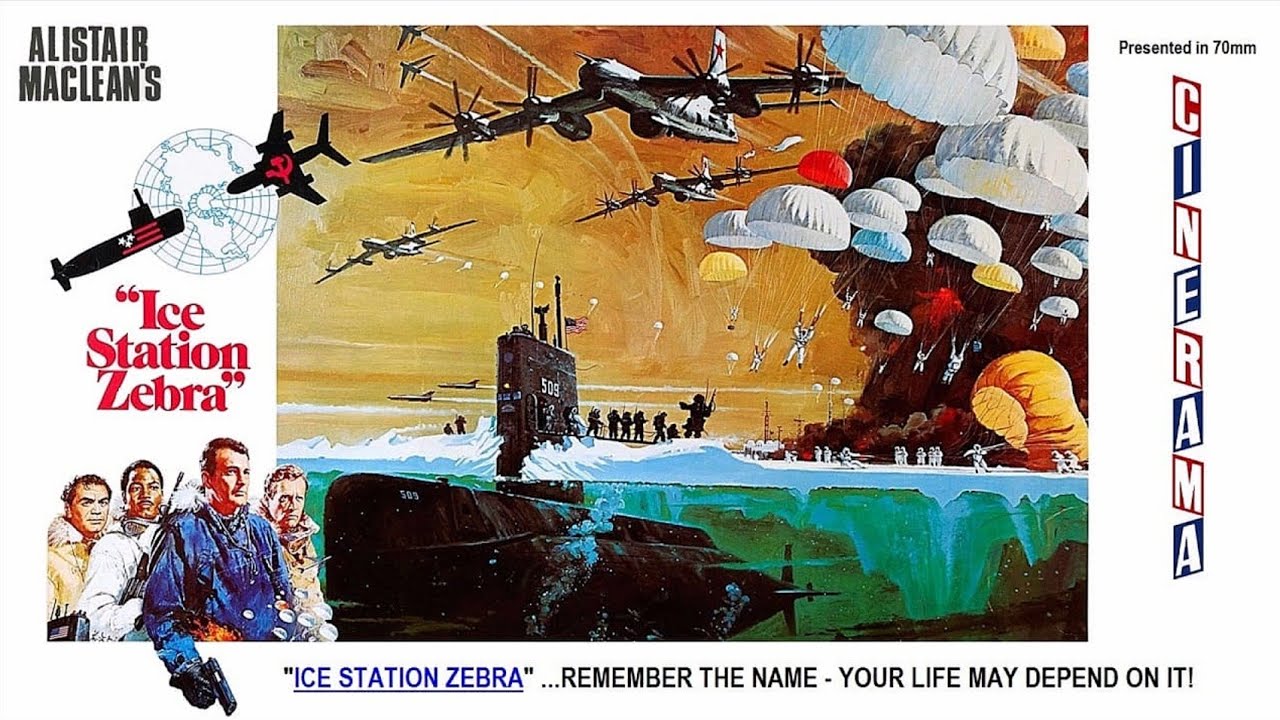
ICE STATION ZEBRA, a Cold War opus, was begat by the 263 pages of Alistair McLean’s 1963 novel. With an interesting cast working under a hit-vetted director of classic ‘guy movies’, the high-stakes saga finally made it to the screen in 1968. Unfortunately, instead of a bang-up thriller it turned out to be one of the era’s eagerly expected, publicity hyped, big-budget adventure pictures that either didn’t deliver the goods (Krakatoa East of Java, MacKenna’s Gold, Damnation Alley) or did but then were overlooked (The Red Tent, Sorcerer). This managed both: it limped on the creative and fun fronts and while not completely MIA at the cold cash stations, a $13,300,000 gross (28th in ’68) wasn’t enough ballast to keep the $10,000,000 price tag from making a glug-glug sound.
“We operate on a first-name basis. My first name is Captain.”
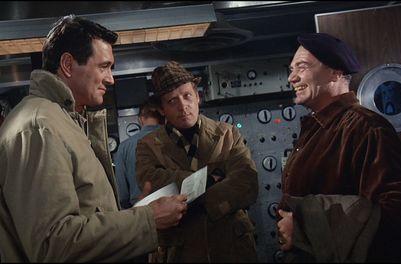
When a US spy satellite drops a photo-bearing capsule onto an Arctic ice pack near a Brit research station, the ‘USS Tigerfish’, a nuclear attack submarine, is dispatched to the scene. Calm veteran ‘Commander James Faraday’ (Rock Hudson) and his crew are joined by supercilious British spook ‘David Jones’ (Patrick McGoohan) and a platoon of US Marines. Then further ‘assistance’ is choppered out to them: gregarious Russian defector-turned-spy ‘Boris Vaslov’ (Ernest Borgnine), who knows Jones, and surly USMC ‘Captain Anders’ (Jim Brown) who takes hard charge of the grunts. Faraday pieces together that the rescue mission has less to do with people and more with what is in the photo capsule. Whatever it is, it’s important enough to provoke sabotage which nearly sinks the sub, and later invite an air drop of Soviet paratroopers who want the gizmo as much as the Americans. Our old and expected friend WW3 may be waiting in the snow.
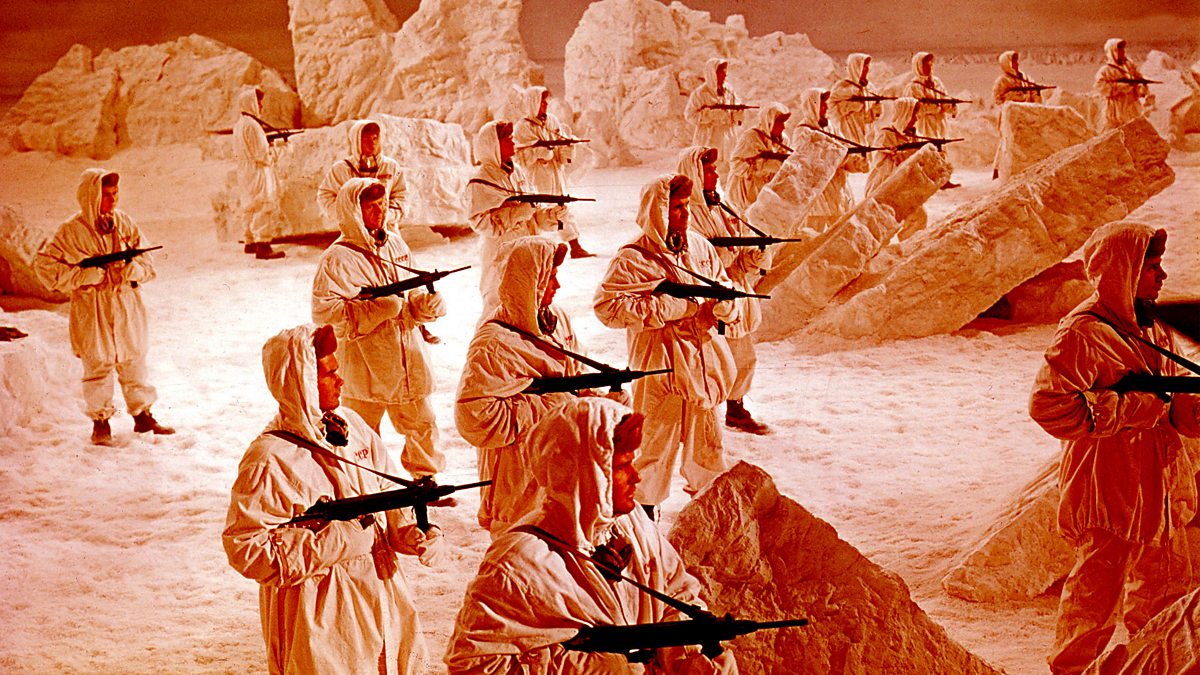
Ivanna GoadaPattaya: Para-Slavs vs. styrofoam ice blocks
Loosely adapting the book, the script was cobbled together by Douglas Heyes, W.R. Burnette (The Great Escape) and Harry Julian Fink (Major Dundee, Dirty Harry). As with any submarine flick, all the way back to when the destination was not north of Greenland but far east in Tokyo Bay, it’s a given that there is lots of repeat-relaying-of-orders talk, together with some expected face-to-face spats over who’s telling who else about what, why and when. McGoohan, in snide mode, comes off best. Rock is assured, Borgnine earnest (there, I said it) with his ‘Rawshun’ accent, Brown stuck in what would be his basic fallback of sullen glaring (possibly pissed that he doesn’t get to sprint and blast a chateau load of gas-soaked Commies). The Tigerfish was, uh, subbed, by two big boys, the USS Ronquil and USS Blackfin, and by a detailed model for the underwater scenes. The vessels, both real and fake, performed admirably. Action expert John Sturges directed. 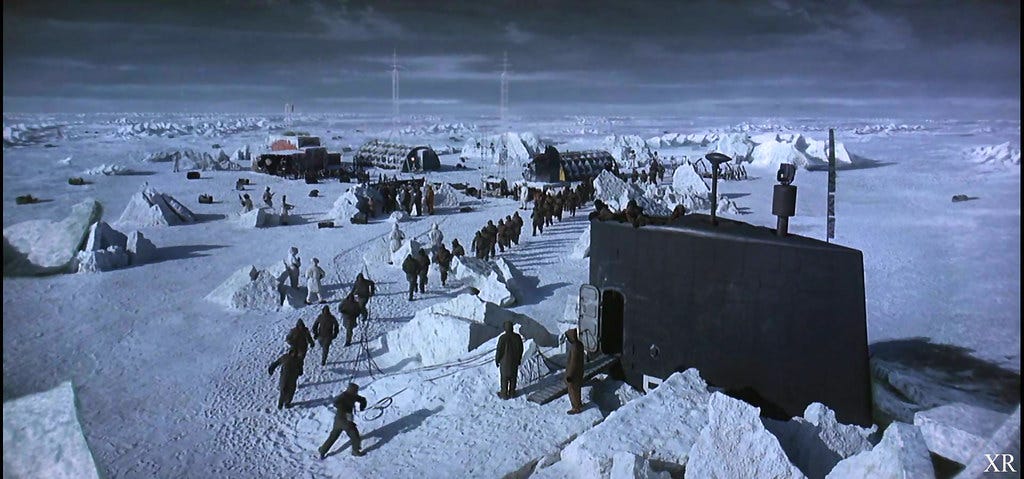
Alas, the few action scenes aren’t exciting, and most of the talk that surrounds them is lackluster. Enervation torpedoes tension; repeatedly, shots are held too long, sapping their initial effect. Was this Sturges’ inattention, a case of normally keen editor Ferris Webster nodding off or did it issue from on high, with the producers ordering “the speeches aren’t boring enough so make it go even slower”? Not helping the plodding and padding is Michel Legrand’s overbearing, insistently repetitive score, aiming at ‘awe’, landing on “aw, c’mon!” While the under-the-ice scenes look pretty good (albeit like everything else they’re dragged out), the art-misdirected sets of the polar surface are the kill shot: they might have looked all right for an elaborate made-for-TV flick, but in a major feature film shot in Super Panavision 70 they came off as obvious fakes. The 148 minute mission groans to a shrugging anti-climax.
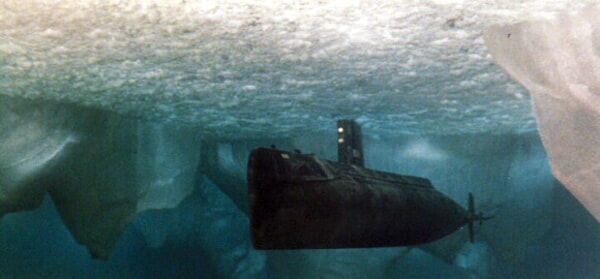
What, no giant squid?
Reciting their dialogue: Tony Bill, Lloyd Nolan, Alf Kjellin, Gerald S. O’Laughlin and Ted Hartley. **
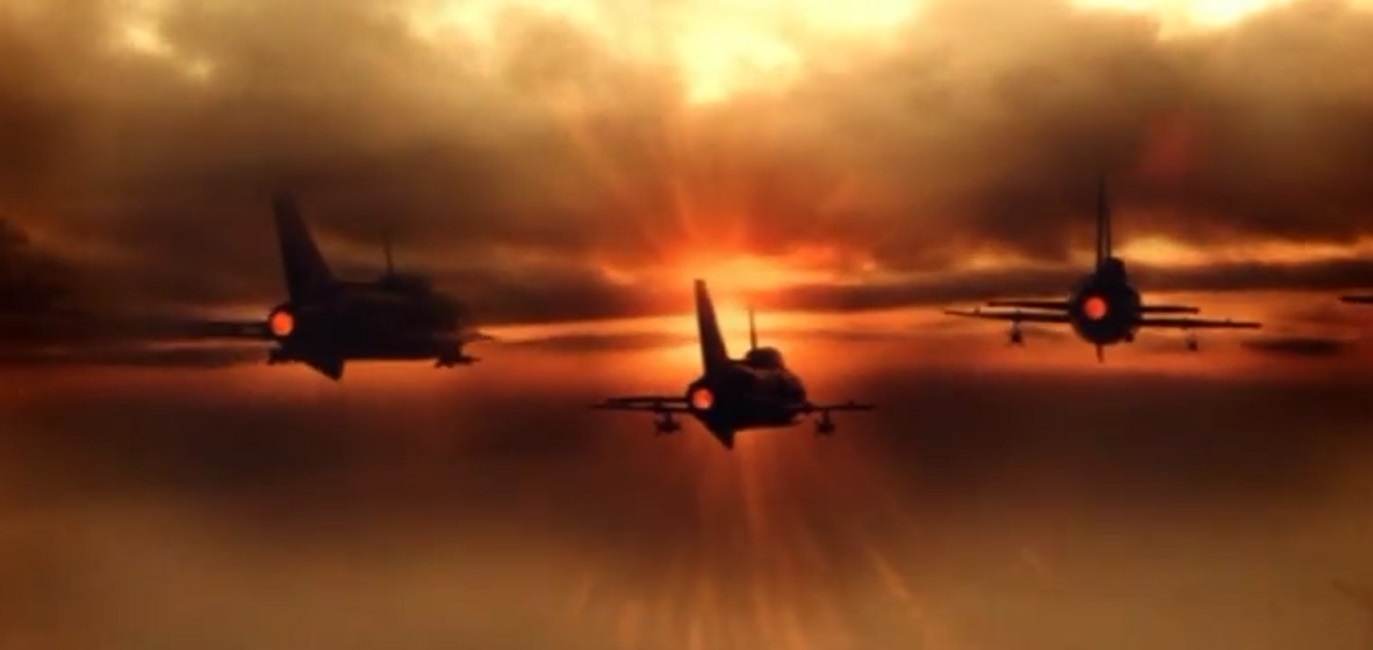
Even though they dicked the pacing. the score and the art direction, Daniel L. Fapp’s cinematography is blameless
* Lost at sea—like everyone else, noted composers occasionally blow it. Michel Legrand’s woofs include a bland stab at The Mountain Men and the all-time awful Bondalepsy of Never Say Never Again. Better to enjoy his fine spin on The Thomas Crown Affair, a lovely theme for Summer Of ’42 and the rousing service to The Three Musketeers.
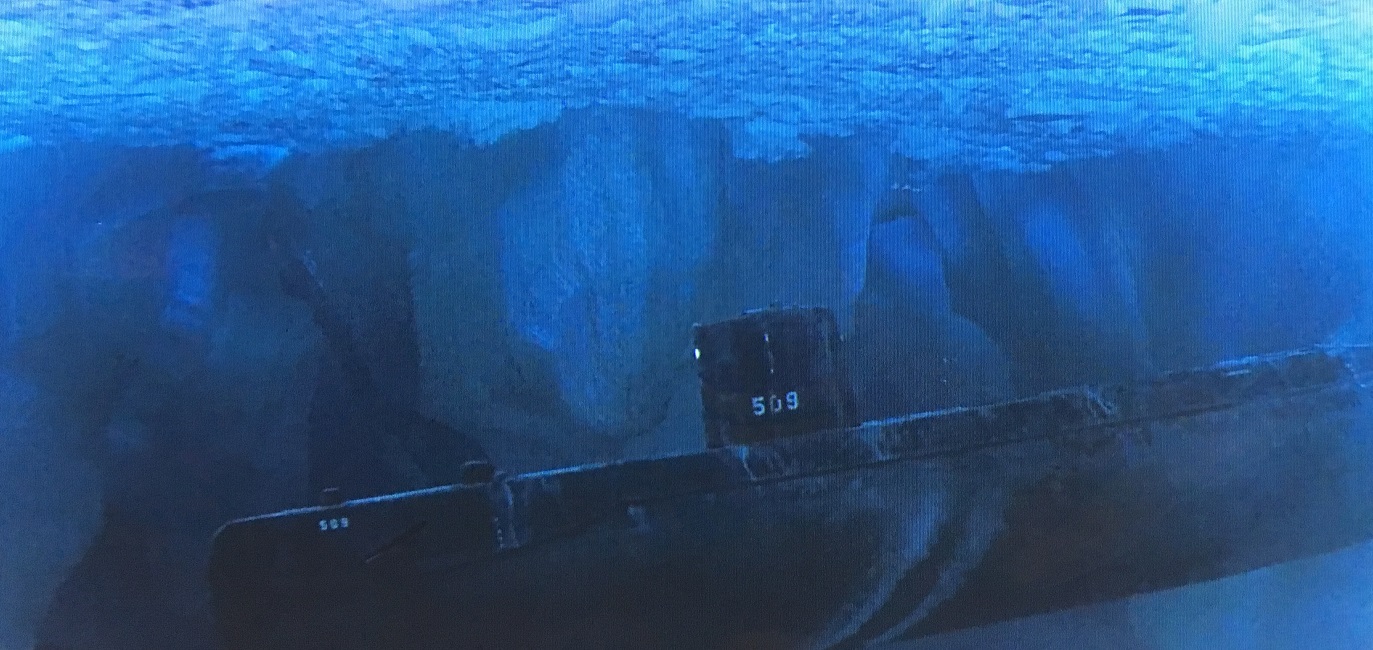
** Load tubes 1 & 2! Uh, also tubes 3 & 4!! —the opening & closing credits in movies have evolved from zippy to endless. From the 30s into the 60s they were brief and to the point, so much so that they often left out cast and crew members who made crucial contributions. The late 70s started the ‘crawl’, credits at the finish that were lengthy and often accompanied by a neat recap of the music score. Later this got so ridiculous that they often note the lawyers, the insurance companies, the three dudes who dumped the porta potty’s…make it stop! The opening credits for Ice Station Zebra engaged in something that a number of “prestige” pictures did for a while. After the stars and co-stars are announced, it goes on to scroll off twenty six players who have bit parts that may include a single line of dialogue—1965’s tanker Battle Of The Bulge is another one that did the same thing. My partially educated guess: this wasn’t because the producer was grateful or the studio magnanimous (good luck!) but because they hoped an extra dose of faux grandeur (look at all these people!) at the opening of a costly production might help pre-disguise that what followed wasn’t nearly as lofty as the portentous and expensive ad campaign had desperately striven to show. “Down scope! Rig for silent running.”
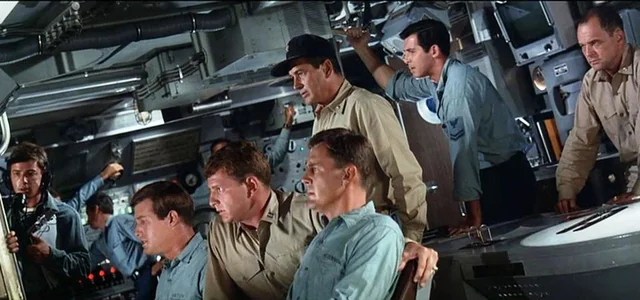
Cold Storage Zzzz’s

