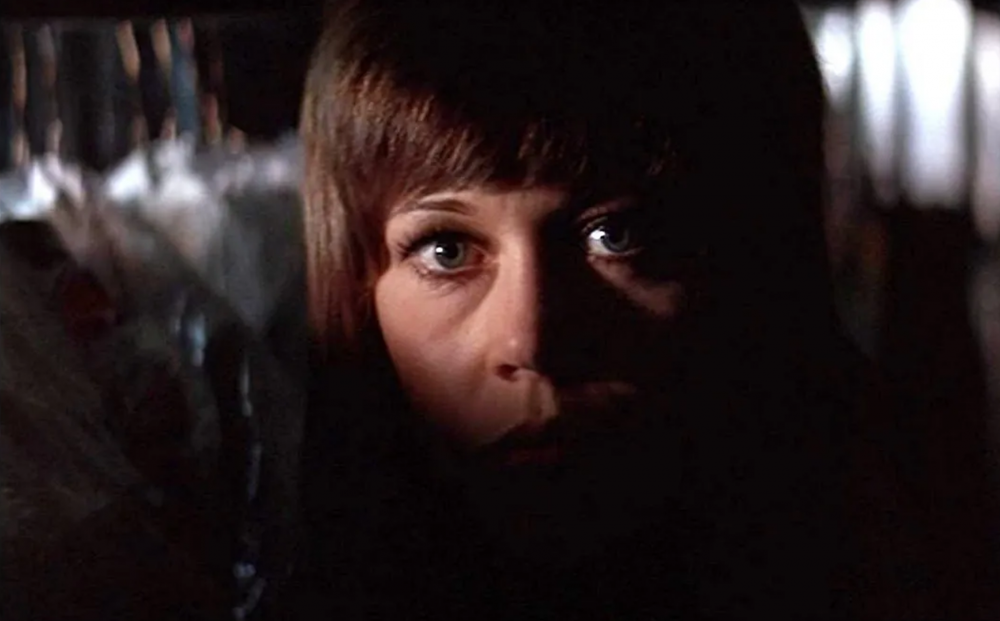
KLUTE was a bracing hit in 1971, and holds up as a peer-into-the-darkness thriller many years later, dated only by advances in technology—this was the era of reel-to-reel tapes—and eroded standards: done today the paranoia aspect would be shifted to a new array of gadgets and the sex and violence shown would be more blatantly explicit and coarse. Jane Fonda, 33, gives one of her career best performances and deservedly won an Academy Award as Best Actress, her first. *
The sudden and unexplained disappearance of a Pennsylvania business executive while on a trip to New York City unsolved after six months, detective and family friend ‘John Klute’ (Donald Sutherland) goes to Manhattan to see if he can find what the police haven’t. Klute questions the only seeming case link, ‘Bree Daniels’ (Fonda), a stylish (and busy) call girl whose name and address are on an obscene letter found in the missing man’s desk. Klute meets, observes and follows the sharp and complicated Bree, befriending and eventually protecting her as the search into her world—private and professional—for what happened and who was involved gets deep and turns deadly.
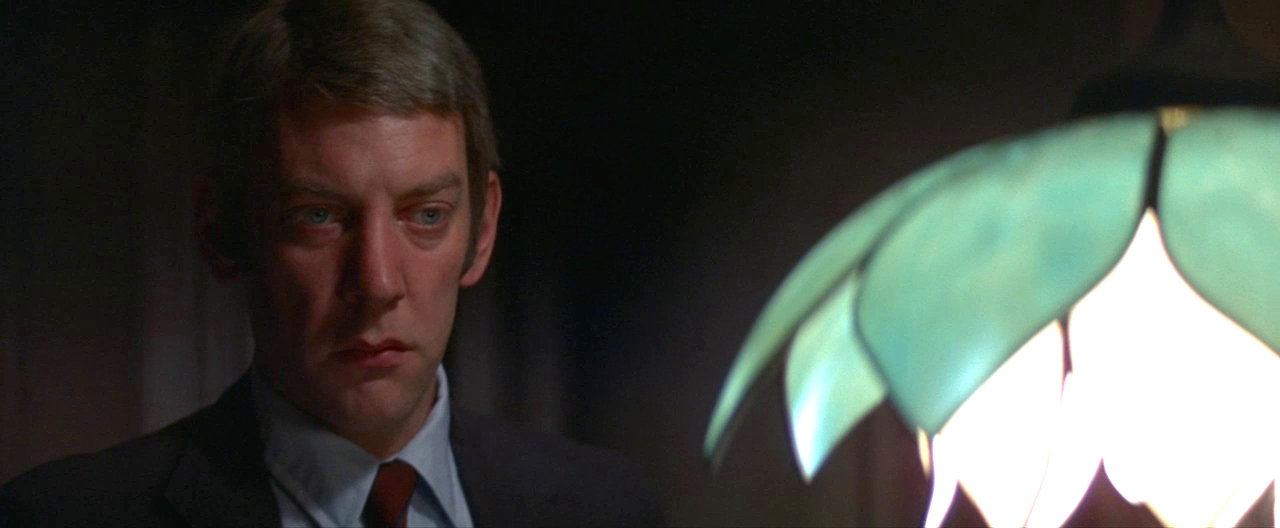
Veteran TV writer Andy Lewis hoped to move into feature work. Sparked by a missing person’s case he’d read about when he was a kid, he developed a script with his brother Dave, fusing a tried & true theme (country rube trumps city slickers) with a fresher one (urban paranoia), commenting “I’m sure this afflicts people all over the world, but I somehow think of it as typically American. The hidden pattern of things. The darkness. The people out there watching you, plotting against you, waiting to hurt you. Sounds you hear at night. Silences on the phone. All that stuff.” Throw in sex—prostitution, kinkiness, hypocrisy, role playing. Sin. Guilt. Danger. Power. **

The gritty, freed-up 70’s launched (thank you, Vietnam?), Warner’s was up for a story about a hooker and new director Alan J. Pakula (he’d recently done his first, The Sterile Cuckoo) signed on. Fonda, after hits silly/sexy (Barbarella) and scalding (They Shoot Horses, Don’t They?) was a hot commodity, and had extra attention for her public anti-war stance; offbeat Sutherland, 35, was cruising from the removed military misbehavior of MASH and Kelly’s Heroes. Despite the title, Sutherland’s role is subsidiary;Roger Ebert commented that the movie should’ve been titled Bree, given most of the focus is on her rather than Klute, and according to Andy Lewis much material he and his brother wrote about the detective was cut, which makes editorial sense in terms of momentum and length. At any rate, he’s fine, appropriately guarded and thoughtful. Fresh to moviegoers, Roy Scheider emanates self-satisfied ooze as Bree’s former pimp; at 38 he zoomed into view in ’71 via The French Connection. In a key secondary part, Charles Cioffi stirs ample unease.
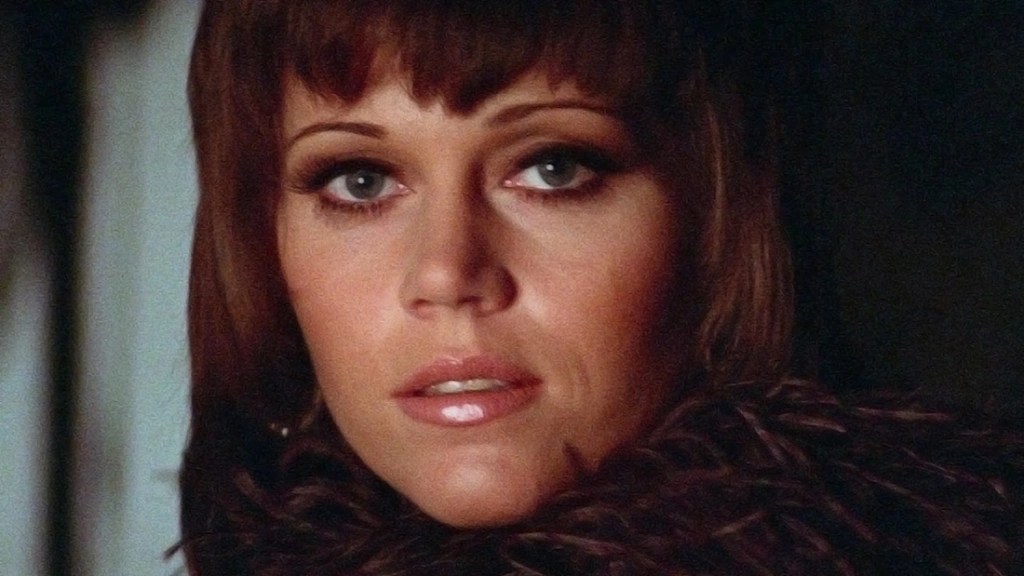
Fonda did a good deal of background work, hanging around ‘pros’—call girls, madams and pimps—studying their attitudes, and those of the johns, melding the quick study into her emerging outlook as a feminist (dovetailed with her political lean) and, initial hesitations banished, sank into the character with a quiet fierceness, informed outrage and razor cut instincts for line delivery, posture and focus. Aided by a sleek haircut that became famous as the Klute ‘do, she is fully invested as Bree Daniels, damaged and defiant, available and alone, wise and empty. It’s acting, of course, but it doesn’t feel like it when you see it. Exemplary camera work from Gordon Willis tightens the slow burn tension and makes the viewer a complicit voyeur, with Michael Small’s spare but telling score adding a creep-up vibe. Though not intended as such, Klute began what would be dubbed Pakula’s “paranoia trilogy”, stalked by The Parallax View and All The President’s Men.
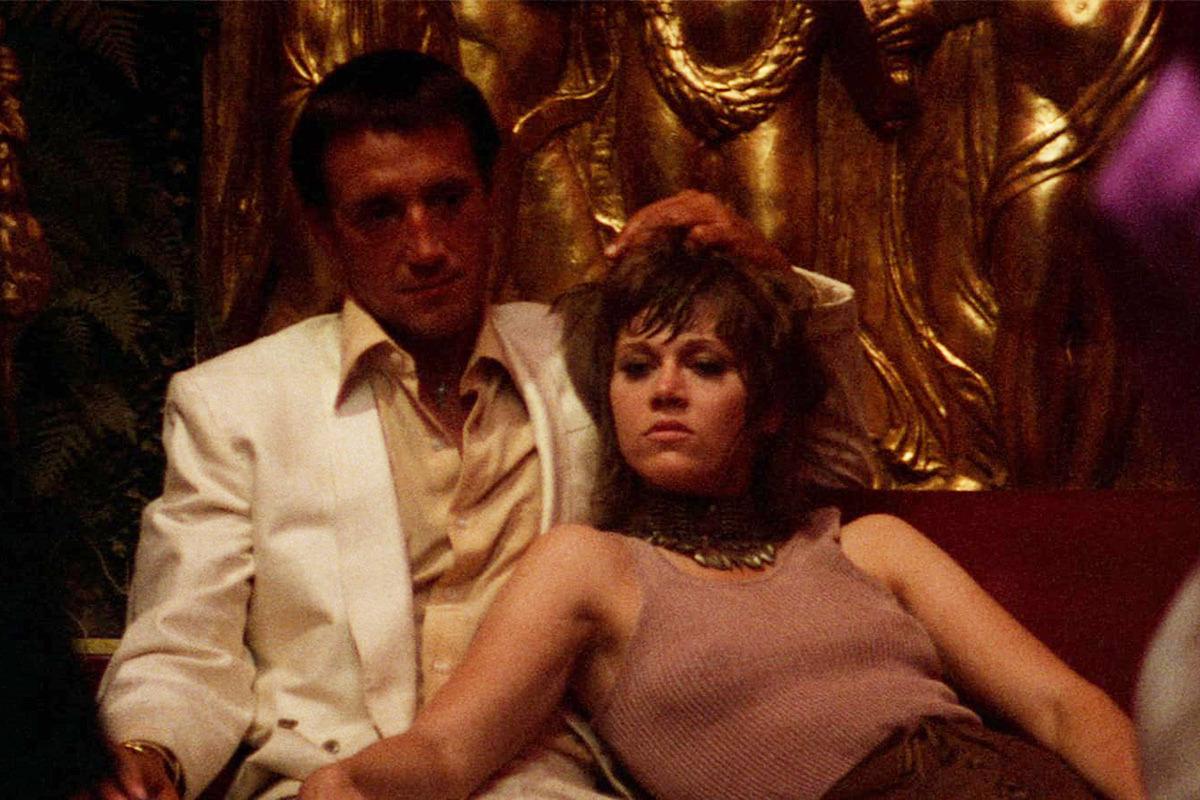
Along with Jane’s win, the script was Oscar nominated. Placing 14th at the year’s box offices, the $24,400,000 take crushed the $2,500,000 production tab.
With Dorothy Tristan, Rita Gam, Shirley Stoler, Nathan George, Anthony Holland, Jean Stapleton, Rosalind Cash, Kevin Dobson, Richard Jordan (uncredited), Veronica Hamel (debut), Harry Reems.
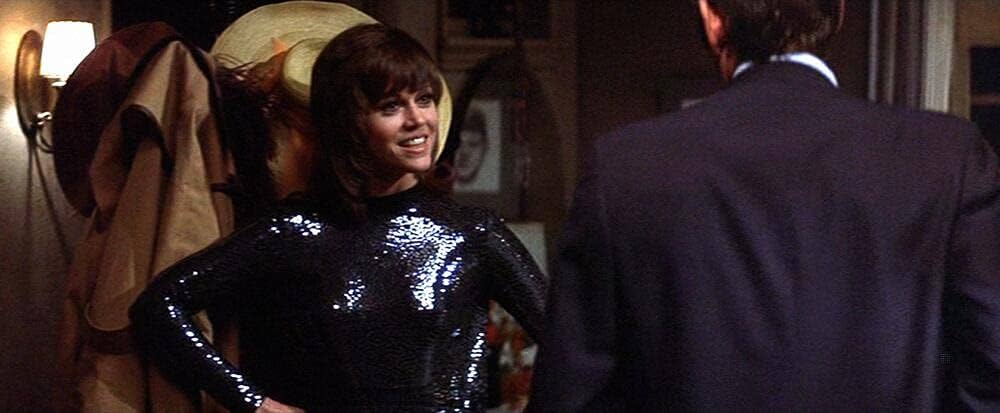
* Sure we can do again, honey, but it’ll cost more— in the surveillance soaked and conspiracy riven days we now must either succumb to or revolt against and given the penchant for remaking everything older than last summer, it’s somewhat surprising that this hasn’t been updated into a vehicle for an edgy actress or a young director who thinks movies began with Pulp Fiction. Seems ideal for at least being whored into a Broadway musical…
Sympathetic prostitutes can be a good call, at least on screen—Nights Of Cabiria, Never On Sunday, BUtterfield 8, The World Of Suzie Wong, Breakfast At Tiffany’s, Irma La Douce, Zorba The Greek, Leaving Las Vegas, Pretty Woman, Mighty Aphrodite…
Jacked Jane—Period Of Adjustment, Cat Ballou, They Shoot Horses, Don’t They?, Julia, Coming Home, California Suite, The China Syndrome, On Golden Pond, The Morning After, Our Souls At Night.
Jane’s Oscar speech: “There’s a great deal to say, but I’m not going to say it tonight. Thank you.” As it was, after her triumph in Klute, Fonda’s next four (Tout Va Bien, Steelyard Blues, A Doll’s House, The Blue Bird) all bombed out; it wasn’t until six years went by that she bounded back in Fun With Dick And Jane and Julia.
** Fascinating interview with Andy Lewis. https://trustory.fm/blog/a-qa-with-klute-co-writer-andy-lewis/

 Movies ala Mark