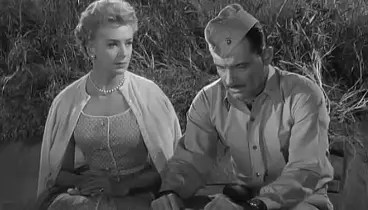
THE PROUD AND PROFANE was adapted from a novel Lucy Herndon Crockett wrote off her WW2 experiences serving with the Red Cross in the Pacific during World War Two. The 384-page book was called “The Magnificent Bastards”, which wasn’t going to be put on any theater marquees in 1956, hence the title change—more decorous yet still defiant—for the drama directed by George Seaton, who also managed the screenplay. The opener tag gives us the dope: “1943: Noumea, on the Free French Island of New Caledonia, was the crossroads of the South Pacific. Eighty thousand men of the Army, Marines and Navy trained here and waited for the day to begin the long push northward. Eighty thousand men-and a handful of women.” *

The island-hopping campaign against Japan uses the French territory’s capital of Noumea as a base. Among the Red Cross workers tending to the troops is fresh volunteer ‘Lee Ashley’ (Deborah Kerr), whose husband was killed in the bitter struggle for nearby Guadalcanal (858 miles away, next door in the Pacific). Her emotional vulnerability is targeted for seduction by callous ‘Colin Black’ (William Holden), a harsh-as-hell Marine Colonel who isn’t much easier on the fragile widow than he is on his battalion of Raiders. Though cautioned by her savvy supervisor ‘Kate Connors’ (Thelma Ritter), Lee allows herself to fall for the domineering officer, and he’s not above lying about knowing her late husband to get what he wants. It’s war: people get hurt.
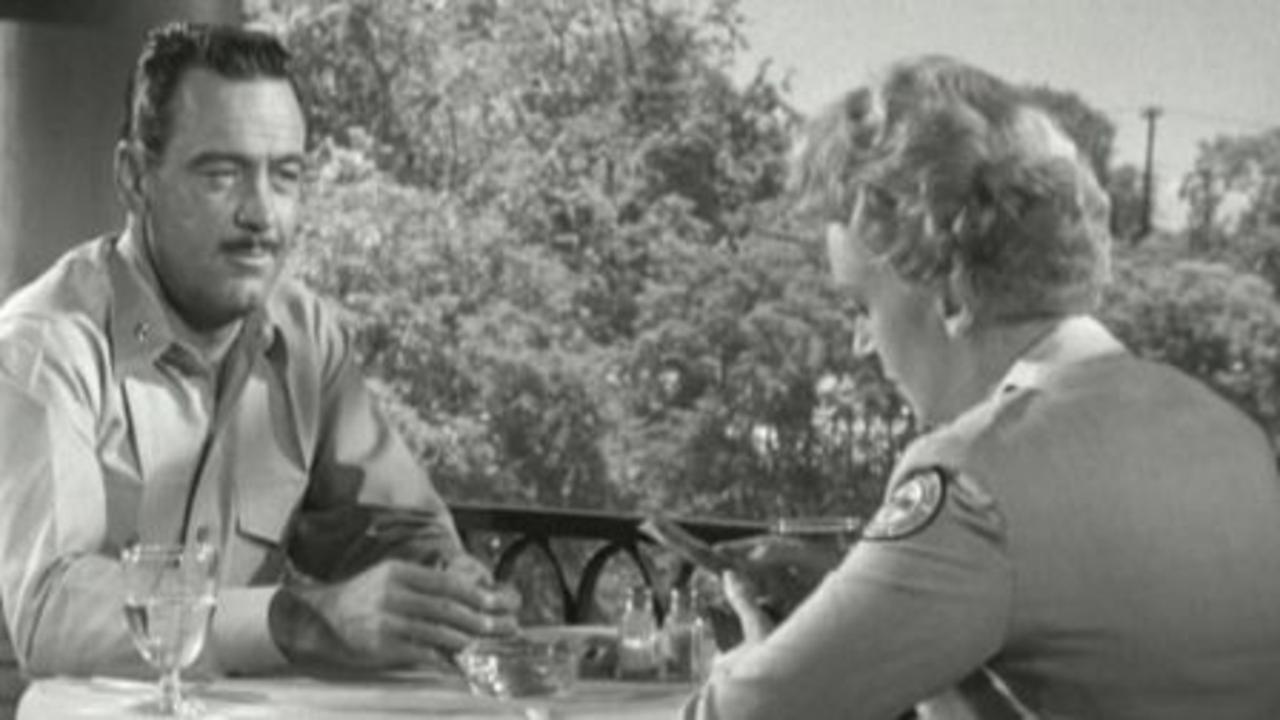
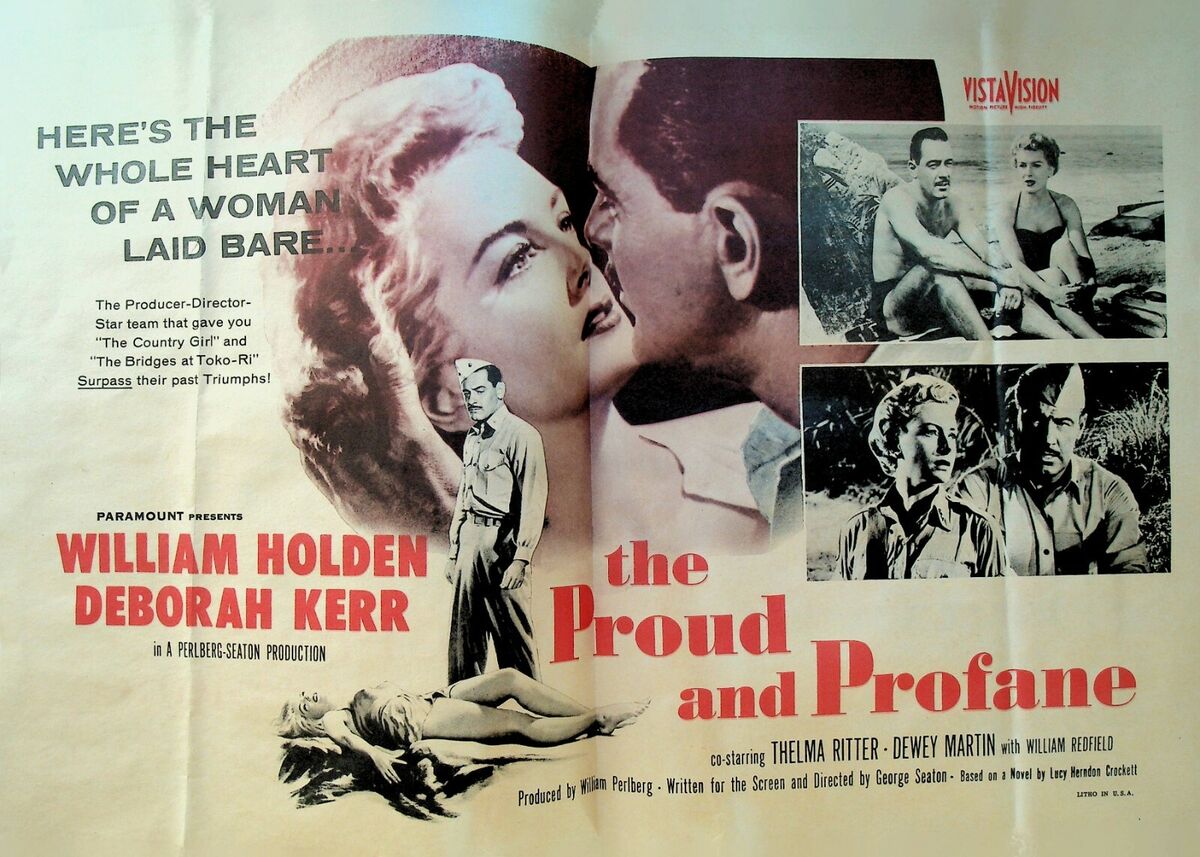
A war film that doesn’t deal with combat—there are no action scenes—but with the toll it takes on those involved, directly or by association, this was a box office success ($11,000,000 gross, #23 for the year) due to the star power of its attractive and very popular leads. Kerr held drawing power thanks to From Here To Eternity and had ’56 wins with Tea and Sympathy and The King And I, a huge smash. Holden (with a Gable-esque mustache) was on a decade-long streak of hits; he preceded this with Picnic and followed with The Bridge On The River Kwai. He excelled at portraying men with conflicting motives, but his character in this story is easily the least admirable in his resume, fitting the ‘bastard’ designation of the novel. His best scene is of Black’s scalding recall of an impoverished childhood. Ritter is excellent as always; less effective is Dewey Martin as a Marine whose over-reactive attitude isn’t well served by the script. **

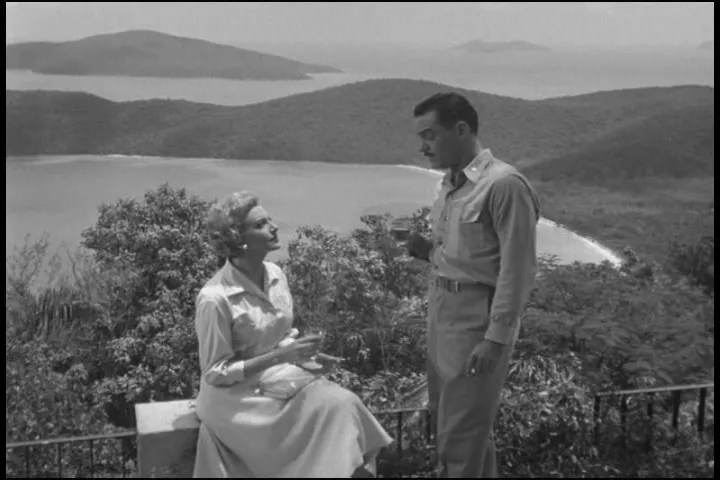
The southwest Pacific of New Caledonia was ‘played’ by extensive location shooting on St. Thomas in the U.S. Virgin Islands and in San Juan, Puerto Rico. Ample service cooperation provided men, vehicles and ships; it’s a considerable production effort. Where Seaton (and producer William Perlberg) dropped the ball is making the budgetary (or just dumb?) call to shoot in black & white when the backdrops beg for color. Granted, cinematographer John F. Warren (The Country Girl, South Seas Adventure) does crisp work in VistaVision but the glory of the locales is left in the lurch. Shades of Prince Of Foxes, Roman Holiday or In Harm’s Way.
Oscar nominations were nicked for Costume Design (uniforms?) and Art Direction. With William Redfield (good as a trauma-burdened chaplain), Adam Williams (a meaty scene as a cemetery tender), Peter Hansen, Ross Bagdasarian, Frank Gorshin (22, debut), Ray Stricklyn (debut), Joe Turkel and Marion Ross. Blink and you’ll miss Robert Morse (feature debut, 24) and Claude Akins. 111 minutes.
* The Proud And Profane was one of twelve 1956 releases set all or partly in WW2, joining The Man In The Gray Flannel Suit, Away All Boats, The Revolt Of Mamie Stover, Between Heaven And Hell, Attack, D-Day The Sixth Of June, The Bold And The Brave, The Man Who Never Was, The Battle Of The River Plate, Battle Stations and A Town Like Alice.
** Personal tie-in time. Your globe-trotting correspondent was lucky enough to live on St. Thomas in 1976 (went for two weeks, stayed for five months), when it was still affordable for people without 6-figure incomes. Of course 1976 wasn’t 1955, when this movie was filmed, but just seeing those still-somewhat virginal locations—even in danged black & white—rings the nostalgia bell. Back then, to ’55 (when I was in diapers)—my late brother-in-law, Larry Pennell, 27 and fresh to the fray, was up for the role that Dewey Martin got. He tested with Kerr, but director Seaton took some kind of animus to him, and acted like an ass. ‘Bud’ recalled that Miss Kerr was warm, charming and reassuring. He later did get to work with—and truly liked—Holden, in a regrettably lame western The Revengers.

 Movies ala Mark