
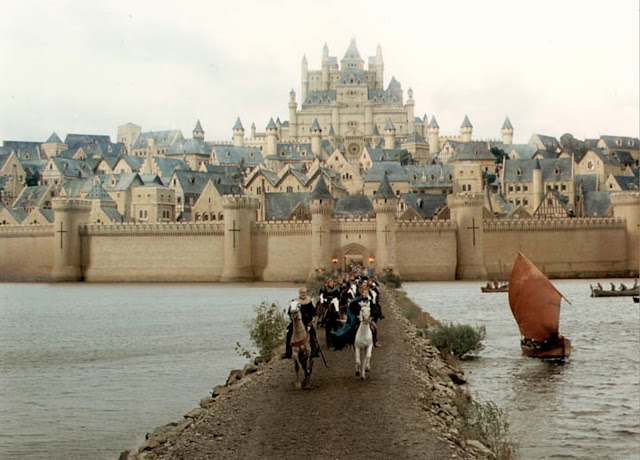
FIRST KNIGHT added Camelot’s legendary swords to those wielded in 1995 by Braveheart and Rob Roy, offering another version of the immortal Arthur-Guinevere-Lancelot triangle of honor, romance and betrayal. Critics largely dismissed it at the time and it underperformed at the box office, but the former were all wet (not a surprise) and the public (those who even had an inkling who the classic characters were, maybe thinking Camelot was some new car model), perhaps sated by the aforementioned rousers beating it to the drawbridge, missed out. Despite one miscast star (who still performs ably) it’s an impressive entry in the long roll of movies made about those heroic-tragic folks around the Round Table, and as Leonard Maltin puts it “Camelot has never looked so magical.” Hear! Hear! *

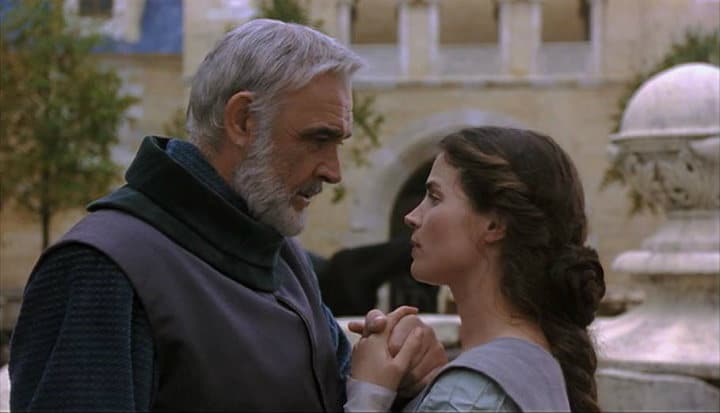
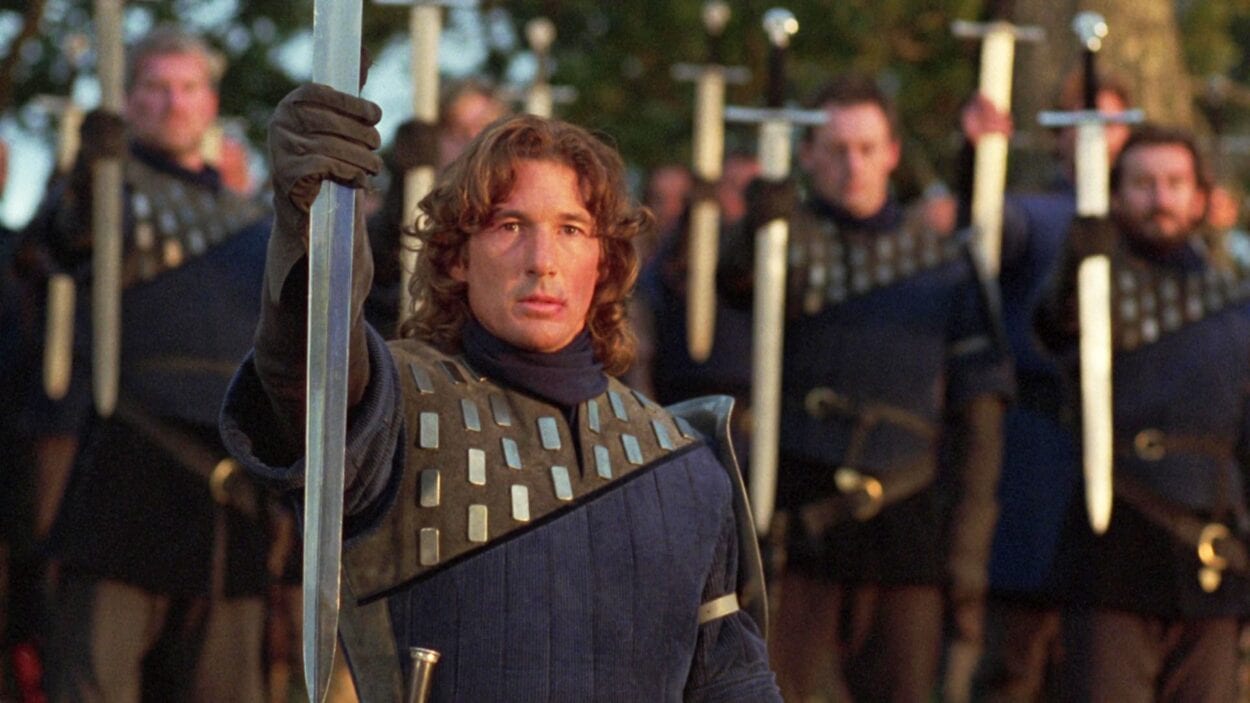
‘Guinevere’ (Julia Ormond), young ruler of Lyonesse, en route to her marriage to ‘Arthur’ (Sean Connery), King of Camelot, is saved from abduction by marauders thanks to the vagabond swordsman ‘Lancelot’ (Richard Gere). Lancelot is smitten, and is convinced the lady feels the same stirrings, but she honors her promise to the older Arthur, who is overjoyed with his bride-to-be. He’s also impressed by Lancelot’s skills and fearlessness, which will come in handy against the threat posed to peace from brutal warlord ‘Malagant’ (Ben Cross), a foe minus anything like a scruple.
The intelligent script written by William Nicholson (Shadowlands, Gladiator, Everest) passes on any Merlin mysticism and tricks, staying trim and focused on power politics and passions of the soul. Known for the riotous comedy hit Airplane! and the fantasy smash Ghost, director Jerry Zucker surprises with an eye for vivid action and the capture of some essence of old-fashioned grandeur. The production design is superb (John Box’s art direction for Camelot is lovely), there’s rich cinematography from Adam Greenberg (The Big Red One, The Terminator) and mood master Jerry Goldsmith delivers another exciting music score. Throw in a whopper of a big night battle.

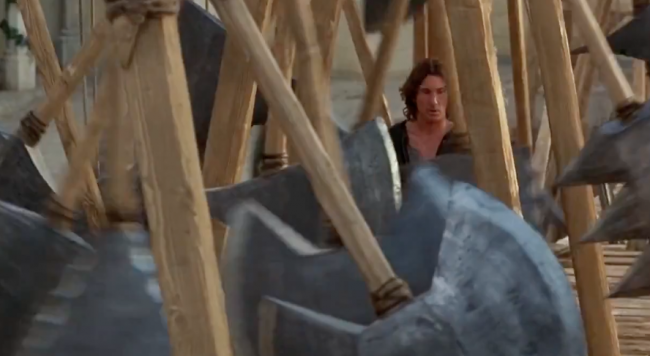
Connery—talk about looking the part—is perfect casting as the wise and noble ruler; he has a memorable entrance scene that summons not just the idea of Arthur but our collective memory affection for the actor. Classical beauty Ormond glows as the heart vs. duty conflicted lady-most-faire, and while the script allows her admirable pluck and bravery it doesn’t sandbag the character with glib one-liners to “modernize” the heroine for the trend-lapping 90s. Cross is a smart, baleful, truly formidable villain. Gere came in for a good deal of drubbing—too American, too modern—but he displays ample vigor in the fight scenes (Lancelot the Dark Ages answer to B.C.’s Achilles when it comes to skewering enemies), and struts deft stuff in a great scene running a medieval gauntlet rigged with spinning boulders, broadswords and battle axes.
The $55,000,000 cost required a lordly return, yet in the States it managed just $37,600,000 (46th place in ’95), though international bookings pushed that to $127,600,000.
“Brother to brother, yours in life and death.”
Shot in England (Buckinghamshire, Hertfordshire) and Wales (Gwynedd), running 134 minutes, with John Gielgud, Liam Cunningham, Christopher Villiers, Ralf Inesen, Stuart Bunce and Rob Brydon.
* Arthur & Co—pick your kingdoms. Traditional (Knights Of The Round Table, Lancelot and Guinevere), revisionist (Excalibur, King Arthur), musical (Camelot), larking (A Connecticut Yankee In King Arthur’s Court), mocking (Monty Python And The Holy Grail), animated (The Sword In The Stone), tangential (The Green Knight), goofy (Prince Valiant, The Black Knight), embarrassing (King Arthur: Legend Of The Sword), numbing (A Kid In King Arthur’s Court), nauseating (Transformers: The Last Knight).

 Movies ala Mark