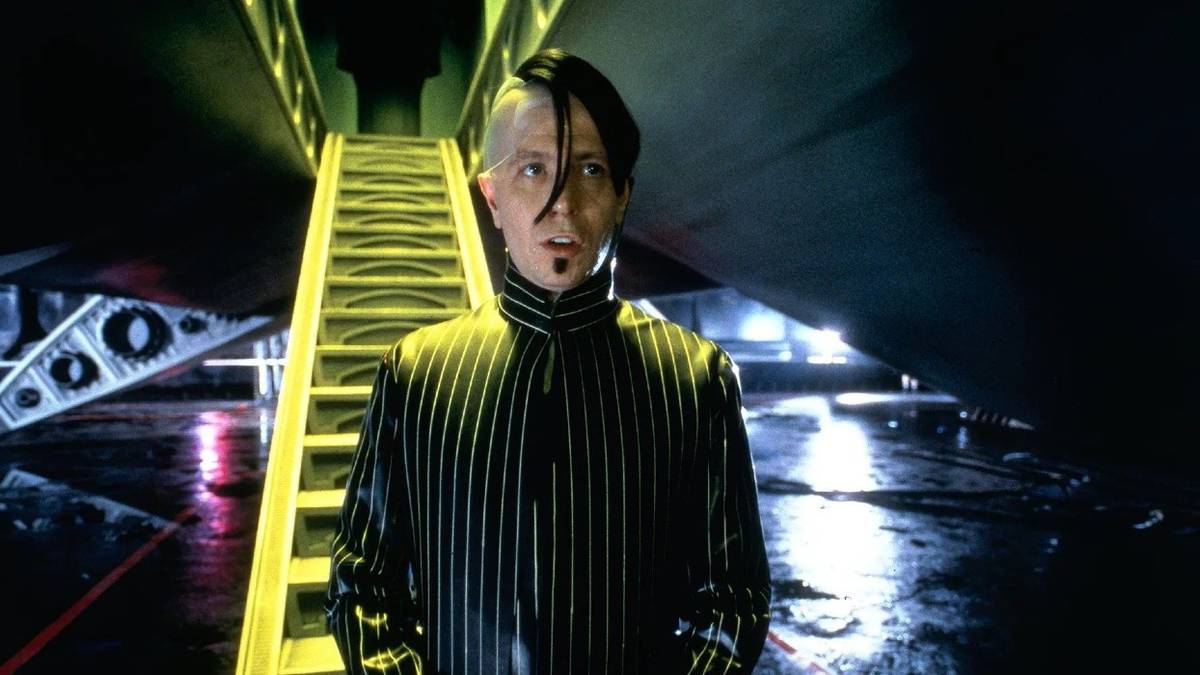
THE FIFTH ELEMENT contains $90,000,000 and 22 years worth of elements that gel and others that repel. Bubbling in the mind of Luc Besson since he was sixteen, when he started writing the story, intended as a novel; it ultimately emerged as a grand scale movie in 1997. Besson directed, co-writing his long-fiddled screenplay with Robert Mark Kamen (The Karate Kid, Taken). The result was a big box office hit, one that divided opinions from both critics and audiences over whether it was worth the hype, let alone the wait. Into splashy visuals–or have taken something that helps you get into them? This delivers your money’s worth. Dislike being bombarded with noise while trying to decipher what the hell is going on? Here’s a 127 minute stress test.

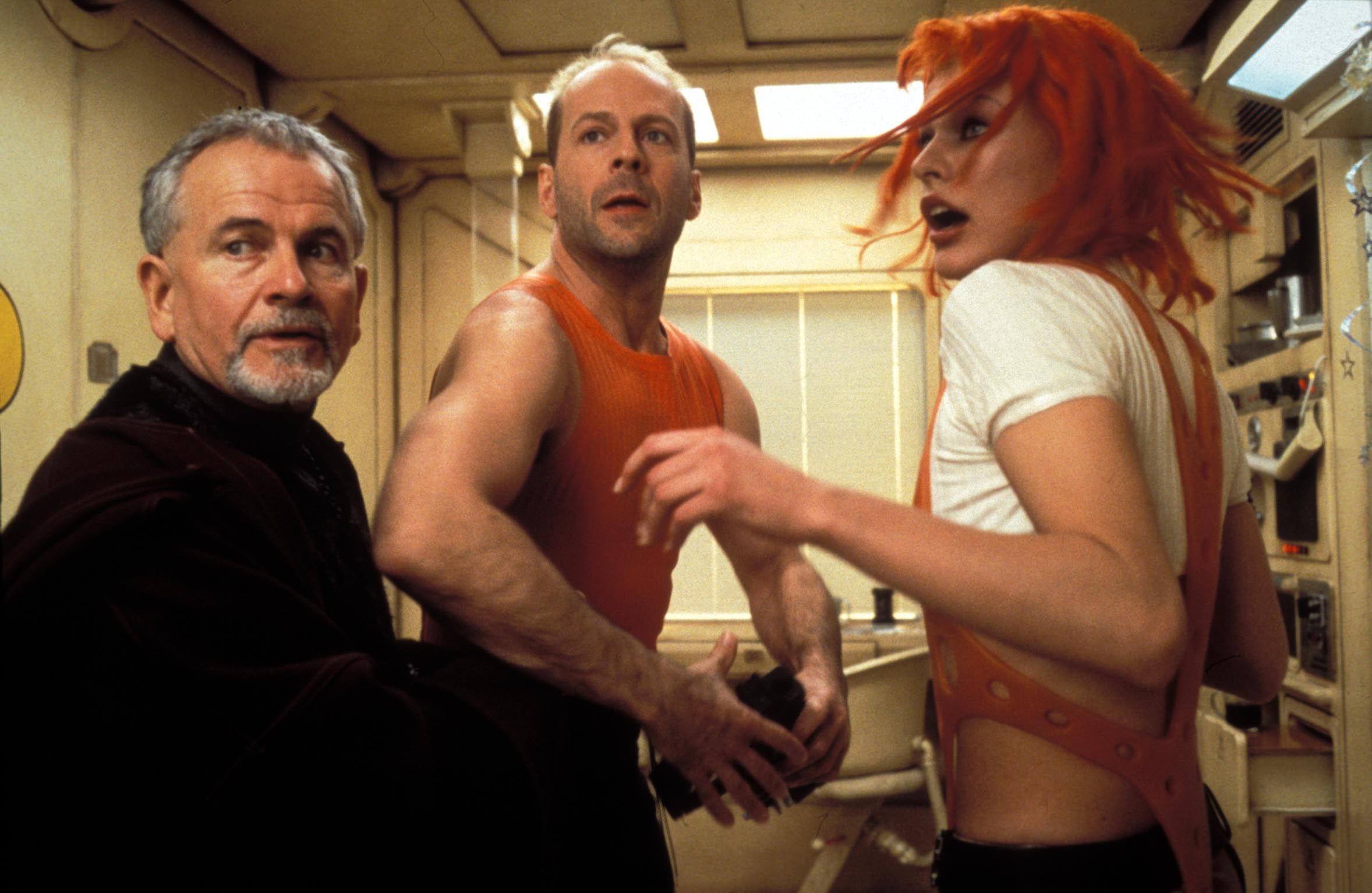
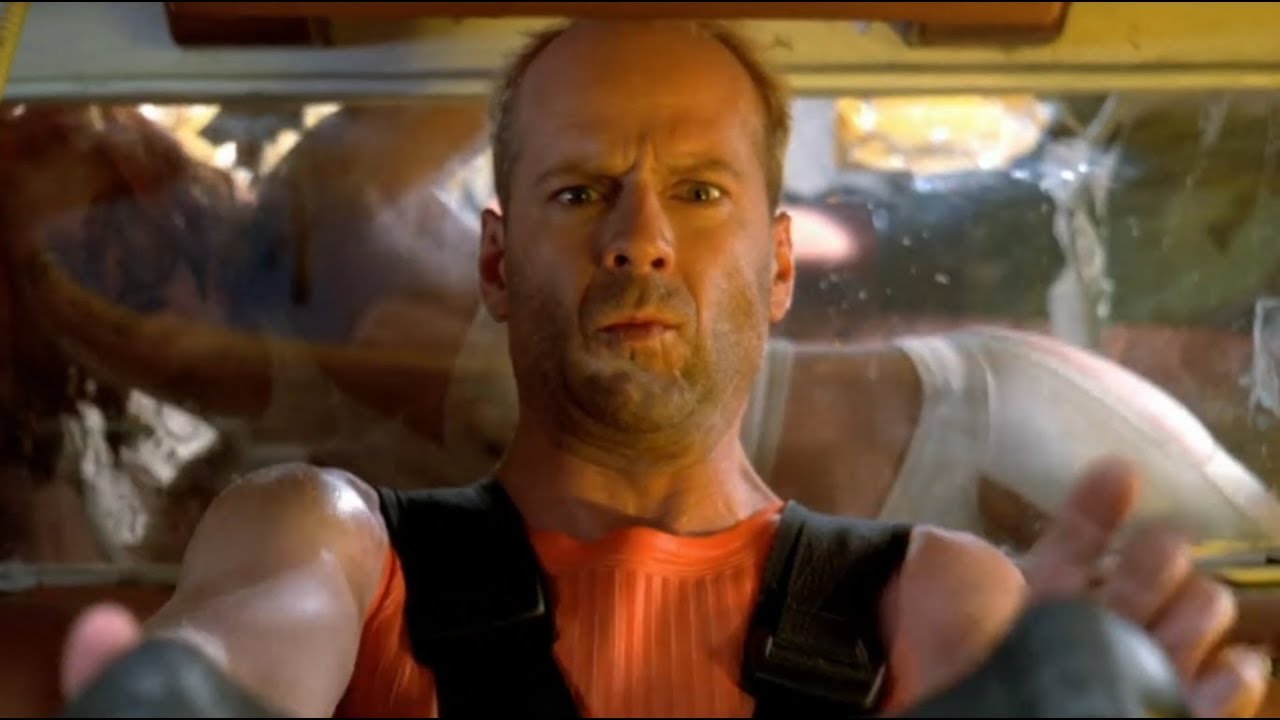
The plot–oh, brother. Ever so briefly—in the 23rd century Earth lies in the path of a giant fireball, ‘The Great Evil’, which shows up every 5,000 years. A secret order of priests knows it can only be stopped by a “fifth element“. It/she comes in the reconstituted bod of a orange-haired alien humanoid chick named ‘Leeloo’, in the willowy, barely clothed form of 20-year-old Milla Jovovich. Priest ‘Vito Cornelius’ (Ian Holm) convinces those in charge of the ‘Federated Territories’ that sacred stones can martial the classical elements of earth, water, fire and air, in conjunction with the suddenly uncovered (like her costuming) fifth. They’re hidden (inside someone/thing) in a floating resort on planet ‘Fhloston’. New York City airborne taxi driver ‘Korben Dallas’ (Bruce Willis), an ex-commando, is assigned to accompany loopy Leeloo to a gala gathering there and retrieve the rocks. Also after the prizes are ‘Mangalores’, grotesque alien mercs who grunt and resemble upright hippos, working with/for ‘Jean-Baptiste Emanuel Zorg’ (Gary Oldman with bonkers hair) who is in league with The Great Evil. There are also good aliens called Mondoshawans, but they get decimated. Don’t be troubled by the How or Why about any of it.
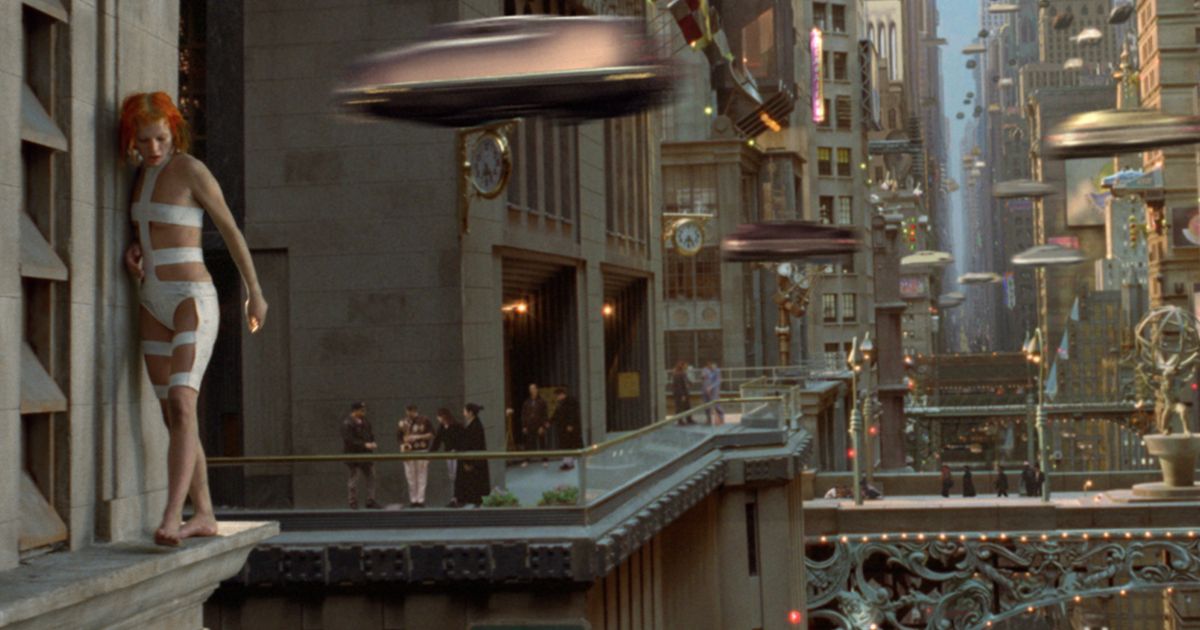
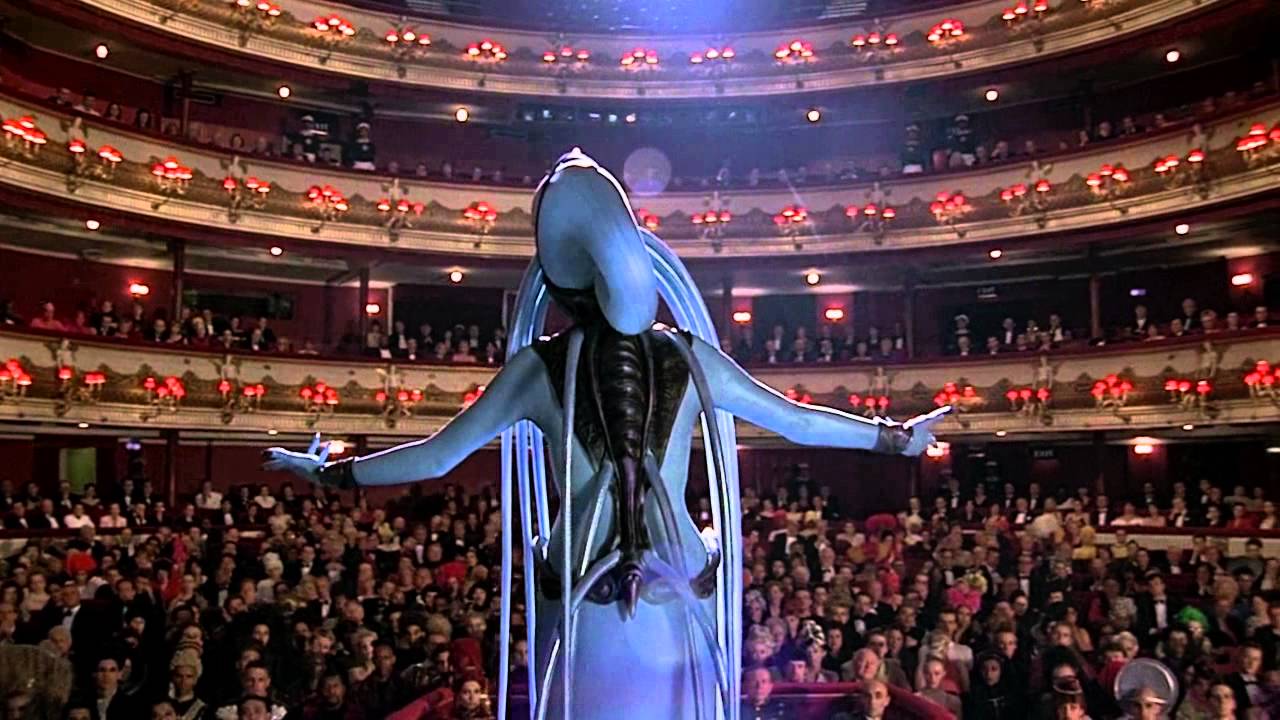
Elements positive—a lot to look at. The sheer amount of production design detailing is very impressive, especially the minutely crafted New York City sequences; on a big screen the traffic flow effects are a dazzle of effects combinations. Eric Serra’s score paces the weirdness well. The striking Milla commands attention, and no, not just for her scanty attire. She brings intense focus, quivering immediacy and kinetic flair to a literally otherworldly character, besting the comic book material. She also deftly handles a 400-word language Besson designed for the character. Back in English, wily pros Oldman (madman mode) and Holm (fumbling sage zone) surge theatrical energy into their roles, investing a good deal more vitality than the Dorksville script deserves. A brief but memorable highlight arrives in the one-of-a-kind musical number from bizarre alien singer ‘Plavalaguna’ (Maïwenn Le Besco, voiced by Inva Mula), a visual and aural showstopper. *
Elements negative—looks help, duh, but the learning curve proves they aren’t everything. The overdding undercut is that the Isn’t This So Very Clever script is straight from high school sophomore smugness. A few gags work, most are obvious, lame and leaden. Pay-me-up-front Bruce may as well be doing a Willis impression; he’s as perfunctory as the character, another retread of the reluctant hero complete with a battery of yawns, tight grins, cigarettes and coffee to prep the one-liners (lousy here) and expected wielding of weaponry. Just as the colorful art direction, neat props and spacey costumes are exacting and the aforementioned performances intense, the obnoxious quotient is rammed into overkill. The Mangalores aren’t cool, scary or funny, just—let’s be high school—butt ugly. After the Plavalaguna knockout the action mayhem is merely loud and frenzied, and goes on too long, with the last twenty minutes dragged to exhaustion. The concept of In-Yer-Face is encapsulated by the shrill twinkiness of Chris Tucker’s strut & bleat ‘Ruby Rhod’, a whine-machine mash of Prince and Michael Jackson. A minute or two would be amusing, more than that (and there’s plenty more) and it feels like a hornet has crawled into your ear. **
A solo Oscar nomination came, for Sound Effects Editing (swallowed by Titanic). The $63,820,000 US/Canada gross ranked 24th, a quarter of the global scoop of $263,920,000, placing it at #9 for ’97. ***
Shot in England, Iceland and Mauretania. In the swarm: Brion James (allowed to be humorous for once), Tiny Lister Jr. (out of his, yes, element) Luke Perry (barely there), John Neville (71, back in the game after The Adventures Of Baron Munchausen), John Bluthal, Lee Evans, Indra Ové, Sophia Goth (sole film appearance from striking model and yoga teacher), Richard Leaf, Laura De Palma and enough stewardess cleavage to sate half the audience and objectify insult the rest.

* Elemental, my dear Luc—Maïwenn Le Besco, 20, was married to Besson (he met her when she was twelve, basing the girl in Leon: The Professional on her); during the shoot he left her for Milla. They hitched, that lasted until they finished The Messenger: The Story Of Joan Of Arc. Maïwenn became a successful screenwriter and director. In 2026 Milla was the highest paid actress in the world.

** Rage on, Ruby Rues-the-Day—Prince, then 38, was originally cast as Ruby Rhod: he would’ve made it bearable, as would the also considered Jamie Foxx, 28 at the time and best known from TV. Jackson, 38 going on 13–and in their company?–no thanks. Perhaps Leeloo’s lingo could explain how some rip in the time-space continuum let Tucker, 25, in from his home planet. After The Fifth Element he briefly hit the big time in the trio of hugely lucrative Rush Hour comedies. He also earned a place in the contact book of a gentleman named Jeffrey Epstein. The Great Evil didn’t come from outer space after all.
*** Detail this! For a supposed comment on capitalist excess (one interpretation of whatever Besson’s inner teen was expressing) this production’s budget expenditures fit in with earlier go-past-lavish-proceed-to-bankruptcy examples like The Fall Of The Roman Empire and Heaven’s Gate. Those two (the first we like, the second gets a slap) both failed spectacularly at the box office; Besson’s opus succeeded. Yet could not the ninety million bucks (at the time the most expensive movie ever made in Europe) shaved off here and there? One single costume designed by Jean Paul Gaultier cost $5,000. The scale models for the New York scenes that took five months for 80 workers to create had them making furniture, light work, blinds and art behind the windows in the 1/24 scale buildings that Korben and Leeloo speed past. It’s the auteurs version of Pentagon spending.