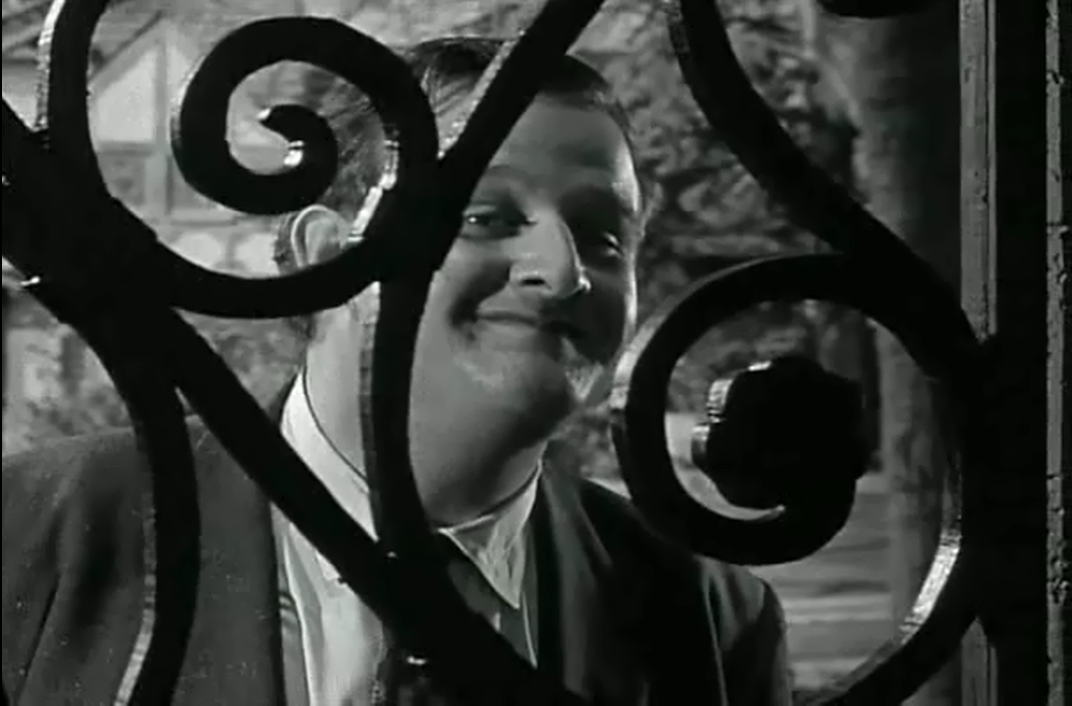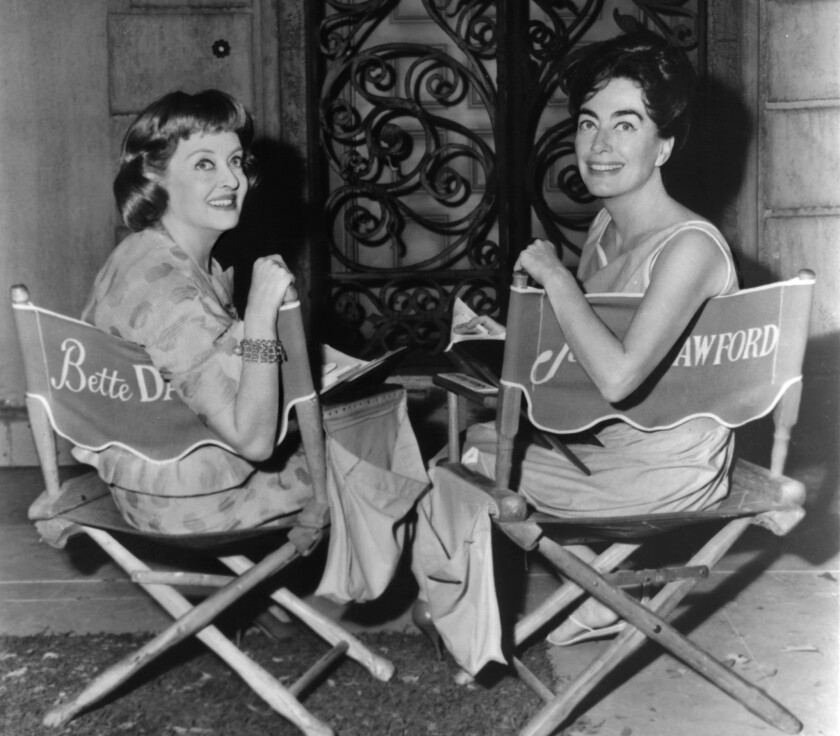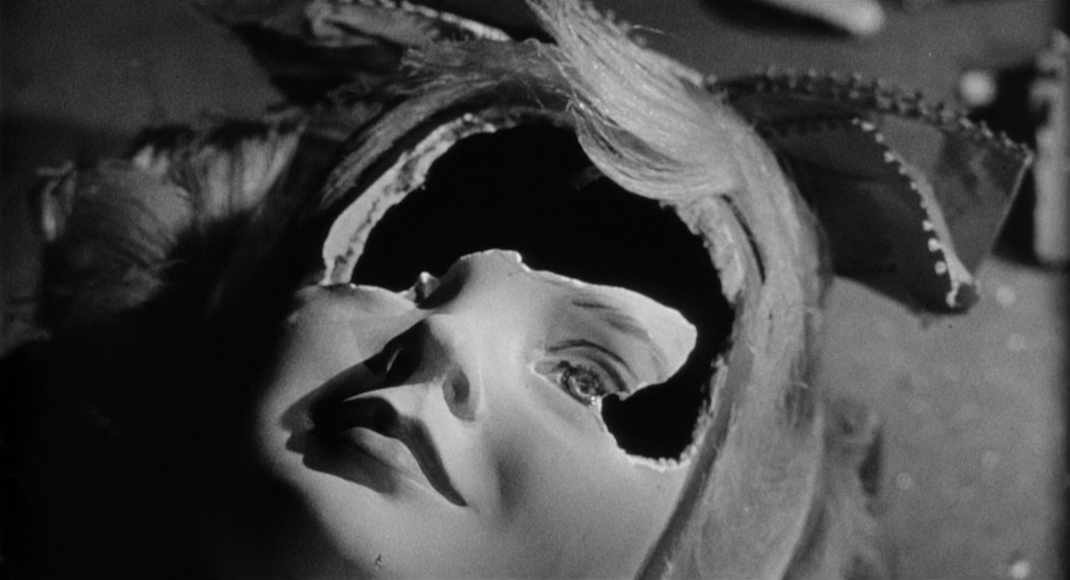
WHAT EVER HAPPENED TO BABY JANE? is something you have to watch the movie to find out, but what happened to the makers of the infamous 1962 hit was a bizarre win for all concerned, and a camp feast for those inclined to snack on excess, presumption and gossip. Legendary divas Bette Davis and Joan Crawford, sly, offbeat newcomer Victor Buono and button-pushing director Robert Aldrich had a demented field day with a script Lukas Heller crafted off Henry Farrell’s 304 page novel.
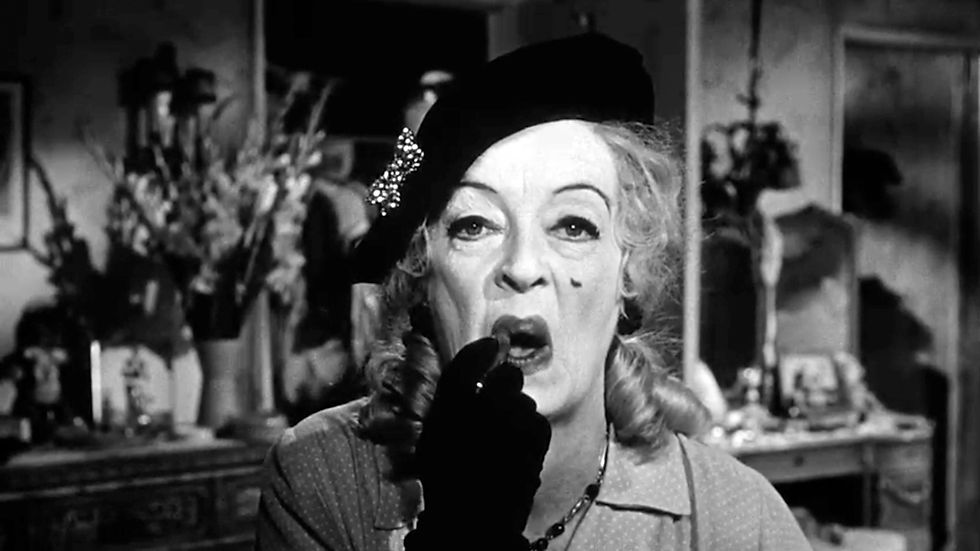
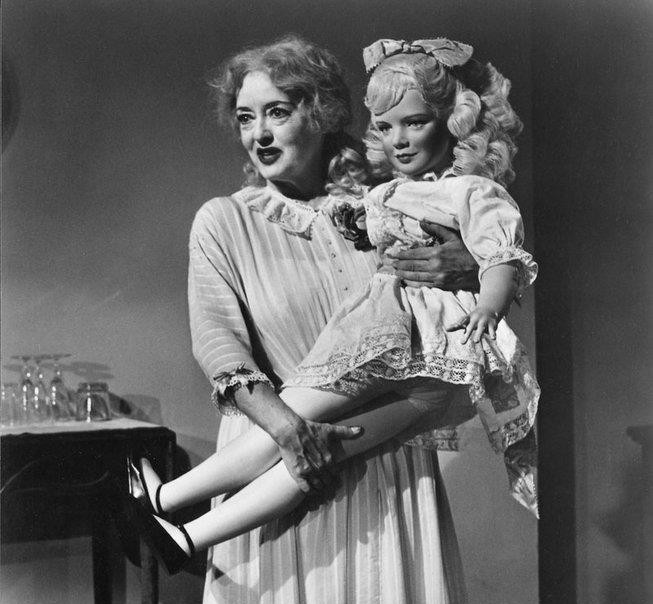
Back in 1917, 9-year-old ‘Baby Jane Hudson’ is a popular vaudeville attraction, singing syrupy songs to her daddy: her manager father plays the piano in their act. Jane’s a little witch, while shy sister Blanche is stuck on the sidelines. When the Thirties arrive, Blanche has become a successful film actress, Jane is on the wane, boozing her way to HasBeenLand. Then a car ‘accident’ literally paralyzes Blanche’s career. Forward to 1962: the sisters share a mansion in Hollywood, living on money from Blanche’s heyday. Blanche (Crawford) is wheelchair bound, dependent on Jane (Davis), who has aged into a haggard, soused caricature of her child self, morphed into an accelerating madness. When not tormenting Blanche, she crazily imagines she can resurrect her Baby Jane act, aided by ‘Edwin Flagg’ (Buono) a work-desperate pianist. Rats are in the cellar, bats in the belfry.
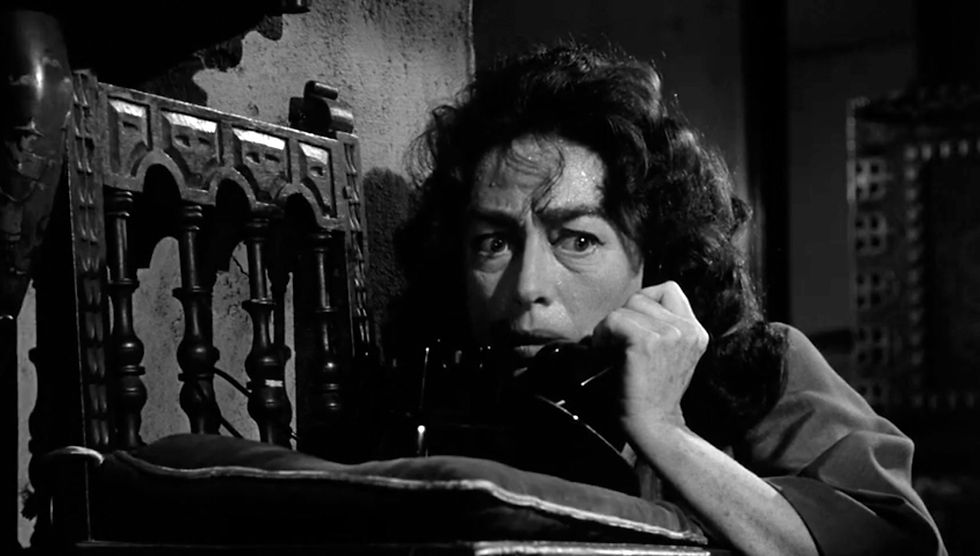
“You mean that all this time we could have been friends?”
As well as directing Aldrich produced (for $1,025,000) and the biz-wise stars opted for less salary and more profit percentage, a move that paid off when crowds donated $10,200,000, #20 on the year’s box office tally. The public response (critics were iffy) and a quintet of Academy Award nominations were a boon to Aldrich, who’d made it thru the helming hassles of Sodom and Gomorrah (also out in ’62) and hadn’t had a big hit since Vera Cruz back in 1954. Davis, 54, and Crawford, 56?, had been working (in projects of varying quality) but their box office appeal as headliners was in the past. Bringing the longtime rivals together in a creepy subject clicked: issues they had with each other were mostly kept out of the job at hand; each came thru like the vaunted pros they were. *
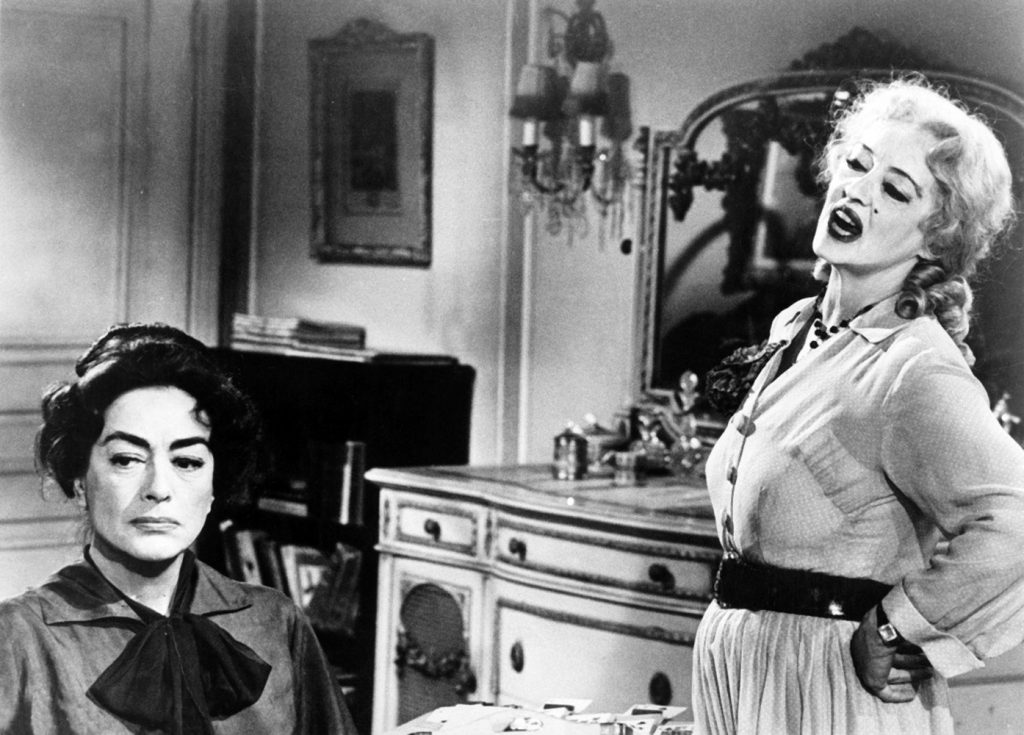
Crawford is quite good (she was ne plus ultra at portraying suffering), but Davis has the bigger and certainly showier role, which she rips into with relish. Mixing malevolence with warped humor and a sickly appearance—the grotesque makeup job for Jane was her own design— almost dares you to watch her; it makes for a bravura turn that grabbed her an Academy Award nomination as Best Actress, her last of 11 (two wins). Buono, 24 in his feature debut, manages to be delightfully repulsive; he did a good deal of sharp (and fun) work afterwards (he was drolly hilarious on talk shows) but none topped his role here. Like Davis, he nabbed an Oscar nomination (Supporting Actor), and others went up for Cinematography, Sound and Costume Design, winning in that category. **
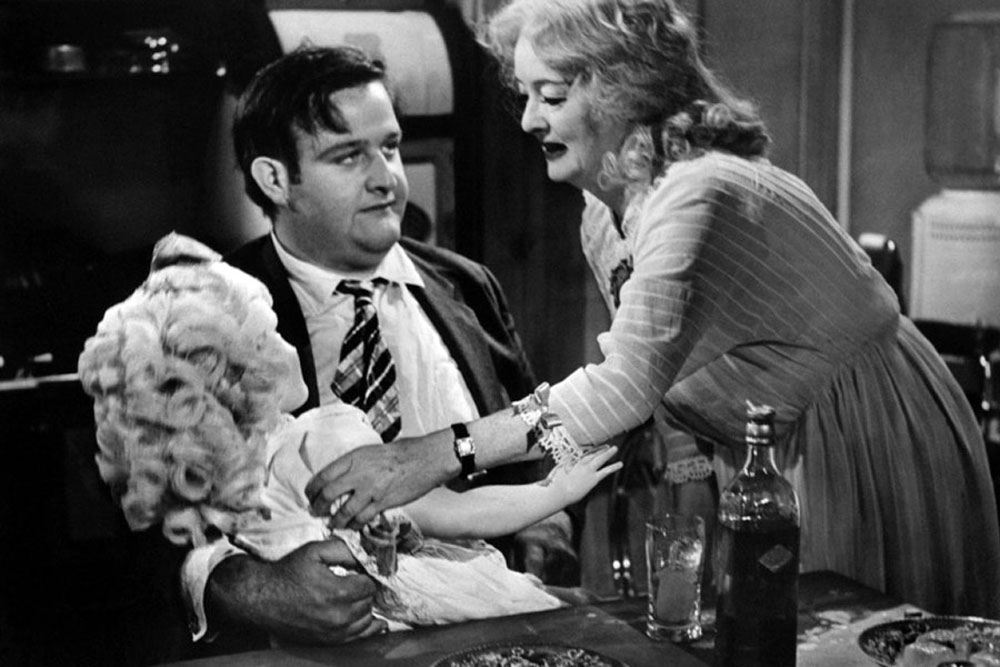
After doing well accompanying the title sequence, composer DeVol’s scoring becomes and stays more insistent than warranted, and his cutesy underlining of a few sequences is more fitted to a comedy than a thriller. Things get increasingly mean and at 134 minutes it’s drawn out more than necessary. Those qualifications noted, it’s otherwise arresting. Ernest Haller’s clean black & white cinematography makes a better fit for the mood and deeds than color, and the let-fly acting from Davis, Crawford and Buono is darkly fascinating. One of the poster tag lines gave patrons fair warning: “Things you should know about this motion picture before buying a ticket: 1) If you’re long-standing fans of Miss Davis and Miss Crawford, we warn you this is quite unlike anything they’ve ever done. 2) You are urged to see it from the beginning. 3) Be prepared for the macabre and the terrifying. 4) We ask your pledge to keep the shocking climax a secret. 5) When the tension begins to build, try to remember it’s just a movie.”
With Anna Lee, Maidie Norman, Julie Alred (Jane in 1917), Bert Freed, Wesley Addy, Dave Willock, Marjorie Bennett, Barbara Merrill (Davis’s daughter), Gina Gillespie (Blanche in 1917), Russ Conway, Robert Cornthwaite, Murray Alper.
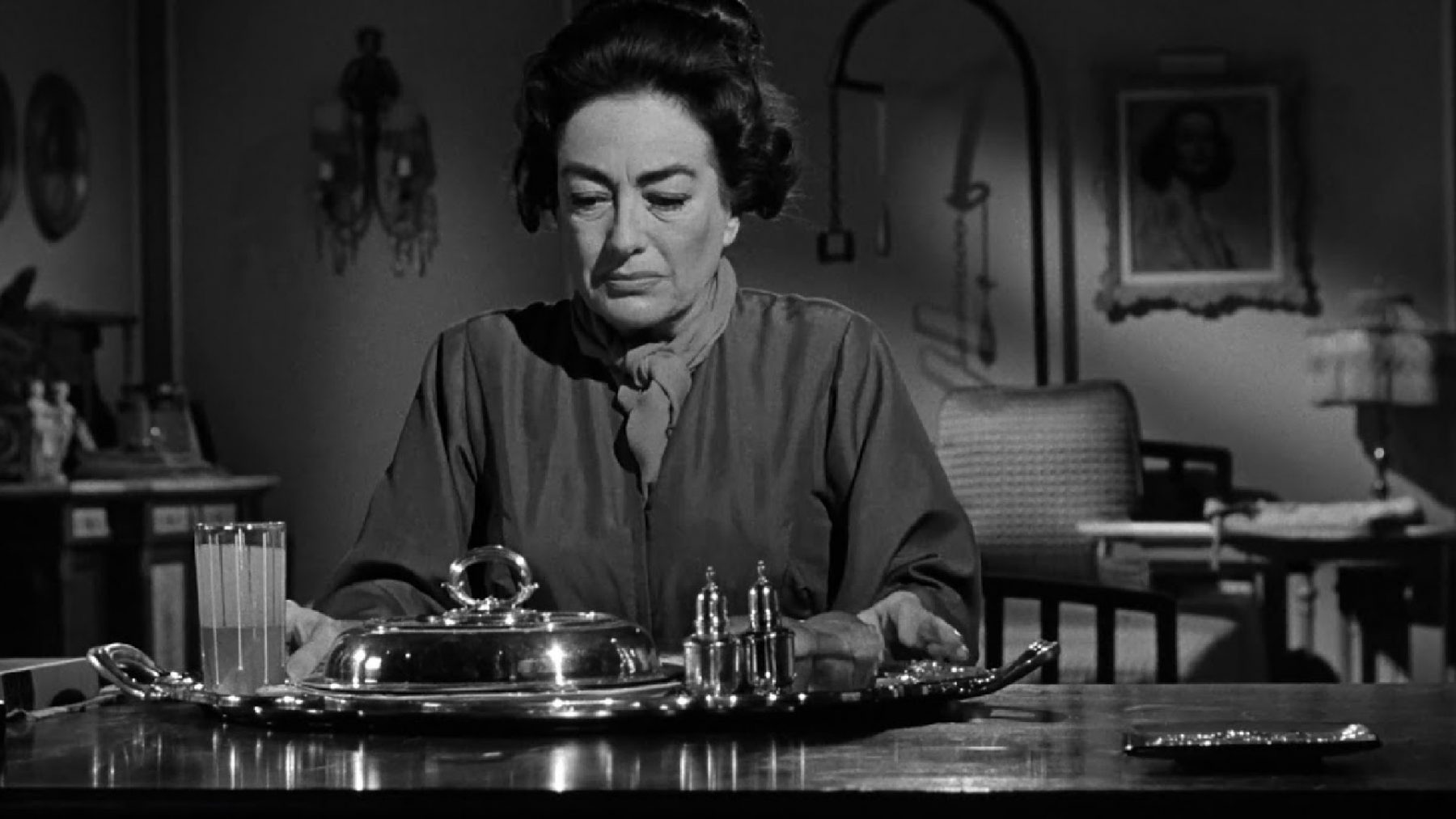
* The Bette v. Joan feud blather is over-documented/rehashed/lied about/done to frickin’ death, so we’ll leave it alone here except for one of Aldrich’s comments: “I think it’s proper to say that they really detested each other, but they behaved absolutely perfectly: no upstaging, not an abrasive word in public. They both behaved in a wonderfully professional manner.”
 ** To the Victor belong the credits—two years earlier Buono had been unbilled in a bit as a guard in The Story Of Ruth. Acting on stage for six years, prior to Baby Jane he’d gained notice on TV, and after this Aldrich deployed him again in Hush…Hush, Sweet Charlotte, playing Davis’s father. He would eventually tally 113 credits before his untimely passing in 1982 from a heart attack at 43.
*** Broadly speaking—the movie kicked off a spate of flicks (ungraciously queen-dubbed as “hag horror”) that would provide late-career shots for not just Bette & Joan (several for each) but Olivia de Havilland (Hush…Hush, Sweet Charlotte, Lady In A Cage), Debbie Reynolds (What’s The Matter With Helen?), Joan Fontaine (The Witches), Geraldine Page (What Ever Happened To Aunt Alice?), Shelley Winters (Whoever Slew Auntie Roo?), Joan Bennett (Suspiria), Elizabeth Taylor (Night Watch), Lana Turner (Sheba) and best of all, Tallulah Bankhead in Die! Die! My Darling!