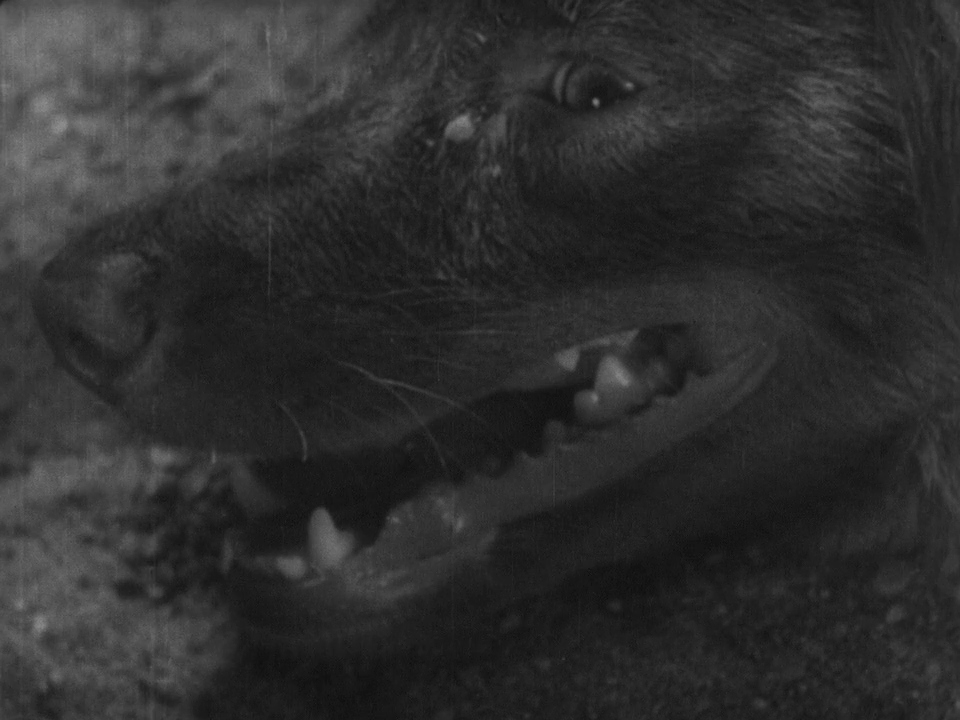
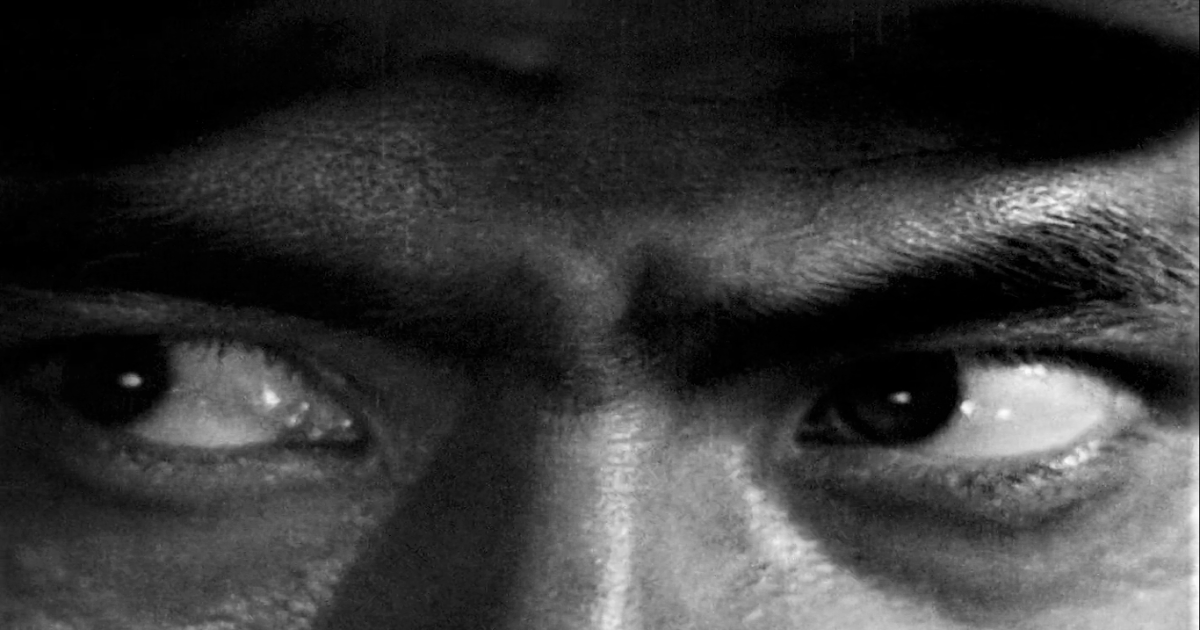
STRAY DOG snarls right out of the gate in the opening credits with a disconcerting close-up of a feral canine, wide-eyed, panting and poised to snap jaws shut on whatever is sympathetically/foolishly extended. Furious scoring from Fumio Hayasaka kicks urgency into play.
“Come to the Cafe Conga on Suzuran Boulevard at 9:00. Talk to the bitch with the white flower.”
Tokyo police detective ‘Murakami’ (Toshiro Mifune), newly promoted to the homicide squad, makes a rough start; on a jam-packed trolley, someone pickpockets his service pistol. Humiliation turns to shame when the stolen weapon is used twice, first in a robbery, then in a murder. Desperate to set things straight, he is teamed with calm department veteran ‘Satō’ (Takashi Shimura), who brings methodology and experience to bear, qualities he seeks to impart to the anxious, frustrated Murakami.
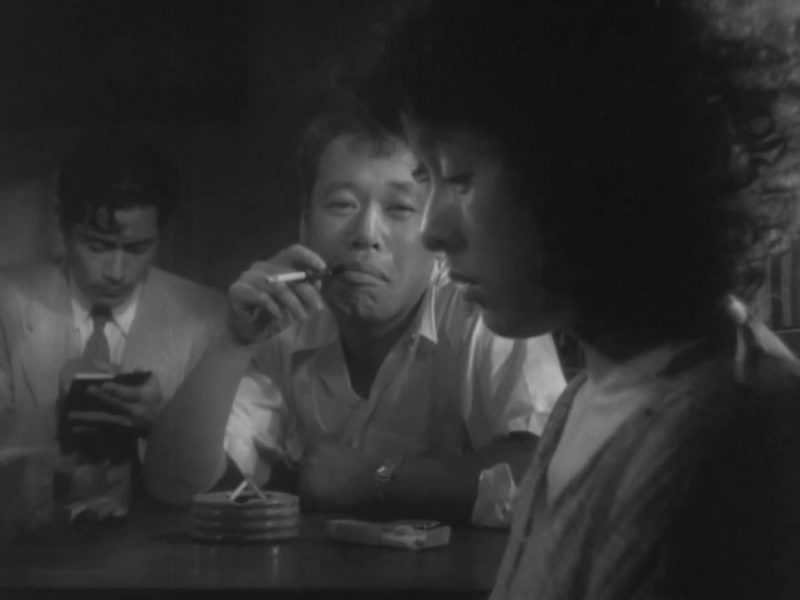
Directed in 1949 by Akira Kurosawa, who co-wrote the script with Ryûzô Kikushima. For their first of thirteen collaborations they drew inspiration from the novels of Georges Simenon and were nudged by the previous year’s US hit The Naked City. While Stray Dog was not the first police procedural film, it did presage the whole ‘buddy cop’ theme that a few decades down the pike turned into its own mini-genre.
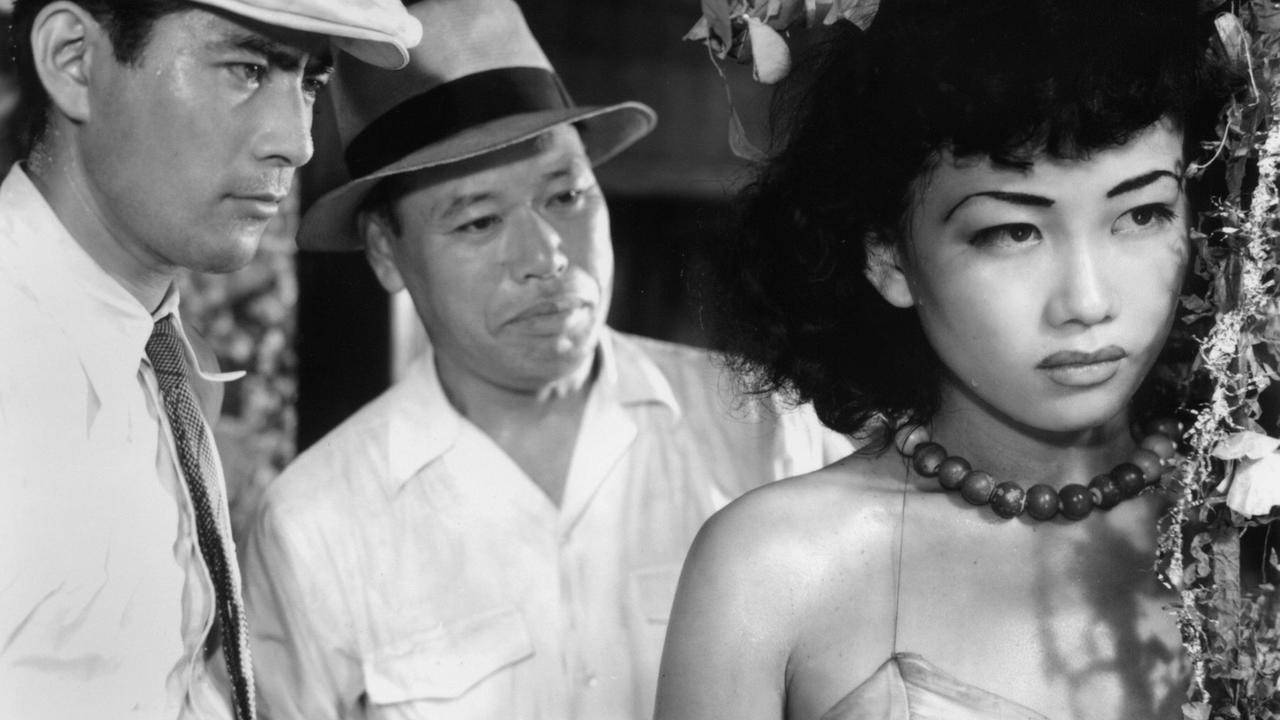
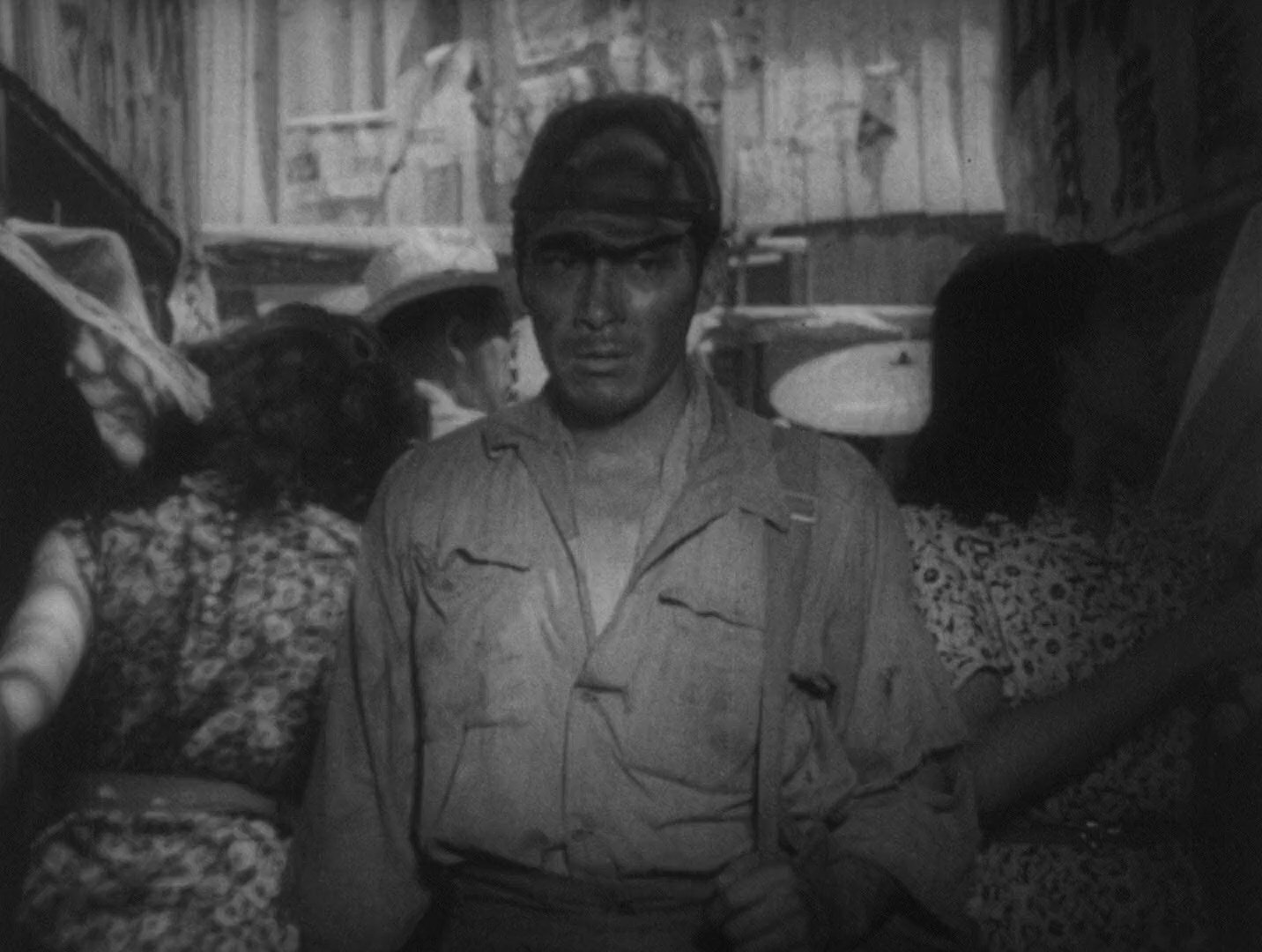
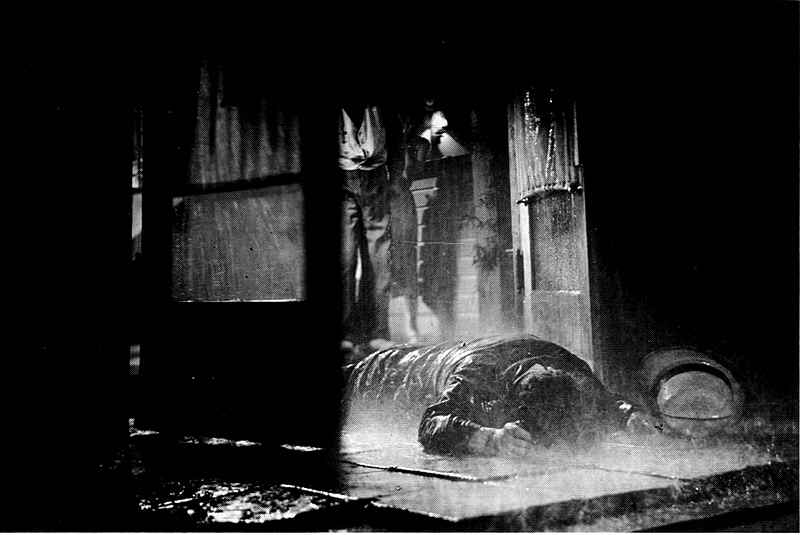
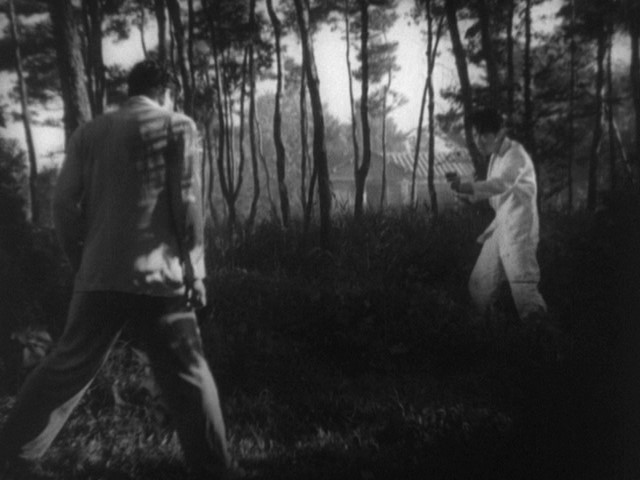
Steeped in atmosphere (literal, it takes place during a sweltering heat wave) and studded by a host of vivid characters, the 122 minute comb thru regions and denizens takes deliberate time to set up and flesh out individual segments yet the pacing never dawdles but instead flows with accumulating tension and detail. Different aspects of the department, layers of the city and revealing sketches of personalities and behaviors reward repeat viewings. The assorted interrogations are intriguing, the ground level looks into teeming Tokyo make fascinating time capsules. As the case expands and deepens we enjoy the growing pupil-to-teacher relationship between the intense, guilt stricken Murakami and old hand Satō, whose laid back demeanor disguises that he’s actually too observant to miss a trick. Highlights include the trackdown of a suspect in a packed baseball stadium, a charming visit to Satō’s family, and the desperate confrontation at the climax. They—indeed each and every scene—are beautifully rendered, fitting perfectly into the investigative puzzle. Perhaps the most memorable is an undercover prowl Murakami takes thru the city’s dodgier seams, a you-are-there nine-minute segment shot by assistant director Ishirō Honda, who would go on to unleash Godzilla, Mothra, Rodan and a galaxy of giant threats to puny humans. *
An unbilled character is the weather, you sense the oppressive heat in the lowering clouds, waiting to break and release just as the case tightens to culmination. We tiff hat (or wipe brow) to one of our favorite reviewers, the hostess of Classic Film and TV Corner, who won a smile with “this is arguably the sweatiest film ever made”. https://classicfilmandtvcorner.wordpress.com/2025/10/07/stray-dog1949/
With Keiko Awajo (16, debut), Noriko Sengoku, Noriko Honma, Reizaburō Yamamoto, Ichiro Sugai, Isao Kimura, and Minoro Chiaki ((30, debut).
* Kurosawa, in “Something Like an Autobiography”, his 1981 memoir—“I had Honda do mainly second-unit shooting. Everyday I told what I wanted and he would go out into the ruins of postwar Tokyo to film. There are few men as honest and reliable as Honda. He faithfully brought back exactly the footage I requested, so almost everything he shot was used in the final cut of the film. I’m often told that I captured the atmosphere of postwar Japan very well in Stray Dog, and if so I owe a great deal of that success to Honda.”


So happy to see you write about this one, Mark. I love it so much. I wish his non-Samurai films were as well known and discussed as the likes of Seven Samurai and Sanjuro.
The sweatiest film ever made has surely got to be either this or Body Heat. Appreciate the shoutout.
Maddy
Glad you were okay with the line swipe. So much going on in that movie. I almost added a “sweaty movie” asterisk, and what came to mind first was “The Bridge On The River Kwai”, then “Yesterday’s Enemy”. “Body Heat” would be there for sure.