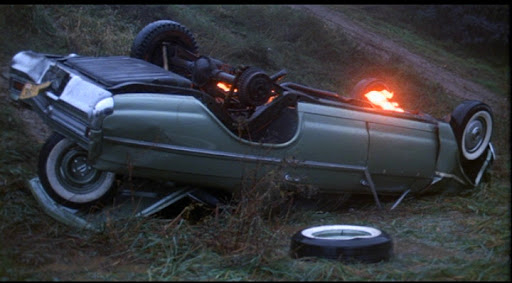
AUDREY ROSE was a box-office letdown in 1977, 82nd place and $5,400,000 made against $4,000,000 spent. Most likely the “what, again?” audience shrug was the perception that it was another dip into the brimstone stirred by The Exorcist and a flurry of furies that spooked the 70’s in the cradle-rocked wake of Rosemary’s Baby. In 1977 alone genre devotees were blessed by Suspiria and cursed by Exorcist II: The Heretic, The Sentinel, Demon Seed and Rabid, so attendance avoidance may have been a case of chiller-overkill. Yet the way critics scorned Audrey Rose was out of proportion, indulging in a collective pile-on that went past dinging subject matter and execution to basically insinuate that anyone who liked the show was mentally deficient. Call me reborn, but my reply to the braying nags is (drum roll) find your pills: take one. Or six. *
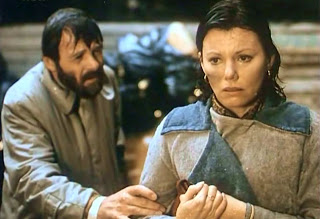
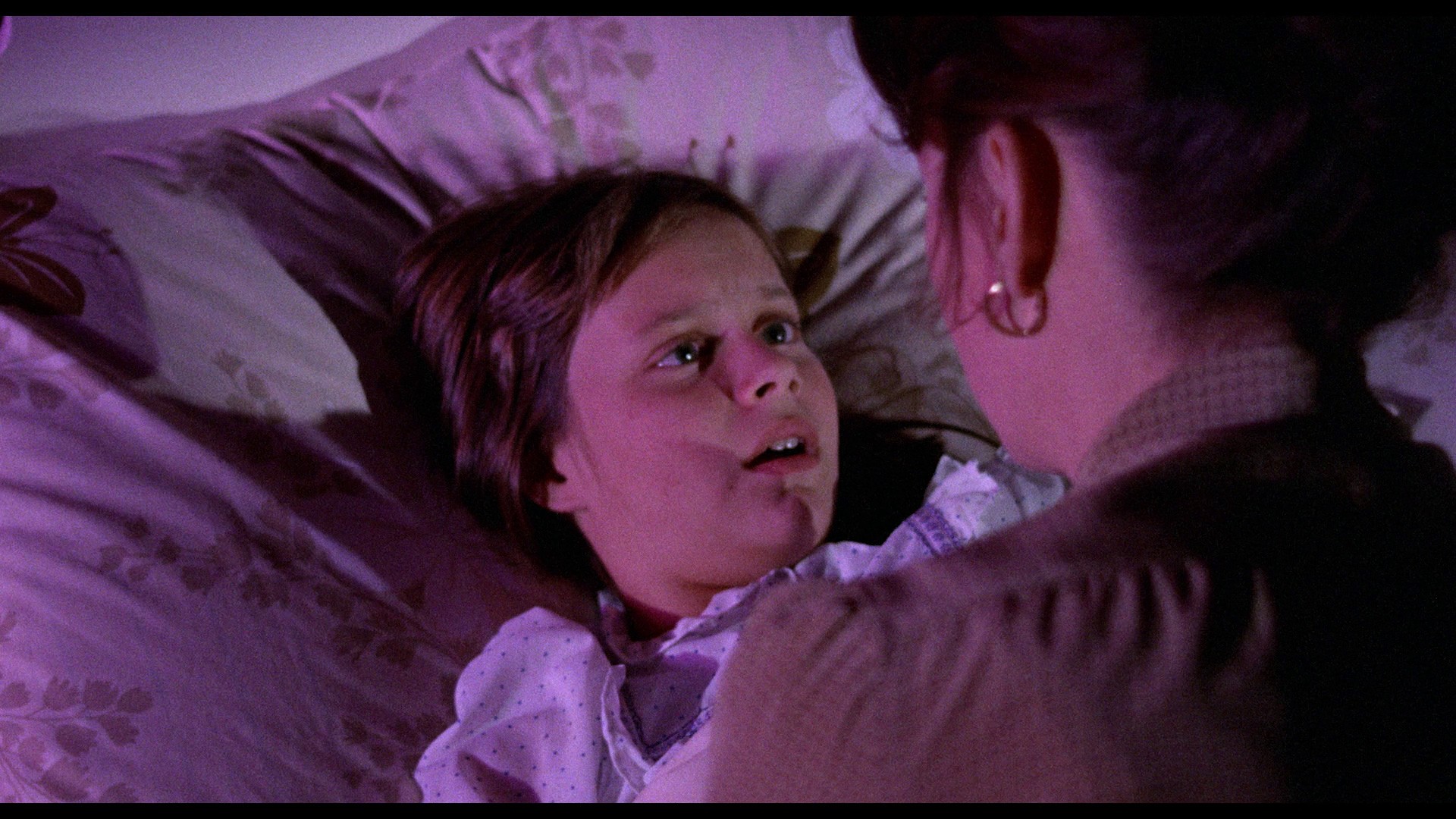
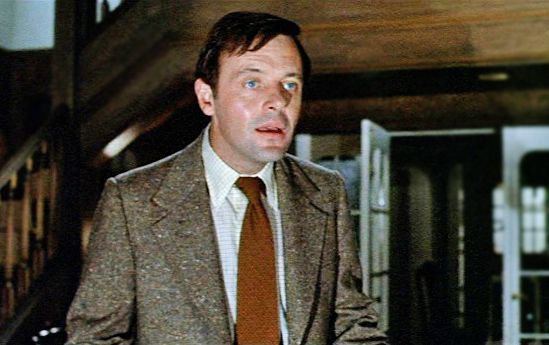
In a tony part of Manhattan, ‘Janice and Bill Templeton’ (Marsha Mason and John Beck) have it pretty good, and apart from occasional bad dreams (night terrors) their 11-year-old daughter ‘Ivy’ (Susan Swift, 13, debut) is a sweet and happy child. But when a stranger starts showing up, seemingly shadowing them in public, they become understandably suspicious of his motives. When they consent to meeting him, he politely reveals himself as ‘Elliot Hoover’ (Anthony Hopkins), a widower whose wife and young daughter perished in a horrific auto accident that occurred eleven years before. He astounds them with his calmly offered belief that his deceased daughter ‘Audrey’ has been reincarnated as Ivy, and that her increasing and horrifically worsening nightmare episodes are the result of Audrey’s spirit seeking release. Is Elliot demented? Ivy seems to be going insane. The parents are split about how to deal with this utterly certain man, their tormented girl/s and the increasingly bizarre situation as it turns from psychological and unfathomable to medical, legalistic and public.
Frank De Felitta adapted the screenplay from his 374 page novel, which sold over three million copies. Robert Wise directed, posting this intimate family spookout between epic-scalers The Hindenburg and Star Trek: The Motion Picture (those made money but all were castigated by reviewers). ’77 saw Mason enjoy a huge win as a frazzled but much luckier mom called The Goodbye Girl, Hopkins notching a plum piece of valor on A Bridge Too Far and Beck managing to make it thru The Other Side Of Midnight.
Unlike lazier filmmakers who would just douse you with effects or cheap carnage, when Wise tackled something that was from the surreal zones you could be sure that, even if the premise was unlikely, it would be thoughtfully presented, proven by The Curse Of The Cat People, The Body Snatcher, The Day The Earth Stood Still, The Haunting, The Andromeda Strain—all excellent; even the flayed misfire of Star Trek: The Motion Picture has some sterling attributes. He commented on this project “I don’t think we’re going to prove reincarnation in this picture, but I’m very open to the whole possibility of the supernatural, the paranormal, the possibility of dimensions out there.” A number of critics took the film—specifically the script— to task for seeming to insist on reincarnation as a reality. Our view is that’s just in keeping with viewpoint of the Hoover character and the suspension of disbelief required by the plot idea, a feature of almost any movie to start with. More valid arguments address basic logic holes and that the third act—the courtroom and hypnosis sequences—push acceptance too far. Fair enough, but committed performances carry the day, quietly impassioned Hopkins being particularly strong, and the nightmarish scenes come across with required intensity. True, young Swift does have a slight resemblance to Linda Blair, which throws some viewers off, but the eruptive terror passages are more readily convincing than the elaborate possession punishments in The Exorcist, which added special effects, makeup and viciousness to jolt audience reactions, bombard-fooling them on a primal level hard enough to temporarily disguise the physically impossible gimmick beneath the dramatic hysteria. At any rate, scorched palms or hurled barf, they’re both just examples of movie make believe, so sign on to whatever inflates your fear vessel.
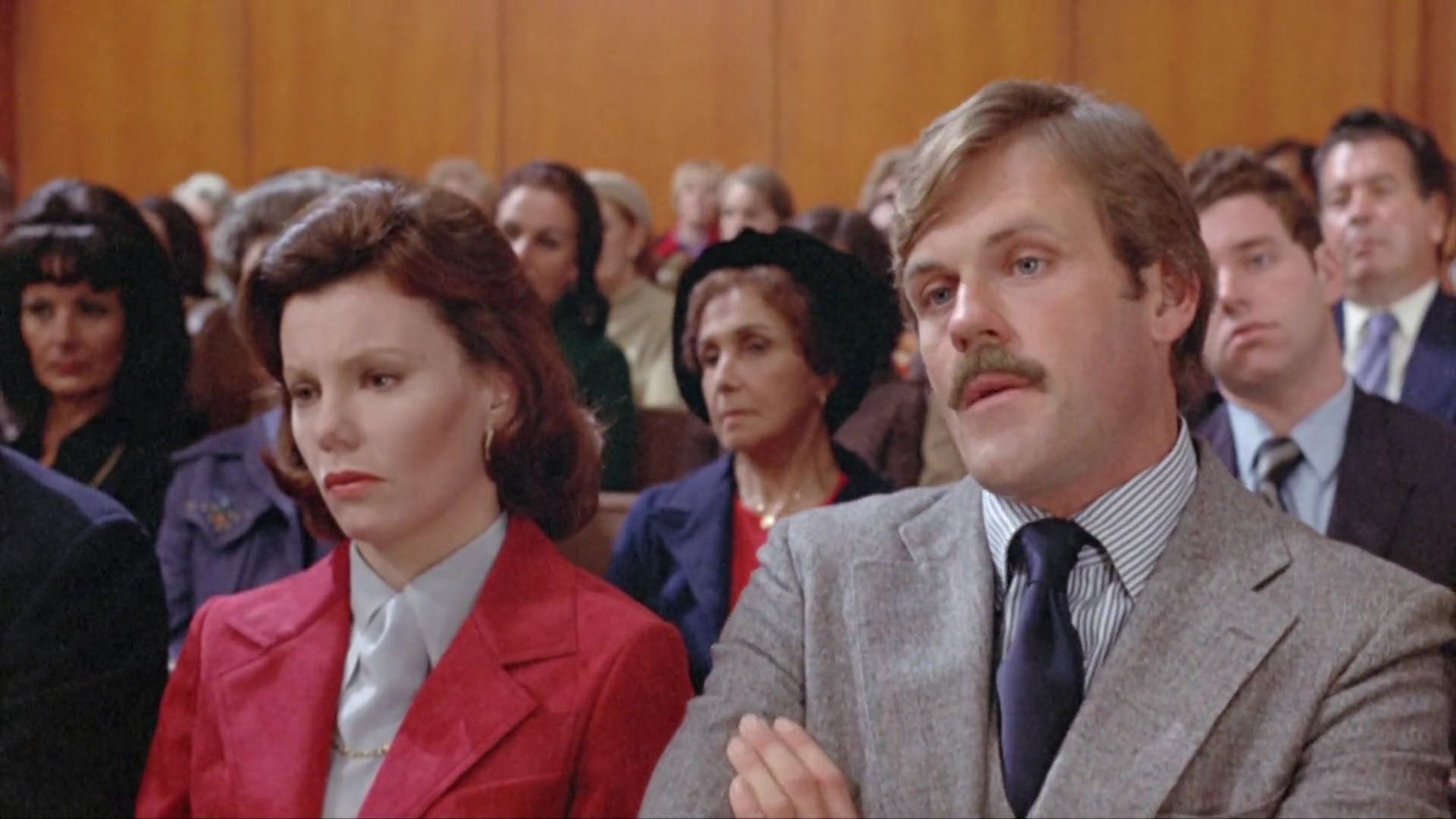
“It sounds bizarre. But I went to India, where I found a way of that was indescribable. I found brutalizing poverty, starvation, death, pestilence. But I also found something else. With all the misery and suffering that those people had to face, there was still a great spiritual peace and joy in their lives because they believe. They believe that this life is not the end. Life and death are not the end. And I believe that now, without the shadow of a doubt. This life, the end? No! This is one act in a vast, cosmic drama, that’s all. Oh, yes…our bodies die, our aged vessels crack releasing the ensnared soul yet again on its vast journey homewards. Through many lifetimes, many lifetimes. Improving with each new life. Not only do I believe this beyond a shadow of a doubt, Mrs. Templeton, but 700,000,000 other people also believe in it.” When that speech is put over by someone as persuasive as Anthony Hopkins you don’t have to commit to the concept, dump your SUV and buy a one-way fare to the Ganges, but you can believe that the character is speaking his truth.
With Norman Lloyd, John Hillerman, Robert Alden, Ivy Jones, Stephen Pearlman and Mary Jackson. 113 minutes.
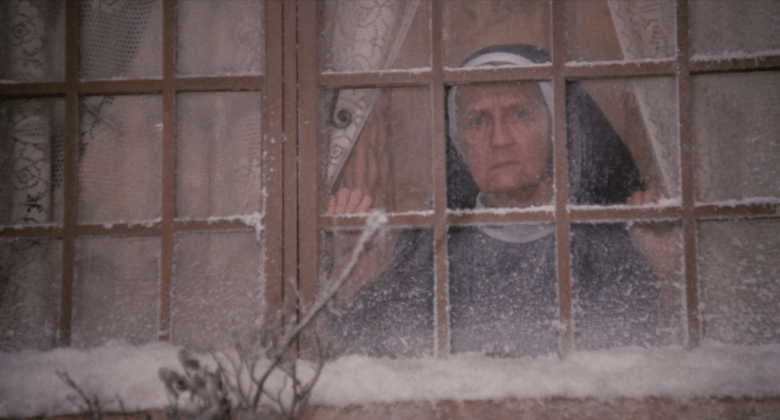
* What’s with the kids, nowadays?—true, this horror entry shared the child-at-peril aspect facing parents in The Exorcist, The Omen, Don’t Look Now and Carrie (okay, Carrie’s mom was a bat out of her own holy hell) but in 1977 there was also devilish company kept by Beyond The Door, Burnt Offerings, The Reincarnation of Peter Proud (sounds like a porn flick, or am I just more twisted than usual?), Tales That Witness Madness, The Tenant, To The Devil A Daughter and The Uncanny, let alone a slew brewed up for TV.
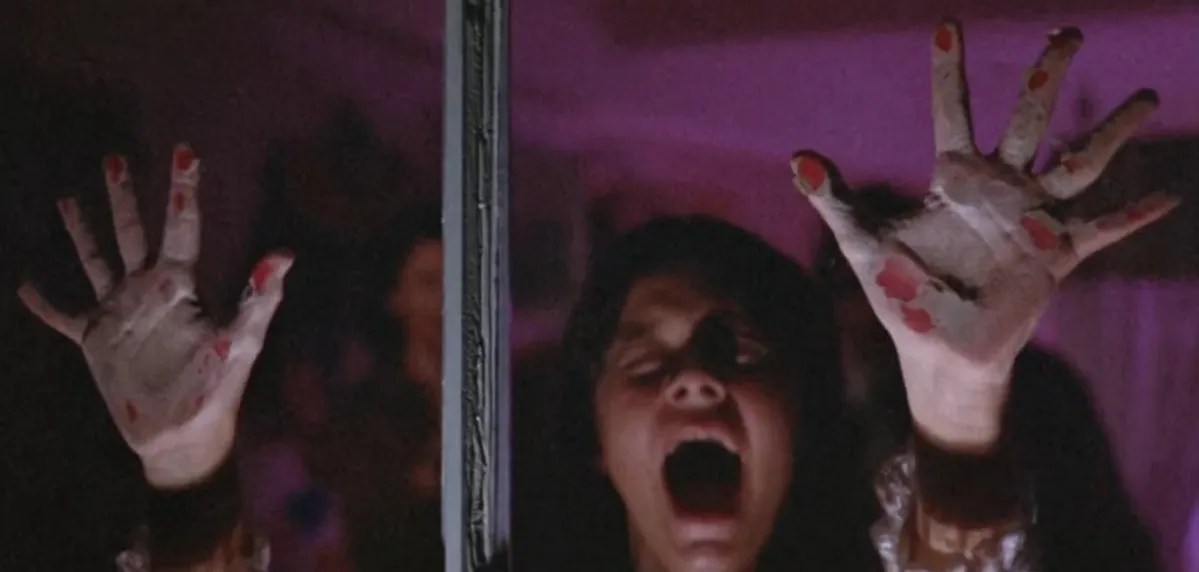 Burnt again—Susan Swift acted in a dozen film and TV projects afterwards, the oddball choice coming in 1982’s barely seen Burned At The Stake,
 half-baked by directed & written by schlockmeister Bert I. Gordon. Miss Swift did dual roles, a witch accuser in 1692 Salem, and a young woman in 1960 who seems to be her…WTF?…reincarnation. Her last acting turn came in 1995, billed 12th in Halloween: The Curse Of Michael Myers.
Attitude adjustments—a couple of deep philosophical musings casually tossed off for the eternity-bound helluvit …personally, I’m not big on using kids as props to frighten people (okay, I know, The Bad Seed) and didn’t read (and won’t bother to) De Felitta’s novel (the next movie made from his work, The Entity, is repulsive). Like a zillion other folks I zipped thru the 385 pages of “The Exorcist” over five decades ago and remember being less than bowled over. Likewise, that flashy film, despite assorted plus points, is absurd on its face, yet somehow hordes of people can accept a pea soup ralphing head twisting around 360 degrees (uh, and the crucifix biz?) and yet snidely dismiss the possibility of reincarnation—in a script, for cryin’ out loud, or Dharma’s sake. Sneer at will, wisdom sifters. Was Shirley MacLaine originally Joan of Arc? Seems a stretch, but there’s a lot of room in the universe. So what in the Alfie is it all about? Well, Yajé knows, and that is jungle-raised truth I will take to the cosmic bank. Just sayin’.
Bonus—dig deeper with the superb piece by Steve Johnson for Bright Lights Film Journal—https://brightlightsfilm.com/hollywood-daedalus-robert-wise-audrey-rose/