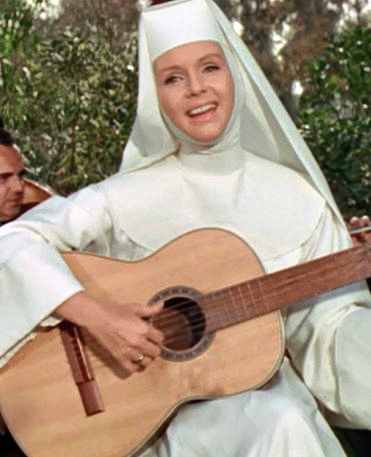
THE SINGING NUN was a box office winner in 1966, a gross of $9,500,000 placing it 33rd among the year’s 130-odd releases. Nestled among salty items like Who’s Afraid Of Virginia Woolf, The Sand Pebbles, Alfie and Georgy Girl (let alone The Wild Angels), critics unsurprisingly scourged it for being saccharine enough to induce anaphylactic shock. Yet its public popularity was also understandable: the subject lady was famous for a lilting song (a #1 hit in 1963), she was played by vetted star Debbie Reynolds, coming off two major scores (great in How The West Was Won, grating as The Unsinkable Molly Brown), and the taken-from-real-life tale was boosted by the world-sweeping success of another sister with pipes saga in The Sound Of Music. But ‘based on’ can span latitudes: the true story of Jeanne-Paule Marie Deckers, better known as Sœur Sourire (‘Sister Smile’) was considerably less sweet. Well, there’s always the song: unless you’re a killjoy by nature, “Dominique” is hard to resist. Humming is not a crime. *
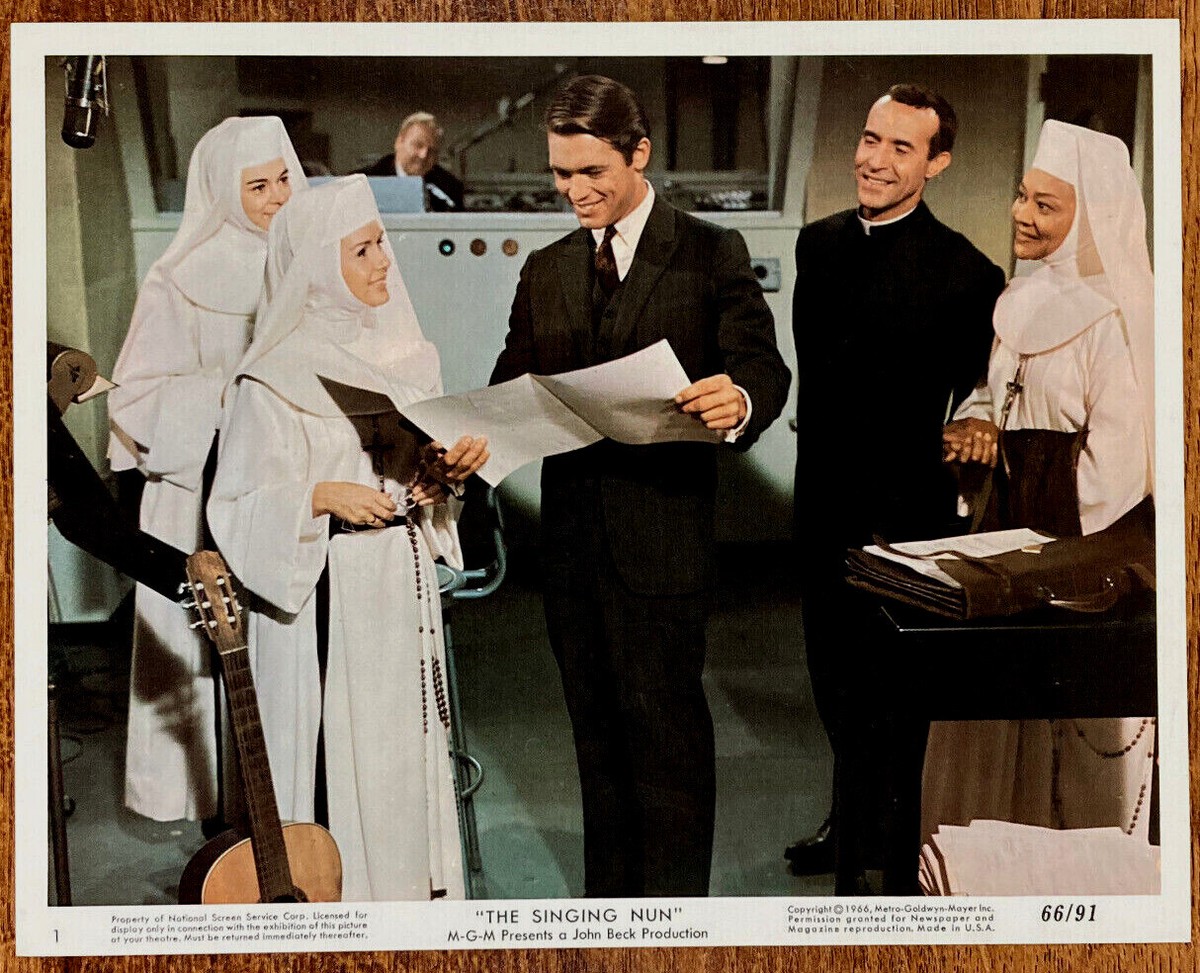
Belgium. ‘Sister Ann’ (Deb) is assigned to serve at ‘Samaritan House’, in a less-favored part of Brussels. Her cheery demeanor and hopeful attitude are accompanied by a gift for singing and playing the guitar. ‘Father Clementi’ (Ricardo Montalban) sees a fund-raising potential and persuades music producer ‘Robert Gerrard’ (Chad Everett), a former classmate of Ann’s, to record some of her tunes. This eventually leads to meeting American TV host Ed Sullivan (playing himself, with about as much animation as he did on his Sunday night show), whose broadcast of the gentle nun strumming and trilling “Dominique” brings her worldwide attention. In the meantime she’s drawn to helping a little boy from a fractured family, and dreams of doing ‘The Lord’s Work’ in Africa.
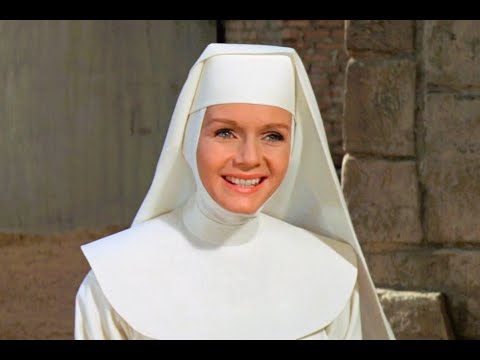 The part about her being a nun, liking to sing, the hit song and Ed Sullivan are correct. The rest of the script, concocted by John Furia and Sally Benson (Shadow Of A Doubt, Viva Las Vegas) is puerile pap, Old Hollybland style bio-hokum. It was a star vehicle for Reynolds that was fraught with bitter squabbles during the production, producer John Beck squaring off with old pro director Henry Koster, both battling the star’s next-to-nun ego for control. Koster expressed his opinion calling it “probably the most difficult thing I ever did. Not the picture but the procedure of production. On that picture there was absolutely nothing but friction. I decided that this was the last thing I’d ever do. I never did another picture.”
That was the on-set drama. On-screen (the sets suitably stagy and obvious) the make ’em smile stuff is unicorn-in-a-candy-store cloying and the ‘serious’ angles are trite and mawkish. Ten songs are sandwiched in. They could at least have mentioned that “Dominique” knocked “Louie Louie” off the top spot on the charts and was simultaneously #1 as both single and album, the first time that had happened. Unlike the uplifting fiction finale for Sister Ann in the film, the post-1966 trajectory of Jeanne Deckers ended in tragedy. **
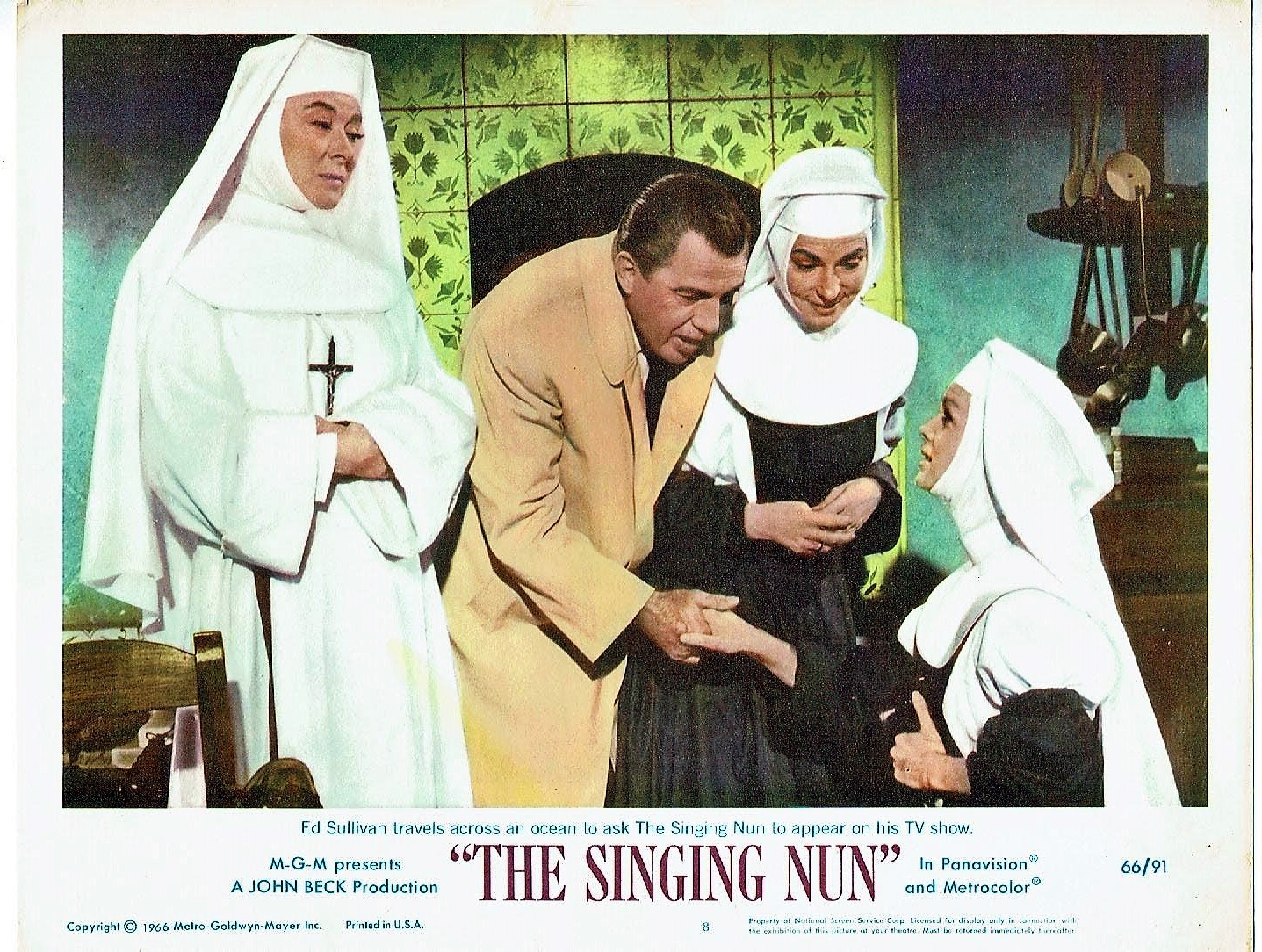
To their credit, the cast soldier thru professionally. Deb, 33, could fake a beam with the best of ’em, Montalban knew how to milk sincerity out of a line as simple as “Yes“, and wise older nuns are dutifully in-habited by deck aces Greer Garson and Agnes Moorehead. To give the sophomores a boost, along with TV-bound Everett (28, getting pushed by MGM after Warner’s took their shot) there is Katherine Ross (26, a year away from ‘Graduating’–sorry, couldn’t let that just lay there) as the embittered older sister (posing for skin mags) of the script’s made-on-demand ‘cute’ kid (cute like a wolverine) named ‘Dominic’ (cringed by Ricky Cordell, 11 going on 7) that Sister Ann takes under one of her wings. Insulin time.
Harry Sukman’s score adaptation pulled an Oscar nomination. With Juanita Moore, Michael Pate, Tom Drake, Larry D. Mann, Charles Robinson and Joyce Vanderveen. 97 minutes.
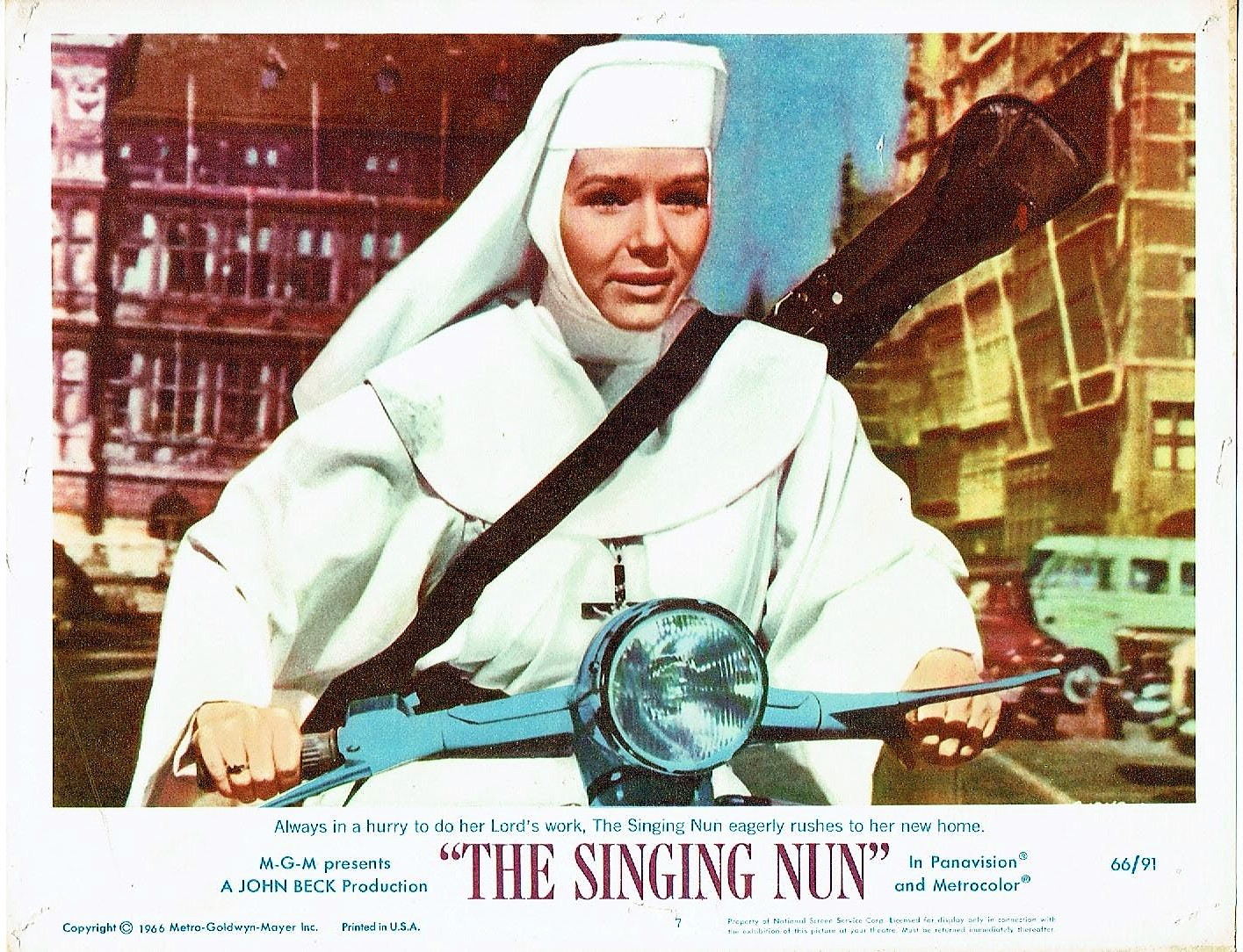
* Holy Vow!—you have Happy Nuns—The Bells Of St. Mary’s, Lilies Of The Field, The Sound Of Music, Sister Act. Determined Nuns—Heaven Knows Mr. Allison, Dead Man Walking, Doubt. Troubled Nuns—The Song Of Bernadette, The Nun’s Story. And, yes, Nutty Nuns—Black Narcissus, Agnes Of God, The Magdalene Sisters, Philomena. Every one of those productions are worthy, a number are classics. Though not in the same pew, we’ll allow The Trouble With Angels (also 1966), simply because of Hayley Mills and Rosalind Russell. Now hold out your penitent palm so it can be whacked with a ruler.
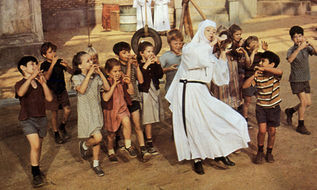
** Pray to prey—other than landing on Sullivan’s show, nothing else in the movie comports with actuality. The same year that the film was released, Deckers, 33, left the Missionary Dominican Sisters of Our Lady of Fichermont after seven years and good deal of dispute: the record company took 95% of the profits from her sales, the church managed to reap $100,000 and then stiff Sœur Sourire in the bargain. Leaving them to their ‘faith’, she kept her own and pursued singing, but further success in that vocation soon dried up. The Church wasn’t exactly pleased when she released a 1967 ditty defending contraception, “Glory be to God for the Golden Pill”. She and life-partner Annie Pécher opened a school for autistic children. Like the music career that also failed when Belgium demanded back taxes that the couple were unable to pay. Individually and jointly plagued by depression, nervous breakdown and maladies of mind and spirit, battered down by the power and reach of ‘authority’, in 1985 Jeanne and Annie committed mutual suicide. They left a note: “We hope God will welcome us. He saw us suffer.”
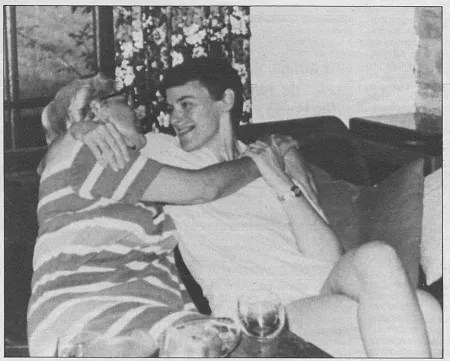
Jeanne (on the left) and life & death partner Annie

