A TIME TO KILL arrived on screen in the summer of 1996, seven years after it was published as a novel, the first written by John Grisham, a hefty tome that became a bestseller after the smash success of his second, The Firm. Grisham’s 672 pages were streamlined by screenwriter Akiva Goldsman (The Client, A Beautiful Mind, Cinderella Man) into a tension-stoked 149 minutes of running time. Variable director Joel Schumacher knocked down one of his best jobs guiding a stellar cast in a plush $40,000,000 production, steam-heated by volatile subject matter and sultry location ambiance. Critics liked the acting; the public made it the year’s 10th most-attended show, raking in $108,766,000 domestically. Foreign markets added $43,500,000. *
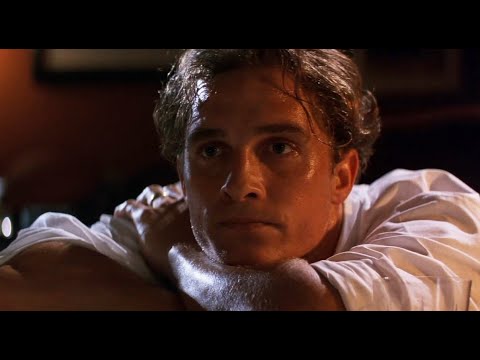
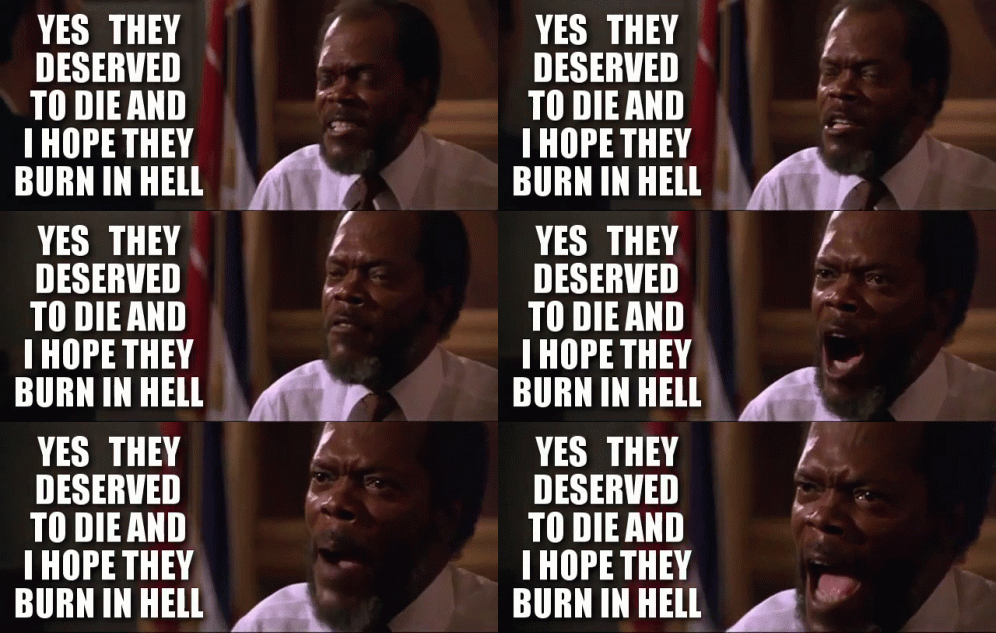
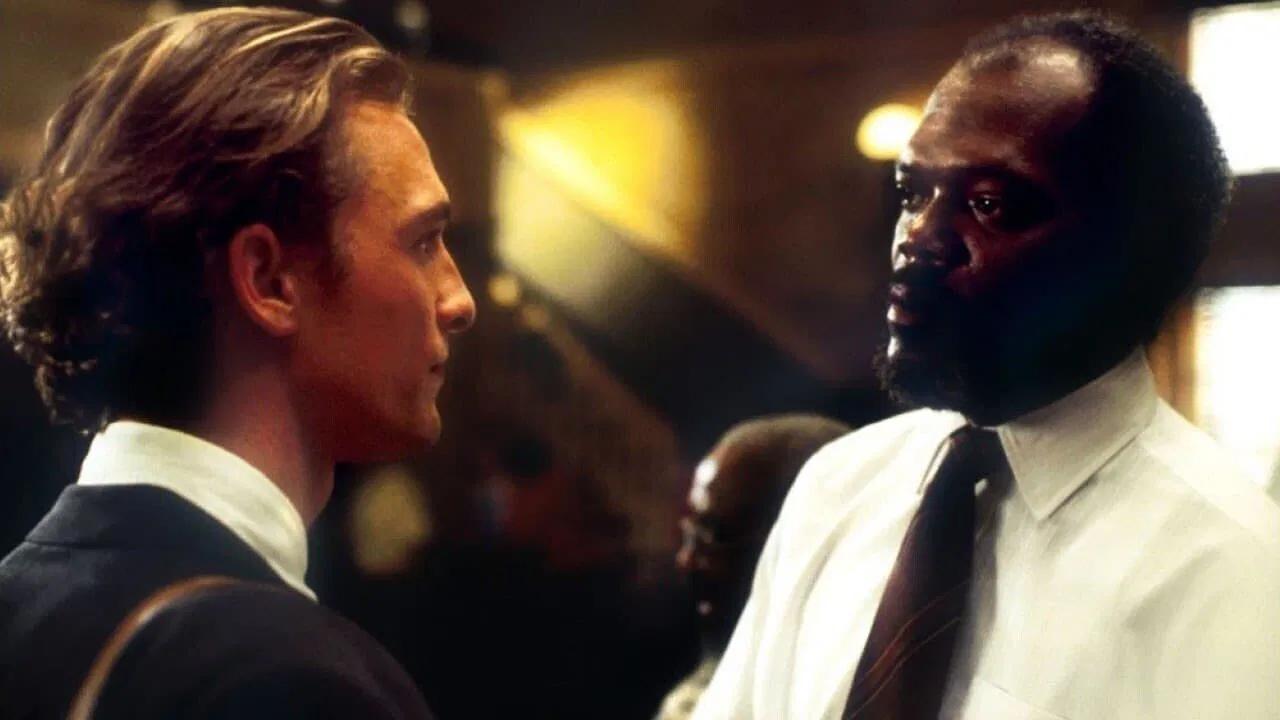
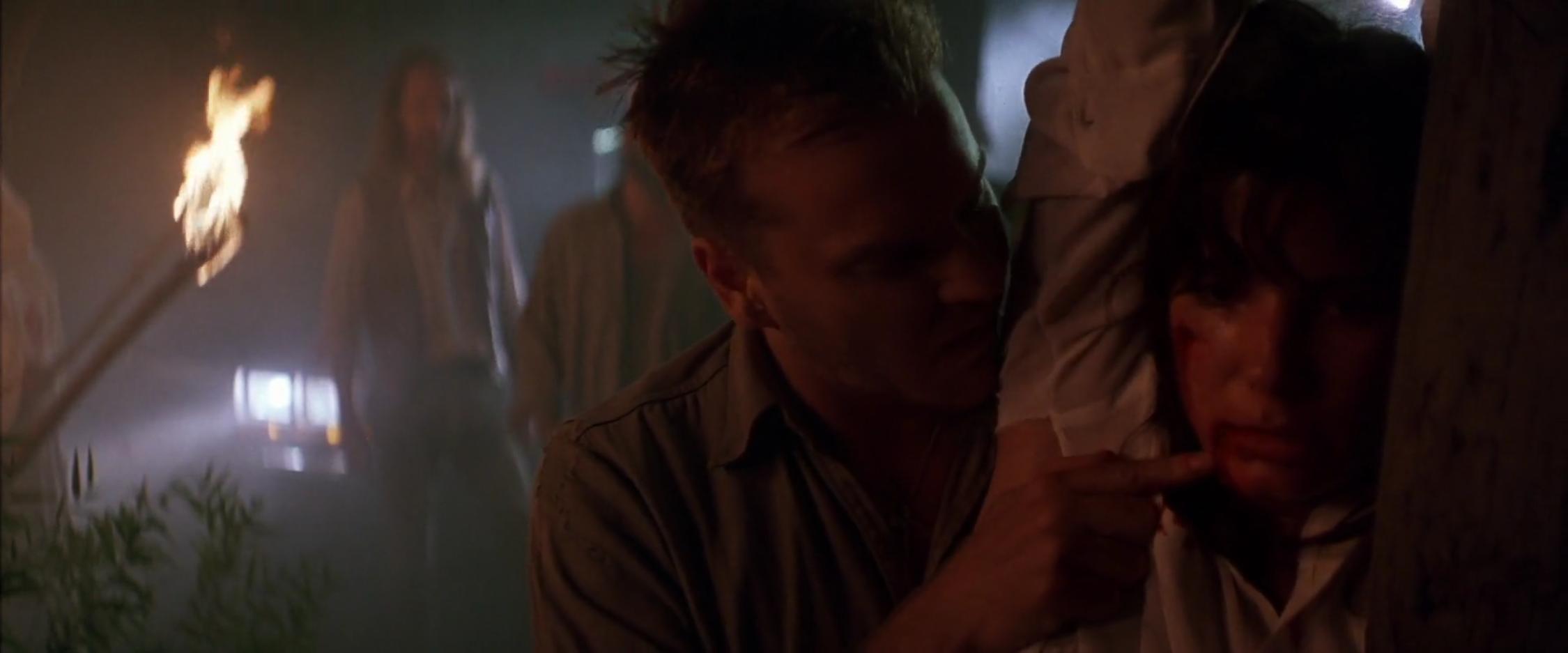
‘Clanton’, Mississippi, sweltering in its perpetually simmering cleaves of race and class. Walking home with groceries, ‘Tonia Hailey’ is abducted, raped, beaten and left for dead by joyriding pukes ‘Billy Ray Cobb’ and ‘Pete Willard’. The ten year old girl is black. The ‘men’ are pure-bred white trash, latter-day Rebs with the I.Q.s of slugs and the empathy of reptiles. Anguished father ‘Carl Lee Hailey’ (Samuel L. Jackson) is told by his acquaintance, white lawyer ‘Jake Brigance’ (Matthew McConaughey) that, given the way things too often work in Dixie, it’s likely that the scum, who’ve been arrested, may walk. Carl Lee decides that further atrocity cannot be allowed to happen, and as a bloody result he goes on trial for murder, having offed the pair—in full public view. Whether or not his act was “in cold blood” is left to Jake to defend, in a trial that threatens to rip the racially divided community apart. Assistance for the outgunned defense comes from ‘Ellen Roark’ (Sandra Bullock), a sharp, ambitious law student (and a ‘Yankee’), but her nervy help is more than countered by the high-powered, politically-minded prosecutor ‘Rufus Buckley’ (Kevin Spacey), a questionable judge in ‘Omar Noose’ (Patrick McGoohan) and a deck-stacked ‘jury of peers’. The NAACP takes notice. Then the KKK shows up. Good thing it ain’t Alabama.
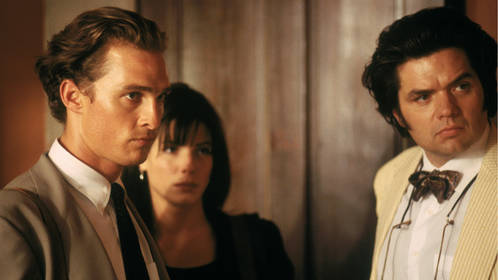
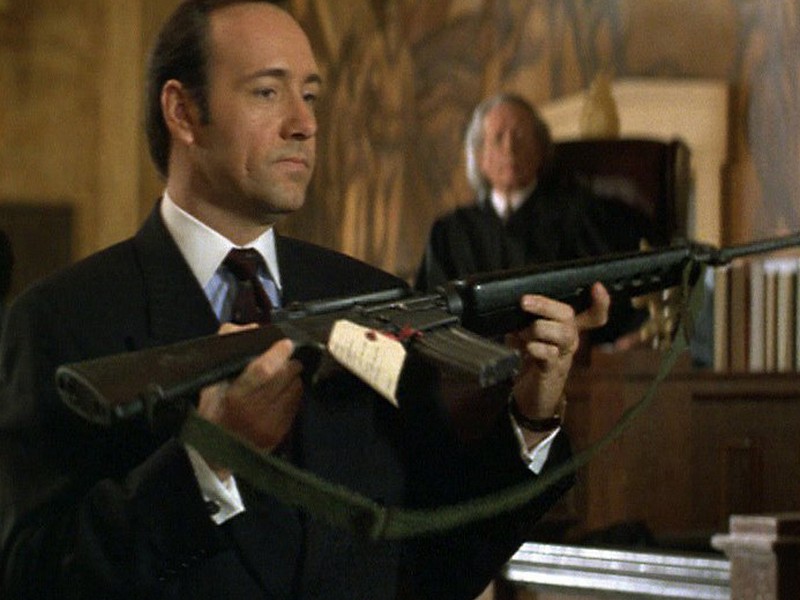
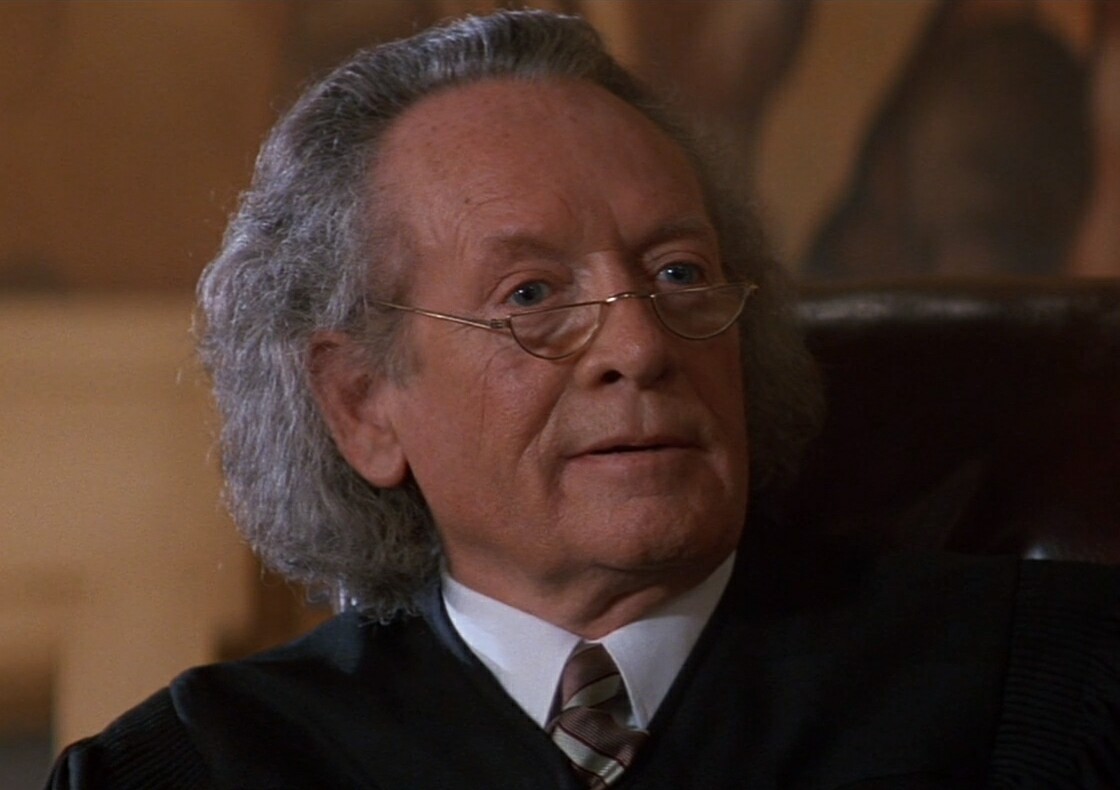
The charismatic leads are backed by a bulging gallery of talents in support. Foremost focus is on the fulcrum character of Jake; for McConaughey, 26, (third-billed after Bullock and Jackson) this complex part and the film’s success put him into official star status three years after toking onto the scene in Dazed And Confused. Bullock is slyly charming, Jackson customarily intense. Spacey does a smooth warm-up for his cunning political animal ‘Frank Underwood’, lying in wait on House Of Cards, and wily scene-swiper McGoohan previews some of the cold steel he’d unsheathe for Braveheart. Kiefer Sutherland dons his nasty side as dead dog Cobb’s brother ‘Freddie Lee’, just as vicious but smarter, eager to draw in the masked cretins of the Klan. Schumacher and cinematographer Peter Menzies Jr. (The Great Raid, The 13th Warrior) soaked up the baked-in vibe around the subtropical byways of Canton, Mississippi—there should have been a credit for Sweat Wrangler.
With Oliver Platt, Ashley Judd (glistening in perspiration that’s practically an advertisement for four poster beds), Donald Sutherland (Jake’s boozy mentor), Charles S. Dutton (redoubtable police chief ‘Ozzie Walls’), Brenda Fricker, Chris Cooper, Kurtwood Smith (as ‘Stump Sisson’, Wizard of the area Klan), M. Emmet Walsh, Anthony Heald, Joe Seneca, Nicky Katt (perfectly vile as the abruptly dispatched Billy Ray), Tonea Stewart, Beth Grant, Mike Pniewski, Doug Hutchison, John Diehl, Rae’ven Larrymore Kelly and Octavia Spencer (25, debut).
Nicky Katt, 1970-2025
* Objection overruled—Grisham’s debut book was rejected by 28 publishers before #29 finally took it up, peddling a mild 5,000 copies. Republished after The Firm went supernova, it eventually rang up more than 20,000,000 sales. Of his 50 novels that have been published as of 2026 (between three and five hundred million sold), eight (and one original screenplay) have been turned into movies. Most won their cases—this audience gripper, The Firm, The Client, The Pelican Brief, Runaway Jury, The Rainmaker. Three failed to pass the bar: The Chamber, The Gingerbread Man (not a Grisham book, but his original screenplay), Christmas With The Kranks.
“You can’t handle the truth!”—Grisham’s story for A Time To Kill was based on a trial he’d witnessed in 1984; two girls, 16 and 12, testifying to their home invasion rapes, bludgeoning (pistol whipping and battering with the stock of a shotgun) and stabbings (20 times with a barbecue fork, vicious enough to bend it), assaults that miraculously didn’t kill them. The ‘human’ male who did it was sentenced to life in prison. How’s the soap, bro?