OPERATION PETTICOAT, though dated, remains entertaining as a well-produced, adroitly cast, smoothly directed ‘service comedy’. A huge hit in 1959, the year’s third most popular after Ben-Hur and Sleeping Beauty. At the time this was Universal’s biggest success, plus the $26,600,000 gross was the then-highest ever for a comedy. Blake Edwards produced & directed a script written by Stanley Shapiro and Maurice Richlin, their work scoring an Oscar nomination. Filming was done on and off the Florida coast around Key West, posing as the WW2 Philippines. Plenty of US Navy cooperation gave the $3,000,000 lark a large-scale patina. Cary Grant, Tony Curtis and a bevy of damsels in a pink submarine: no wonder we won. History/schmistory debunked below. Dive! Dive! *
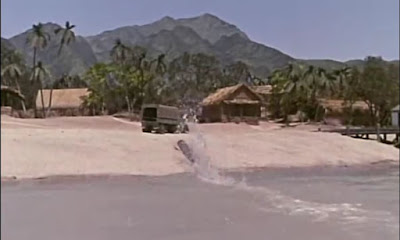
“We sunk a truck!”
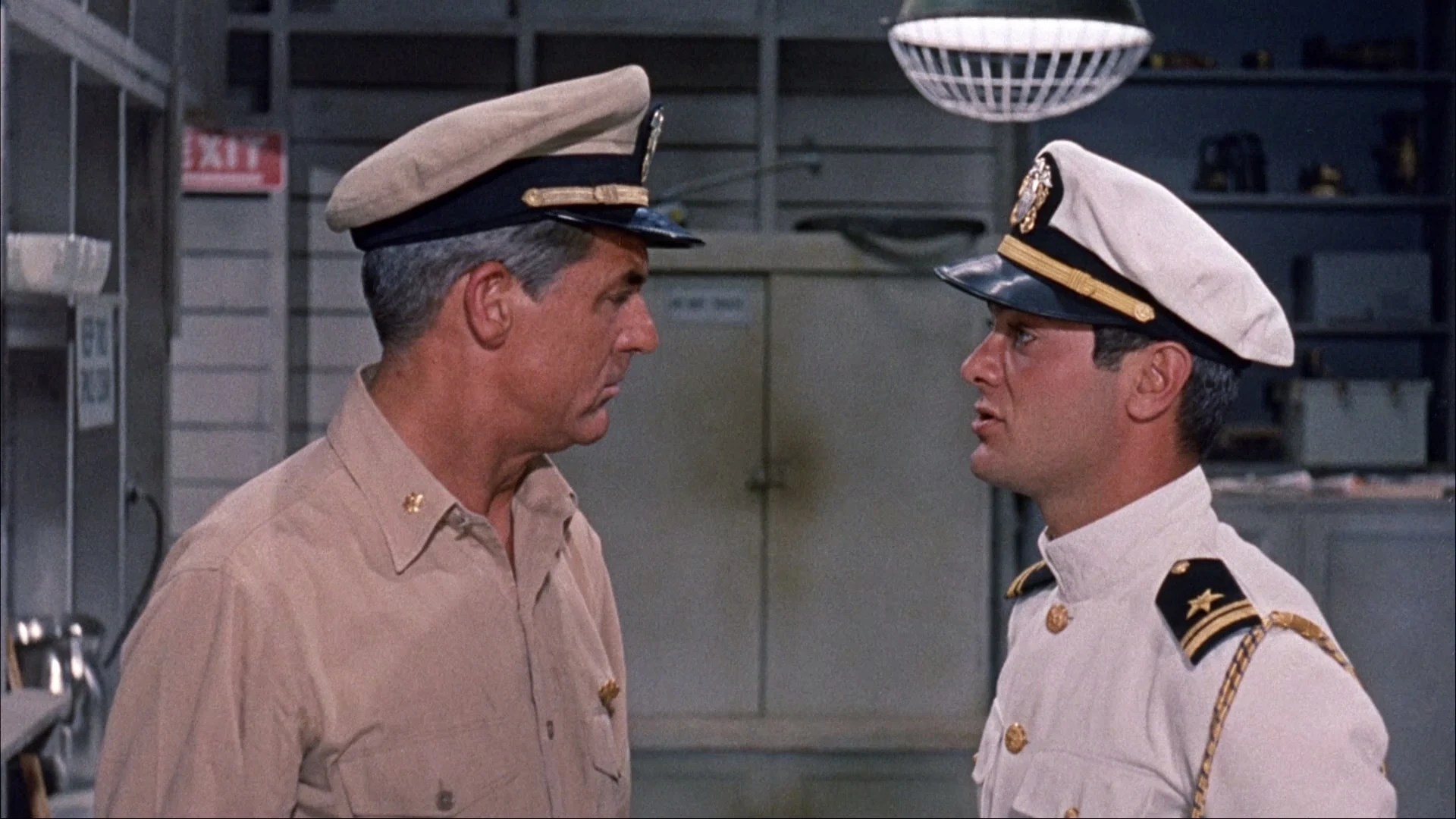
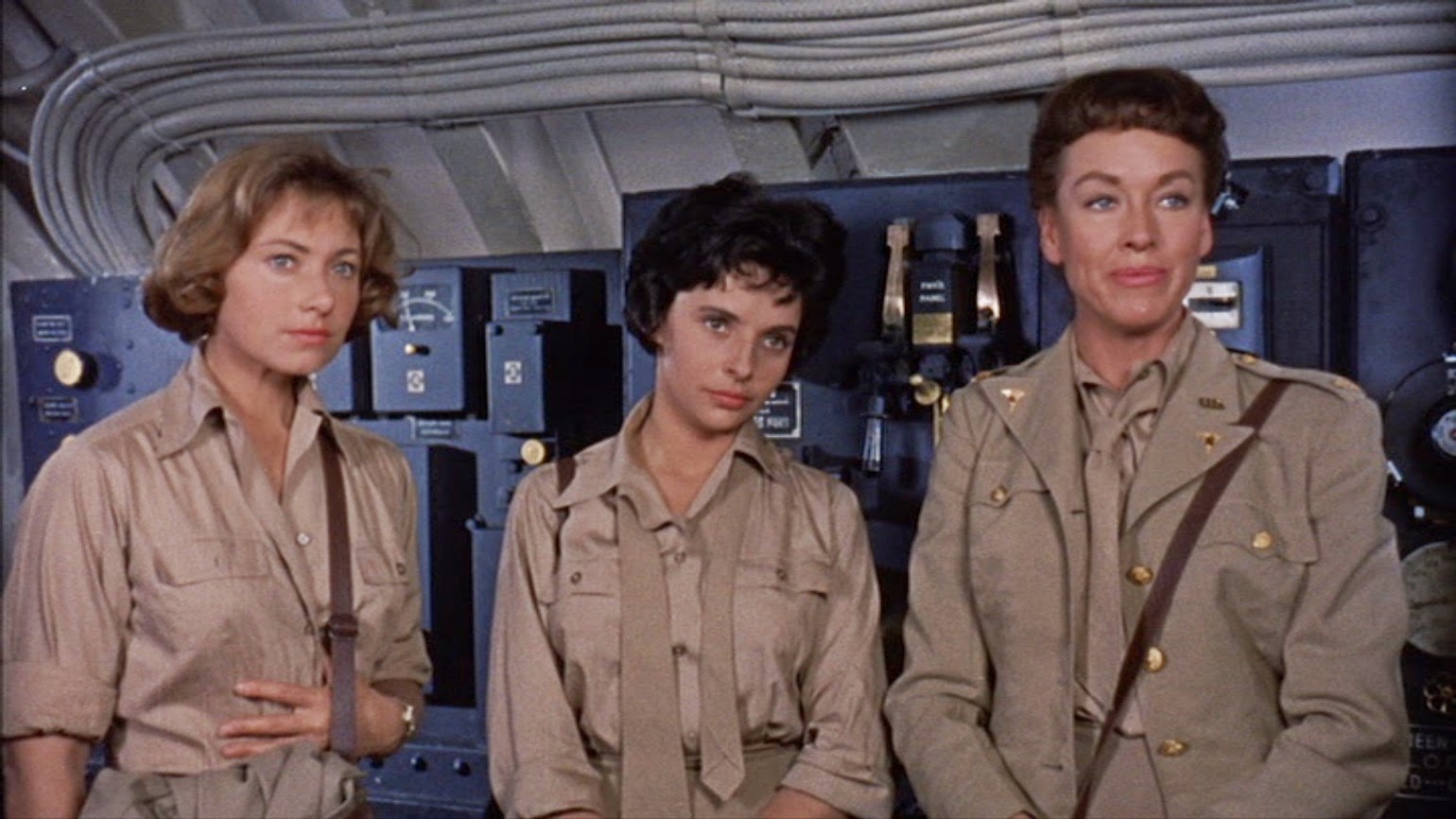
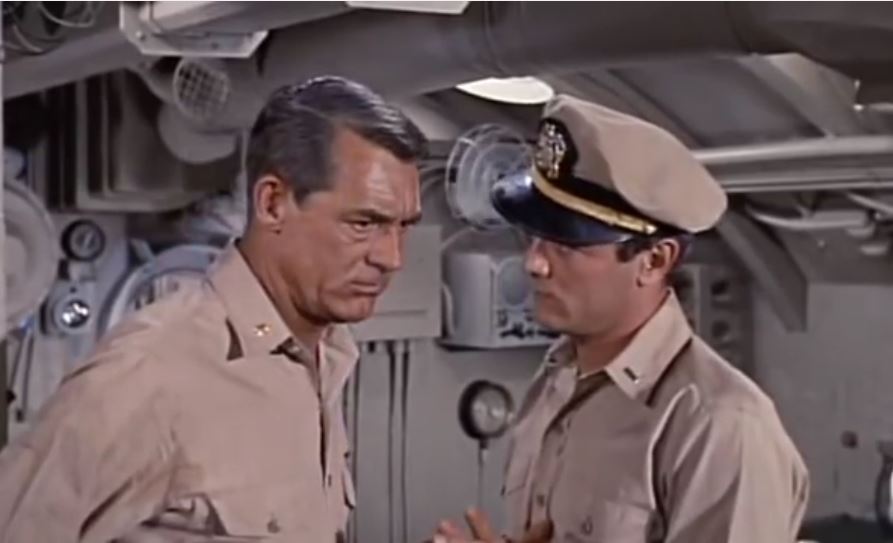
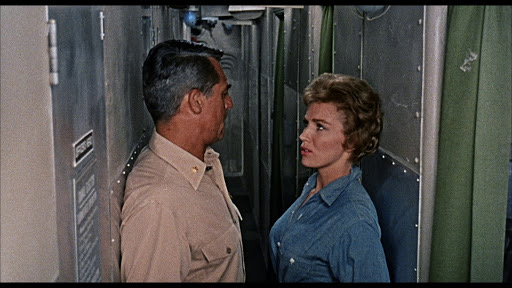
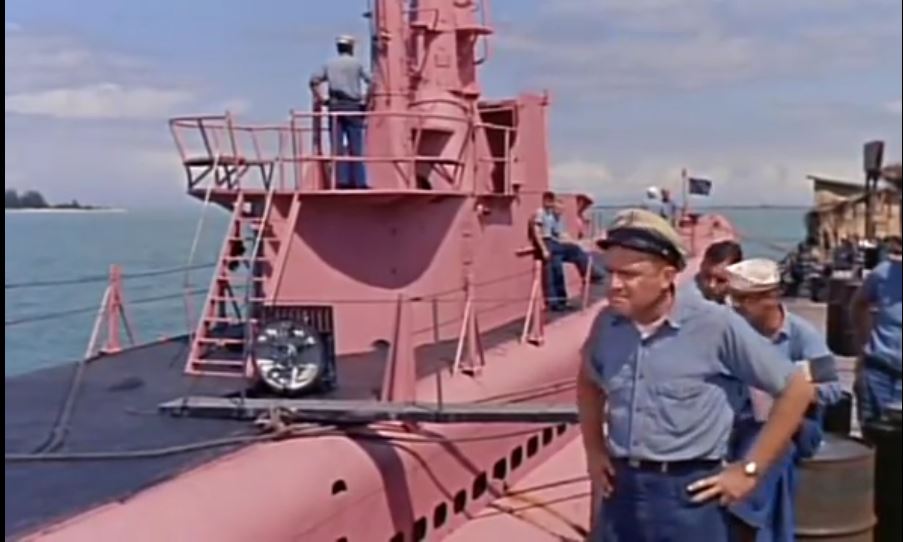
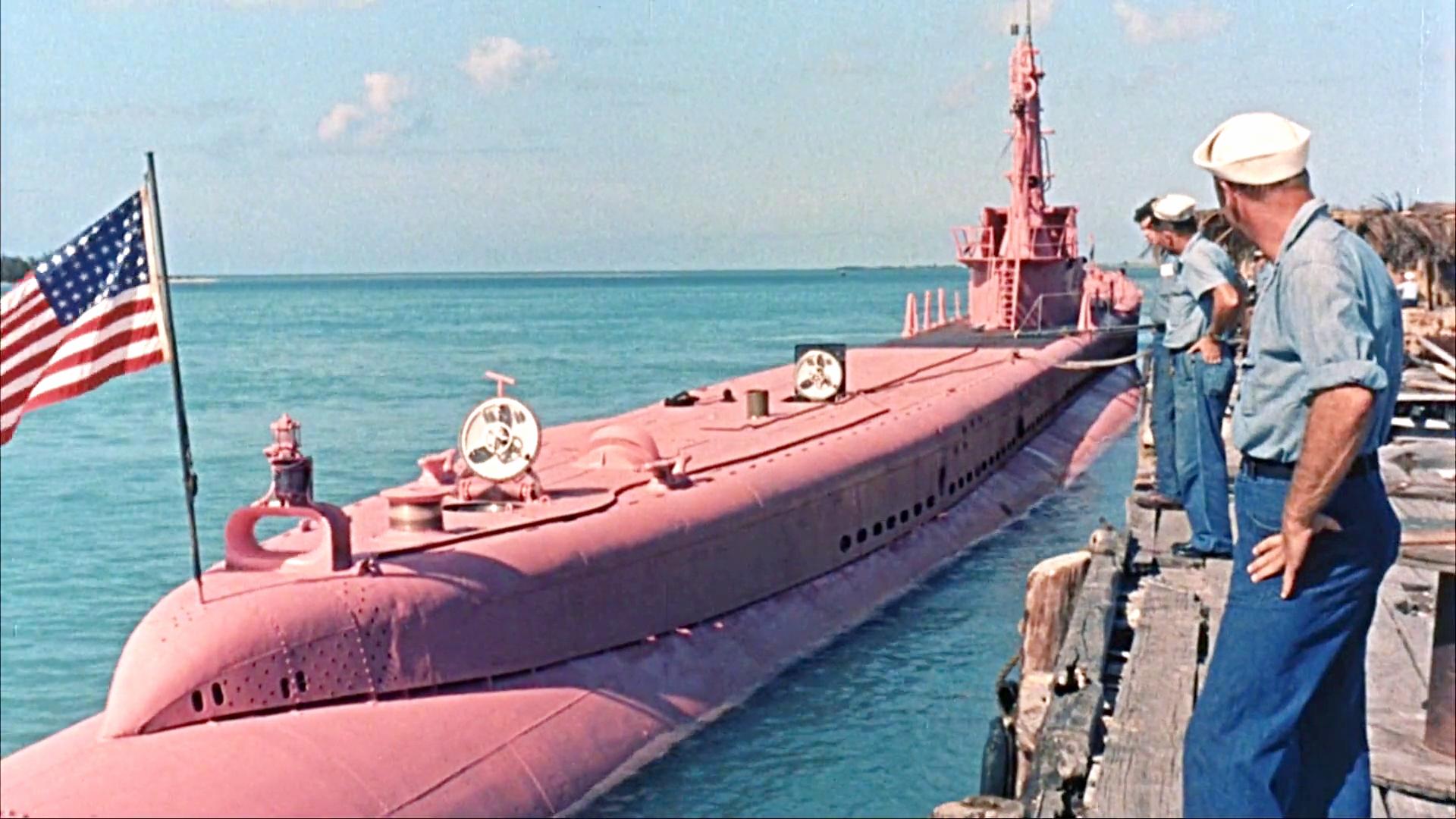
Cheeky fiction with a few elements lifted from actual events, the story, with bookend sections taking place in 1959, is set in December of 1941. The damaged submarine ‘USS Sea Lion‘ (played by three WW2 era subs), hoping to evacuate from the embattled Philippines to Australia, is pressed into impromptu rescues. Veteran ‘Lt. Commander Matt Sherman’ (Grant) is dismayed to have inexperienced junior grade Lieutenant ‘Nick Holden’ (Curtis) as a replacement officer. But as the patched-up, creaky vessel manages to (a) stay afloat and (b) evade the conquering Japanese, the slick newcomer proves masterful at scrounging needed material. He also plays jockey to relations between the crew and their surprise guests, first a team of five Army nurses, then a gaggle of civilian women and kids. Not enough that Zeroes strafe them, a US destroyer depth charges them as well. A skewed paint job results in Sea Lion being given a pink coating, then when it tries to sink an enemy ship its torpedo goes off course, runs ashore and blows up a truck. Messed up paint jobs did happen and the real USS Bowfin accidentally managed to clobber a bus. In Operation Petticoat the torpedo sinks a truck thanks to the clumsiness/vavoomage of ‘Lt. Crandall’ (Joan O’Brien, 22) whose nature-blessed figure accounts for many of the innuendos littering the screenplay. Once again playing a sub commander, as he had in sixteen years earlier in the decidedly more serious hit Destination Tokyo, Grant, 54, takes it all in suave stride, getting the movies best laughs with some deceptively simple, elegantly timed and delivered expressions. He also gets paired up with (er…against) O’Brien, while Curtis, 33, is tasked to put the moves on Dina Merrill. **
Though at 124 minutes the satire goes on longer than needed, the amiable cast mostly gel well, and if some of the jokes are sophomoric, they don’t get puerile. Bow to stern, it looks fine, and while the situations are there for humor, the nautical jargon and maneuvering is played straight enough to keep some tension at hand for the necessary suspension of disbelief (there was a war on–and it wasn’t going well in December of ’41). While director Edwards gets mileage out of the truck FUBAR and the noisy action inserts he was smart enough not to have the Sea Lion destroy an enemy ship and as such try to put across a casualty-causing event as a gag. ***
“As a kid, I was victim of the most vicious propaganda ever. People kept telling me that money wasn’t everything, and I believed it. Until I found out that the people who were saying that “money wasn’t everything,” were the people that had all the money. So I figured they were trying to hide a good thing.”
With the omnipresent Arthur O’Connell, ever sturdy Gene Evans, Virginia Gregg (thankless duty as the head nurse matched up with snorting O’Connell), Dick Sargent, Robert F. Simon, Robert Gist, Gavin MacLeod, Madlyn Rhue (23, given too little to do other than look great, in her first credited feature part), George Dunn (funny as a crewman who continually warbles depressing songs), Marion Ross (even less to do than Rhue), Nicky Blair, Hal Baylor and William Bryant. Good luck spotting Kirk Douglas, who dropped by for an unbilled bit part, possibly to schmooze Curtis about a part in the upcoming epic Spartacus. ****
* Depth charges—scan the lit on this fondly-recalled flick and one fish tale that comes up like bad crab is that Tony Curtis enlisted in the Navy (he forged his mom’s name and joined when he was not yet 17) because he’d seen his idol Cary Grant playing a submariner. Curtis threw this jive around a lot, and lazy reviewers too frequently don’t do their homework. He went into the Navy in September of 1943. Destination Tokyo didn’t come out until the last day of that year. Tony did crew in a sub tender and is said to have been present in Tokyo Bay for the Japanese surrender. Tony admired Cary, Cary liked him: after The Defiant Ones and The Vikings Curtis had some clout, Grant was amenable (this could banish the bad taste of his earlier Navy comedy, the dud Kiss Them For Me) and Edwards, flush from TV success, was primed for a big-screen breakout. Curtis was on a roll—Some Like It Hot was #5 (and included his great Cary impression). Grant played his cards particularly well; he shrewdly negotiated his contract in such a fashion that he ultimately made a record three million smacks off the film, which ranked at the tip top of his box office winners. It didn’t hurt that also aced a classic that year; North By Northwest was #7.
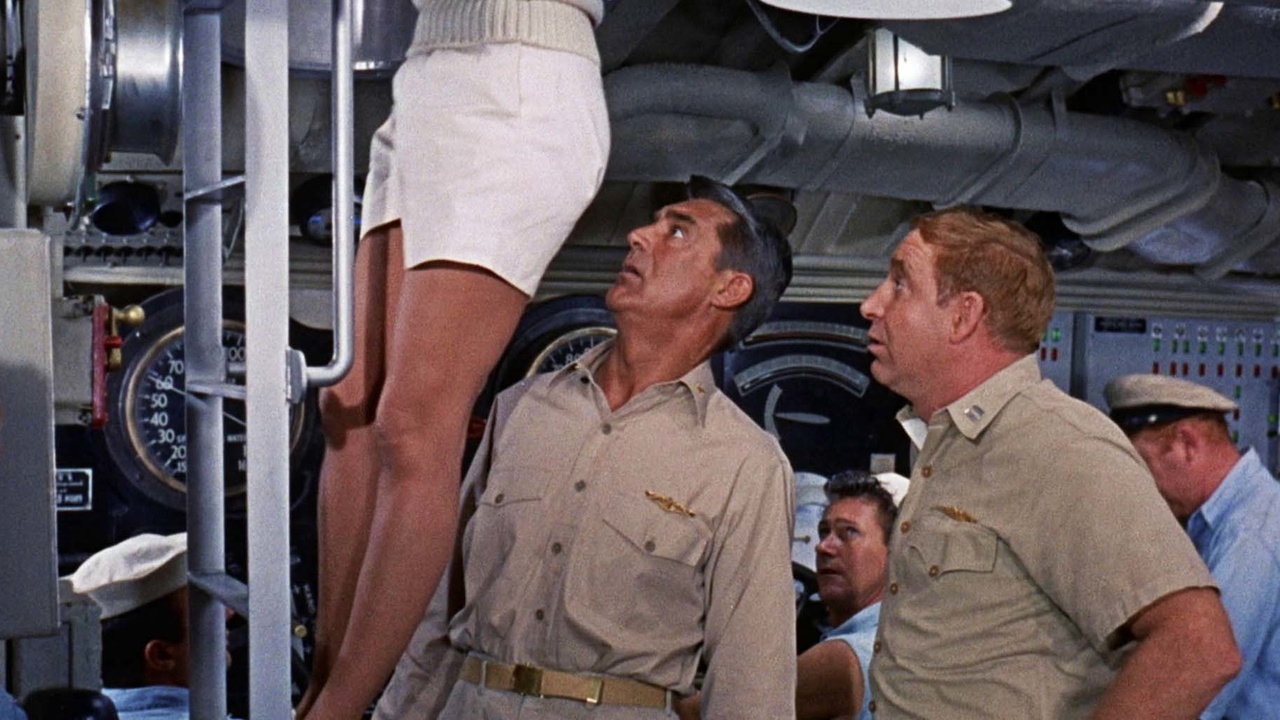 ** Stacking the foredeck—lascivious lore has it that steam-generating Tina Louise, 25 turned down the role of nurse Crandall because of the breast-focused sex kidding in the script; peeling reviews in the galley, am I bound for the PC brig by clinically observing that Joan O’Brien filled out the part admirably? Boys will be sailors. Did the guys flip coins over who’d team with whom? Grant had been married to heiress Dina Merrill’s heiress cousin Barbara Hutton, so perhaps snippy familial & social class delicacy factored in. Or maybe Cary just lucked out with the more likable O’Brien. The Duke noticed and fit her (with more decorum) into The Alamo and The Comancheros. The ever-randy Tony’s shark moves toward Merrill may have been acceptable/expected in 1959 but they come off as lecher ick today. Post-toastie Dina, 35, was featured in another Navy farce that did quite well in ’59, a Jerry Lewis thing called Don’t Give Up The Ship. Being pawed over by Jerr seems even worse than getting slobbered on by Curtis: lady, you wanted to come to Hollywood, remember?
*** Don’t-Mention-It Dept.—while the bus-‘sinking’ incident drew hooting from other ships (and was swiped for the movie), the vehicle-bashing USS Bowfin did send twenty ships to the bottom. Tragically, one of them was the passenger liner Tsushima Maru, whose 1,534 deaths included 780 schoolchildren leaving Okinawa for, ironically, Nagasaki. War is only funny in the movies.
**** Dwelve! Dwelve!—attractive and reasonably talented, you land a part in a A-list movie with big stars. Sky’da limit. Dina Merrill (1928-2017), the World’s richest actress, got cast in a few popular films (BUtterfield 8, The Sundowners) but soon downshifted to TV. After working with Cary Grant, John Wayne and Elvis (It Happened At The World’s Fair) Joan O’Brien (1936-2005) did some singing, then faded out of show biz. Virginia Gregg (1916-1986), 43 at the time, knocked back 242 credits in a four-decade career and offered a too harsh self appraisal:”I work steadily, but I have no identity…When casting people have a call for a woman who looks like the wrath of God, I’m notified.” Madlyn Rhue (1935-2003) brightened several films and a host of TV shows but from 1977 on had to contend with multiple sclerosis which eventually completely incapacitated her (my sister and brother-in-law knew her and really liked her). Marion Ross (born 1928) won the longest run of all, showing up in 36 movies and three dozen TV series, most notably 252 episodes of Happy Days.