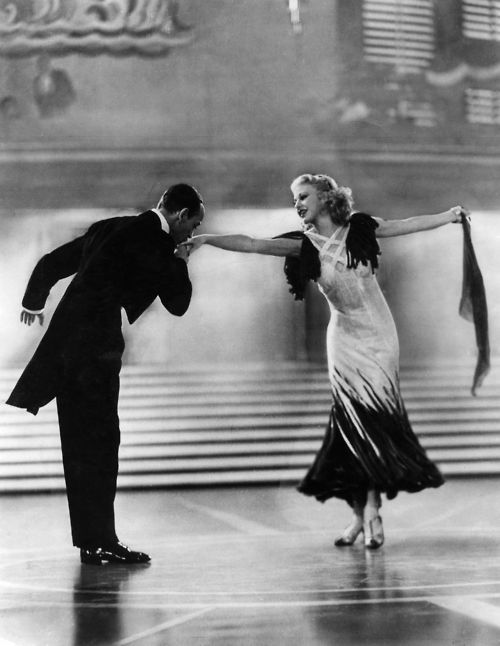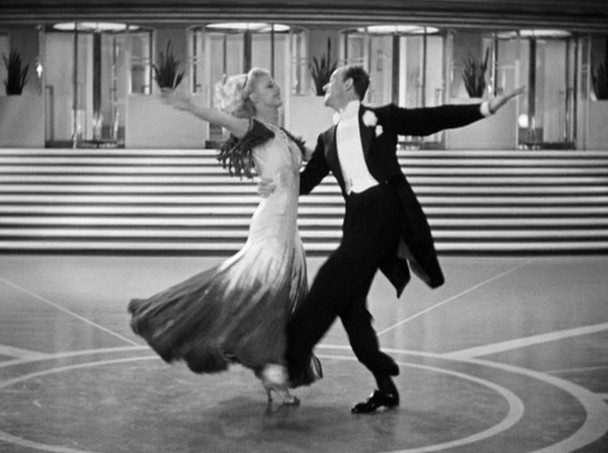
THE GAY DIVORCEE cheered up audiences in 1934 by securing Fred Astaire and Ginger Rogers as a team. Billed 4th & 5th in 1933’s Flying Down To Rio, they’d stolen the show from leads Dolores Del Rio and Gene Raymond, and drew enough notice to give them a starring shot. It was the third film appearance for Astaire, 34, the 29th for Rogers, 23, who’d also logged 42nd Street and Gold Diggers of 1933. After the success of The Gay Divorcee, the two (say “Fred & Ginger” and everyone knows who you mean) danced into legend together in eight more movies. *
“Can I offer you anything? Frosted chocolate? Cointreau? Benedictine? Marriage?”
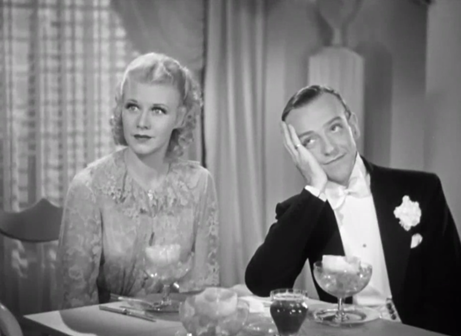
On a ship from France to England, lauded dancer ‘Guy Holden’ (Fred) comes into contact with “Mimi Glossop’ (Ginger), in what’s since been dubbed a ‘cute-meet’. Guy is first bemused, then besotted, Mimi initially irritated, then swayed. Trouble is, she’s married, although looking to be divorced from her total drip of a hubby. Her dippy yet bossy ‘Aunt Hortense’ (Alice Brady), an expert at getting into and out of marriages, has Mimi consult lawyer and former amour ‘Egbert Fitzgerald’ (Edward Everett Horton), who coincidentally (plot logic) is a close friend of Guy. Between multiple crossed wires, magic moments on assorted floors, giggly outbursts from Hortense, fussy fumblings from Egbert and assorted goof-in’s from a professional co-respondent, a quip-laden waiter and squadrons of instant hoofers, it’s pretty clear (to us) that things will work out for Guy and Mimi. Just a matter of getting there. With a smile.
EGBERT: “Guy, you’re not pining for that girl!” GUY: “Pining? Men don’t pine. Girls pine. Men just… suffer.”
Produced for $520,000 by make-it-happen powerhouse Pandro S. Berman, directed by Mark Sandrich (five A&R vehicles, plus Holiday Inn and So Proudly We Hail!), the screenplay confection came from George Marion Jr., Edward Kaufman and Dorothy Yost. Critics clapped, then the public made it the year’s 18th most popular time-passer, grossing $3,100,000 (roughly $170 mil in 2026). The romcoming makes room for six tunes (with dances) including the eternal “Night And Day” and the showstopper “The Continental”, which took the first Oscar awarded for Best Song. Besides a win for “The Continental”, the giddy escapade drew nominations for Best Picture, Art Direction, Music Score (Max Steiner) and Sound.
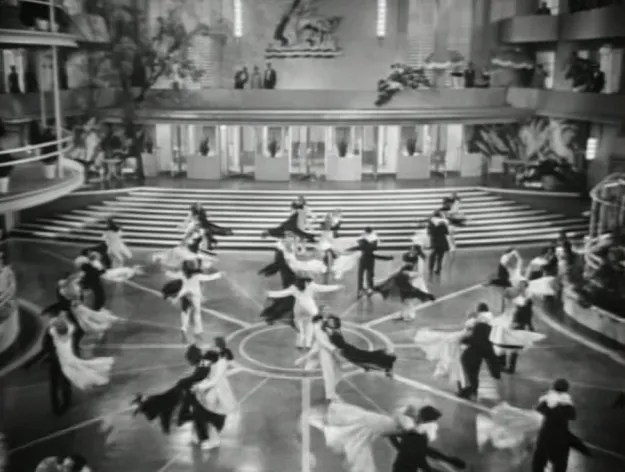
Rogers is one smooth mover (and her comic skill is evident) but Astaire is so lightning quick (and sleek) it’s amazing anyone could keep up. Brady (42, a star from the silent era teens) and Horton (48, ten parts in ’34) ply their farce trade. Capacious art deco sets backdrop the scampering and the 17-minute spectacle of “The Continental” is a classic.
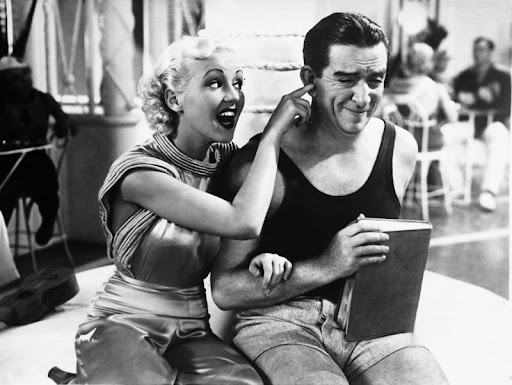
With Erik Rhodes (sillypants co-respondent ‘Rodolfo Tonetti, cue phonetic fiddling), Eric Blore (the waiter, having fun with syllables and “Would you be the kind of man who would ring for a toasted scone, sir?”) and an energetic cutie named Betty Grable, 17, who drags Horton into a dance number. 107 minutes.
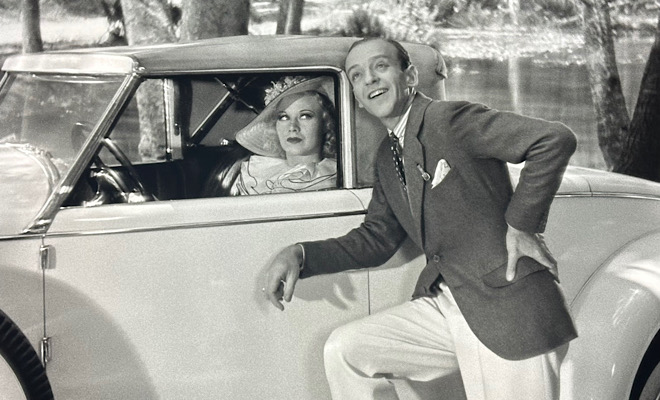
* Split decisions—Astaire, Rhodes and Blore recreated their roles from 232 performances of the 1932 Broadway musical Gay Divorce, with songs from Cole Porter (only “Night And Day” was used in the movie). Besides the three credited screenwriters, pitching in on the sly were Robert Benchley, H.W. Hanemann and Stanley Rauh. That 1929 Duesenberg Model J that Ginger sports about in was her own car.
Light hearts in dark days—the Depression woes of 1934 got vaccinations of hope from not just from FDR (yes, we once had a President who cared) but via the talent tyros of Tinseltown in the likes of Bright Eyes, It Happened One Night, Dames, Twentieth Century, Little Miss Marker and The Thin Man.
Fred & Ginger followed with Roberta, Top Hat, Follow The Fleet, Swing Time, Shall We Dance, Carefree, The Story Of Vernon And Irene Castle and The Barkleys Of Broadway.