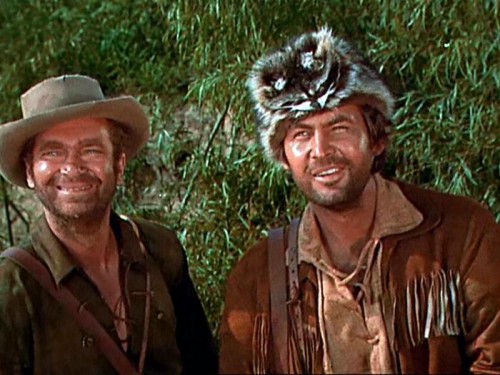
DAVY CROCKETT AND THE RIVER PIRATES was stitched together from Walt Disney’s Crockett TV faves, made as a two-part prequel to the third episode had which left Davy at the Alamo, swinging his musket into glory and legend. Like the first three episodes shown on the telly in 1954 and edited into a feature release the following year, this came out a year after that; in 1956 enough of the banzai Crockett craze was still going to see it make $2,100,000 and place 135th among the mass of releases. Star/Davy/instant icon Fess Parker was also in two other Disney features that year: Westward Ho, The Wagons! and The Great Locomotive Chase were both popular, doing even better biz than the Crockett tale. Buddy Ebsen was back as loyal pal ‘Georgie Russell’. Kenneth Tobey, who’d been killed off as Jim Bowie in the Alamo segment, was on hand again, this time playing for laffs. His part as a rowby boatman is secondary to the one going to frontier he-bull Mike Fink (1775-1823), played to the rafters—and kids delight—by big ‘n’ brawny Jeff York.
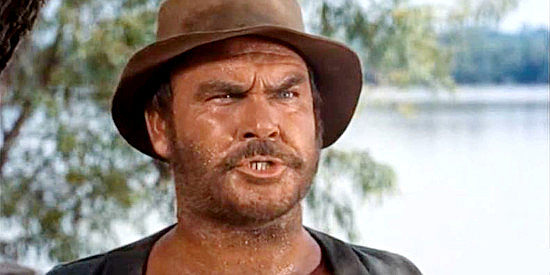
MIKE: “I am the original ringtail roarer from the thunder ‘n lightnin’ country! I’m a real snorter and a head buster! I can out-run, out-jump, out-sing, out-swim, out-dance, out-shoot, out-eat, out-drink…” DAVY: “Out-talk?” MIKE: “Yeah, out-talk, out-cuss and out-fight anybody in the Mississippi and Ohio Rivers put together!”
‘Round about 1810. Davy and George have finished a hunting trip in ‘Kain-tuck’ and want to sell their pelts at some city (such as they were) down the Ohio River. Encountering experienced keelboater and famed braggart Fink, after some tussling, they’re challenged by Mike to a boat race, destination New Orleans. En route, a gang of white pirates masquerading as Native Americans attacks the boys, and when they’ve been defeated, a friendship bond is formed. That’s handy because there will be further trouble from the rascals, who are led by infamous scoundrels Samuel Mason and the murderous Harpe brothers. *
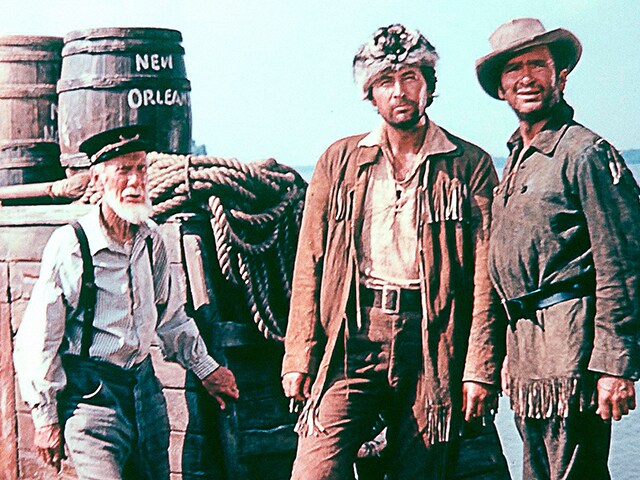
Handsomely shot around riverine locations in Kentucky and Illinois, the show has the same director (Norman Foster), producer (Bill Walsh) and writer (Tom Blackburn) as the earlier episodes-turned-feature but unlike Davy Crockett–King Of The Wild Frontier, which covered authentic sections of his life (albeit in safe kiddie consuming form) this go-round with Davy, Mike and the other historical characters (Mason and the Harpes) was strictly from tall tale spinnin’, similar to the 19th century knee-slappers circulated while Crockett was alive, with some included in his 1834 autobio (death in Texas came in 1836). It’s less clean-cut than the earlier outing, and rowdier (lotsa brawls, drinkin’ and assorted silliness) and the action scenes are a mix of broadly staged comic combat with some insertion of nasty weapon wielding (axes, torches, a scythe) by the bad guys in the conclusion that is surprising given that it came from Disney at the time. As before, Parker and Ebsen have easy rapport, and York (a 6’4″ ex-boxer) is a great choice as a ring-tailed bruiser like Mike Fink. The scenery is nice and Walt’s sound crew delivers those cool “punk-a-tah” musket sounds that were particular to Disney flicks: old fogies who were kids back when Ike and JFK were around will have a nostalgic twinge and sensory recall when the rifles boom, and the classic “Davy Crockett” song gets a refrain.
With Clem Bevans (75, always a fun ‘country’ presence), Mort Mills (as Mason), Paul Newlan (as Big Harpe), Frank Richards (as Little Harpe), Hank Worden, Douglas Dumbrille and William Fawcett.
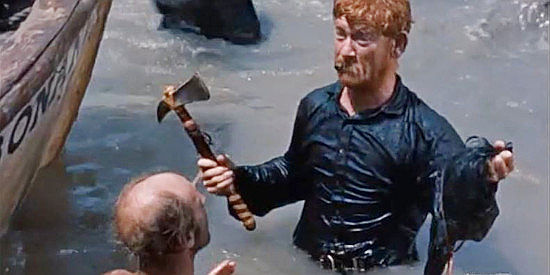
* Folklore folks—George Russell was a fictional character. Whether Davy ever met up with Mr. Fink is speculative, but he made mention of the outlandish figure in his memoirs. Samuel Mason (1739-1803) was a former Revolutionary War officer who turned to piracy, leading the ‘Mason Gang’, who made the Ohio and Mississippi rivers harder to travel safely. The twisted Harpe brothers (Micajah/’Big Harpe’–dispatched in 1799–and Wiley/’Little Harpe’–offed in 1804) were all too real, and are considered America’s first serial killers, murdering as many as 50 men, women and children, not for money, but for thrills.
One of the locations Mason and other crooks used—and that is featured in this show—is now Cave-in-Rock State Park in Illinois. It also turned up later in How The West Was Won, with Jimmy Stewart’s fur trapper Linus Rawlings’ getting tricked by Walter Brennan’s river pirate to “go see the varmint.” Adage: don’t let a creep lure you into a cave.
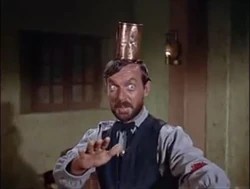
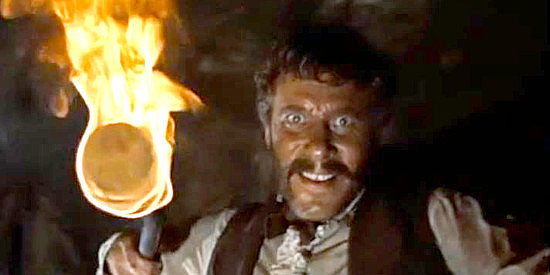
I wonder if Walt got some letters over this?

