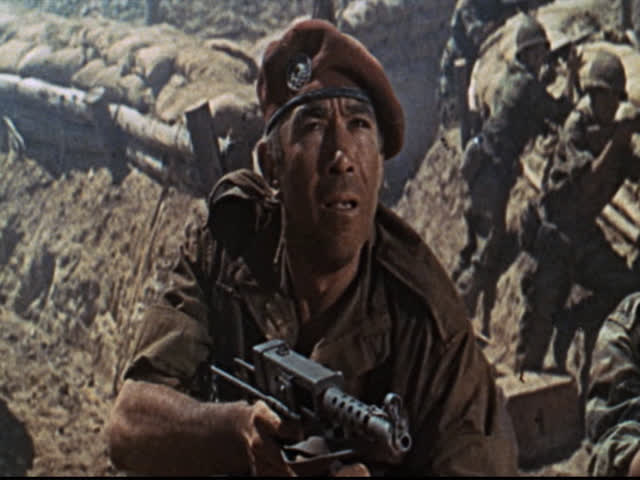
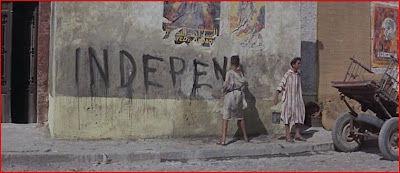
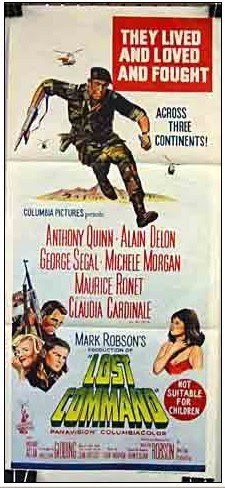
LOST COMMAND, a flashy but disappointing 1966 war movie, didn’t do too well in the States (79th place, $2,900,000 incoming) but fared much better in France, where it clocked 4,294,756 admissions, the years’s 5th most-attended picture. Other than that it was pretty much a downer, it’s box office defeat in the US could be linked to the country’s nervous attention drawn to the expanding (and increasingly unpopular real war in Vietnam: the year’s few war flicks didn’t do well except for The Blue Max, a ‘safe’ epic set in WW1. For the French, however, this hit closer to home, since the show starts with their defeat in ‘French Indo-China’ and then shifts to the subsequent eight-year misery mire in another ‘possession’, Algeria. That independence struggle also figured in the critically acclaimed The Battle Of Algiers, which was controversial enough to be banned in France for five years (it came in 167th in the US). Finally, while Anthony Quinn is top-billed, most of cast is French and the screenplay was based on “The Centurions”, a 1960 novel by French warrior/writer Jean Lartéguy, a former commando and war correspondent. His 544-page book was not just a bestseller but became quite influential in military circles for its ideas about counter-insurgency doctrine, tactics and ethics. The movie is of interest but it pales in comparison to The Battle Of Algiers. *
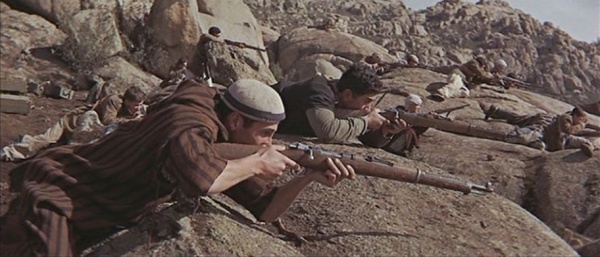
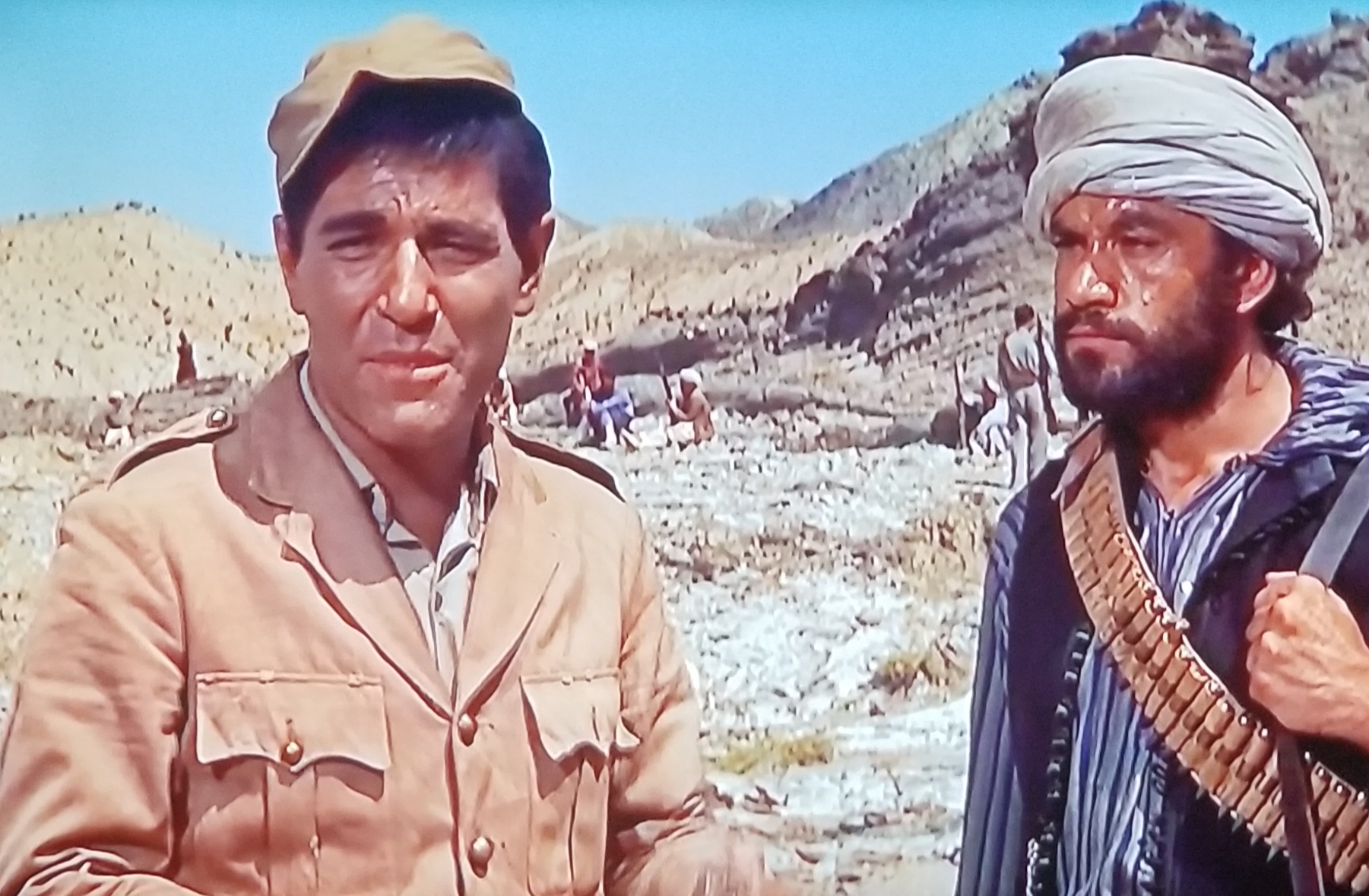
1954. In northern Vietnam, Viet Minh forces surround and eventually defeat French troops in the siege battle of Dien Bien Phu. After release from captivity, ‘Lt. Col. Pierre-Noël Raspéguy’ (Quinn) returns to France, along with his surviving men, who include ‘Captain Phillipe Esclavier’ (Alain Delon), a military historian, and ‘Captain Boisfeures’ (Maurice Ronet). Their Algerian comrade ‘Lt. Ben Mahidi’ (George Segal) returns to his native land and after witnessing the French treatment of their Algerian ‘subjects’, he lends his martial skills to the independence fighters. When Raspéguy’ and the others are sent to Algeria to put down the revolt, they face their former fellow soldier. The conflict is anything but civil, with ample cruelty dished out on both sides.
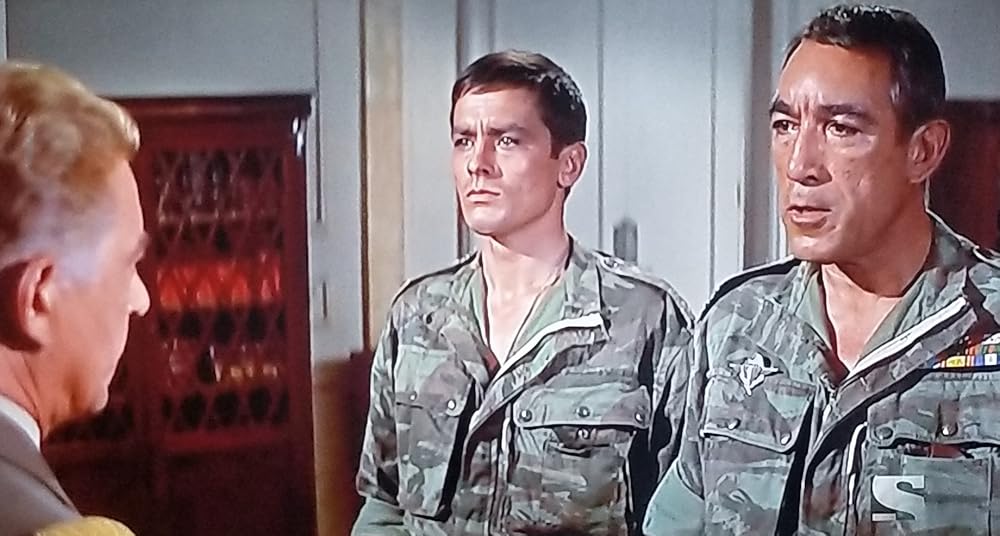
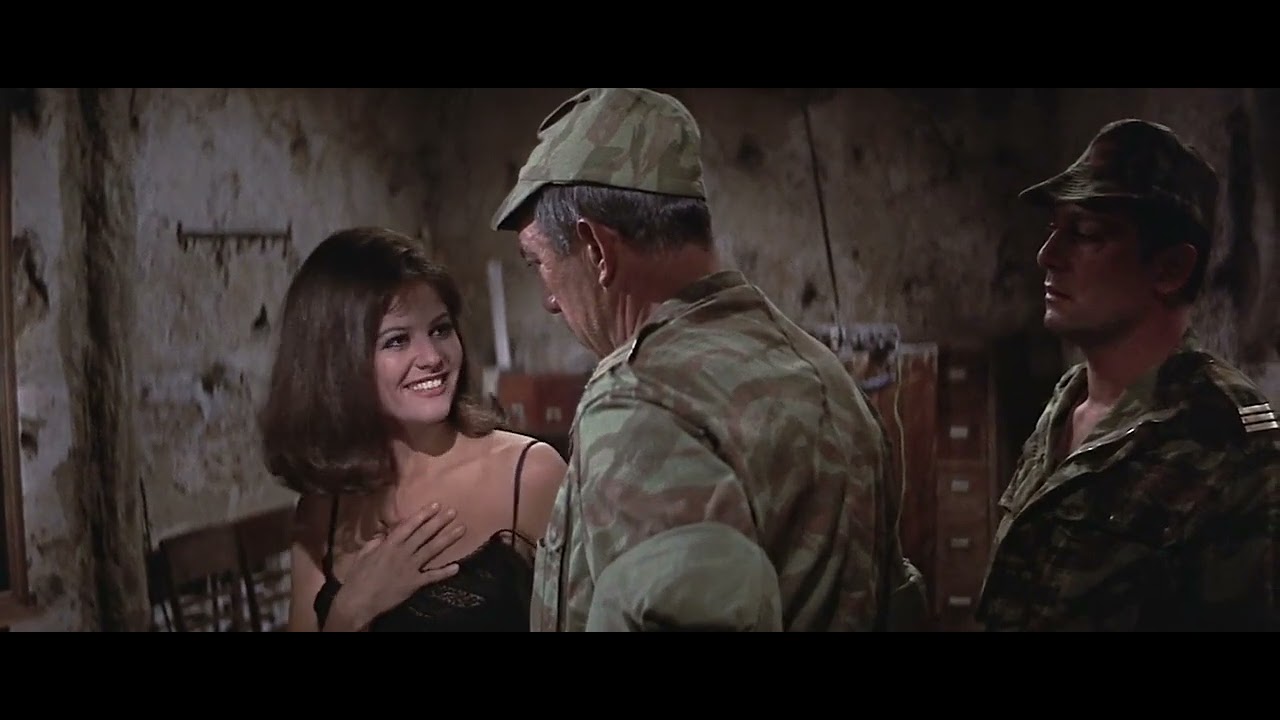
Directed by Mark Robson, who’d just scored a WW2 winner with Von Ryan’s Express, the script by Nelson Gidding takes the conventional support an ally (France) against “the hordes” (the damn colonies want freedom enough to fight for it—called about ingrates!) and leaves any deeper political commentary to books (those square things people used to read instead of their phones) and sees fit to inject a pair of unconvincing romances to add a little cleavage and smolder relief from the standard-issue testosterone display. Delon’s character gets involved with Mahidi’s sister ‘Aicha’ (Claudia Cardinale), not realizing she’s working for the underground. Quinn’s earthy Basque (what else would a Quinn character be but earthy?) flings with ‘Nathalie de Clairefons’, a Countess, rich and a widow, played by Michèle Morgan, 45. At 50, Quinn may have been pushing it as a battlefield commander, but he brings his typical gusto to the role. Delon, 31 and ravishing Cardinale, 27, were at the height of their international exposure, and Segal, 31, was being grooved for bigger things: he fared a lot better that year in Who’s Afraid Of Virginia Woolf?; he just doesn’t cut it as an Algerian rebel: the obvious makeup job not helping.
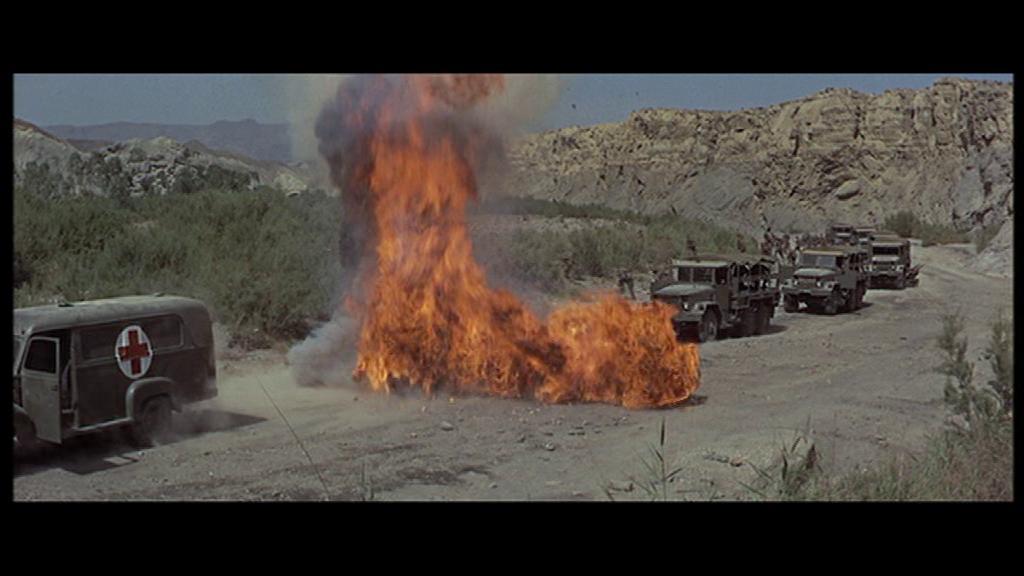
Franz Waxman’s last score for a feature film is okay, somewhat reminiscent of his great work for Objective, Burma! (another day, another war, the justifiable one). Thanks to cinematographer Robert Surtees the well-mounted production looks all right, shot on location in Spain. Special effects and sound are excellent. With Robson probably focusing his attention on the actors, the rowdy action was likely the handiwork of José María Ochoa. *
130 minutes, with Grégoire Aslan, Jean Servais, Jacques Marin, Aldo Sambrell and Burt Kwouk.
* Screen warring in ’66—though it was about US sailors, The Sand Pebbles, the year’s 3rd biggest hit, was an action adventure, not a war movie. The Blue Max came in 15th, and in descending rank after were Cast A Giant Shadow (a sales job on the first Arab-Israeli conflict), What Did You Do In The War, Daddy? (a WW2 comedy, yuk yuk), Khartoum (19th century imperial battle spectacle), Closely Watched Trains (Czech WW2 story and Oscar winner), Is Paris Burning? (underrated all-star WW2 epic), Triple Cross (WW2 espionage) and The Battle Of Algiers. TV audiences could follow Vietnam on the news and then retreat to Combat, Twelve O’Clock High and The Rat Patrol.
** Make it move!—José María Ochoa, as 2nd Unit and/or Assistant Director knew his way around coordinating action scenes—The Pride And The Passion, King Of Kings, El Cid, 55 Days At Peking, The Fall Of The Roman Empire…
 Movies ala Mark