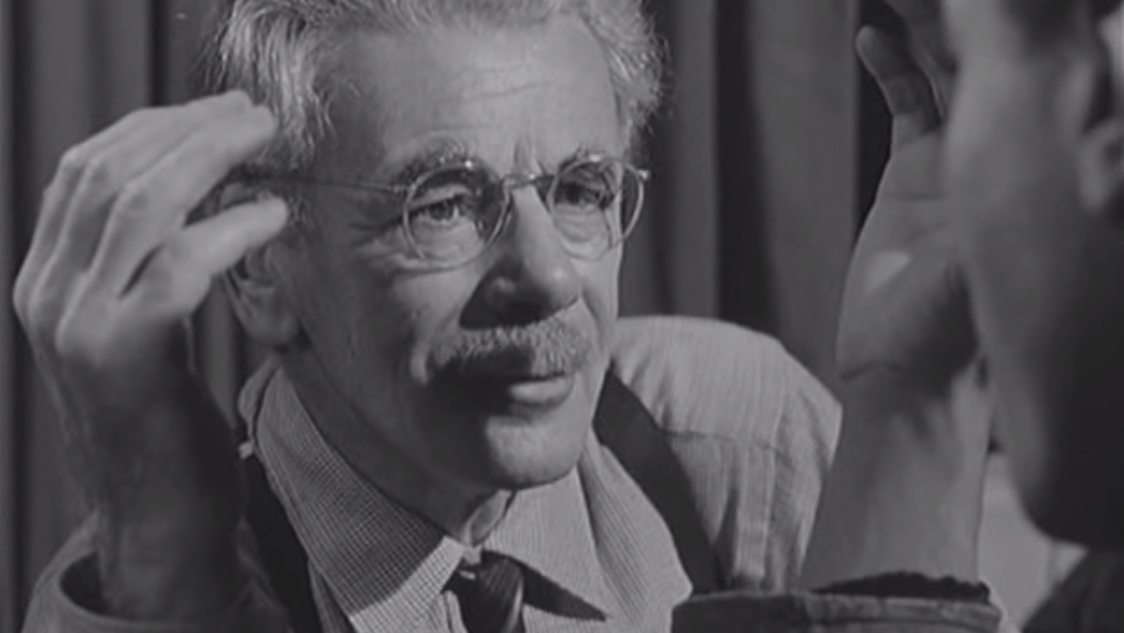
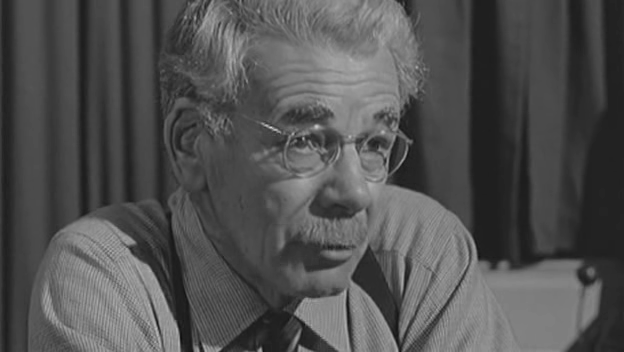
THE LAST ANGRY MAN gave Paul Muni, 63, his final film role, and his first in an American picture in 13 years. Since Angel On My Shoulder in 1946 he’d mostly concentrated on the stage, with a few TV spots and one movie made in Italy, the barely seen Stranger On The Prowl. Directed by Daniel Mann, this 1959 drama made for a worthy valedictory, bringing the revered actor an Oscar nomination for Best Actor, a peer honorific to go with his win for The Story Of Louis Pasteur and nominations for I Am A Fugitive From A Chain Gang and The Life Of Emile Zola.
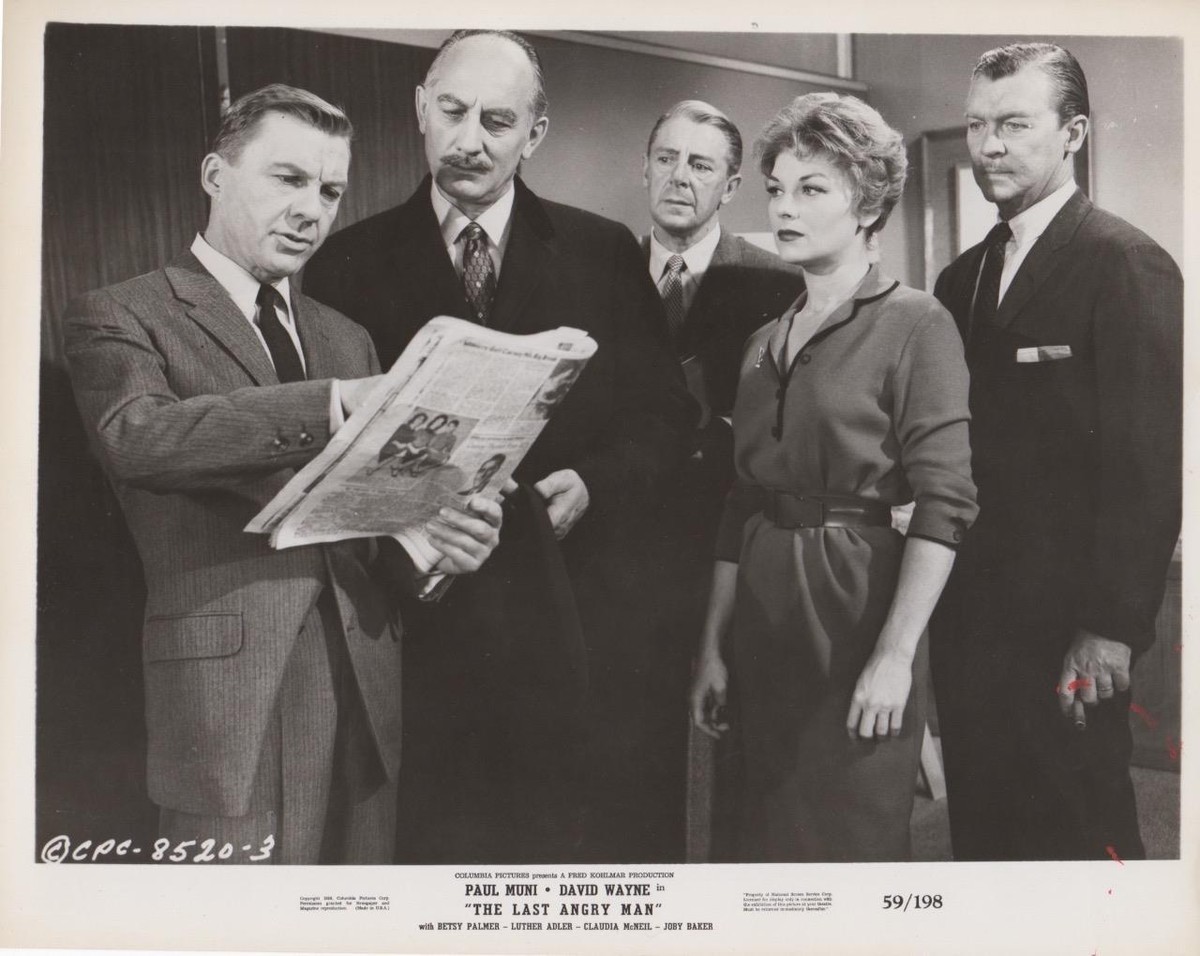
Elderly ‘Dr. Sam Abelman’ (Muni) has served many years in his Brooklyn neighborhood, selflessly attending to the poor even as the area deteriorates from crime and neglect. His ambitious nephew submits a newspaper piece detailing a recent case Sam worked on, and the article happens to catch the attention of ‘Woodrow Thrasher’ (David Wayne), a TV producer. He’s desperate to locate a human interest story that will fit his network’s show that highlights ‘real people’ and that will also please one of the network’s principal advertisers. Woody takes a gamble on tracking down the doctor, is impressed by the man and proposes the idea of a live TV bio. Crusty, proud, honest to a fault, Adelman resists, feeling the slick synthesis of Madison Avenue, television and public acclaim will not just invade his privacy but may cheapen what has been his life’s work. Woody enlists ‘Max Vogel’ (Luther Adler, 56), Sam’s oldest friend, also a doctor, more ‘successful’. Woody believes his show can do the wary and argumentative healer justice, and he has to deliver; his own job is at stake.
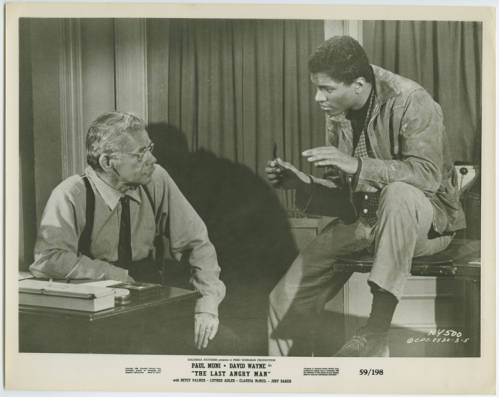
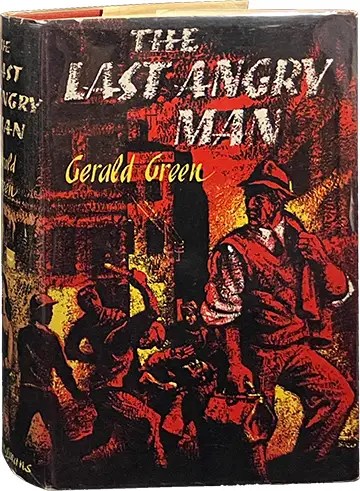
The screenplay by Gerald Green and Richard Murphy was adapted from Green’s novel, which he based on the experiences of his father, a physician from Brooklyn. The book ran a hefty 494 pages and covered an entire life; the script reduces the focus to the last act, and puts as much attention to the Thrasher character, the sort of harried urban striver that had recently been portrayed in pictures like The Man In The Gray Flannel Suit and Patterns. It’s a good fit for Wayne, 44, who excelled at decent-but-worried types; along with Wait ‘Til The Sun Shines, Nellie and the remake of M, this is one of his best performances.
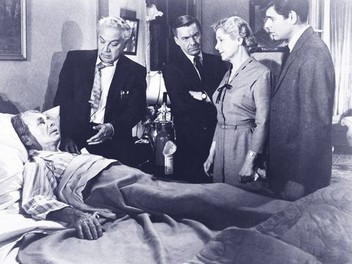
Initially, it looks like rough going, with some awful overplaying from Joby Baker as the obnoxious nephew, and hard-to-take caricatures of street punks, treating their mindlessness like pranks, with pretty bad debut roles for Billy Dee Williams, 21, and Godfrey Cambridge, 26. And early scenes with Muni skirt “lovable ethnic” territory. But the further along it goes, the more Muni’s characterization of Adelman deepens, and by the concluding scenes he’s won you over enough to draw genuine emotional involvement; the painful finish is exceptionally well handled. Though Betsy Palmer, 32, doesn’t get much to do as Woody’s wife, Joanna Moore, 24, has a nice role as his sharp secretary, and Dan Tobin scores as Woody’s dexterously shifty supervisor. Adler was always a stalwart presence. *
Besides Muni’s nomination, another went to the Art Direction. The box office results pegged 53rd place in 1959, the gross coming to $4,800,000. 100 minutes, with Nancy R. Pollack (as Abelman’s wife Sarah’), Robert F. Simon (good work as the chief sponsor of the TV show), Claudia McNeil (41, debut, as Williams mom), Jay Adler (Luther’s older brother), Ned Glass and Cicely Tyson (34, uncredited, no dialogue, as a crime victim).
* In for a penny—Godfrey Cambridge built a terrific career as a standup comedian and talk show favorite, but film work was scarce until late in the 60s. Betsy Palmer had strong start (The Long Gray Line, Mister Roberts), but after this she didn’t appear in a feature film until 1980, weirdly enough in Friday the 13th. Joanna Moore’s promising career eventually flamed out and personal traumas took hold. Billy Dee Williams held on doggedly until finally getting a break in 1971 with Brian’s Song.
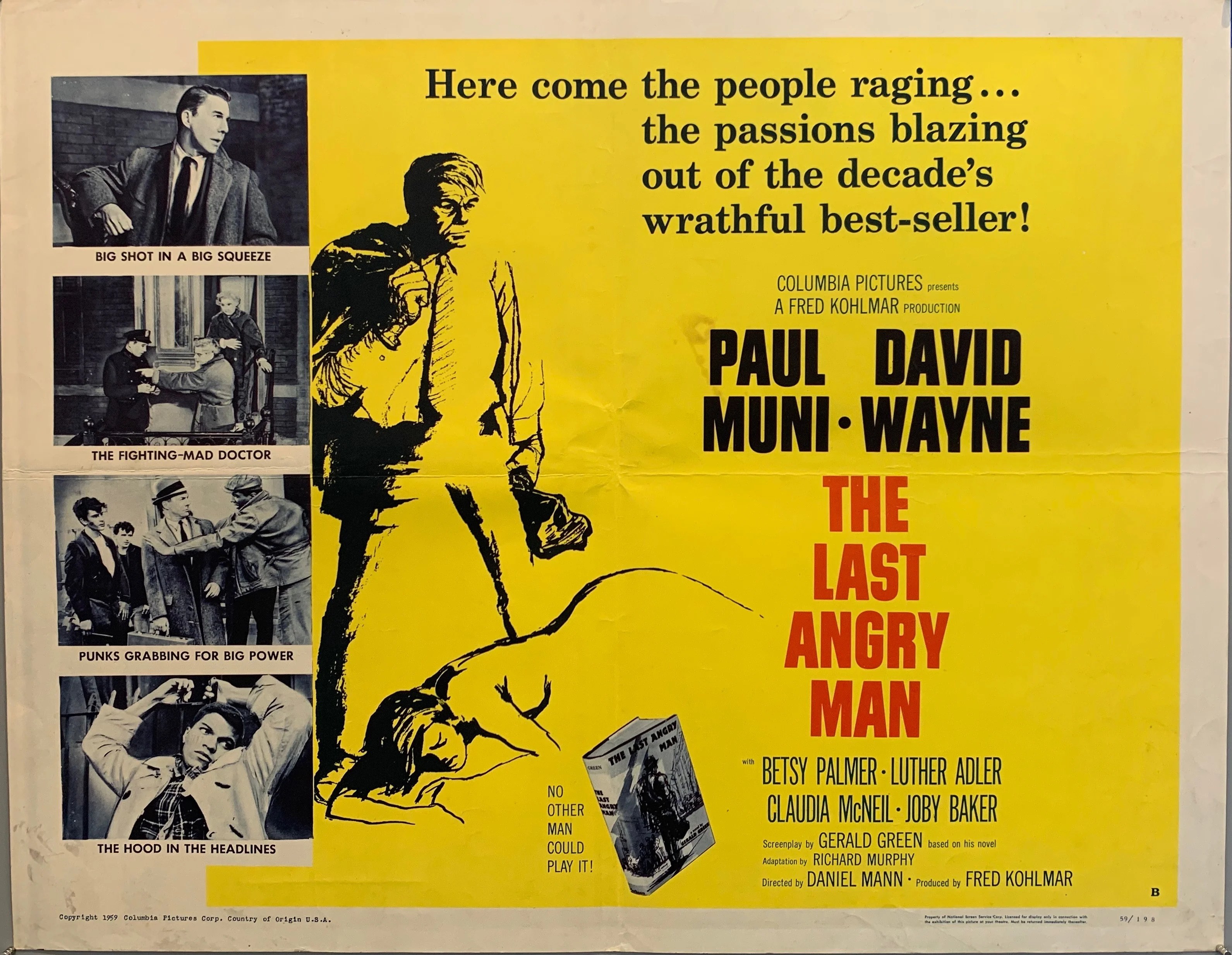
Click on pic for clarity
 Movies ala Mark