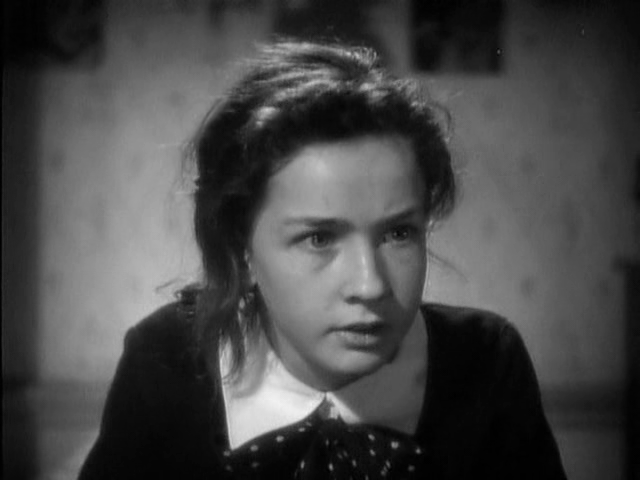
THESE THREE was one of three 1936 movies rising light William Wyler worked on for respect-haunting producer Samuel Goldwyn. He directed this and Dodsworth, and took over from Howard Hawks to share credit on Come And Get It. Dodsworth is a triumph, Come And Get It better than its so-so rep, but this drama, less popular at the box office than those two, draws more attention today. That’s not because it’s better than the others but due to reverbs over the cause célèbre source material, Lillian Hellman’s once-controversial play The Children’s Hour, based on the real-life story of two teachers in Scotland back in 1810, falsely accused of having a lesbian relationship. They didn’t, but for maligned Marianne Woods and Jane Pirie the blight was ruinous. Hellman’s 1934 play notched 636 performances and was still in its run when Goldwyn bought the film rights for $40,000 (about $930,000 in 2025). Hellman adapted it into a screenplay, and Wyler’s first of eight collaborations with Goldwyn tackled taboo by first detoxing the title, then tossing suggestions of same-sex ‘sin’ that would never get within an ocean of the Production Code. Censor-skitty alterations spayed the scandal to a still-naughty but less ‘shocking’ hetero relationship triangle that bandaged the surgery by keeping the basic idea intact: innuendo as a destructive force. To further soften whatever ‘think twice’ blow that might panic presumably puritanical audiences, a happy ending was tacked on. Twenty-five years later, the social awareness climate thawing, Wyler remade the picture. We prefer his 1961 version, many consider the earlier to be superior. *
“The wicked very young… and the wicked very old.”
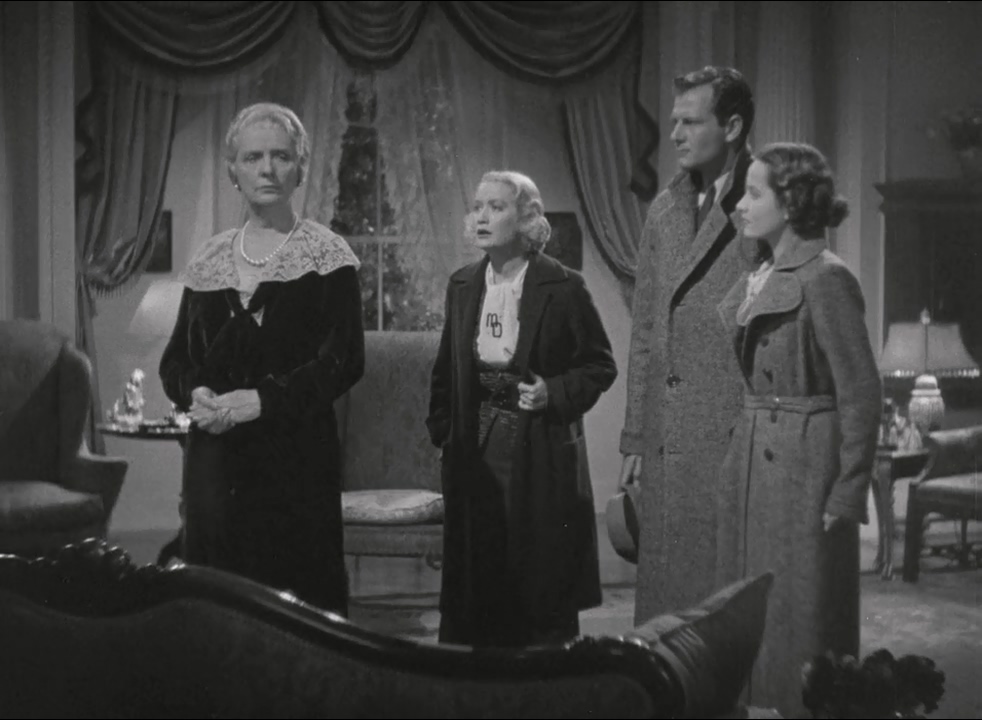
College friends ‘Karen Wright’ (Merle Oberon, 24) and ‘Martha Dobie’ (Miriam Hopkins, 23) have turned Karen’s inherited farmhouse from a dilapidated wreck into a popular boarding school for girls. Local doctor and volunteer handyman ‘Joe Cargin’ (Joel McCrea, 30) helps and befriends them, striking up a romance with Karen. Martha’s aunt ‘Lily Mortar’ (Catherine Doucet’, 60), a blowhard stage actress, shows up, insisting on a teaching position. She’s a pain, but nothing on the order of ‘Mary’ (Bonita Granville, 13), granddaughter of ‘Amelia Tilford’ (Alma Kruger, 64) a wealthy, influential local. Mary is more than just a little brat; she’s a vicious bully and serial liar. Miffed at being disciplined, she blackmails and terrifies another girl into vouching for spun-for-spite lies Mary concocts about Joe and Martha carrying on behind Karen’s back. Guilt is more presumed than innocence.
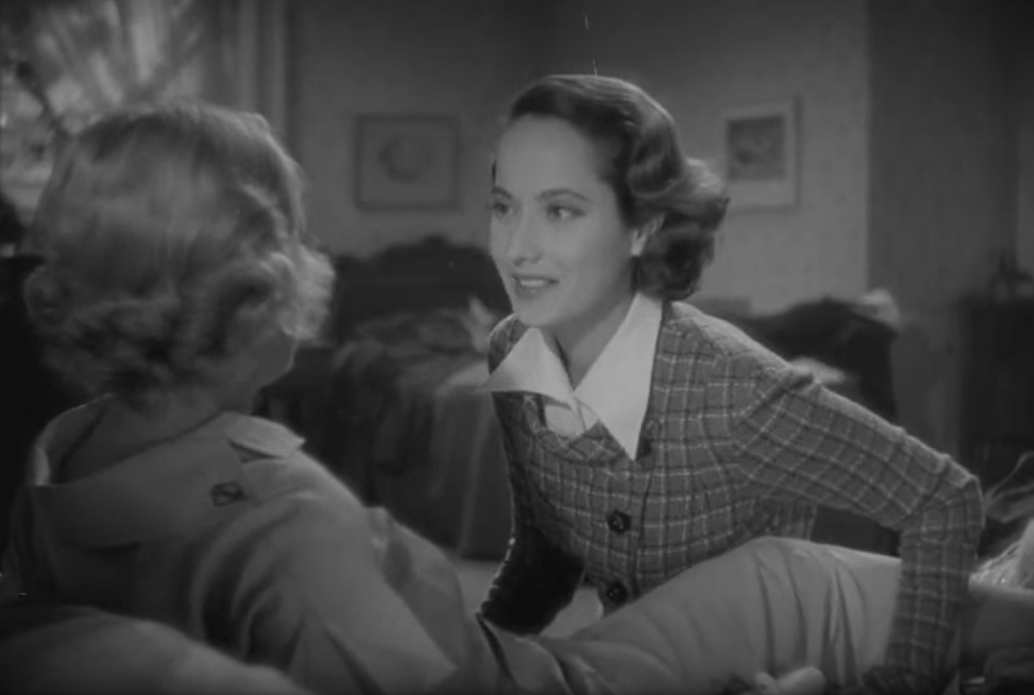
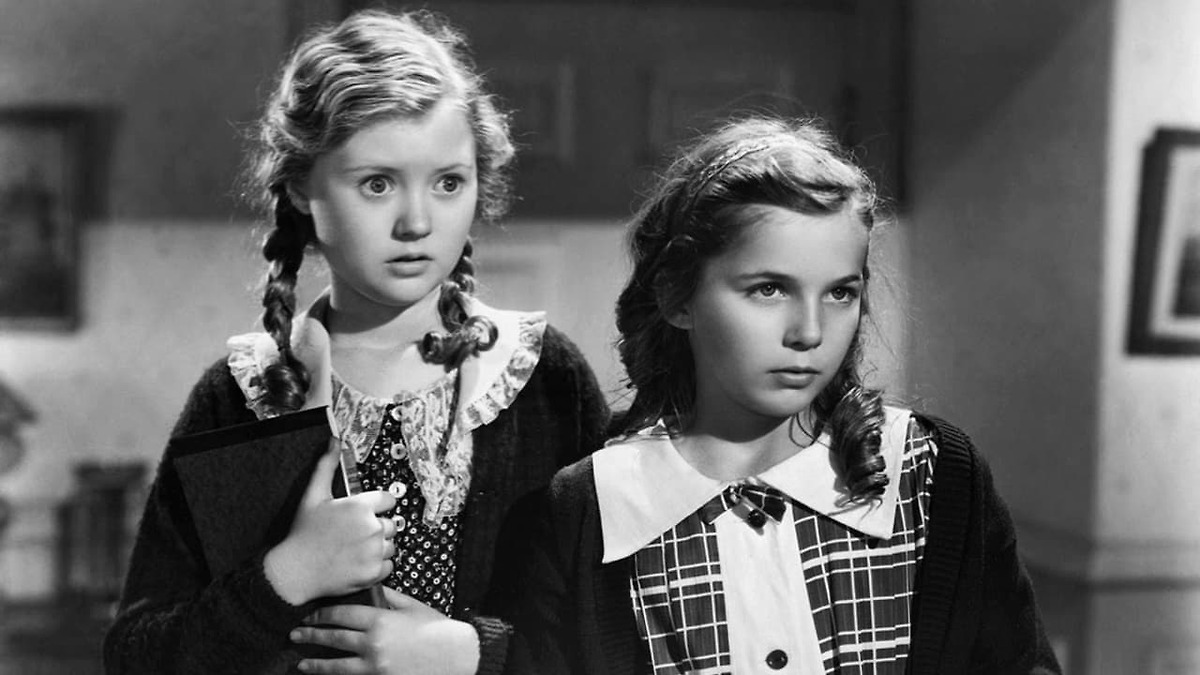
Spicy Hopkins and cool Oberon were both in demand at the time: enjoyment of the movie may depend on their appeal to the viewer; I fess to never being much taken with either, and find their theatricality (along with Doucet’s and Kruger’s) a wee too dated to convince. McCrea’s all right, no more, and Joe’s a cipher role. The crucial key to the piece is the banzai performance from Granville, marvelously horrid as a kid from planet Malice. Her wingding tantrums were startling enough that she pulled one of the first Academy Award nominations in the new category of Supporting Actress, albeit losing by a glare to another formidable meanie, Gale Sondergaard, the villainous ‘Faith Paleologus’ in Anthony Adverse. Granville’s hell-demon dominates but there are other excellent child actors on hand, too, as the kinder students, particularly Marcia May Jones and Carmencita Johnson.
It’s effectively photographed by Gregg Toland, though Alfred Newman overdoes it on the score, adding extra sap to lovey-dove scenes with Oberon and McCrea, the sort that kids, once upon a time, accurately referred to as ‘mushy.’ Smiles of relief come from supporting players Walter Brennan, 43, and Margaret Hamilton, 23, who gets in a slap that probably rocked theaters with hoots and applause. The happy ending—in Vienna?—is ludicrous. Box office was $2,800,000, 71st place for the year.
* “What’s happening to us? What are they doing to us? We’re being kicked around by crazy people!” We don’t claim any moral clarity high ground about which version (of Hellman’s version of a book’s version of an 1810 accusation and trial) is more relevant/dated/affecting/distressing: that’s an individual subjective choice. What does seem crystal clear from the vantage point of the mid-2020’s is that whoever coined “the more things change, the more they stay the same” was ahead of the curve. Today, anything goes on screen (& off) while at the same time a politically revitalized, pulpit-sanctioned and particularly virulent strain of mob-stupid intolerance promises to yank us backward, past 1961 and 1936, all the way 1810. Hate sells, and, as we’re always assured, this is a ‘market economy.’
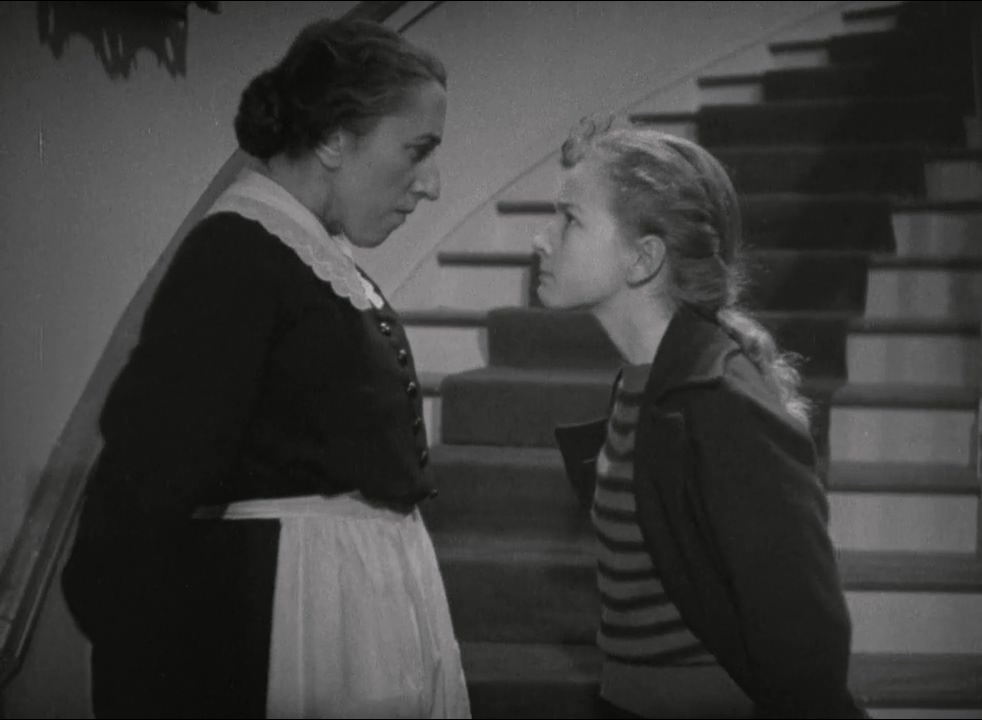
Which witch is which—someone’s asking to get smacked
Oui, already: le wit turns out to be a shrewd dude—French critic Jean Baptiste Alphonse Karr in 1849: “plus ça change, plus c’est la même chose”.
Wyler/Goldwyn followed up their resume-spiffing ’36 trio with Dead End, Wuthering Heights, The Westerner, The Little Foxes and The Best Years Of Our Lives.
Granville went on to play Nancy Drew four times, eventually marry an oil millionaire and then tapped a TV gusher in producing 379 episodes of Lassie. Quoted in 1972, when she was 49: “I don’t go to the movies. They’re indecent. They appeal to the baser tendencies, to temptations. Young people aren’t able to cope with them, all this sex starting too early. It’s thrown at them under the guise of art. But it’s really immoral, amoral stuff , made just for the money. More than that, it’s done something to our generation. It’s destroyed romance and imagination that goes along with sex. And that’s pretty important because, otherwise, sex becomes mechanical. Don’t get me wrong. I’m a great believer in sex. But that’s not the way to go about it.” Can’t we all just git it on get along?
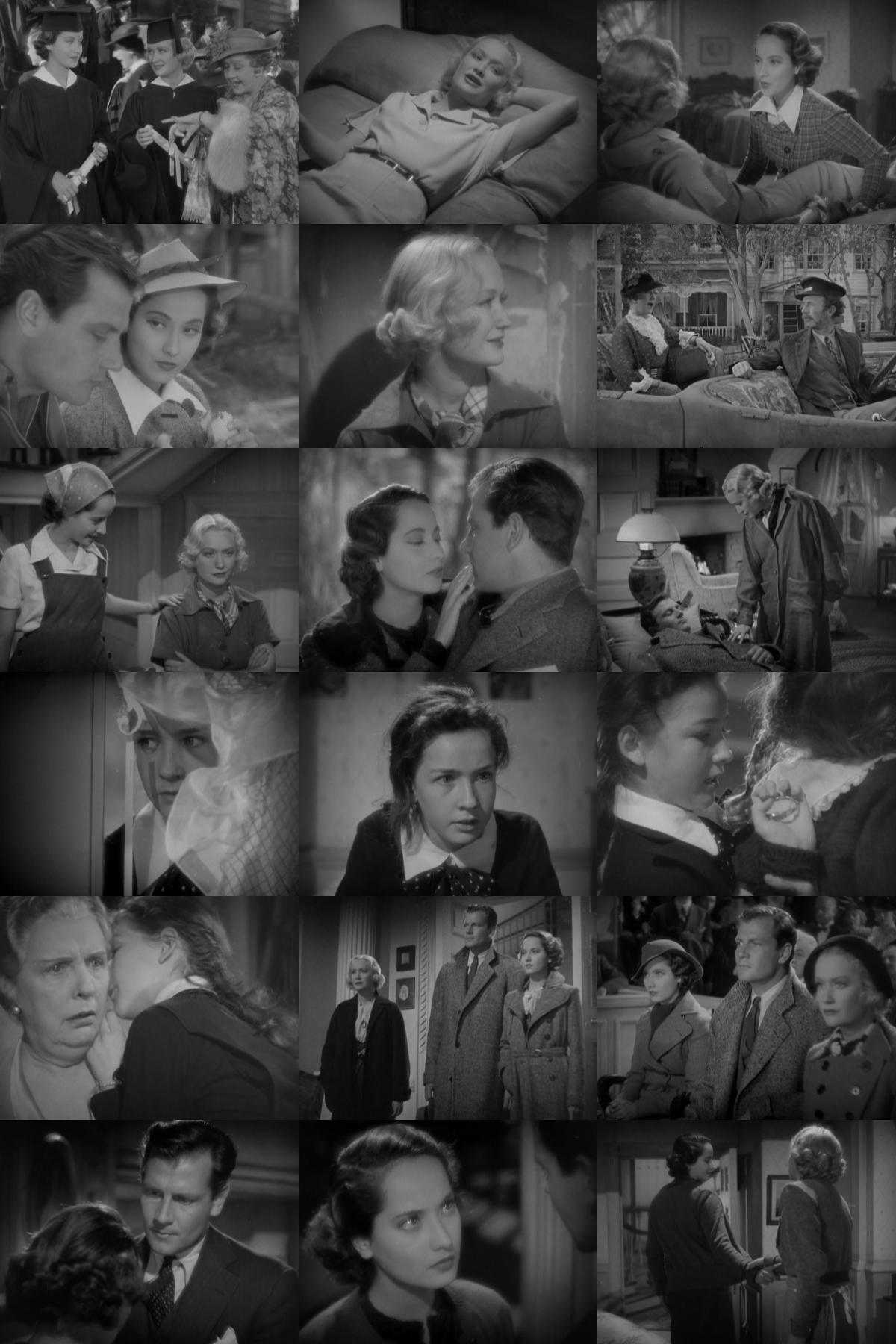
Click to enlarge for clarity

