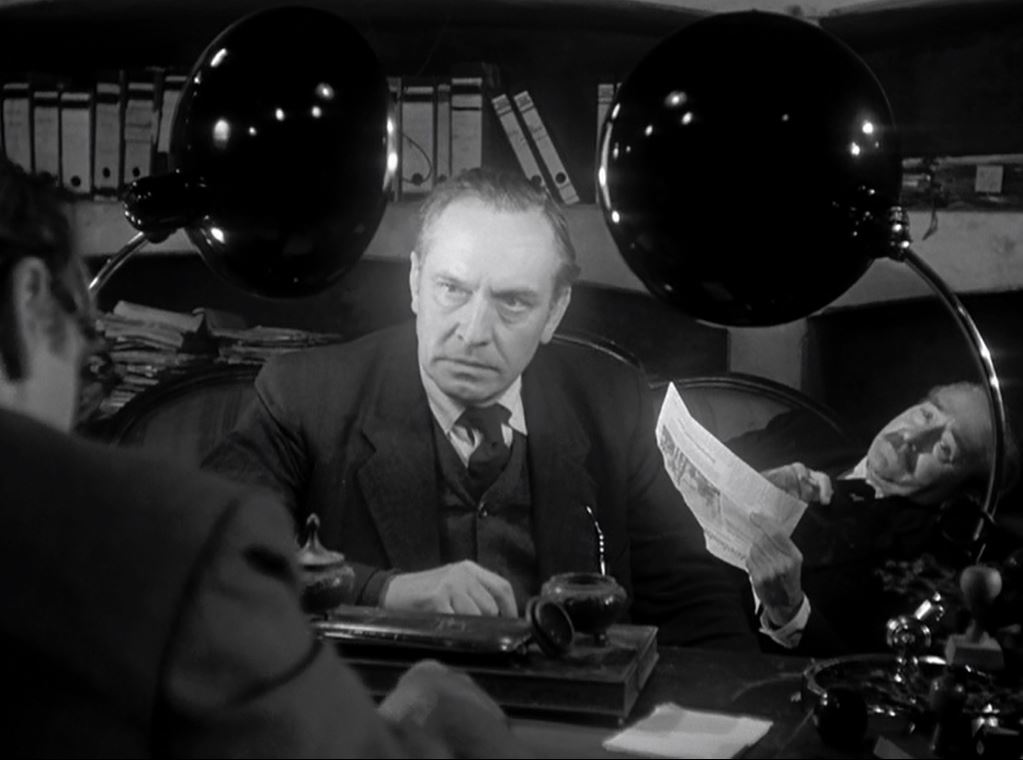
MAN ON A TIGHTROPE walks the line as one of the handful of actually good anti-Communist movies made during the 50’s, thanks to a smart script based on a true story, with a solid cast etching vivid characters in flavorful location filming under the sure and subtle direction of Elia Kazan. An overlooked gem from 1953. *
1952 Czechoslovakia, stifled under the Iron Curtain. Circus owner ‘Karel Černík (Fredric March, 55) has several problems on his hands. His second wife ‘Zama’ (Gloria Grahame, 29), younger and bored, openly flirts with the company’s roguish lion tamer. He’s concerned over the romantic relationship his daughter ‘Tereza’ (Terry Moore) has developed with roustabout ‘Joe Vosdek’ (Cameron Mitchell). More worrisome is that the totalitarian government thinks him disloyal; their threats may bring down the entire Cirkus Černík. Dire situations: drastic measures.

Shooting on location in Bavaria, Kazan and his Californian contingent recruited a real outfit, the Brumbach Circus, which had escaped East Germany in 1950, much like the company portrayed in Neil Patterson’s article which was turned by Robert E. Sherwood (Idiot’s Delight, Rebecca, The Best Years Of Our Lives) into screenplay form.

In one of his least-known films, March gives one of his best performances; Karel’s a great character—strong yet frightened, wise but fallible, canny, humorous and energetic, brave and desperate. Under Kazan’s guidance, Grahame, 29, reins in her occasional tendency to overplay; she’s very good as the sexy, frustrated Zama. Adolphe Menjou does smart work as ‘Fesker’, the calmly crafty supervising policeman tasked with making the State’s case against Černík. Robert Beatty has a plum part as the piratical ‘Barović’, a wily rival circus owner; he and March share a marvelous scene staging a fight as cover for a mutually beneficial deal. Even Moore, cringeworthy that year in Beneath The 12-Mile Reef and King Of The Khyber Rifles, surprises by doing well here.

Box office was meek, 146th place, $2,400,000 stuck in the red zone against a $1,200,000 cost. With Alex D’Arcy (one of his meatier roles, as ‘Rudolph’, the lion tamer; “The curse of my life is that I’m a handsome man“), Pat Henning, Richard Boone, Paul Hartman, John Dehner (excellent as a pitiless Party lackey), Hansi (the testy dwarf) and Mme. Brumbach (the actual owner of the circus). Look sharp and spot the future famous Gert Fröbe and Fess Parker. Well scored by Franz Waxman, photographed by Georg Krause (The Berliner, Paths Of Glory, The Devil Strikes At Night), with a running time of 105 minutes.

* Other ‘fight the Reds’ flicks of the period that are actually worthy rather than hysterical: Diplomatic Courier, Never Let Me Go, Night People and The Prisoner. Movies about the ‘hot war’ (Korea) within the Cold one are their own subset.
Kazan: “So in a way the film was an important purgative experience for me. In another sense, it was a simple play of sweet, affectionate people against ritualized violence. On Panic In The Streets I’d hired lots of blacklisted actors like Zero Mostel. Freddy March was blacklisted and I got him the lead in the picture by pulling a lot of strings and throwing my weight around. At the same time my feeling as a liberal was that I should never work with Adolph Menjou, who was famous for his right-wing, reactionary politics. But then I thought, he’s an actor, not a politician. There’s no reason why 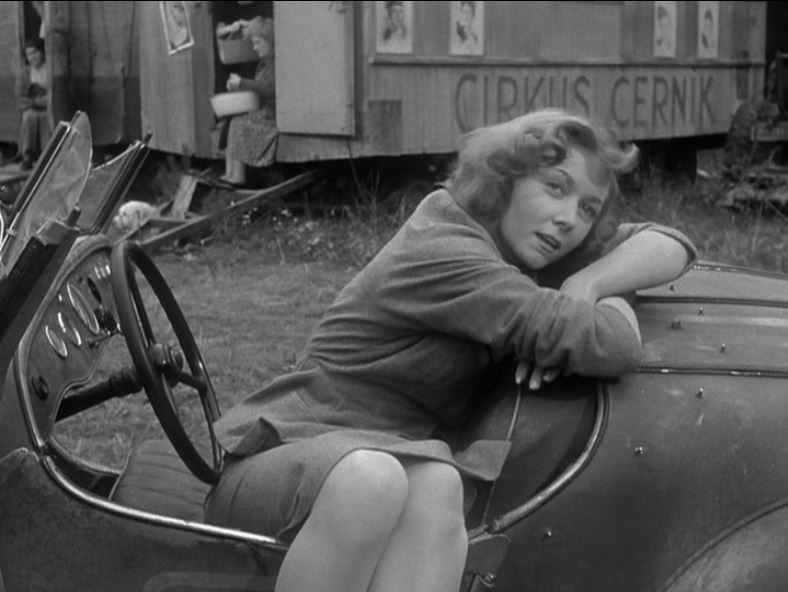 if I got one side work, I shouldn’t get the other side work. A man is an artist first. I’ve always thought Menjou was a good actor, and he behaved marvelously—professionally and in every other way.”
“I also had a terrific experience with the Bavarian people….The crew was made up of the toughest human beings I’d ever met. I can’t say I liked them all of that I was in any way sympathetic to them, but there was something about their absolute fortitude in the face of continual misery that Americans can never understand or match. We can’t even conceive of the hardship these people were living under.”
Though the Commie-baiters tried, March wasn’t blacklisted; he resisted them in 1938 and 1940, then again in 1948. While the negative publicity hurt, more to the point was that at 55—seven years after his second Oscar for one of the 40’s biggest hits, The Best Years Of Our Lives—he was no longer a draw, with four box office duds in a row (An Act Of Murder, Another Part Of The Forest, Christopher Columbus, Death Of A Salesman). After this movie also went away with little notice, he wisely segued into shared billing and key supporting roles, his respected presence gracing hits The Bridges At Toko-Ri, Executive Suite, The Desperate Hours and The Man In The Gray Flannel Suit.
Kazan followed with major wins On The Waterfront and East Of Eden.

 Movies ala Mark