
IT SHOULD HAPPEN TO YOU happened in 1954 with the 4th mesh-up of a sparkling star, a smooth director and a snappy writer. Judy Holliday, George Cukor and Garson Kanin had mixed wits for Adam’s Rib, Born Yesterday and The Marrying Kind, and this time out they were joined by another sharp cut-up, an energetic 29-year-old fella in his feature debut, Jack Lemmon.
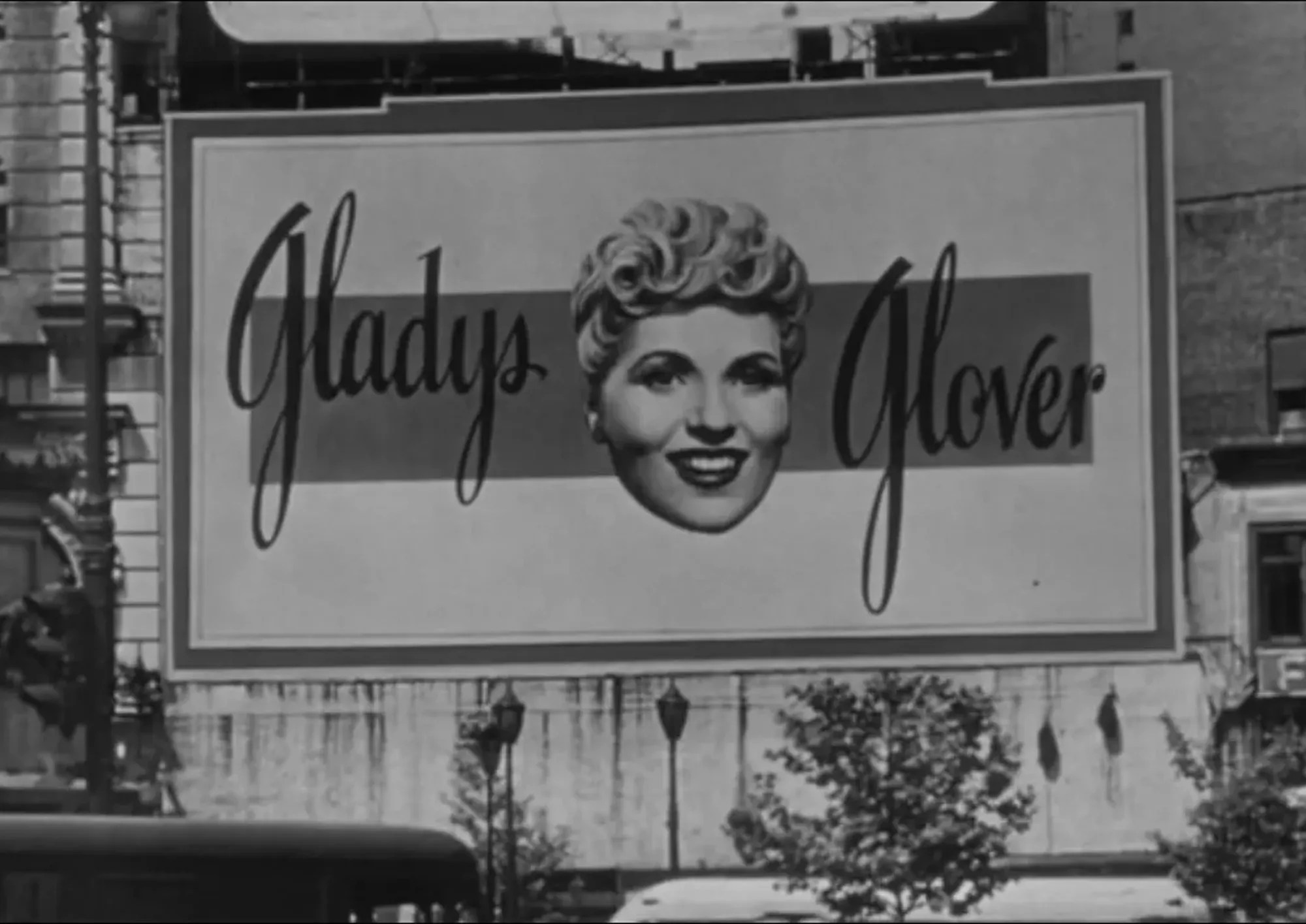
New York City. Documentary maker ‘Pete Shepherd’ (Lemmon), filming faces and scenes in Central Park, comes across ‘Gladys Glover’ (Holliday), footloose and down in the dumps after being fired from her job. Their pleasant meet-up (NYC hasn’t put out the welcome mat for either of them) promises possibilities when Pete moves into the same building Gladys lives in, and on the same floor, yet. But happy motoring hits a construction zone after Gladys—naive but no fool—has a brainstorm and puts her savings into renting a billboard that dominates the busy arterial Columbus Circle. Just her name, 30 feet high. When ‘Evan Adams III’ (Peter Lawford)—the slick rich guy who usually rents it for his soap company—tries to buy out her time, she digs in. Then the public curiosity (“Who is Gladys Glover?”) is turned into a money machine by ambitious huckster ‘Brod Clinton’ (Michael O’Shea) and ambitious yet honest Gladys becomes a commodity. Savvy deal maker Brod’s raking in dough, sportscar-wielding Evan aims to seduce her, everyman putz Pete is left in the usual position that ‘nice guys’ assume. *

EVAN: “There’s nothing like champagne.” GLADYS: “Yes there is.” EVAN: “What?” GLADYS: “More champagne. It’s a very interesting thing I found out. All these different things…I mean, the expensive ones, like champagne and thick steaks and silk stuff. What I mean to say is, it’s very easy to get into the habit. But then you take like different things, like once I was at a boardinghouse, they used to give bean sandwiches for lunch, and that’s a habit I never could get into.”
For Cukor (his epic version of A Star Is Born was on tap) and Kanin this swipe at empty excess comes off as an amusing but minor effort, notable mainly for Holliday’s guaranteed charm and for the introduction of new blood Lemmon. The $4,000,000 gross (79th place) was enough that Columbia quickly put the two together again that year in Phffft, another comedy—as if you couldn’t tell from the title. Leads in a half-dozen B-pictures couldn’t sell second-stringer Lawford, 30, as a star; after this he was off the big screen and onto TV for five years until 1959’s Never So Few brought him back in perfunctory supporting roles, thanks to his Rat Pack palship with Frank Sinatra. Here he suffices as a well-practiced sleaze. O’Shea does all right as the guy pushing Gladys into the limelight that she initially wanted and then found wanting.
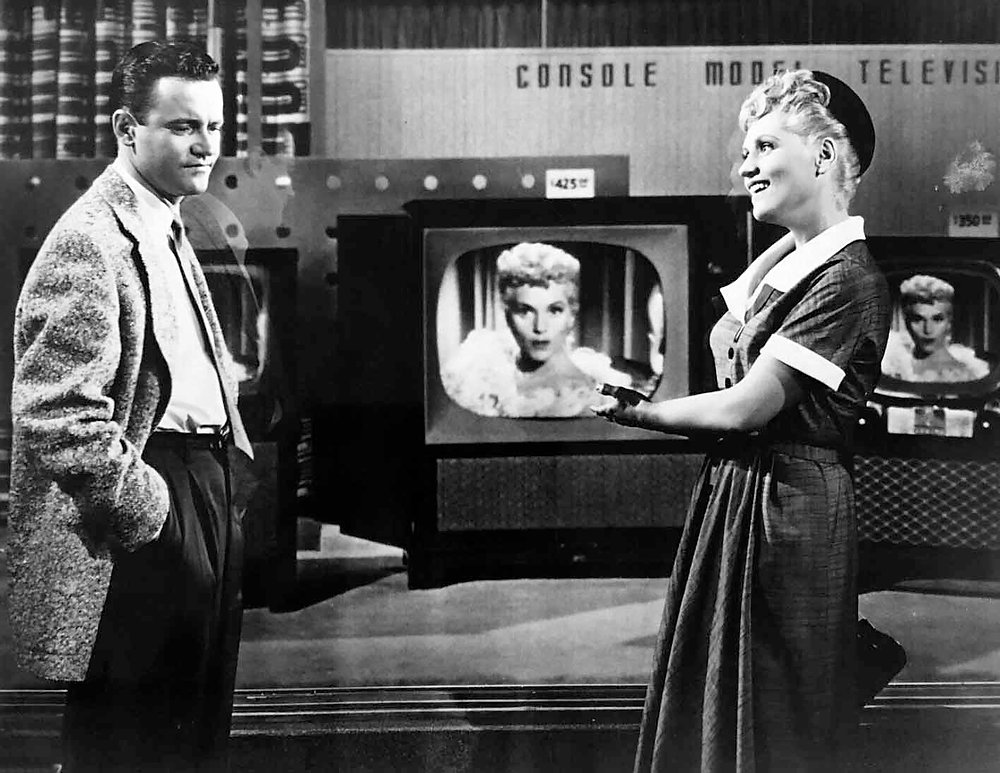
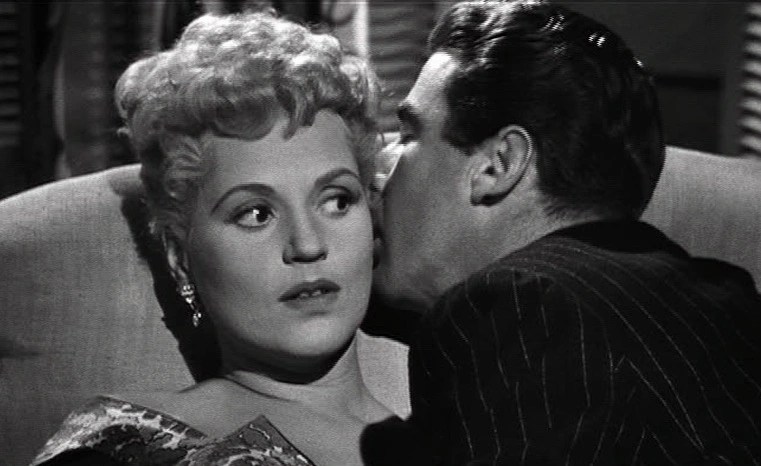 Lemmon displays both the strengths and weaknesses that would mark his later work. In quiet mode he’s affable and sincere, deft with quick facial expressions and line twists. The louder he gets it can often veer into braying; Cukor should have told him to dial back the anger a notch. Anyway, the story belongs to Gladys and the movie to Holliday; her smile could light a stadium, her timing is sublime and she had a range of vocalizing distress that was unmatched.
Frederick Hollander’s overdone score is a debit, but Jean Louis drew an Oscar nomination (one of his fourteen) for the Costume Design.
With Vaughan Taylor, Connie Gilchrist, Whit Bissell, Constance Bennett, Ilka Chase, Wendy Barrie, Melville Cooper, Heywood Hale Broun, Jack Kruschen, Frank Nelson and an uncredited 17-year-old extra in his first time on camera, John Saxon. 86 minutes.
* The pitfalls of celebrity had been explored before (plus ’54 offered the best A Star Is Born) and Madison Avenue was tweaked as early as 1947’s The Hucksters. But the mid-50’s saw a burst of corporate culture critiques: serious slings (The Man In The Gray Flannel Suit, Executive Suite, Patterns) and comedic arrows (Artists And Models, The Solid Gold Cadillac—with Holliday, Will Success Spoil Rock Hunter?)
Biting the Big Apple that Feeds You—this was Jack the Quipper’s first ‘New York City’ escapade, followed by My Sister Eileen, Bell Book and Candle, The Apartment, The Odd Couple, The Out-of-Towners, The Prisoner Of Second Avenue and The War Between Men And Women.
Michael O’Shea, 1906-1973, forgotten today, had a decent run of leads in B-pictures after scoring with Barbara Stanwyck in 1943’s fun Lady of Burlesque. He slipped into supporting roles in the early 50’s, this his last feature; he later did TV and stage work. He was married to Virginia Mayo. https://www.imdb.com/name/nm0642671/
 Movies ala Mark