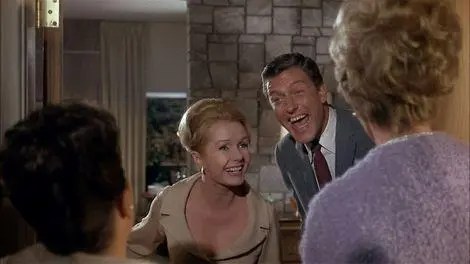
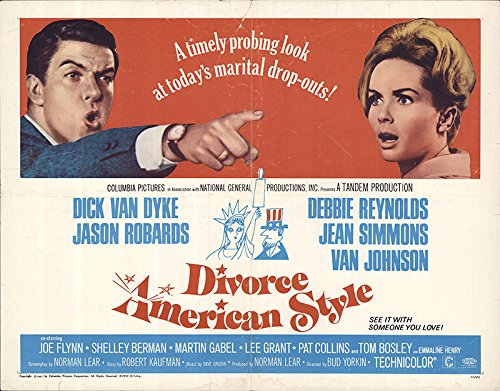
DIVORCE AMERICAN STYLE, a 1967 satire with some bite to it, was a popular success at the time with good reviews, an Oscar-nomination for its screenplay, a $13,800,000 gross the year’s 22nd most attended. Today it’s all but forgotten (somehow it took this vacuumer 58 years to scoop it up, via You Tube, on a laptop, in Bangkok, fighting a fever: all for art, etc.) and that’s a shame, as it’s cleverly written and directed, is spring-loaded with good actors and contains several standout performances.
After 17 years of marriage and two kids, ample income and a nice house in Los Angeles aren’t making ‘Richard Harmon’ (Dick Van Dyke) and wife ‘Barbara’ (Debbie Reynolds) happy: they fight constantly, eventually splitting the sheet, with Richard getting the tatters via alimony and a lopsided settlement. Also divorced and barely eking existence, ‘Nelson Downes’ (Jason Robards) tries to set Richard up with his ex-wife ‘Nancy’ (Jean Simmons), freeing him of alimony so he can wed someone new, and give lonely Nancy someone to share life with. Then Barbara gets set up with ‘Big Al Yearling’ (Van Johnson), a wealthy local car dealer. Strings, loose ends, knots. Ever after?

DAVID, Barbara’s lawyer: “Well now, to the property settlement. I’ve prepared a list here of major items of community property with some suggestions as to how they may be distributed amongst the parties. RICHARD: “Seems to be fair. Split right down the middle. The house to Barbara; the mortgage payments to me. The furnishings, color TV and piano to Barbara; the monthly payments to me. The insurance benefits to Barbara; the premiums to me. The uranium in our uranium mine to Barbara…” DAVID: “Uranium mine?” RICHARD: “And the shaft to me!”
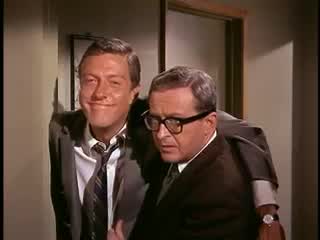
Rising lights Norman Lear (writing) and Bud Yorkin (directing) used the title as a hat tip to the great 1961 farce Divorce Italian Style. Though the peaceful postwar years boomed America with goodies, all the barbecues, stereos and V-8 convertibles disguised gaps in the circled wagons. TV opted to lullaby The Great Unsettled with scores of westerns and family sitcoms but the movies began to dig deeper. The divorce rate doubled between 1960 and 1980, with a precipitate rise in the latter half of the 60s. Just as flicks of the late 50s, usually dramas, showed increasing unease that came with clawing up the success ladder (The Man In The Gray Flannel Suit, Patterns, The Bachelor Party, No Down Payment), when sex tidal waved the 60s, comedies took on more of the psychic burden, and among the relationship rockers of 1967 were The Graduate, Barefoot In The Park, A Guide For The Married Man and Two For The Road. All relics of the time, some holding up better than others over the ever-more-cynical decades that followed ‘Nam and Nixon.
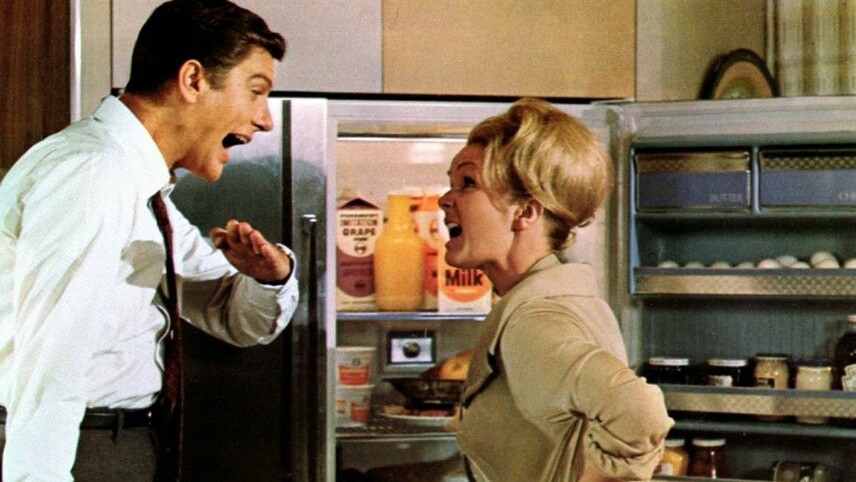
Not merely set up as a slew of one-liners (Barefoot In The Park) or broad skits (A Guide For The Married Man) the script give some meat and heat to the arguments and dilemmas, with some of the funnier bits offered as toss-offs or subtle jabs. Simmons is stuck with the straightest role and as such isn’t as well served. Robards gets to ham it up, countering his badass roles that year in the dead-serious shoot’em ups Hour Of The Gun and The St. Valentine’s Day Massacre .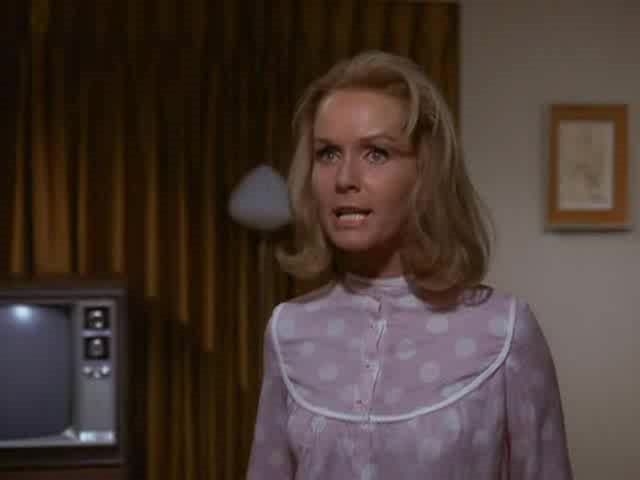 Scoring wins in the ace supporting cast are Shelley Berman, supremely sly & dry as Barbara’s divorce attorney viper; Joe Flynn, in his best big screen role, as Robert’s just-trying-to-help pal; Martin Gabel, chewing insinuating syllables as a smug marriage counselor; Emmaline Henry, skillful deadpan as Barbara’s loyal girlfriend. It’s a shame that when people think of Dick Van Dyke’s movie career, a mixed bag, they usually stop at Mary Poppins (his worst performance) and totally miss his excellent turn in this picture; though some may opt for Bye Bye Birdie, others The Comic, we’d call this his best big screen job. He’s well-matched with Reynolds, 35, who, with How The West Was Won, does her keenest work of the 60s. Though a skilled comedienne, her comedies from the decade were mostly lame (Mary Mary, My Six Loves, Goodbye Charlie, The Singing Nun, How Sweet It Is!–and the indigestible The Unsinkable Molly Brown, which for some reason got her an Oscar nomination. She’s allowed some fire & ice here and her no-win skirmishes with Van Dyke are choice cuts.
Good swank ‘sophisticated 60s’ score from Dave Grusin. Done up for $2,800,000, with Lee Grant, Tom Bosley, Dick Gautier, Tim Matheson (18), Pat Collins (“The Hip Hypnotist”, as herself), Gary Goetzman (14, debut), Eileen Brennan (34, debut) and Doris Roberts. 109 minutes.
 Movies ala Mark