
THE LIFE AND TIMES OF JUDGE ROY BEAN, the 1972 farce-with-fatalities western, trampled self-aware mockery paths that 1940’s Gary Cooper-Walter Brennan classic about the infamous Texas cuss (The Westerner) was not allowed to tread, insofar as rough language, crude behavior and extensive violence are concerned, adding the nihilistic cynicism considered chic in the 70s. Both eulogizing and satirizing the genre, it’s one of those ‘have cake and eat it, too’ slices, though in this case the ‘have’ is mainly in the costuming, props and fancypants variations on ‘frontier speech’; the ‘eat’ is more like gluttonous gulping in a sorghum-paced 120-minute blabfest that overstays its welcome by a good thirty. Aimless (except for all the guns), visually dreary, it’s a series of anarchic vignettes in search of plot and purpose. Critics at the time were not impressed, but the box office placed 14th place for the year, the $24,500,000 gross knocking down a $4,000,000 cost. One thing it accomplished was turning its young hotshot script wiz into a director. The writer, ornery new poke in the corral John Milius, 28, was so displeased with how the director (John Huston), star (Paul Newman) and producer (John Foreman) toyed with his ideas that he decided from then on he’d direct what he wrote. *

“Maybe you can explain to these people here that I mean them no harm. Tell ’em it’s going to be a new place. It’s going to be a nice place to live. I’m the new judge. There will be law. There is going to be order, progress, civilization, peace… Above all, peace. And I don’t care who I have to kill to get it.”
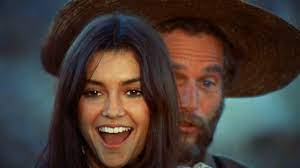
Based, with ricochet notions of accuracy, on the real Roy Bean (1825-1903) and his ‘rule of law’ in west Texas near the Pecos River. In this version, easily-riled Roy (Newman, bearded and gruff), after taking wipe’em-out vengeance on polecats who left him for dead, grabs their dwelling and sets himself up as The Law. He turns a crew of scruffy outlaws (Ned Beatty, Jim Burk, Matt Clark, Bill McKinney, Steve Kanaly) into loyal deputies, deals quickly and harshly with territorial vermin, and wins the love of a beautiful Mexican maiden even as he pines for famous actress Lillie Langtry. Defrauded in later years by cheating lawyers, he goes out in a blaze of glory, taking everything with him but Langtry, who finally shows up in a brief coda at the anticlimactic finish. Occasionally funny balderdash has some highlights, but too much is tone deaf, both with the humor and sentiment. The only character who feels something like real is the patient ‘Maria Elena’, endearingly played by stunning 21-year old Victoria Principal, making an auspicious debut. Everyone else is a caricature, and with three brief exceptions they all come off like actors playing cowboy dress-up, with several out-of-their-element and seemingly cast for the hell of it—Roddy McDowall, Anthony Perkins, Jacqueline Bisset. Huston hams up a cameo as Grizzly Adams, there just to introduce a non-human member of the cast (despite Adams having died decades before Bean’s reign). The Langtry cameo tack-on is done by Ava Gardner, presumably because Huston had a soft spot for her after directing her in The Night Of The Iguana (where she’s excellent) and The Bible…in the Beginning. When she finally shows up, it doesn’t register more than “Hey, there’s Ava Gardner!”, just as with Perkins, Bisset, et al. The ending before the ending—the needless battle royale that goes full apocalypse now with money-corrupted Vinegaroon (never happened)—is just ridiculous, one of those ‘we have to end it somehow so let’s just blow everything to smithereens’ deals.
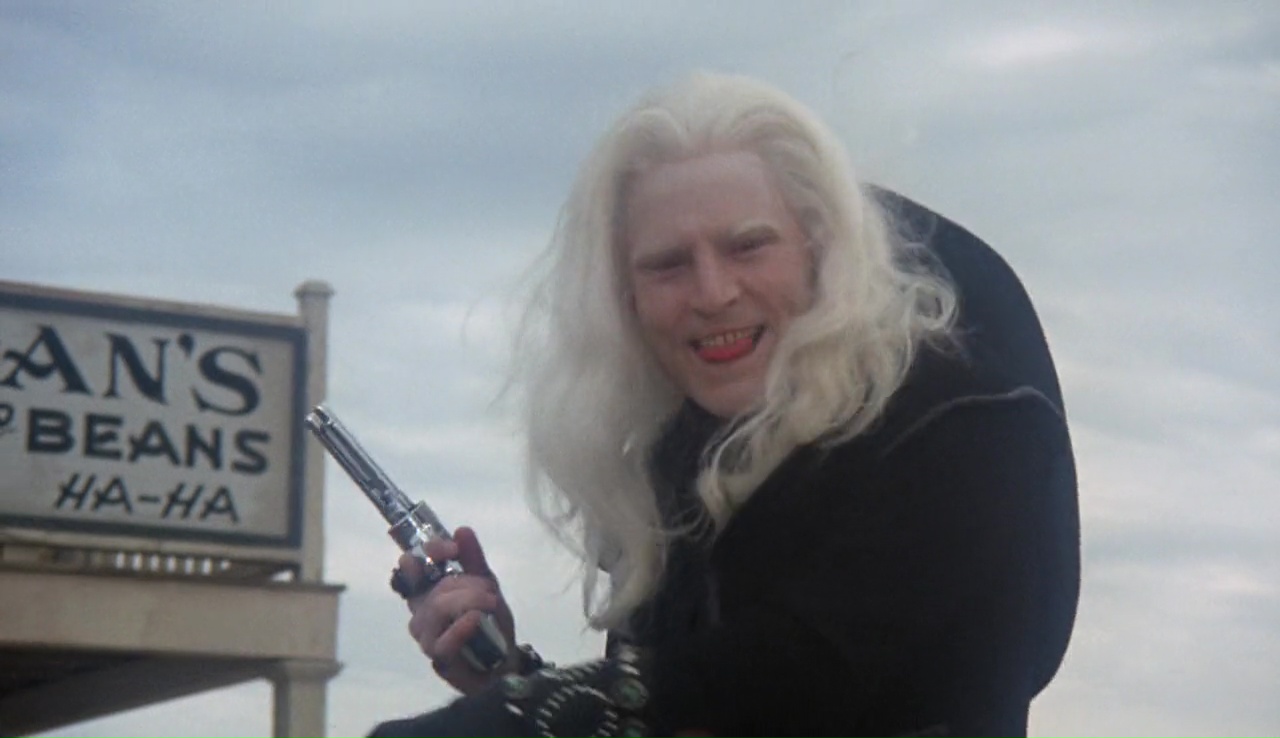
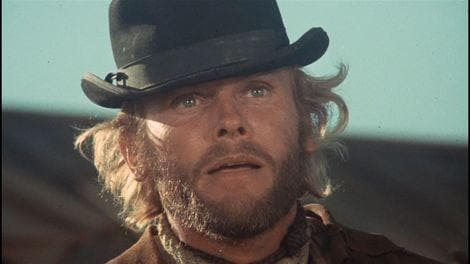
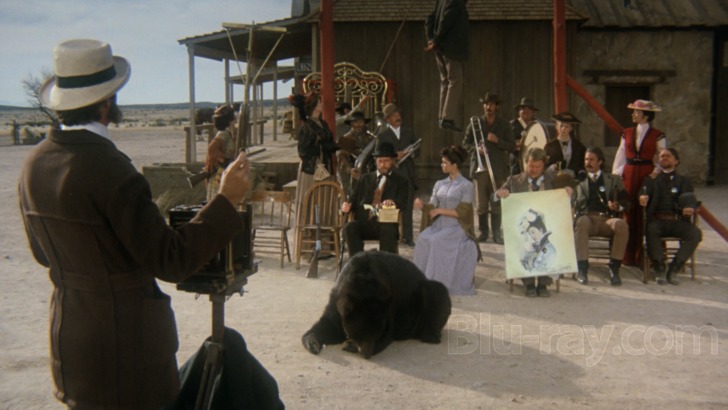
The three that make marks—Tab Hunter is a nice comic surprise as one of the daft yahoos Bean strings up. Stacy Keach, made up like a demon from beyond, takes the bullpuckey by the horns in a wild couple of minutes as gleefully crazed ‘Bad Bob, the Albino’, complete with memorable exit. And a tip of the sombrero goes to ‘Bruno’, the black bear from TVs Gentle Ben, here stealing scenes as ‘Zachary Taylor/Watch Bear.
It’s a good thing Victoria, Tab, Stacy and Bruno are there: they help you get over the awful insertion of “Marmalade, Molasses and Honey”, sung by Andy Williams (as western as Santa Monica) but the attempt to summon the success of that accursed ‘Raindrops’ ditty from Butch Cassidy and the Sundance Kid is a major groan. The opening credits include a huge “Sung by Andy Williams”—hey, we like the guy, too, but “Moon River” this isn’t. The lame number managed to snare an Oscar nomination but lost to The Poseidon Adventure‘s not exactly cherished “The Morning After”. It was a ghastly song array that year, including “Ben”, about a homicidal rat.

Numerous retrospective reviews of this movie call it a financial under-performer, which isn’t at all borne out by the box office results. Do due diligence, doofs! Quite a few of the newer reviews see this oddball effort as something nearly profound. Uh, yeah, well. I enjoyed this movie back in 1972, when I was 17, with buddies and some bud: seen again after a long while it just doesn’t work–and I’m a fan of Huston, Newman, Milius and westerns. Maybe the key is THC?
Music by Maurice Jarre. With Anthony Zerbe, Roy Jenson and Richard Farnsworth. Michael Sarrazin shows up in a photo as Bisset’s husband: the actor was her boyfriend at the time, lucky s.o.b.
* Milius, miffed: “Judge Roy Bean has been turned into a Beverly Hills western. Roy Bean is an obsessed man. He’s like Lawrence of Arabia. He sits out there in the desert and he’s got this great vision of law and order and civilization and he kills people and does anything in the name of progress. I love those kind of people! That’s the kind of people who built this country! That’s the American spirit! And they say, ‘What you’ve created is a reprehensible man. We’ve got to make him much more cute.’ So they changed it from a Western about royalty and greed and power to a western where Andy Williams sings a song in the middle of the movie and the judge and his girl and a pet bear go off on a picnic. It’s incredible. He goes on a picnic and sits on a teeter-totter. It’s a movie about Beverly Hills people. About John Foreman and John Huston and Paul Newman.”
The apologetically macho writer fared much better that year with his screenplay for a western that doesn’t fart around—Jeremiah Johnson. Three years later Milius did give Huston a sweetheart supporting role in his epic The Wind And The Lion. Further down the trail he’d also grouch about how his script for 1992’s Geronimo: An American Legend was manhandled.
For better or worse, The Life And Times Of Judge Roy Bean, like Jeremiah Johnson, fit in with the other “end of the old days” westerns–and their modern rodeo diehards—that came out in force in 1972: The Cowboys (John Wayne shot in the back–by psycho-hippie Bruce Dern, yet!), Joe Kidd, Buck And The Preacher, Pocket Money (with Newman), Junior Bonner, The Culpepper Cattle Co., Chato’s Land, When The Legends Die, The Honkers, The Great Northfield Minnesota Raid, Bad Company, Ulzana’s Raid.

 Movies ala Mark