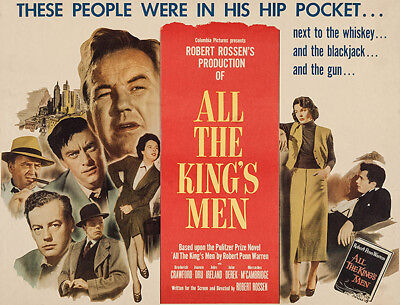
ALL THE KING’S MEN—demagogue, American style. Lifted from Robert Penn Warren’s Pulitzer Prize winning novel, the 1949 film was written, directed & produced by Robert Rossen. Two years earlier his superb Body and Soul took the sport of boxing to the mat as a stand-in for societal stress fractures from money and fame. In this take-no-prisoners epic of personal and political corruption he points the finger (or gives it) to damn near everyone: those who can be fooled, those who do the fooling, and those who help them do it. A bitter pill at the time, revisited in the harsh light of the present ‘state of the nation’ its prescience is downright stunning. *
“Appeal to their emotions. Make them laugh; make them cry; make them mad, even if they get mad at you. But for heaven’s sake, don’t try to improve their minds.”
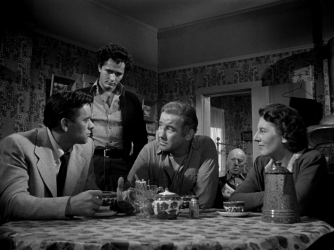
Post-WW2 USA, down South. Newspaper reporter ‘Jack Burden’ (John Ireland) does a story on a ‘regular fella’ running for county treasurer in a poor backwater district (or parish–while-unmamed, the state smells like gumbo, so take a wild guess). ‘Willie Stark’ (Broderick Crawford) comes off as authentic, an honest family man vs. ingrained corruption. Pummeled by the machine, Stark loses, but he’s determined to better himself, getting a law degree, eventually making enough of a name to draw attention as a candidate for governor. When Burden, now a loyalist, and campaign insider ‘Sadie Burke’ (Mercedes McCambridge, 32, debut) show Willie he’s being used as a pawn, he goes off-script. Telling “the hicks” what they want (and need) to hear. He loses again, but grassroots support grows, as does his appetite for the spotlight. Ultimately triumphing and becoming governor, Stark’s ego expands into egomania, grabbing power by any means possible, crushing not just his opposition but those closest to him—all with the bamboozled backing of “we, the people.”
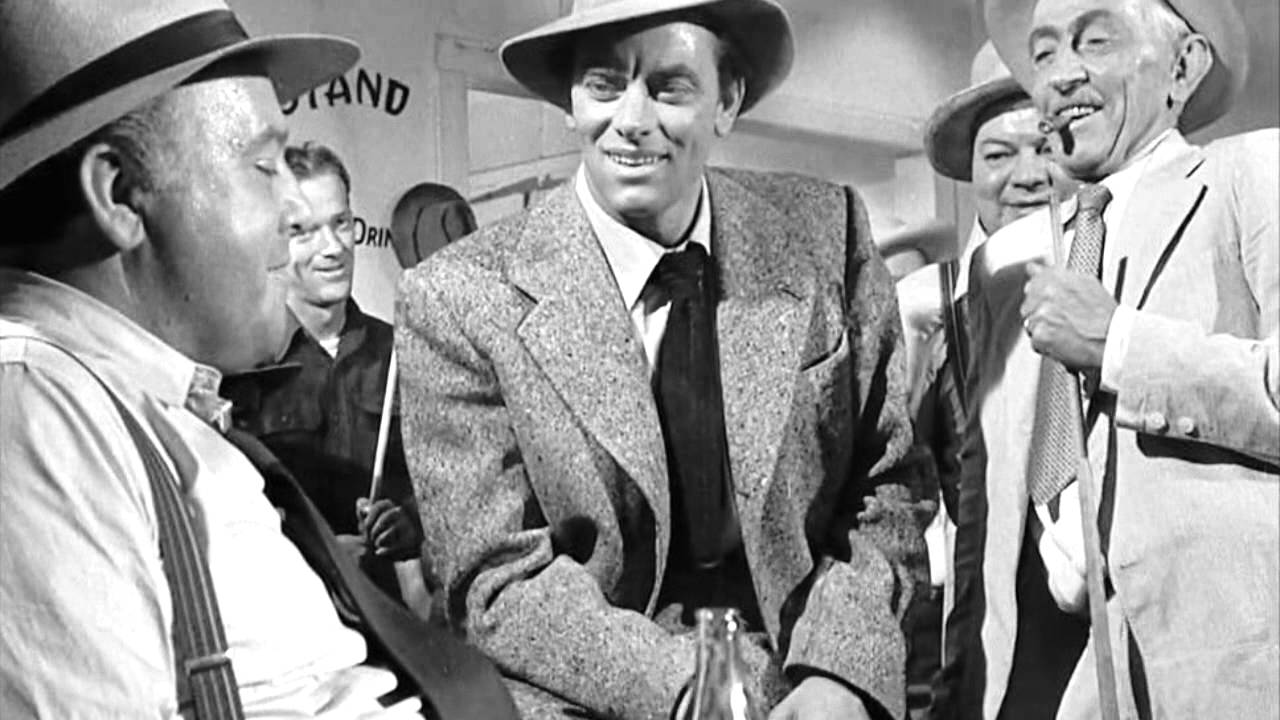
Dynamic acting, writing, direction, camerawork (Burnett Guffey) and editing sell Stark’s rise & rise again saga, enough to wow critics, hurdle the $2,000,000 budget by making $6,700,000 (30th place for the year), and win Academy Awards for Best Picture, come-from-behind Crawford as Best Actor and refreshingly naturalistic newcomer McCambridge as Supporting Actress. Nominations went to Rossen for both Direction and Screenplay, Ireland as Supporting Actor and the staccato Film Editing from Al Clark (The Awful Truth, Mr. Smith Goes To Washington) and future director Robert Parrish. **
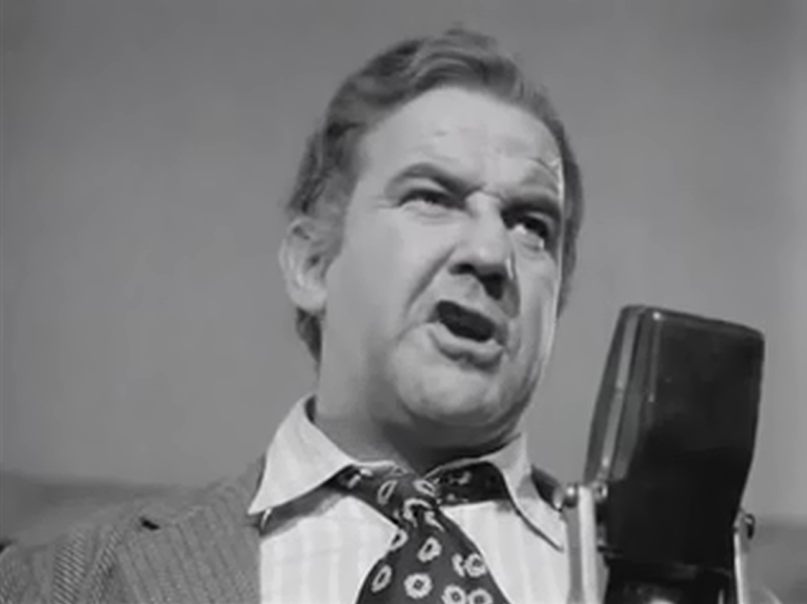
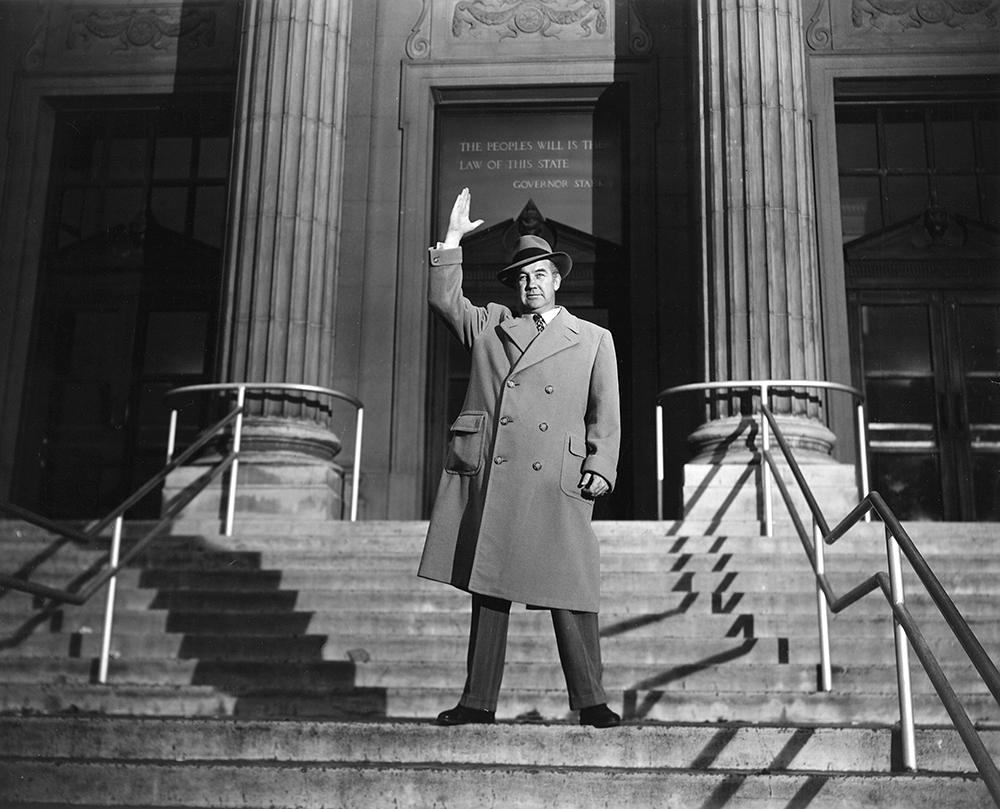
In films for a dozen years, at 37 Crawford had been a reliable character player in A-list pictures (Beau Geste, The Real Glory) and sometimes lead in B-flicks but no-one was ready for his outstanding portrayal of a seemingly good man-gone deeply bad. Like any number of performers, Crawford was limited in range but he was glove fit for the crafty, crude, eventually cruel chameleon who enthralls more people than he repels, just enough to cinch the numbers game and run the table on priceless yet gossamer values like honesty, decency and trust. There’s one born every minute, and Willie, like charismatic ‘Calvera’ in The Magnificent Seven believes that “if God didn’t want them sheared he would not have made them sheep.” Yokels & flacks, rich & poor, decent & gullible, they line up as snacks for The Great White Stark. Too many of Crawford’s later performances relied on bluff bellowing, but he’s indelible here, so real it hurts.
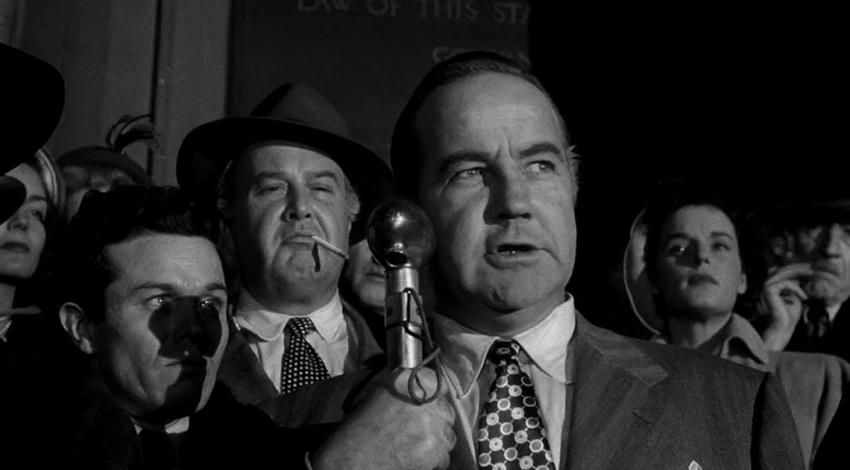
Also a reliable character actor and sometimes lead, the offbeat Ireland, 34, equally adept at conveying reserved decency or the casually sinister, has a strong role here (the major one in the novel) and gets to work with Joanne Dru, 27; they’d marry that year. She plays Burden’s ex-flame who falls under Stark’s spell. Another acting coup comes from compelling McCambridge, who’d made a name for herself in radio, her unique voice and unshowy but arresting manner taking attention away from anyone else sharing a scene with her.
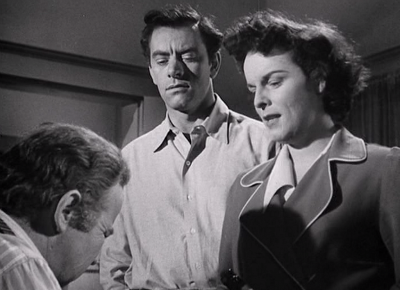
The scorched earth view of political corruption and personality power is bracketed by skillfully integrated subplots keying adultery, alcoholism, journalistic integrity (don’t laugh) and their ability to be complicit in crafting opinion. Beneath all is the class vs. class drive to not just better yourself but best others in the bargain. As long as there’s a “they” to scapegoat, there’ll be a handy serving of blame you can scrape off your own plate.
110 minutes, with John Derek (as Willie’s ruined son, a double wham that year with Knock On Any Door), Shepperd Strudwick, Ralph Dumke, Anne Seymour, Walter Burke (creepy as ‘Sugar Boy, Stark’s fanatic bodyguard), Katherine Warren, Raymond Greenleaf, Will Wright, Grandon Rhodes, Paul Ford and King Donovan. The 2nd unit director was Don Siegel. The 2006 remake was universally derided and a box office flop: I’m one of the few who think it unfairly underrated. But will “the American people” listen? Can they, even? Obviously not.
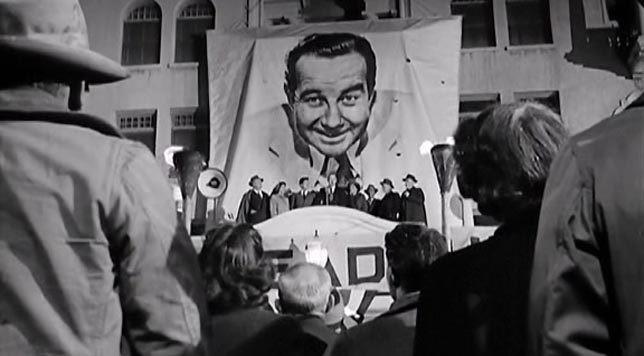
* Stark was, is & will always be cited as representing Louisiana’s ‘Kingfish’ Gov. Huey Long: at the time his memory was still potent in the collective public mind. Warren (who would be the one to know) said the coincidence was oblique. For the author, Stark and his appeal warned of “the kind of doom that democracy may invite upon itself”. NFK.
** The novel fills 672 pages. Rossen’s original cut ran 4 hours, 10 minutes: no way a studio would release that, let alone would audiences sit thru it. Editors Clark and Parrish (he’d help shape Body and Soul) were flummoxed by the messy mass until Columbia’s czar Harry Cohn (a Stark sort of his own, with hotter secretaries) and desperate Rossen laid down a chop-to-fit edict gamble with no wiggle room. Free 140 minutes of excess, streamlined with montage, the final cut of 110 plays like a fever dream. Parrish would go on to direct winners like The Mob, The Purple Plain and The Wonderful Country.
The editing ought have taken the Oscar (it went to Champion) and Rossen should’ve received both Director and Screenplay instead of Joseph L. Mankiewicz for his slick but overrated A Letter To Three Wives. The Stark role was originally offered to John Wayne, but his right-wing politics didn’t comport with lefty Rossen’s; he thought the script was essentially anti-American. Duke must’ve been more than perturbed when Crawford won over his nomination for Sands Of Iwo Jima. Wayne was in top form as proto-Marine ‘Sgt. Stryker’ but burly, less likable Brod beat him fair & square with his too-American huckster Willie Stark.

 Movies ala Mark