
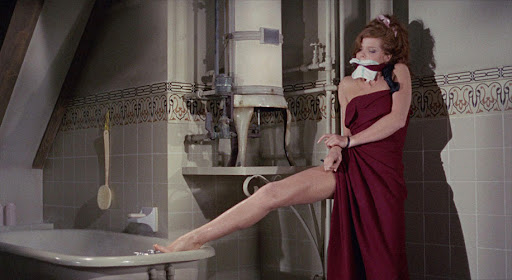
THE COLLECTOR—“Think of all the living beauty you’ve ended” says ‘Miranda Grey’ (Samantha Eggar) to ‘Freddie Clegg’ (Terence Stamp) as she beholds his stunning yet sad array of bottled butterflies. The private hoard is enough to stock a museum but not sufficient to sate Freddie’s needs, which go beyond curiosity and past fascination into a category harder to define and impossible to rationally accept. Freddie’s not her host. He’s her captor. Miranda’s not his guest. She’s the newest specimen in his collection. *
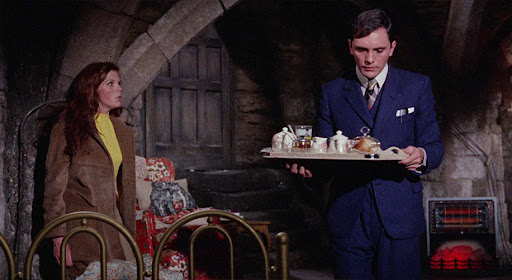
A textbook case of consummate talent triumphing over distressing—essentially sick—subject matter, this 1965 delve into dread was directed by esteemed taskmaster William Wyler, helping craft a pair of career-high performances from emergent young actors in a study of delusion and despair. Taken from John Fowles well-regarded novel, the screenplay was adapted by Stanley Mann and John Kohn. Samantha Eggar drew a Oscar nomination as Best Actress, Wyler for his taut direction (his last of 12 nominations–with three wins), and the keen script went up as well.
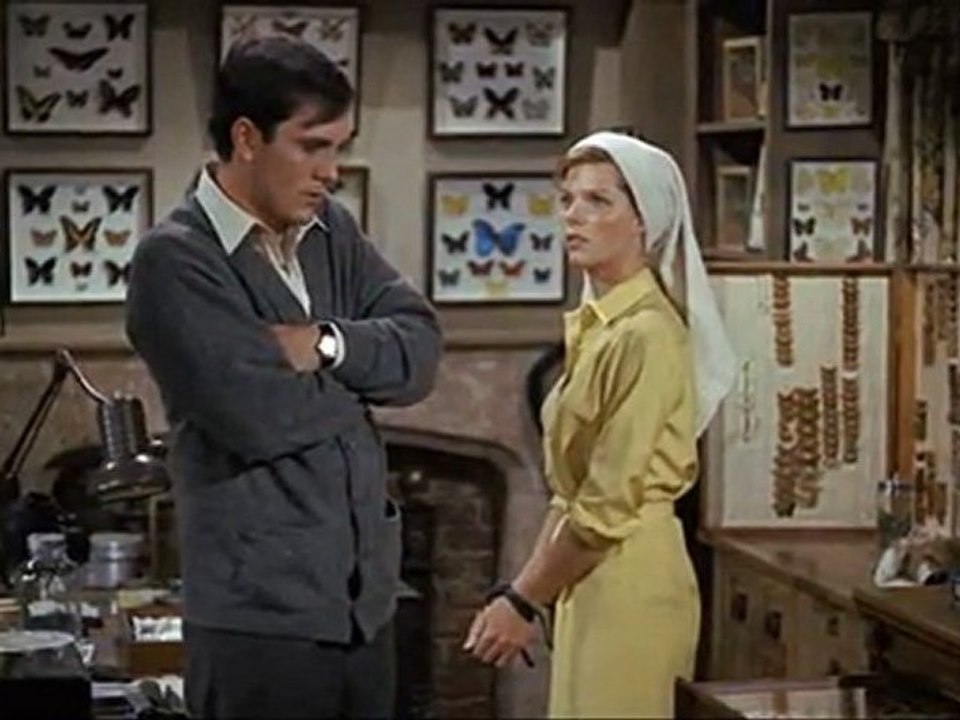
Short form synopsis: obsessed, socially isolate Freddie stalks and kidnaps a stranger, beautiful art student Miranda, and keeps her imprisoned in the cellar of his farmhouse. As they get to ‘know’ each other, the terrified but resourceful young captive uses a variety of tactics to attempt to escape. Both are determined, but determination itself is an impartial quotient.
Stamp, 26, drew raves for his 1962 turn as another (distinctly different) type of lad in Billy Budd but hadn’t worked since, instead reaping publicity mileage out of his swinging bachelor lifestyle. He’s superbly controlled as the ‘considerate’ predator: Freddie’s matter-of fact-politeness juxtaposed with his icy resolution makes this polite psychopath a more chilling variant on the boy-next-door pose of homicidal hotel clerk ‘Norman Bates’. Anthony Perkins bravura twitchy freak in Psycho got serious disorder competition from the cursed-yet-lucky Freddie and his class-branded victimization complex. Plus, people looking for ‘Norma Crane’ had a few clues to go on.

Eggar, 25, had been acting in British TV & B-flicks for four years before breaking big with this knockout and Return From The Ashes, a good, unheralded suspenser. The somewhat regrettable backstory behind her perfectly-pitched performance was that per Wyler’s instructions Stamp and the crew treated her with disdain throughout, one of those cruel-to-be-kind (or just cruel?) tactics some directors employ to elicit what they want and/or think that an actor is capable of: she was so upset by the tortuous treatment that she lost 14 pounds from stress. When critics are enamored of a particular filmmaker they almost always cut kowtow slack for the ‘artistic genius’ behind the bullying. Debatable, given the actors often know what they’re in for. In this case, blindsided Eggar didn’t. That art-imitating-life grist to the side, for sure her justly nominated work here is more vital and arresting than the good job from sister Brit find Julie Christie, who won for the depressing Darling. After a few more parts in A-list pictures (Walk Don’t Run, Doctor Doolittle, The Molly Maguires) Eggar’s off-like-a-rocket career inexplicably descended into mostly schlock projects.
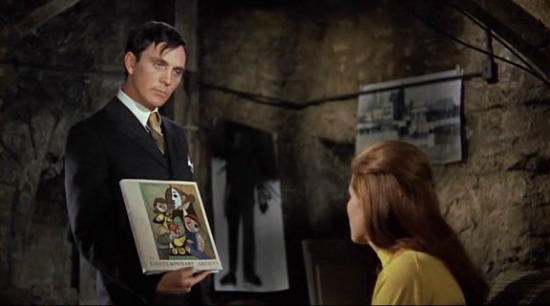
Dramatically impressive and darkly compelling, the utterly believable construct and progressive suspense in this ‘civilized’ creepout are also uncomfortable and arguably unnecessary: we have to second the motion proffered by reviewer Charlie Largent “that no one could be blamed for asking, “Why am I watching this?”” A gross of $7,000,000 placed 44th in ’65. *
The exteriors were shot in England (Robert Krasker on camera), interior sets done in Hollywood (Robert Surtees lensing). With Maurice Dallimore, Mona Washbourne and Edina Ronay. 119 minutes.

* “Is that what you love? Death?”
1965 and the otherwise upbeat British Invasion also saw a veritable case-load of barmy’s showing up from England in the weird forms of Bunny Lake Is Missing, Die! Die! My Darling!, Repulsion, The Nanny and A Study In Terror . The States sordid Who Killed Teddy Bear? crept in the back door.
While the novel and then the film enraptured critics they were also found fascinating by a number of eventual serial killers, sadistic ghouls who cited the book and/or movie as an ‘inspiration’. As methodical as fictional Freddie, they were notably less considerate.
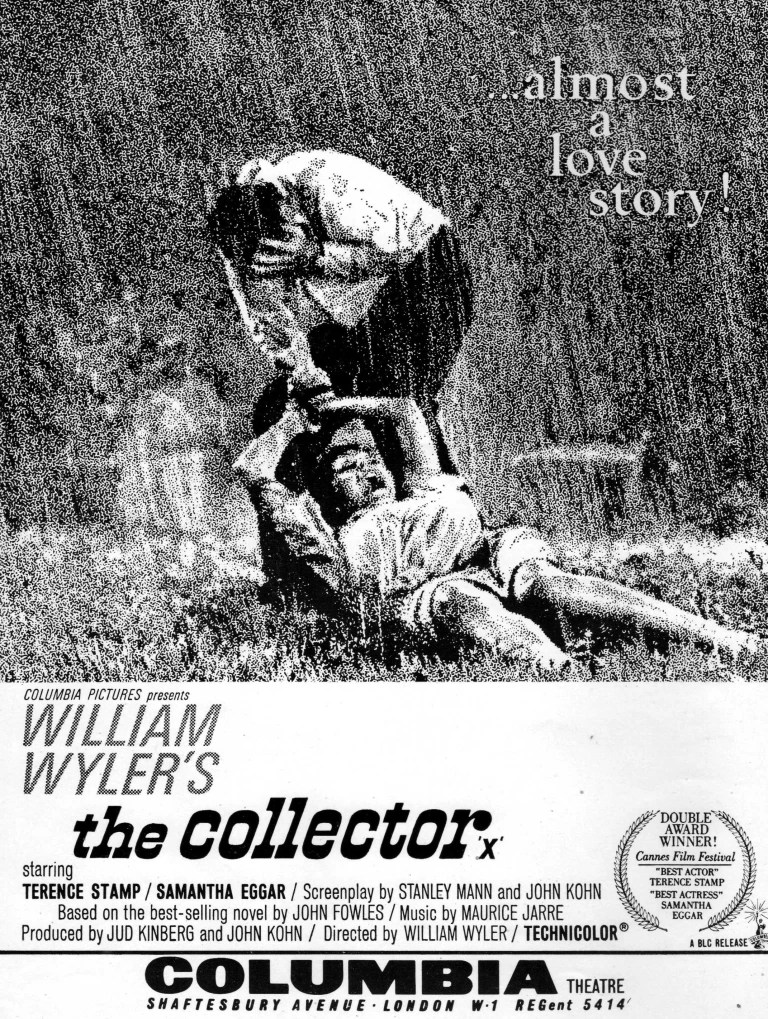
Anything for a buck—the questionable taste of an ad like “…almost a love story!” ranks down there with “They’re young, they’re in love, and they kill people”, deployed to draw thrill-thirsters into the fashionable fusillades of Bonnie And Clyde.
 Movies ala Mark