
SOME CAME RUNNING was a big hit in 1958, the year’s 9th most attended, and it pushed a few careers into higher gear. The pros in this melodrama (the performances, some design elements) trump the biggest con, a bowdlerization of James Jones novel into a simplistic, often laughable script. Published at the start of the year, Jones opus ran a daunting 1,266 pages. Reissued a few weeks before the movie came out in December in a more digestible 624, it was still a lot of dense and downbeat material for screenwriters John Patrick and Arthur Sheekman and director Vincente Minnelli to compress into 134 minutes of running time. *
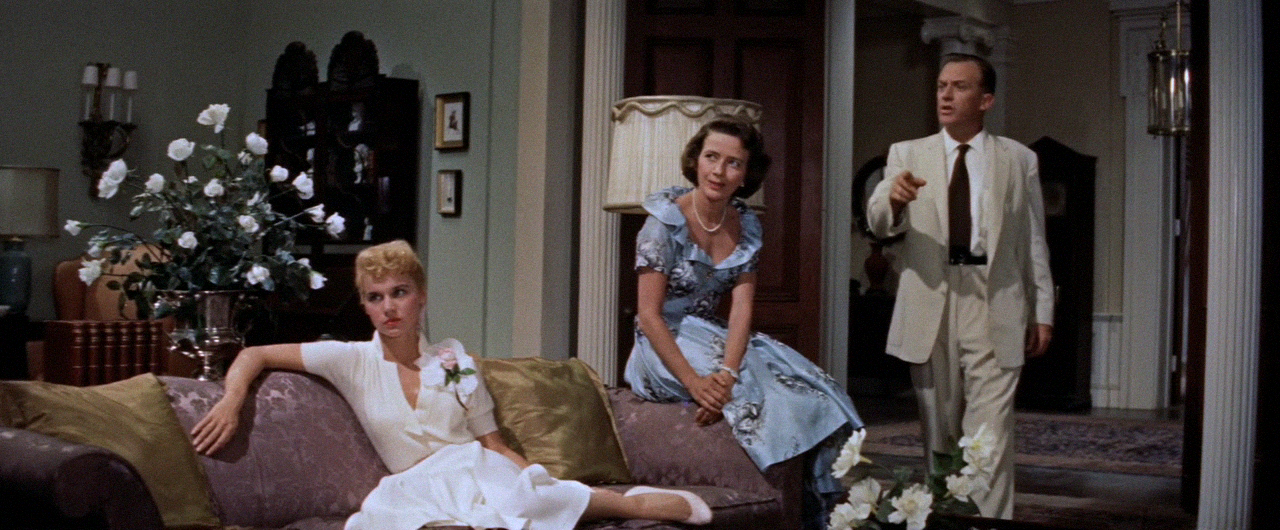
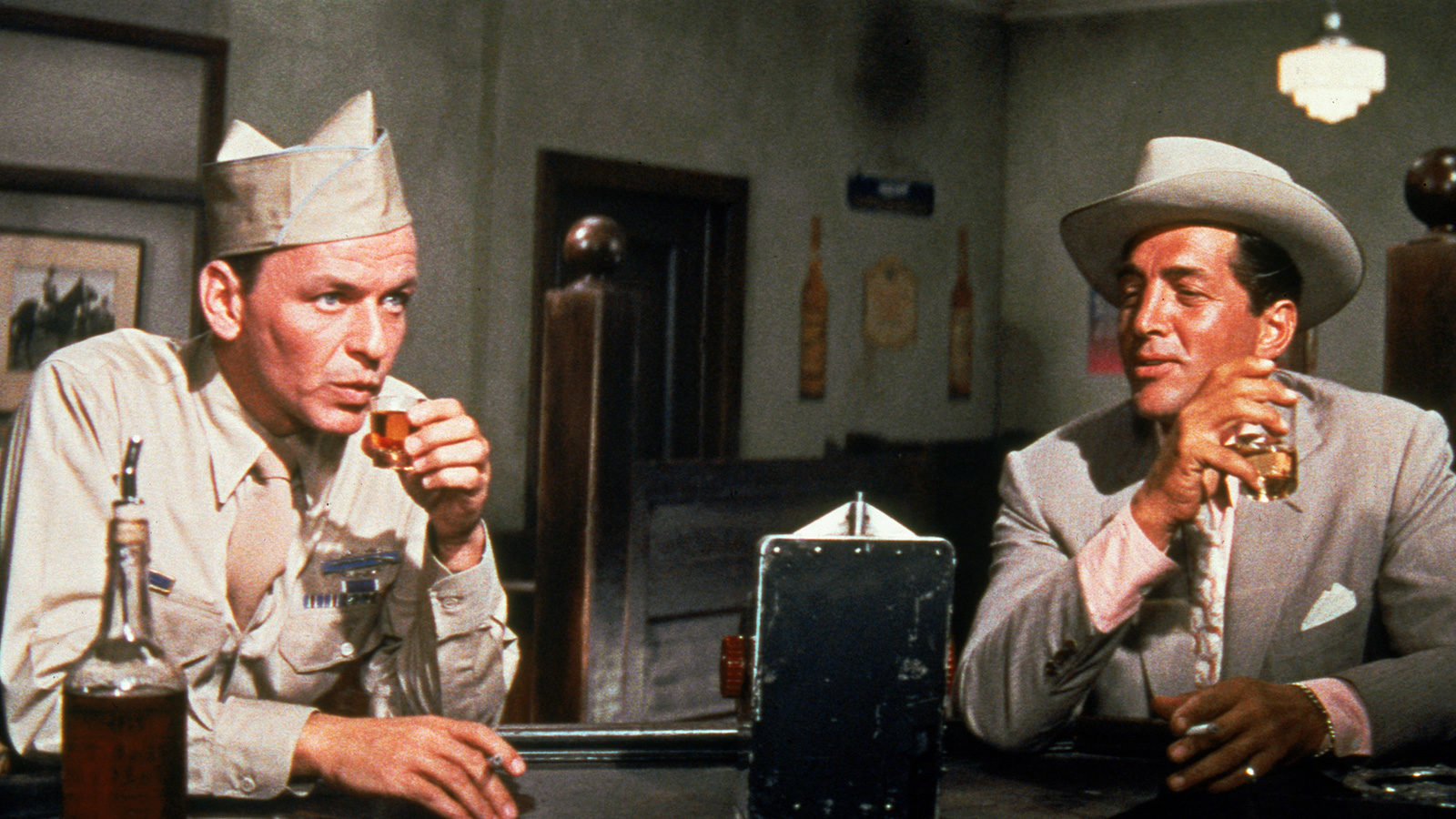
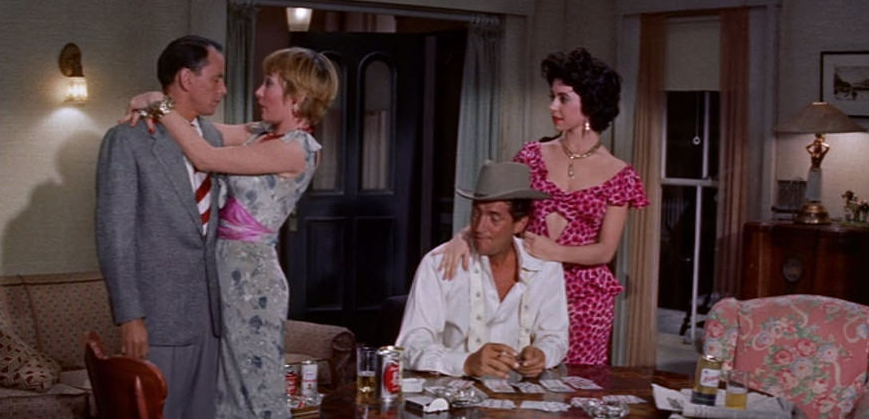
Small-town Indiana, 1948. Ex-Army vet and stalled writer ‘Dave Hirsch’ (Frank Sinatra) comes home after a 16-year absence. During his tumultuous, booze-fueled stay (abbreviated to a few weeks from the books three years) he rips open family scabs with his smarmy older brother ‘Frank’ (Arthur Kennedy), forms buddy bonds with hedonistic gambler ‘Bama Dillard’ (Dean Martin), makes unsubtle plays for uptight teacher ‘Gwen French’ (Martha Hyer) and boorishly puts up with the genuine affections of ‘Ginny Moorehead’ (Shirley MacLaine), a good-natured but gauche and not-too-bright party girl.
Shot in part on location in Madison and Terre Haute, Indiana, the tragedy-bound collision of noble ideals and ignoble weakness gets off to a portentous “Meaning, dead ahead!” start with Elmer Bernstein’s ominous and suggestive scoring. Most of the acting, much of the direction (highlighted with the bravura finale) and look (effective camerawork and art direction) earn applause. They do so even when sandbagged by the script’s force-fed reduction of time and abrupt attitude reversals, particularly the campy “instant love” hogwash with Sinatra and Hyer (about as stimulating as an ironing board).
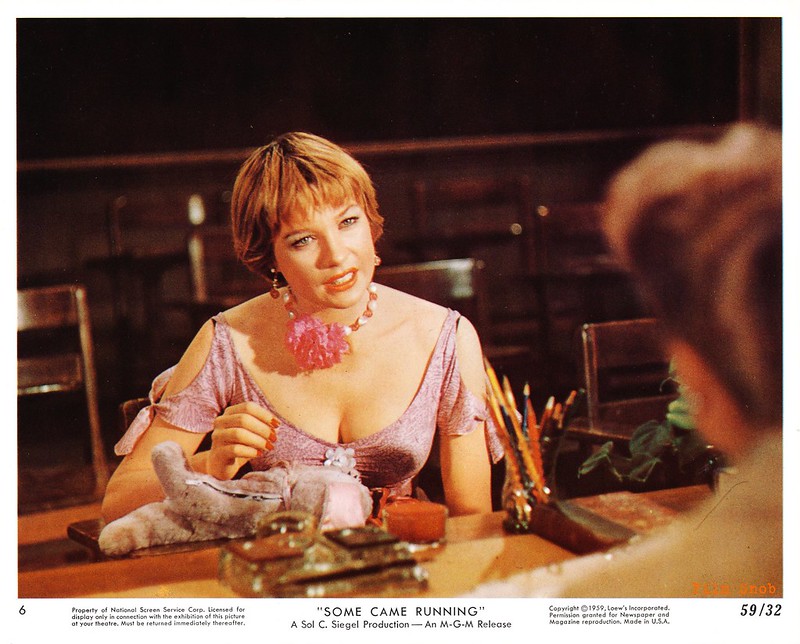
While auteur-awed critics (see “fawning over-analysis”) extol Minnelli’s skill at mood enhancement for the film’s success (accomplished as the fastidious, painstaking director had to deal with the hipster stars blasé attitudes and hijinks), it was power-player Sinatra who insisted on casting MacLaine and Martin. Frank & Dean had known each other previously, but their friendship cemented during this time, not just spurring the coming escapades of The Rat Pack but Dean’s emergent solo career as an actor in something other than comedies. Martin’s innate laid-back affability makes the who-gives-a-damn? Bama character engaging even when he’s being a louse. MacLaine (with a great costume & prop touch) turns ‘tramp’ Ginny into by far the warmest character in the piece, and she doesn’t indulge in the shrillness that would grate some of her later roles: her poignant classroom plea to the emotionally opposite Hyer (character and actress) won the movie’s warmest reviews and cinched award consideration.
Sinatra is very good, even when navigating the script’s speed-dialing of emotions, and Kennedy is always adept at shading complicated self-servers. As his secretary, Nancy Gates offers some smoldering sexuality, and there’s a top-tier essay in bitterness from Leora Dana as his vituperative wife. The unsung Dana had another good role that year in Sinatra’s WW2 drama Kings Go Forth.
MGM’s $3,151,000 investment returned $12,700,000 at the box office and ranked Oscar nominations for Best Actress (MacLaine), Supporting Actor (Kennedy), Supporting Actress (Hyer), Costume Design and Song (“To Love And Be Loved). **
With Betty Lou Keim, Larry Gates, Steve Peck, Carmen Phillips (funny as Bama’s tag-along), John Brennan, Connie Gilchrist, William Schallert, Marion Ross and Denny Miller.

* In my twenties, on a tear to gobble up famous post-war novels by men writing about how messed up it was to be a man (Jones, Mailer, Shaw, Ruark) I read and enjoyed the long version of the book. Jones second, the semi-autobiographical opus took him seven years to lash together, only to have literary critics rip him up for excess. He held such cachet from his first, “From Here To Eternity”, which became a smash movie, that MGM didn’t blink about laying out $250,000 for ‘Running’ before it was even published.
 ** As for those Oscar nominations, MacLaine, 24, certainly deserved hers, the first of six, and we’ll grant Kennedy for his last of five. Hyer? Please. She later displayed some life in The Carpetbaggers and The Chase. Another instance of a social climber who acted, at least she’s better than Terry Moore.
Minnelli consoled himself with plush Gigi‘s sweep of nine (not my pick, but who cares?). Stylist to a fault, Vincente Minnelli had a resume that ranged from sublime (Meet Me In St. Louis) to silly (The Sandpiper), his musicals and comedies generally superior to his overheated dramas. That said, Minnelli devotees love this movie.
Shirl on Frank: “I always thought he was responsible for my good performance…’Let the kid get killed,’ he said to Vincente Minnelli and to the head of the studio. ‘If she dies, she’ll get more sympathy. Then she’ll get nominated.’ He was right.”
 Movies ala Mark