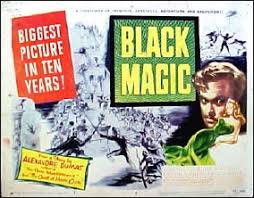
Overselling it more than a bit
BLACK MAGIC is the third example of ‘tricks up his sleeve’ that were revealed by Orson Welles in 1949. Most admired, was a contemporary noir thriller, The Third Man, a classic. Then there was the underrated historical adventure drama Prince Of Foxes. In each of those he played crucial characters but they were in supporting roles. In this, also a history-based costumer, he has the lead. In all three his individual charmers/snakes were different shades of shady, and in this one, directed by Gregory Ratoff, he offers his full-steam-ahead interpretation of the notorious Joseph Balsamo (1743-1795), an occultist/con artist who foxed various European courts as Count Alessandro di Cagliostro.
“They’re all mine—to play God with!”
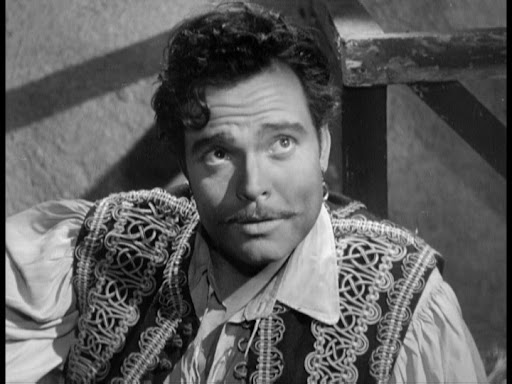
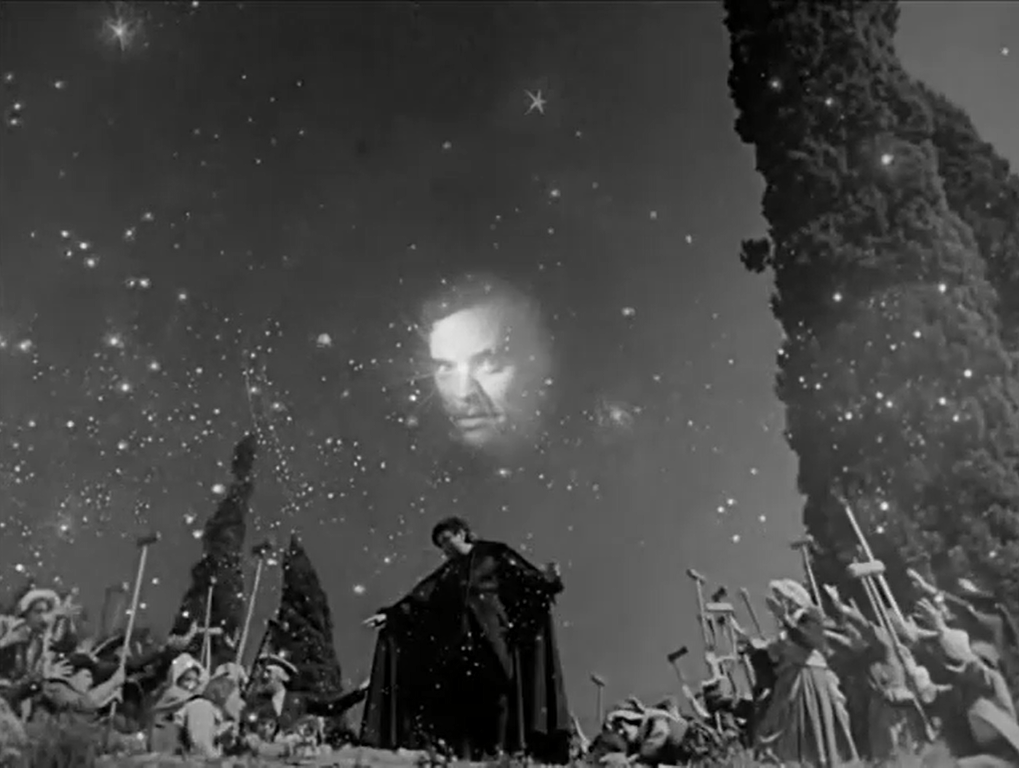
Narration from no less than Alexandre Dumas takes us to a flashback of young Romani boy Joseph Balsamo being persecuted by a vile aristocrat. Fellow gypsies ‘Romano’ (Akim Tamiroff) and ‘Zoriada’ (Valentina Cortese) save the boy from being blinded (he’d already been whipped and had seen his parents hanged) and Joseph swears eternal revenge on ‘Viscount de Montaigne’. In his manhood practiced trickster Joseph (Welles, 32), is coached by Franz Mesmer in how put employ autosuggestion: the word hypnosis is spoken, even though it came into use a century later. A natural at the practice (well-practiced already in deceiving people) Joseph discards the humanitarian aspects of mesmerism and instead sees endless profits. Fame follows his forte for fleecing, and he moves smoothly among the wealthy and titled. He becomes involved in a plot sprung by his old enemy de Montaigne (Stephen Bekassy) and Madame du Barry (Margot Grahame) that will embarrass Marie Antoinette, the French Queen. The scheme involves using a girl named ‘Lorenza’ who is a lookalike for Marie. Will Joseph—now known as Cagliostro—get his long-sought vengeance, or has he stepped into a level of power-play intrigue that’s beyond his power as a fakir?
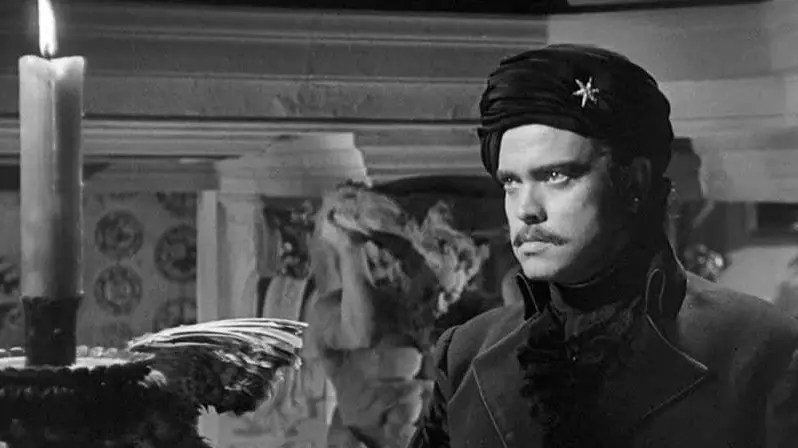
“And so, in his love for one woman and his hate for one man, and driven by his unbridled ambition Cagliosto set in motion a diabolic plot that was to rock the very throne of France!”
Over-plotted but handsomely filmed, with good use of locations and period costuming. Paul Sawtell provides a commendable music score. There’s solid work from Tamiroff, Cortese and Grahame, and the twinsome roles of humble decoy Lorenza and haughty victim Marie are well done by Nancy Guild, 22, easily the best acting of her brief career. But in the main it’s a flamboyant showcase for Welles, who plays his rogue big and bold; he looks to be enjoying himself to no end.
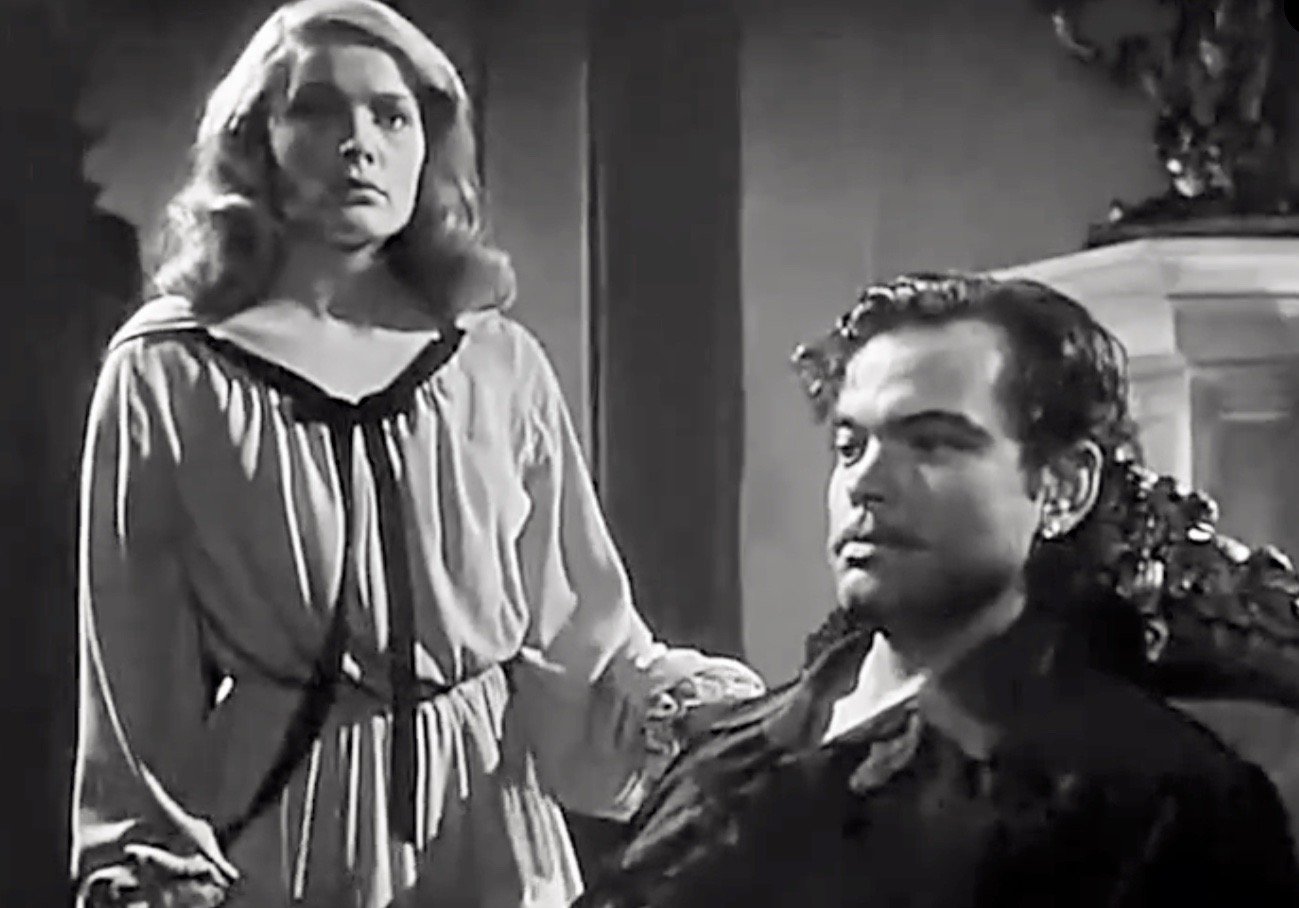
Producer Edward Small made it on location in Italy, where costs (and wages) were much lower than the States, getting a great deal of production details value on a budget that was equivalent to $1,500,000. Charles Bennett (Foreign Correspondent, Night Of The Demon) adapted into a screenplay the 1848 novel “Joseph Balsamo, mémoires d’un médecin”, 444 pages concocted by Alexandre Dumas. Richard Schayer (The Mummy, Kim, Sword Of Lancelot) contributed additional scenes and dialogue. How much Welles helped or interfered with Ratoff on the direction or fussing with the script is left to guesswork: Orson did comment that he had great fun making it. One thing is for certain: whoever had the arched eyebrow concession must’ve banked enough lira to retire on. *
Despite a lavish publicity roll-out from United Artists (including stunt appearances at select theaters from magicians) the returns in the US were low, $1,500,000 that placed it #160 for 1948. With Frank Latimore, Charles Goldner (as Mesmer), Berry Kroeger (as Alexandre Dumas, providing the narration) and Raymond Burr (as Alexandre Dumas fils—son). In the crowd somewhere are Gina Lollobrigida, 21, and Silvana Mangano, 18, each uncredited. 105 minutes.
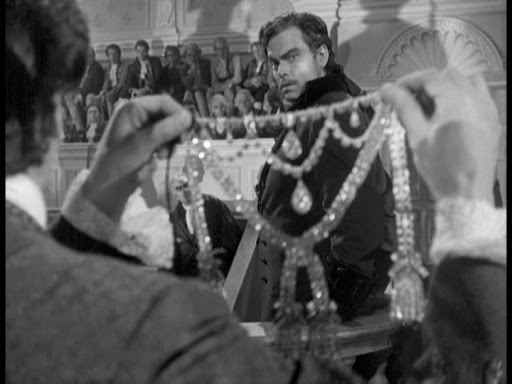
* Can’t get no satisfaction—according to scenarist Bennett “Orson Welles did every possible thing to absolutely ruin the picture”…’You’ve never seen such a mess made”. Another version of the Royal jewels scandal of 1784-5 came about in 2001 with The Affair Of The Necklace, which stranded a good cast in a critical and box office fiasco.