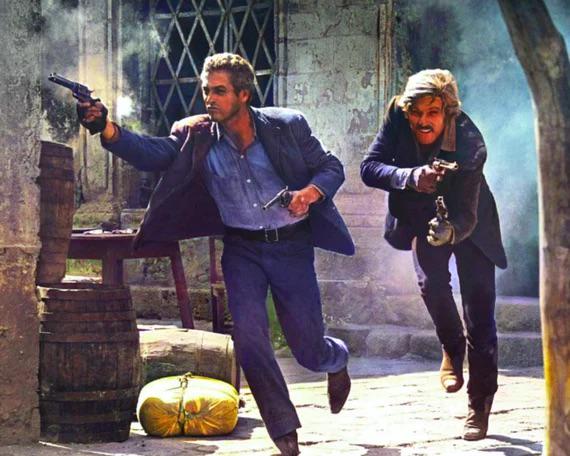
BUTCH CASSIDY AND THE SUNDANCE KID was one of nineteen westerns of one sort of another released in 1969. It isn’t the best—hands down, that’s The Wild Bunch. Enjoyable as it is, many ‘true’ western fans preferred either The Wild Bunch or True Grit, not least due to the ‘cute’ factor in this of-the-moment entry, first and foremost that damned anachronistic music score from Burt Bacharach and the truly insipid warble “Raindrops Keep Falling On My Head”. Go figure, that drop of glop not only became a monster hit, but snagged an Academy Award, as did the Score, two of four Oscar wins, with three more nominations. Though we snort like a grizzled prospector over the awards inclusions (and note that critical response at the time was lukewarm) there is no question that the $6,000,000 show was unarguably a pop culture smash, by far the biggest box office hit of the year. Sour notes now noted, we confer it’s mostly jolly good fun. “You just keep thinkin’, Butch. That’s what you’re good at.”
The first laugh comes at the end of the opening credits with”Most of what follows is true.” William Goldman’s clever script, George Roy Hill’s able direction (apart from allowing the score) and the glove-fit casting deliver a good many more over the course of the sorta true tall telling, until it wraps up on an elegiac note of lament with a heroic rush into echoed volleys of federales rifles. As the 19th-century ticked out, the Old West was ending its days, and the misadventures of its legendary outlaws. Robert Leroy Parker aka ‘Butch Cassidy’ and stickup/stick together/stick-it-out pal Harry Longabaugh aka ‘the Sundance Kid’ were in their early 40s when they met their end on Nov.7th, 1908, in a town in Bolivia. They’d made news and nuisance down there for eight years after scampering out of the States with galfriend Etta Place, in her late 20s when the boys went to glory, her life afterwards wreathed in mystery. Up north, Butch had led a crew variously dubbed the ‘Hole-In-The-Wall-Gang’ and ‘the Wild Bunch’, who hid out in the Big Horn Mountains of Wyoming. The second lusty appellation was seized by the makers of that other 1969 saga about gringo outlaws ending up south of the border, a much wilder bunch indeed, and a much more serious motion picture. *
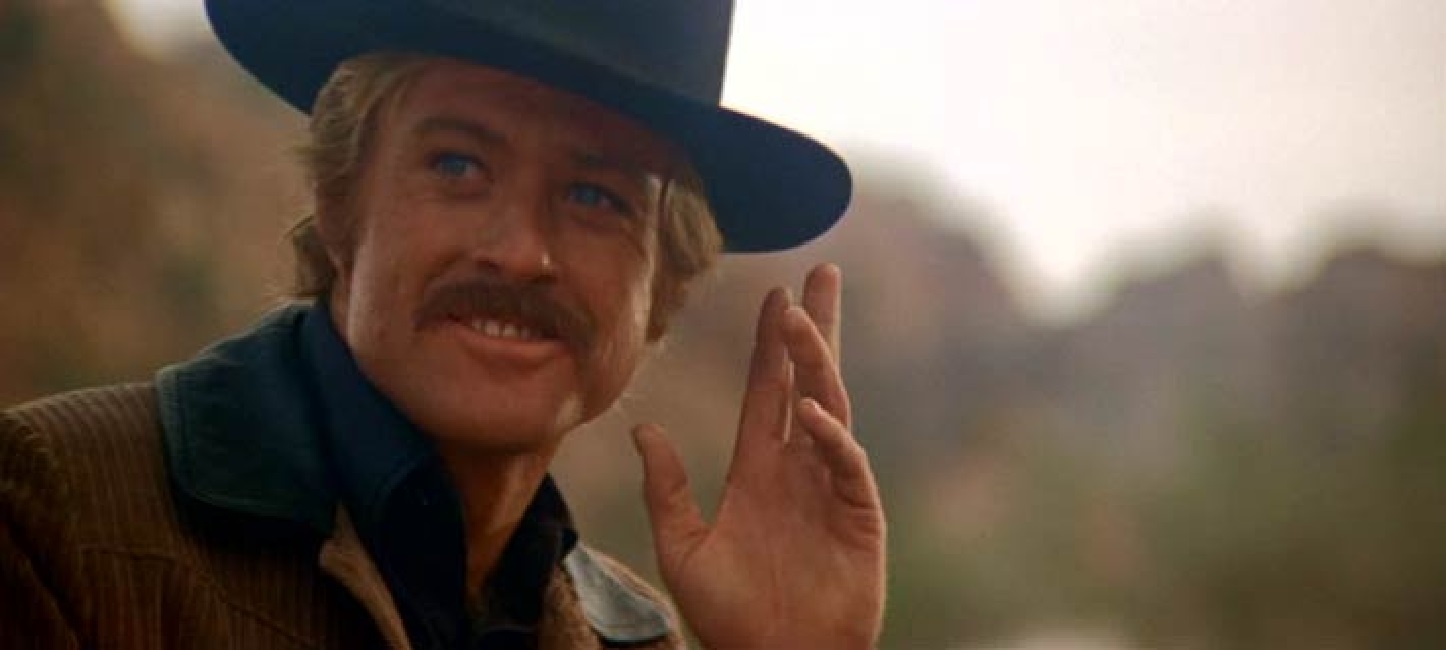
“Who ARE those guys?”
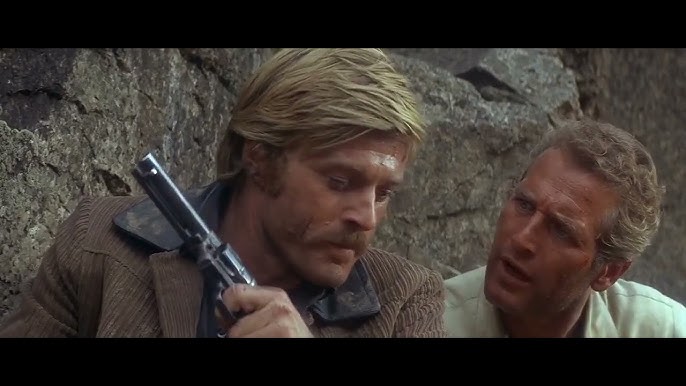
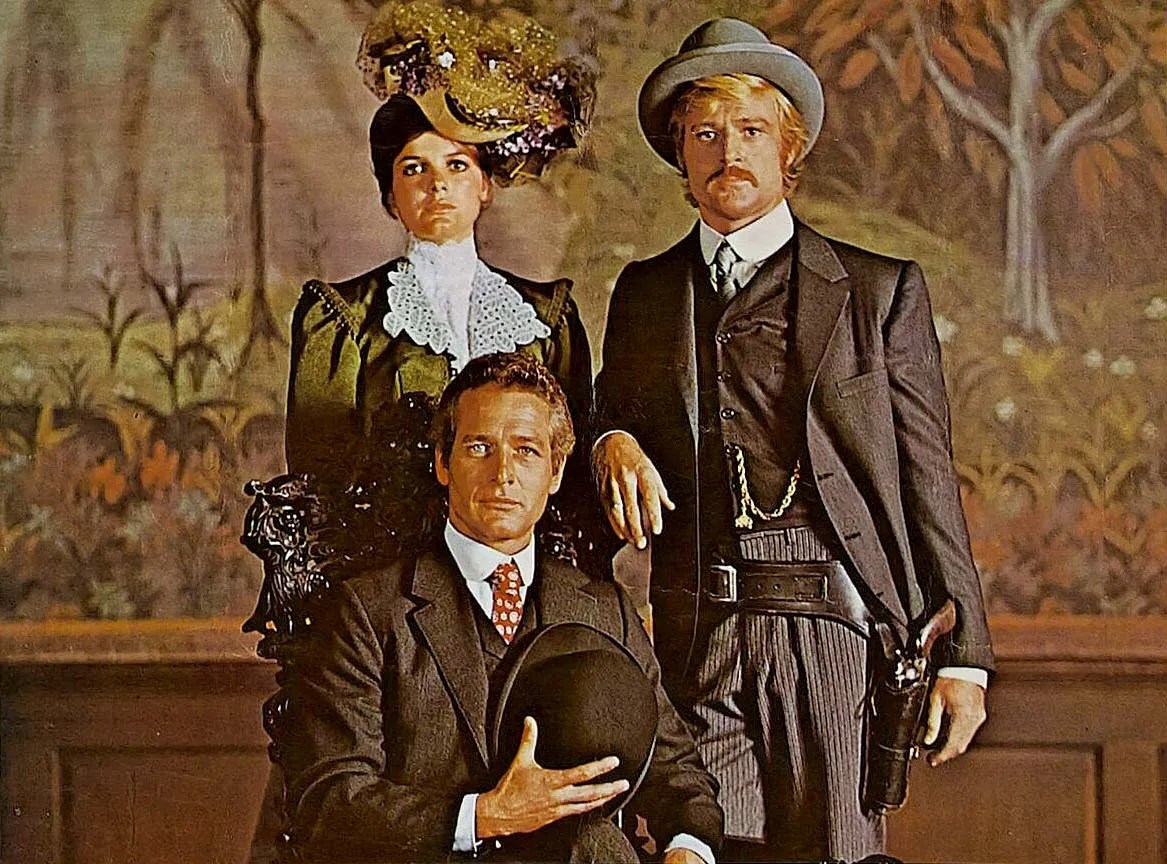
Paul Newman, 43, is Butch. Robert Redford, 32, is The Kid. One at the top of his game, the other seemingly a natural successor, about to grin into the big time. The mesh of looks, charm and skill couldn’t be bettered (similar to Connery & Caine on The Man Who Would Be King) and they were shrewd enough not to dick it up by mugging or seeming too pleased with themselves (the self-sabotage of Burt Reynolds); the timing is superb and neither tries to swipe a scene. Though most of Newman’s best performances have him as either a heel (The Hustler, Hud) or in dire dramatic straits (Cool Hand Luke, The Verdict), ever-optimistic, self-kidding Butch may be his most purely likable character. He had another bread baker that year with the race car tangle, Winning (flashy but dreary). Finding his footing in six so-so efforts spaced across the 60s, Redford emerged here as a front-rank presence. His lithe physical grace and make’em swoon ‘cool’ as the laid back but lightning fast Kid, the sort of hip but human dude that—like Gable or Lancaster—won over women but didn’t alienate men; a blend of smarts and humor with looks that were killer handsome without being pretty-boy. He also turned up that year in Downhill Racer and Tell Them Willie Boy Is Here (with Ross). As shared tagalong girlfriend Etta, Ross, 29, is 1960s comely without being especially compelling beyond a beguiling smile and svelte bod; lucking out with The Graduate and this didn’t guarantee stardom, her subsequent picks and performances were mostly undistinguished.
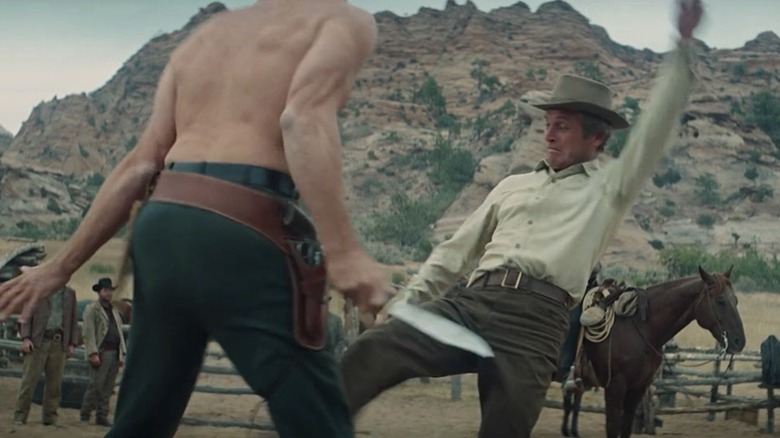
In support, among others, you get the indispensable Strother Martin, 50, who also added extra color to True Grit and The Wild Bunch; he and Newman worked together in Harper, Cool Hand Luke, Pocket Money and Slap Shot. Ted Cassidy finds that the answer to “Guns or knives?” is “boots” when he receives movie history’s most famous kick in the nether regions—something keenly felt by sympathetic millions.
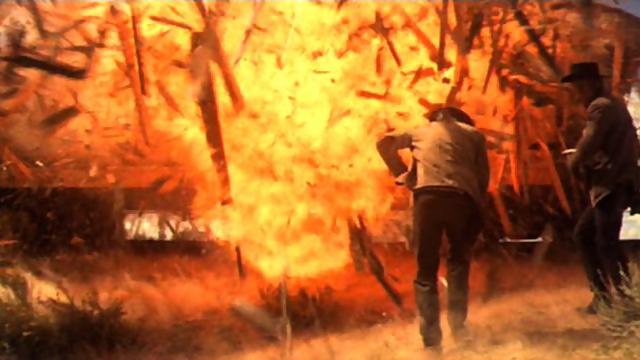
“Think you used enough dynamite there, Butch?”
The beautifully lit cinematography from Conrad Hall (The Professionals, Cool Hand Luke, In Cold Blood, The Day Of The Locust) mined autumnal texture yields from vistas in Utah, Colorado and Mexico (‘no Bolivian locations were injured during the making of this film’). The silly musical intrusions (that—erhgg—song, and ridiculous jazzy riffs with some Bolivian cavalry) are irritating (others no doubt find them sweet and/or hilarious) but not so much they derail the spirited enterprise. If The Great Escape was the war movie for people who don’t like them, you could make that case for this picture and folks who don’t go for westerns. For we genre stalwarts the show gets a B+ pass thanks to pals Paul & Bob, and a number of memorable scenes. These include the great cliff jump escape, the excess ka-booming of the safe on a train and the final gun battle. There’s nothing like going down fighting against overwhelming odds to stir up whatever Spartan chromosomes may be lurking in your otherwise pacifist DNA—They Died With Their Boots On, The Alamo, Spartacus, The Wild Bunch, Saving Private Ryan—a safe way for couch patriots/rebels/weenies to ‘be there’ without doing it for real.
Along with Music Score and Song, Oscar wins went to Goldman’s screenplay and Hall’s cinematography. Nominations went up for Best Picture, Hill’s direction and Sound (20th always had top notch sound quality, those gunshots resonate). **
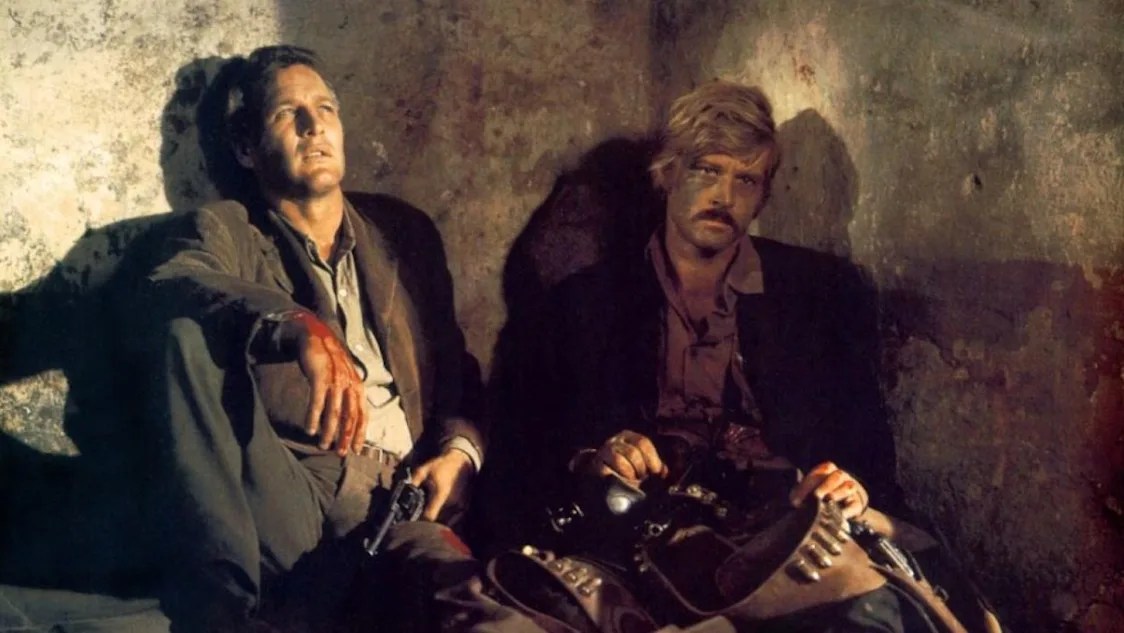
110 minutes, with Jeff Corey, George Furth (‘Woodcock’), Cloris Leachman, Timothy Scott (‘News Carver’), Henry Jones, Kenneth Mars (funny bit), Charles Dierkop, Sam Elliott (24, as a card player), Don Keefer, Percy Helton, José Torvay and Jorge Russek (memorably venal that year in The Wild Bunch).
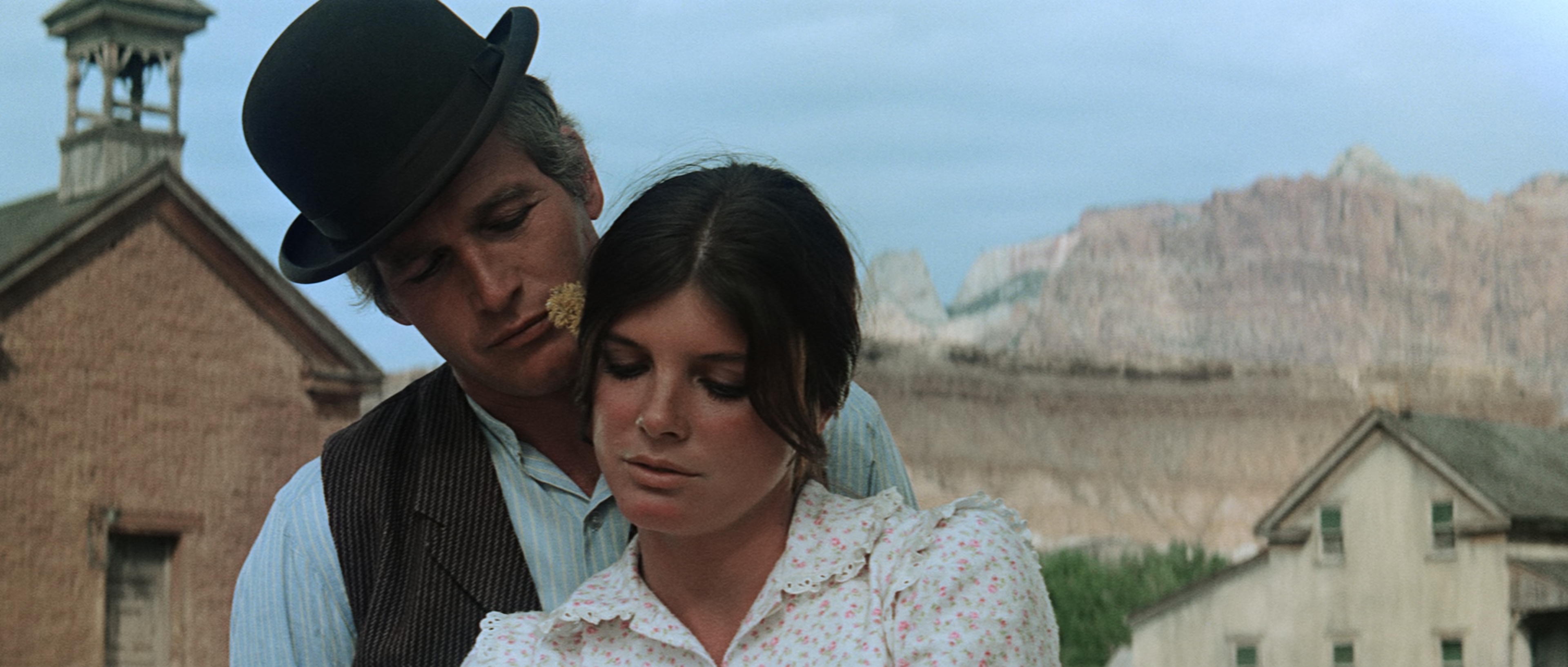
* Who are THOSE guys?— this crowd-pleasing classic (plug ears “Raindrops” falls) was trailed ten years later by the ‘meh’ Butch and Sundance: The Early Days, which—despite valiant turns from William Katt and Tom Berenger—didn’t nab a payroll.
Lore before—Cassidy had been played in minor 1950’s oaters by character pros Neville Brand, Gene Evans and John Doucette, with Sundance impersonated by Alan Hale Jr., Ian MacDonald and William Bishop: it’s no diss on the competent actors to say you’d have to be desperate for the smell of sagebrush in the morning to dig up the utterly fictitious flicks. In 1965 Arthur Hunnicutt did a bit with Butch as an old cuss in Cat Ballou.
** Shoot the Messenger Dept.—Academy Awards for Cinematography and Music Score should have gone to The Wild Bunch, which also was deprived of nominations for Picture, Director, Actor (William Holden), Film Editing and Sound. “Well, why don’t you answer me, you damned yellow-livered trash?”
 Movies ala Mark