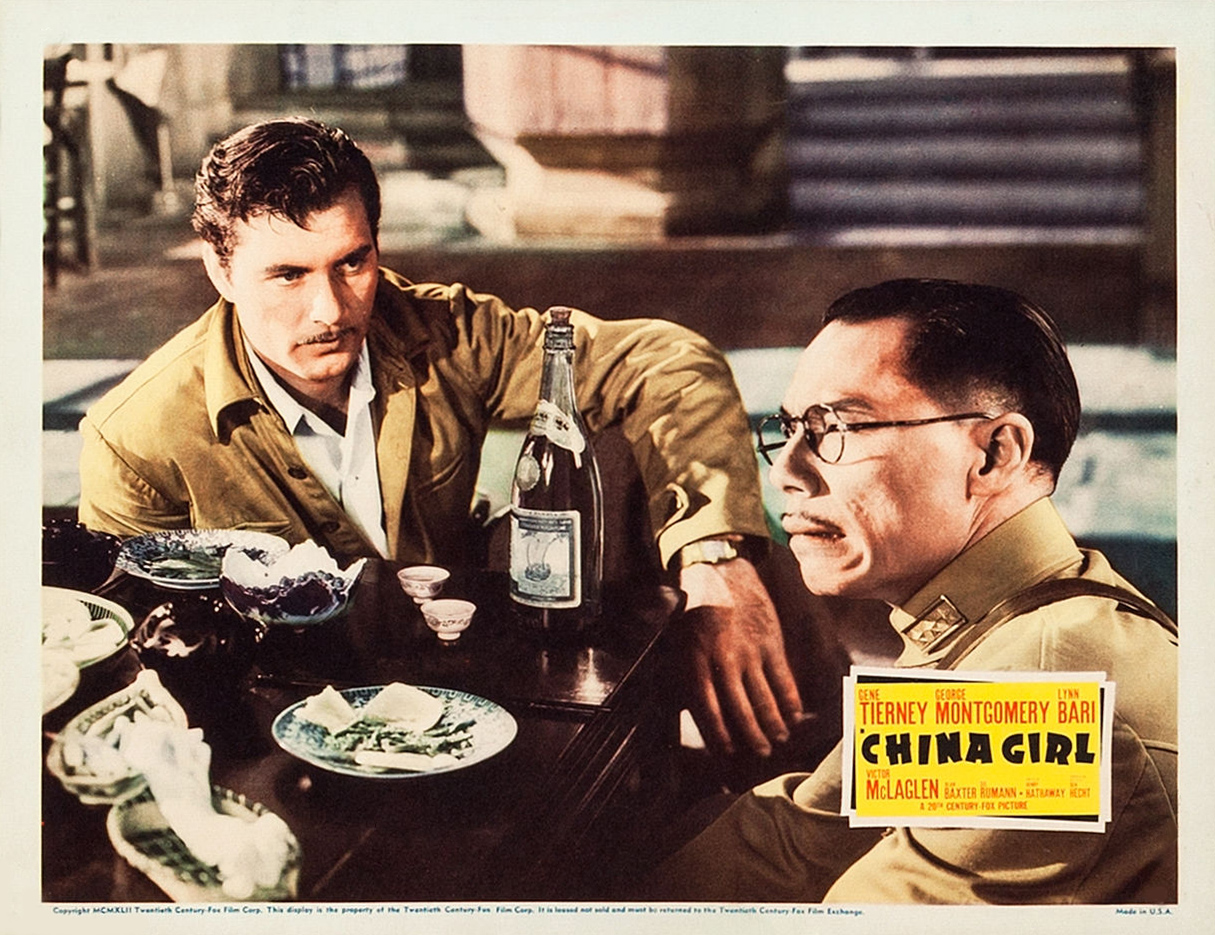
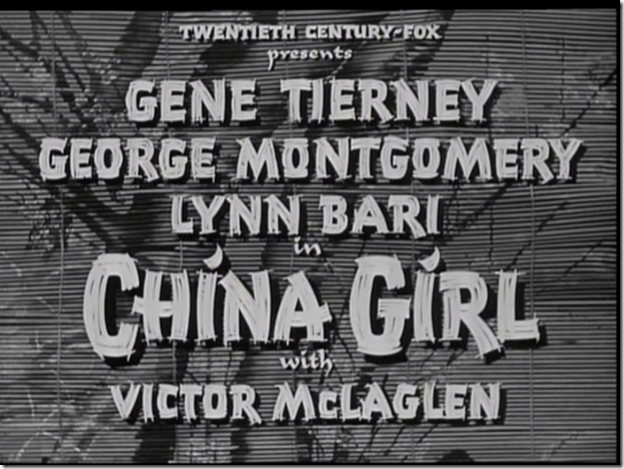
CHINA GIRL, one of 1942’s platoon of ‘splatter the Axis’ vehicles, opens with the admonition “An American will fight for three things—for a woman, for himself, and for a better world.” Well, those were the days…
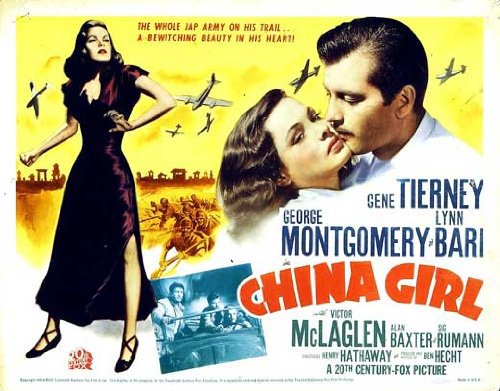
November, 1941, the Chinese port of Luzhou. American newsreel cameraman ‘Johnny Williams’ (George Montgomery) has been taken prisoner by a unit of the seemingly unstoppable Japanese army, and he’s ‘urged’ to take 20 grand as a reward for photographing the Burma Road, the artery that enables supplies to trickle into China from India. He escapes, along with ‘Bull Weed’ (Victor McLaglen), a Canadian ‘volunteer’ aiding the Chinese. Joined by Bull’s friend ‘Fifi’ (Lynn Bari) they seize a plane (Johnny’s a pilot) and make it to Burma, where Johnny meets up with an old pal who is now with the ‘Flying Tigers’. He also comes into contact with Vassar student ‘Haoli Young’ (Gene Tierney), whose Chinese father runs an orphanage school in Kunming. Brash and conniving, Johnny wants nothing but money out of the war, but his mercenary attitude now faces challenges from several quarters. Will this out-for-himself Yank see the light and join the fight?
“I’m new at this, baby. I never loved anybody before. Yeah, there’ve been lots of gals, you know the kind. Dames who’d kick you in the heart if you show it to ’em. So, you go along in a bullet proof vest and nothing gets through, only a hangover now and then.”
Among the slew of morale boosters that dark year were no less than nine that faced off against Japan (at least seventeen focused on Nazi Germany). Often stories had some selfish mug who had to be wised up to Democracy (Tyrone Power in A Yank In The R.A.F., John Garfield in Air Force, Alan Ladd in China); in this one, written & produced by Ben Hecht from a pulpy story concocted by ‘Melville Crossman’, aka Darryl F. Zanuck in writer mode, the arrogant rake is played by Montgomery, whose Gable-aping wears out its welcome after a while: the show has a faint echo of the lighter-toned adventure They Met In Bombay, with Gable and Rosalind Russell, done the previous year, six months before Pearl Harbor. *
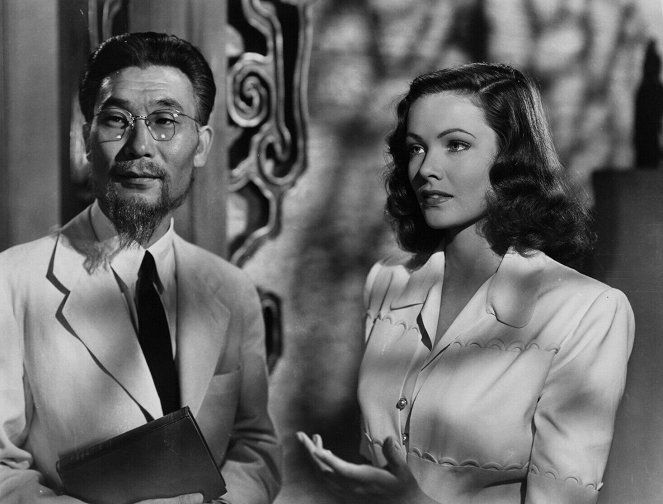
The writing is simplistic, the characters synthetic (Johnny is a full-metal jerk) and it really lays on the hate element, referring to the Japanese not just as ‘Japs’ (this script may take the record for that) but as “bucktoothed monkeys” and assorted insect or virus creatures. Our allies at the time, the Chinese are presented as saintly. McLaglen and Bari perform with confidence, Tierney is just there for decoration. Of note is Robert Blake, all of nine and billed as ‘Bobby Blake’, playing a Hindu kid who is a miniature ‘Gunga Din’ for Johnny. Blake turned into a hard-to-stomach man but he was a cute kid and had verifiable chops as a child actor.
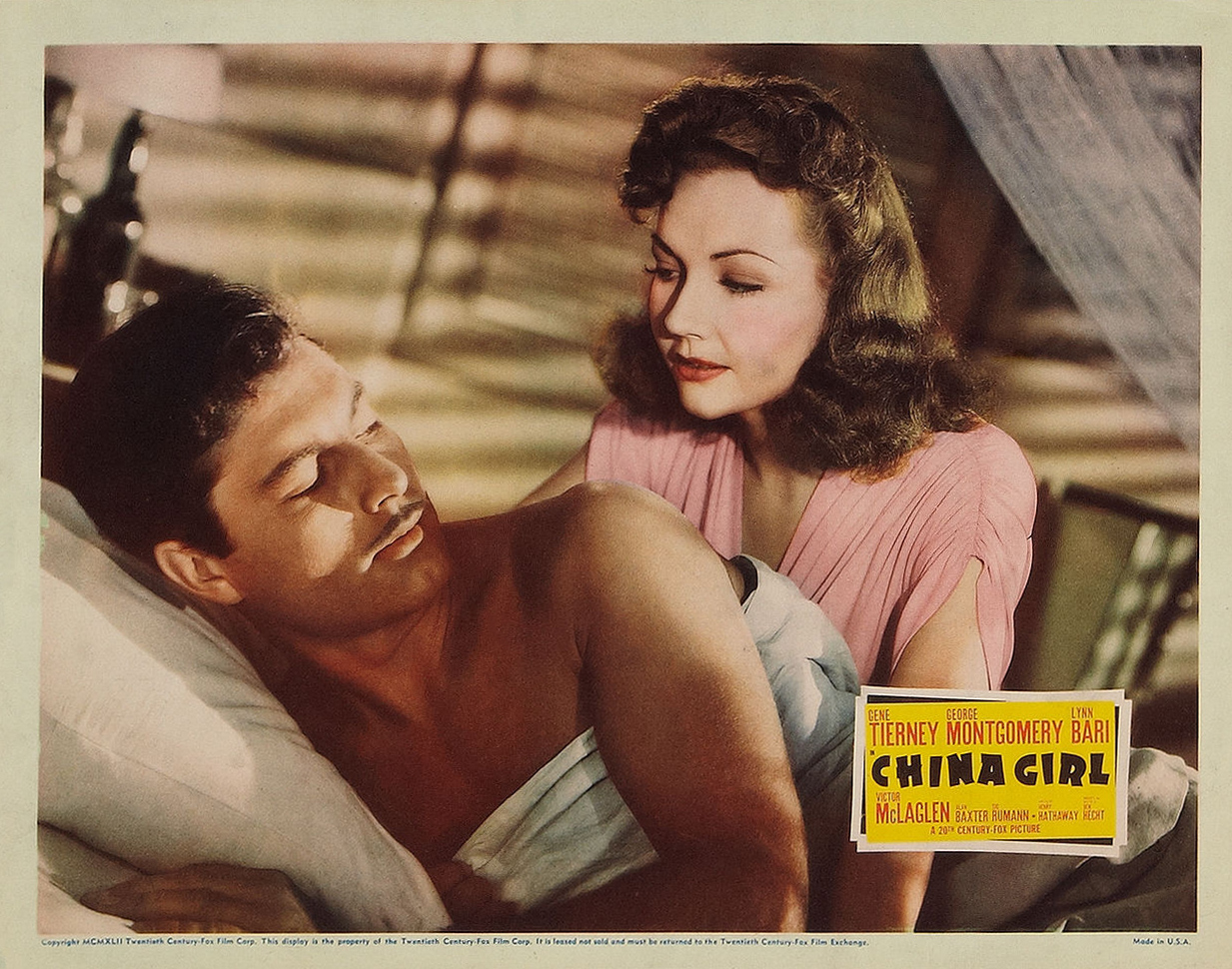
That the movie—which did decent business, $4,000,000 and 65th place—holds up at all is thanks to director Henry Hathaway. Though the aerial special effects are badly dated, things otherwise look good as shot by cameraman Lee Garmes; the art direction, matte work representing backdrops in Mandalay and the ground-level effects of bomb damage are all impressive. A grisly scene for the time has Montgomery and McLaglen crawling over heaps of corpses in a ditch, Chinese civilians methodically slaughtered by the invaders. There’s a dramatic ‘Oriental’ score from Hugo Friedhofer. Queing up 1943’s For Whom The Bells Toll and Bataan, the finale has now-convinced Johnny blazing away with a machine gun pointed directly at the camera (after knocking down a Zero, of course).
With Sig Ruman, Myron McCormick, Alan Baxter, Philip Ahn, Tom Neal and Kam Tong. 96 minutes.
* Of 1942’s “paste the Nips” recruits the rousing Wake Island was easily the best and most successful. Flying Tigers carries a certain wry nostalgic rep. Like the no doubt sincere but too often just plain risible China Girl the rest have been forgotten: Stand By For Action, Somewhere I’ll Find You, Across The Pacific, A Yank On The Burma Road, Manila Calling, Wings For The Eagle.
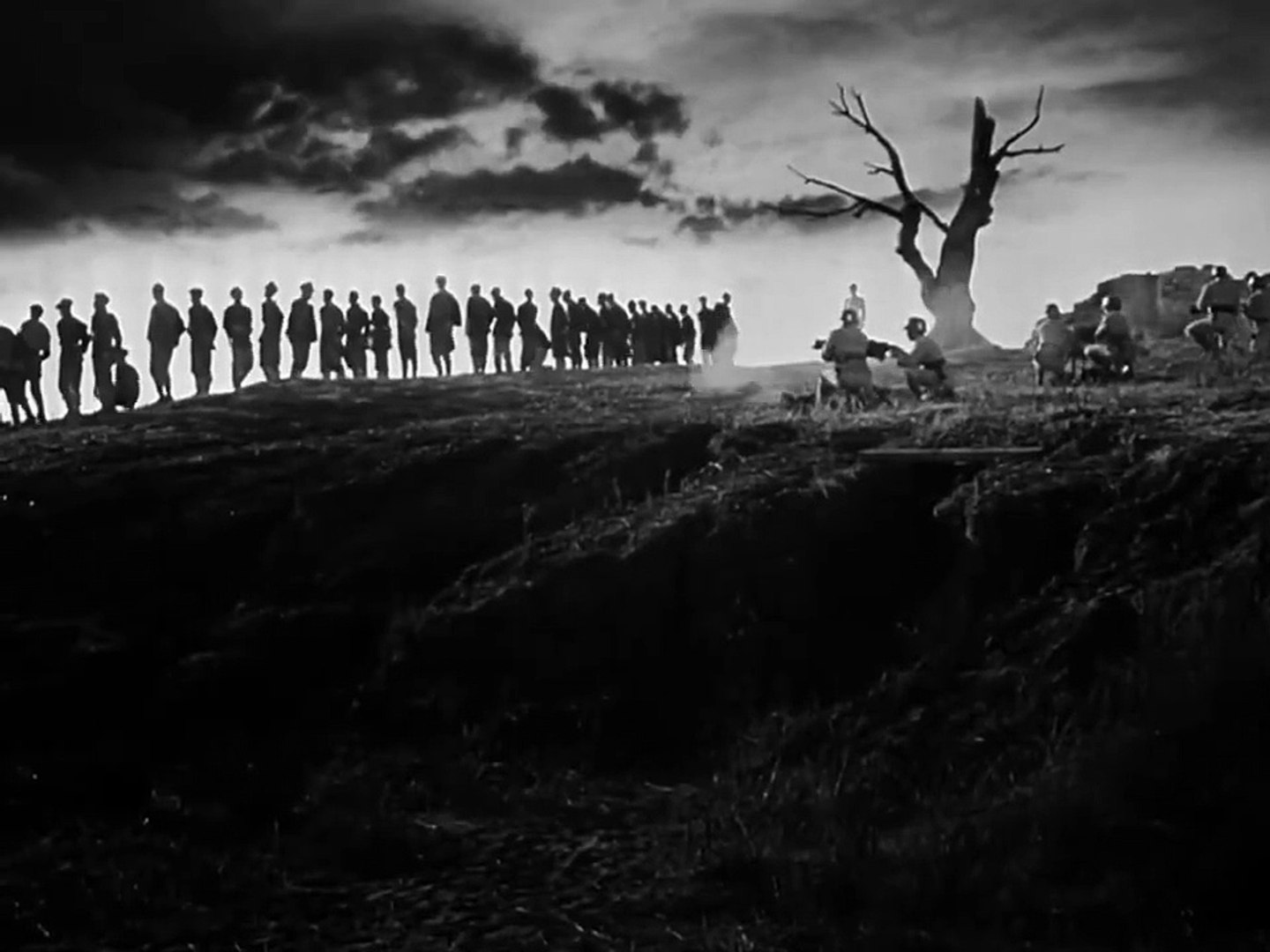
Something that happened literally thousands of times in China from 1931 to 1945
 Movies ala Mark