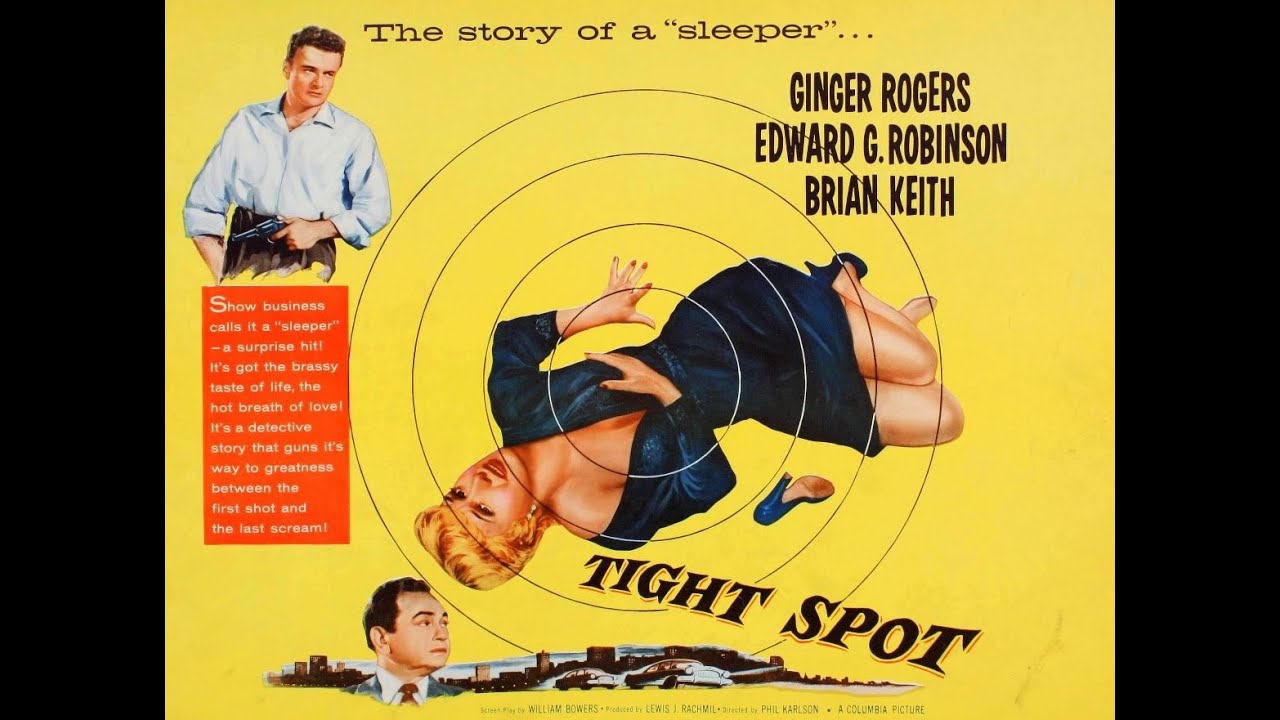
Click for enlargement and clarity
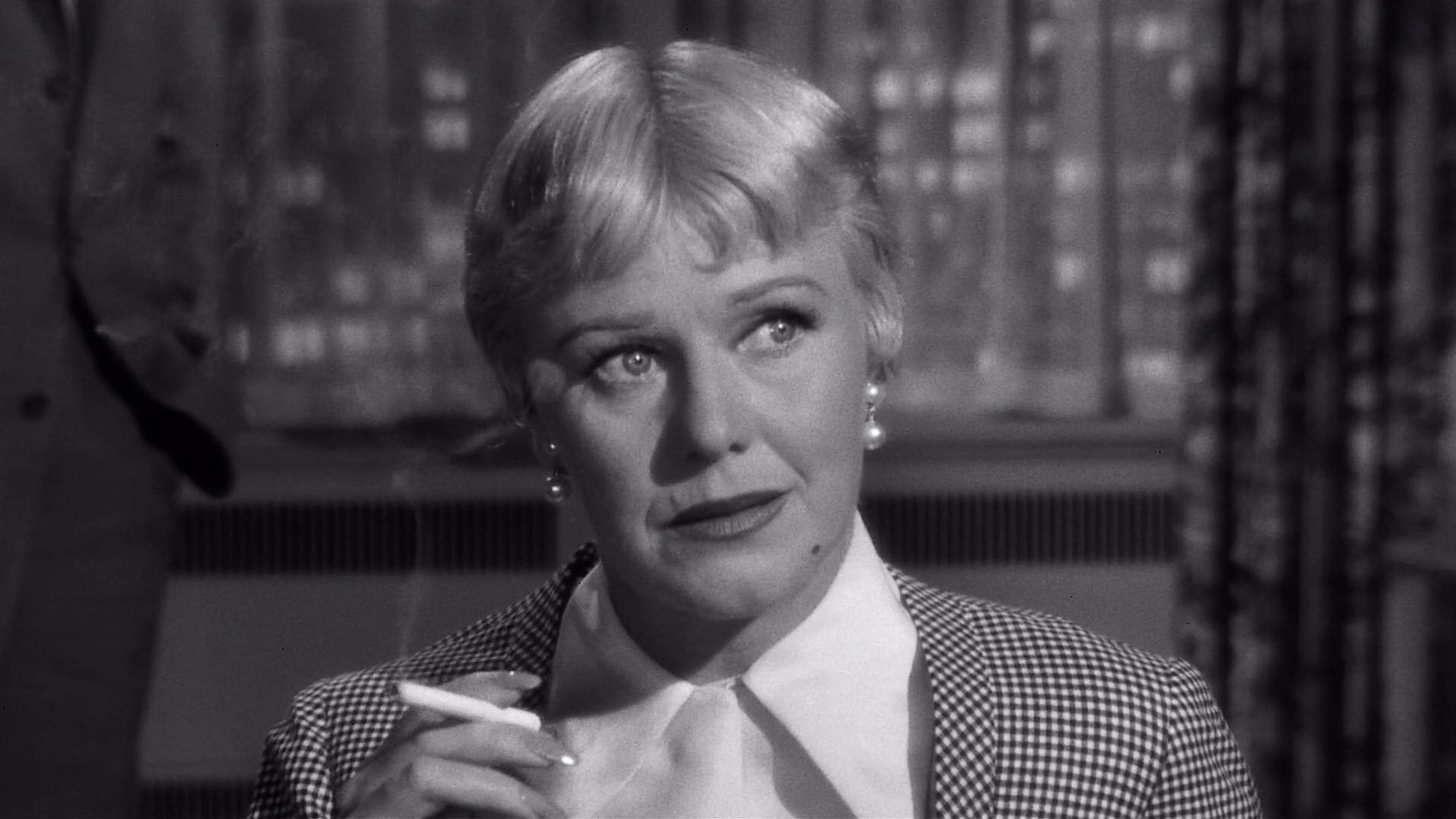
TIGHT SPOT covered a slim production tab back in 1955 but wasn’t ranked a hit, the gross of $1,900,000 lodging at #139 for the year. Decades down the pike in Blogland it draws a good deal of praise for performances and direction. We’re in the minority on this one, thinking that despite some bright spots here and there, it’s the weakest of a string of taut era thrillers directed by Phil Karlson. The script by William Bowers (The Gunfighter, The Sheepman, Support Your Local Sheriff) is too talky by half, and except for a few scenes Ginger Rogers overly brassy star turn feels like it belongs in a late-30s comedy rather than a witness-in-jeopardy noir from the mid-50s. *
“You’re all alike. You only got different faces so we girls can tell ya all apart.”
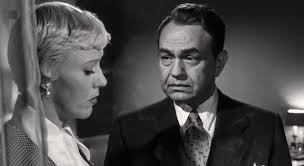
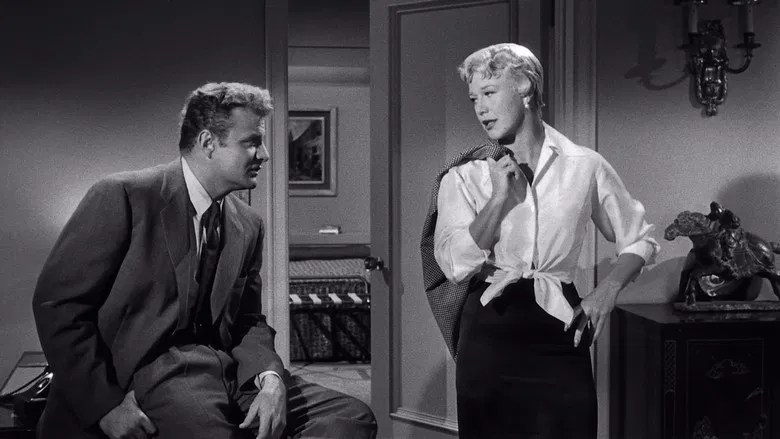
Ex-model (of a sort) ‘Sherry Conley’ (Rogers) is sprung from the slam by U.S. attorney ‘Lloyd Hallett’ (Edward G. Robinson) who wants her to testify against a hood kingpin who will hopefully be deported back to his Mafia spawning ground. Tough but chipper Sherry is nothing if not chatty, but she’s wised up enough to be leery of squawking on someone who’d readily knock off a mouthy dame. As Hallett attempts to convince Sherry of citizen duty, she’s stashed at a hotel, watched over by ‘Vince Striker’ (Brian Keith), a gruff detective. After some fencing, the canary and the cop take respective shines to each other. Meanwhile their mob nemesis dispatches squealer squads. **
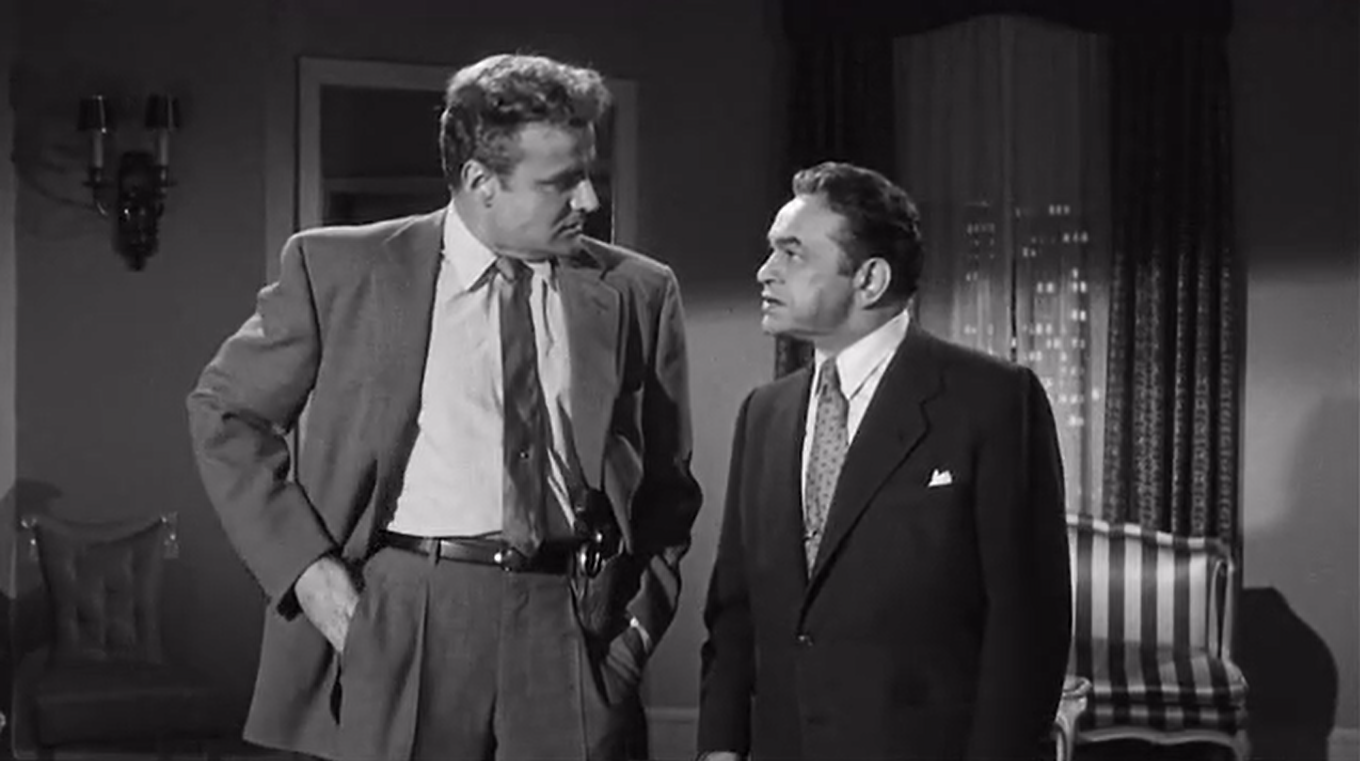
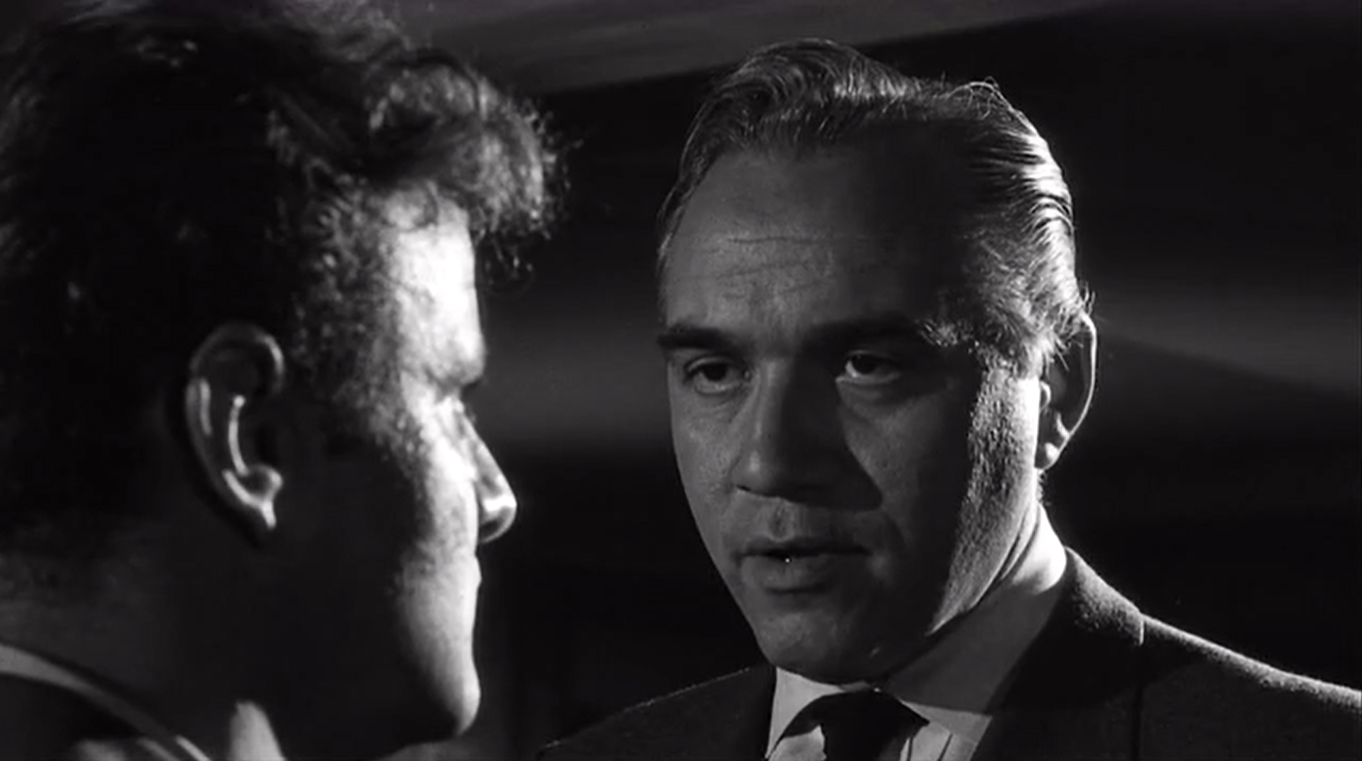
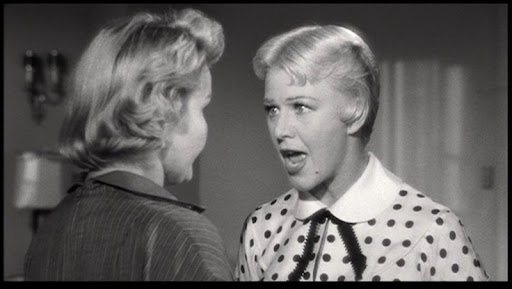
Robinson is typically rock solid, Keith does rough & rumpled proficiently. Ninety percent of it takes place in the confines of the hotel room, with assorted lower-tier characters weaving in & out around the star trio. Popular L.A. TV host/singer of the day Doye O’Dell is amusing as a cornball emcee whose television fund-raiser provides fun for Sherry and irritation to Vince. At 43, Rogers was a way’s past viability as sassy hot number, plus she’s stuck with a hairdo that wouldn’t flatter a Marine. In comedy, her ‘big’ playing would work, but this is supposed to convince as a drama; the frequent shrill excess makes a hard sell. Convenient, next-to-immediate woo between witness and minder is straight from convention, though there is a surprise revelation of Keith’s lawman near the end. We do like Ginger; just wish she would’ve toned it down a few notches. Her best scene is when she has a bitter argument with her ‘older ‘sister, played by Eve McVeagh (36, seven years Rogers junior) who amassed 163 TV and film credits as well as much stage work. Their blistering sibling row is excellently done. Lorne Greene (49, second feature film), makes a smooth villain as Fed-targeted gangster ‘Benjamin Costain’.
96 minutes, with Katherine Anderson, Peter Leeds, Lucy Marlow (spooky), Kathryn Grant, Robert Nichols, John Larch and John Zaremba. For some reason director Karlson liked starlet Grant: he put her in four more pictures (5 Against The House, The Phenix City Story, The Brothers Rico, Gunman’s Walk).
* Speak now and forever be in pieces—the 1950s were rife with protect-the-witness crime mellers—The Enforcer in ’51, no less than five in ’52, Deadline-U.S.A., The Turning Point, The Narrow Margin, Hoodlum Empire, The Captive City.
** Girl Talk—the play source—Leonard Kantor’s “Dead Pigeon”—was roughly based on the Kefauver Commission’s arm-twisting of Bugsy Siegel’s girlfriend Virginia Hill. Mob moll Hill (1916-1966) or versions of her, was tuned up by Joan Crawford (fictionally in The Damned Don’t Cry), Carolyn Jones (fictionally in The Turning Point), Dyan Cannon (non-fiction in Virginia Hill) and Annette Bening (non-fiction in Bugsy).
 Movies ala Mark