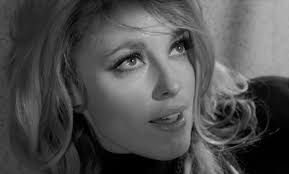
EYE OF THE DEVIL looks great, has a fine cast and a viable setup, yet it was one of those instances where the production was beset with problems and ingredients ultimately failed to jell. Critics sniffed it off, the public showed little interest. As sometimes will happen with an initial misfire, it’s achieved a measure of cult status, partially because along with the superior Burn, Witch, Burn it jumped the gun on the wave of supernatural chillers that peppered the 1970s and also due to its introduction of a strikingly beautiful actress whose bright promise was tragically (and horrifically) cut short by a deranged cult.
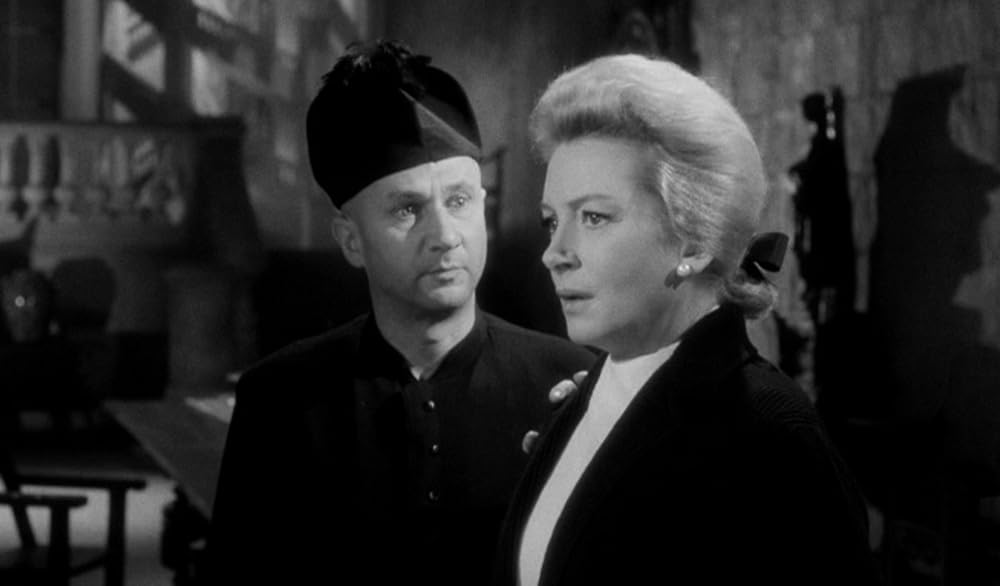
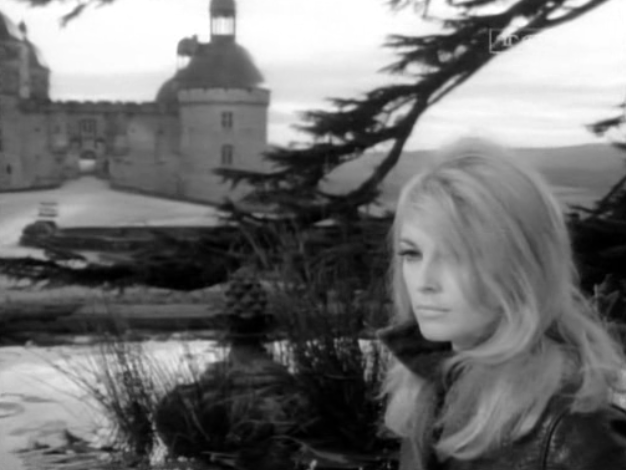
France. ‘Catherine de Montfaucon’ (Deborah Kerr) brings her two young children to join her husband ‘Philippe de Montfaucon, the Marquis de Bellenac’ (David Niven) at his ancient hereditary estate in Bordeaux. Not only is her strangely distracted Philippe seemingly not pleased to see her, she’s discomfited by the locals, including her husband’s Countess sister (Flora Robson), an odd priest (Donald Pleasence) and especially the calmly creepy sister-brother combo of ‘Odile and Christian de Caray’ (Sharon Tate and David Hemmings). Then she observes a dozen robed and cowled people in some sort of stylized and suspect ceremony. Dismay becomes distress, on course to disaster.
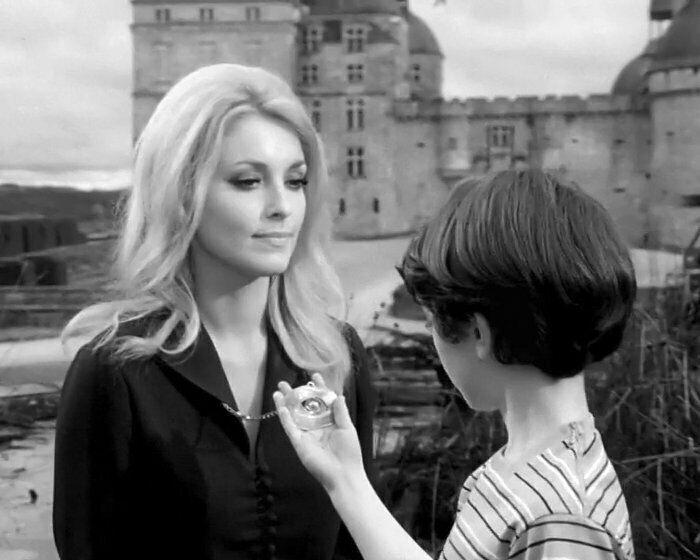
It was adapted from an acclaimed 167-page novel “Day of the Arrow”, written by Robin Estridge (as Philip Lorraine). Estridge then wrote the screenplay, with input from Dennis Murphy and Terry Southern. Filming was mostly done in the Dordogne department of France, in and around the Château de Hautefort, originally a fortress dating as far back as 987. First set to be directed by Sidney J. Furie, then Michael Anderson (who fell ill), it was finally undertaken by J. Lee Thompson. When the $3,000,000 shoot was nearing completion, star Kim Novak was injured riding a horse; Kerr was hurriedly brought in as a replacement. Bowing in Italy late in 1966, making it to the States a year later, it faded away with little ceremony: Cogerson lists it grossing $1,300,000, a dim 115th on the charts.
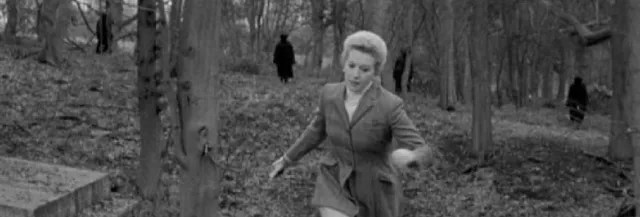
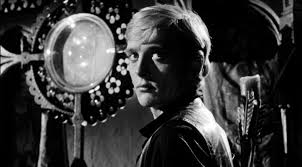
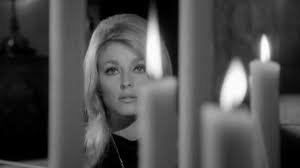
Both opaque and redundant, the script delivers confusion rather than cohesion. The 96 minute running time was apparently pared down from a considerably longer cut. Perhaps that excised material would have made the editing less jumpy, but you’d still be stuck with Catherine’s absurd refusal to get away from an immediately bleak situation, particularly when two small children were involved (the presence of Kerr and two kids in danger can’t help but recall The Innocents, where everything out-of-the-real clicked beautifully); Niven’s glum, listless performance is also a problem–plus he’s let down by the script, which gives him nothing but a sketch to work with. Thompson insists on jazzing up more visual and aural cacophony than needed (like when Kerr is pursued by the robed figures),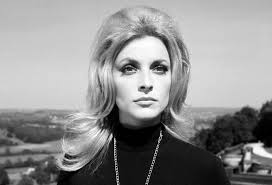 but otherwise Erwin Hillier’s excellent black & white camerawork makes optimum use of the locales and it’s clear from the coverage Thompson and Hillier allowed Tate that they favored her. Hemmings effectively projects weird menace; 23, he broke big that year with Blow-Up. Tate, 22, had been a teenage extra in the 1961 epic Barabbas and had an unaccredited 1964 bit in The Americanization Of Emily as well as some TV gigs: this was her credited feature debut, billed 7th with “and introducing”. Talk about camera-ready!—her simple presence in a scene swipes it away from the other actors. Reportedly her voice was dubbed (some say nay); at any rate she’s stellar at projecting a mysterious, dangerous, basically irresistible element. After this movie she was introduced to Roman Polanski, who put her into his next project, The Fearless Vampire Killers, then married her in 1968. That lasted eighteen m0nths until her murder by the deranged members of the ‘Manson Family’.
Also in the cast are Edward Mulhare, Emlyn Williams, John Le Mesurier, Robert Duncan and Marianne Stone.
 Movies ala Mark