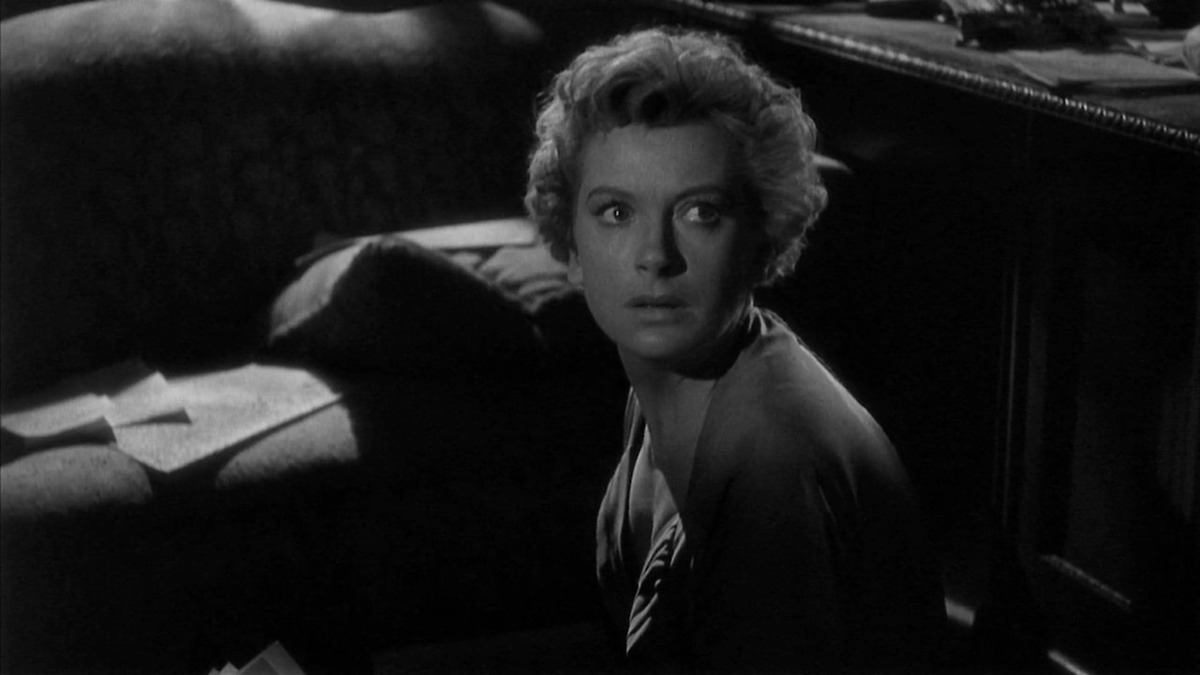
THE END OF THE AFFAIR, an intense drama released in 1955, began with a real love affair that ran its course from 1946 to 1951, in which author Graham Greene engaged in a romance with a married woman, revisiting the elements in his 1951 novel. Happy Endings lie elsewhere with Greene: the self-inflicted exorcisms here strain love-struck and life-stricken casualties of soul-mating thru a wringer of sensual & emotional desire, adultery & guilt, jealousy & obsession, war & suffering, loss & death, a search for redemption, a test of religious faith and a hint at the supernatural. In lousy weather. The 237 page book (his 14th, written when he was 46), set the tone on the opening page with “So this is a record of hate far more than of love…”
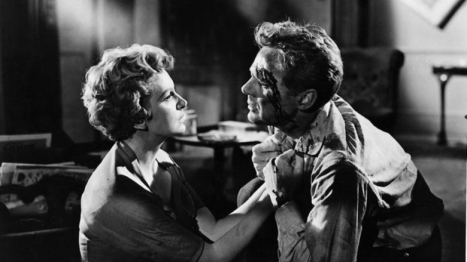
SARAH: “The time ahead is endless.” PRIEST: “Prayer could help to make it shorter.” SARAH: “I prayed once too often.” PRIEST: “When we seek God, it means we’ve already found Him.” SARAH: “But I don’t want Him, and what does He want with me? What can I offer Him except a shabby second best?” PRIEST: “I’m afraid He’s used to that.” SARAH: “How sad for Him.”
London, 1944. The war is being grindingly won, but Hitlerian spite sends powerful rockets into England. The blast from one of them shakes apart the illicit romance that has sprung up between American writer ‘Maurice Brendix’ (Van Johnson) and ‘Sarah Miles’ (Deborah Kerr), wife of a man whom Maurice is profiling in a piece about the Civil Service. Sarah loves her husband but the marriage is absent passion, something she’s sought in liaisons with other men. Maurice knows this, and even though doubt and jealousy burn him, he can’t help falling for her. Her husband has suspicions, but not about Maurice. Somethings got to blow, and the random explosion of an enemy rocket starts a chain reaction of chaos and confusion, realization and resolve.
Lenore J. Coffee (Old Acquaintance, Sudden Fear, Young At Heart) ably tackled Greene’s weighty ruminations, deeply felt from experience. Fresh off a solid (Broken Lance) and a smash (The Caine Mutiny), Edward Dmytryk directed, shooting on location in London. Accentuating the intimacy and anguish, Dmytryk went in for a lot of intense closeups, excellently photographed by Wilkie Cooper (Green For Danger, Stage Fright). Benjamin Frankel (So Long At The Fair, Battle Of The Bulge) contributed a suitably dramatic score.
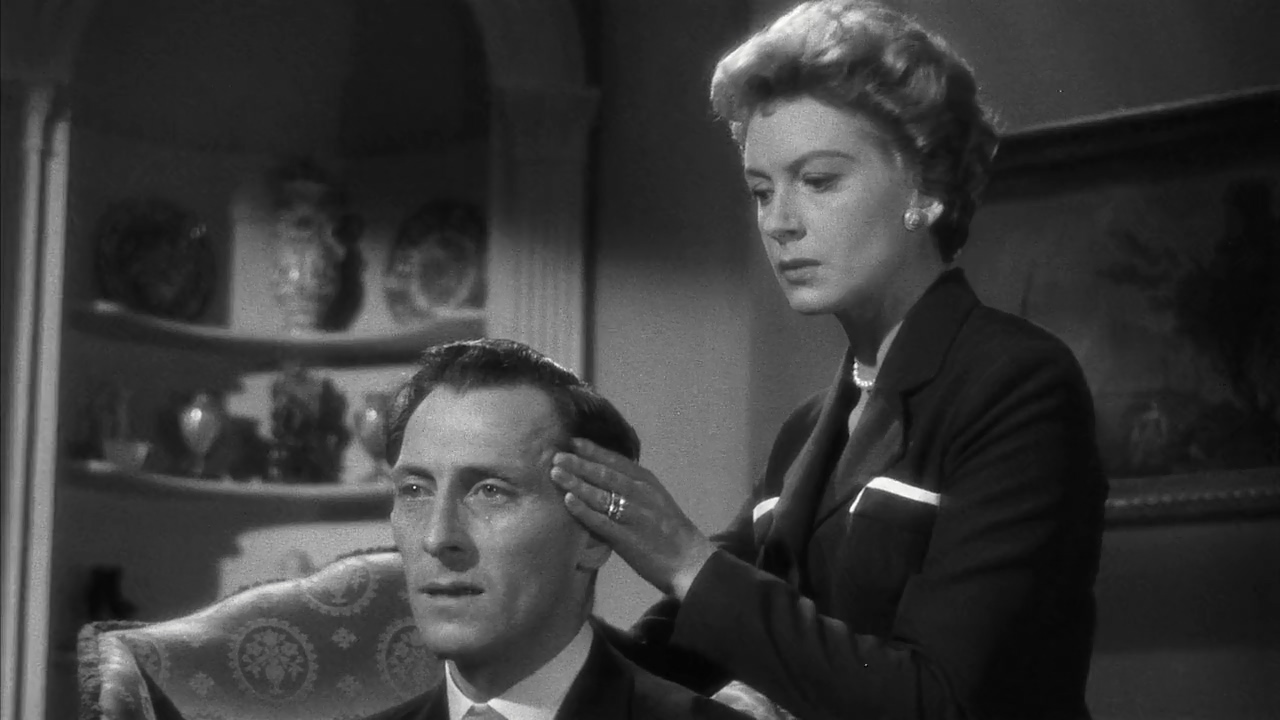
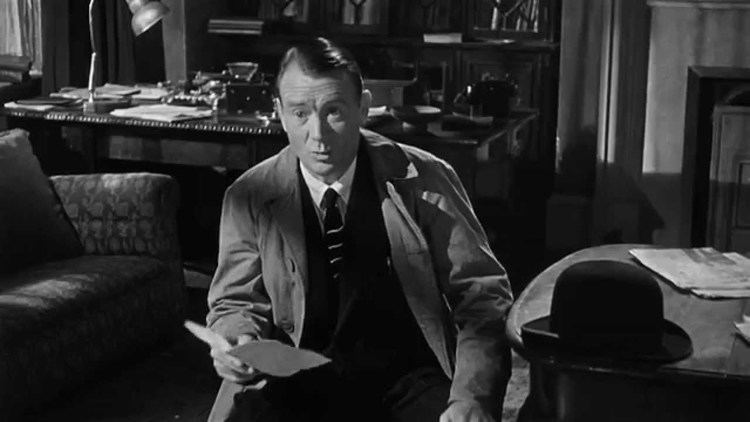
The first half is a little unsteady, with the pairing of Kerr and Johnson feeling awkward, and neither character offers much to warm up to; she’s cheating on a nice fellow and Maurice sulks and stews. After the bomb drops (a well done sequence) things get more interesting, and the performances deepen, plus there are very capable hands in the supporting roles. After a quintet of films in 1954 (including The Caine Mutiny), this was Johnson’s sole project in 1955, and at 38, it kicked off a five-year run of leads in serious dramas, ten altogether, seven of them shot in England or Europe. He’s good here, though he did come in for criticism, maybe simply because he was Van Johnson in a non-Van Johnson part: even a more appealing actor (say Gregory Peck, who was the first choice) would’ve been sandbagged by Maurice’s glumness. The more interesting men occupy the second tier—Peter Cushing, John Mills and Geoffrey Keen. As the deceived husband ‘Henry Miles’, Cushing, 42, has a fine line to walk, timid and boring yet sympathetic for his decency and ultimate gallantry. Those who know him mostly from his Hammer horror movies will be impressed. In what is effectively an extended cameo, Mills adds much needed humor to an otherwise doggedly downbeat situation, playing the practical and cheerful ‘Albert Parkis’, a snoop hire to track Sarah’s movements and see what (or who) she’s up to. Keen injects some tart cynicism as ‘Smythe’, a philosopher type who Sarah consults about her quandary and the wish/need to change.
It’s in the last act that Kerr, 33, really shines as Sarah—conflicted to the point of irrationality—takes drastic measures to make up for her indiscretions; she has some soul-baring moments that are brilliantly rendered: it’s as fine a performance as this much loved actress ever gave, and ought to have been recognized by the Academy Awards selection process. Greene didn’t approve of Johnson, but had kind words for Kerr. *
Successful in Britain, but not faring too well in the States, 144th place and $1,800,000. 106 minutes, with Stephen Murray, Charles Goldner and Nora Swinburne. Successfully remade in 1999.
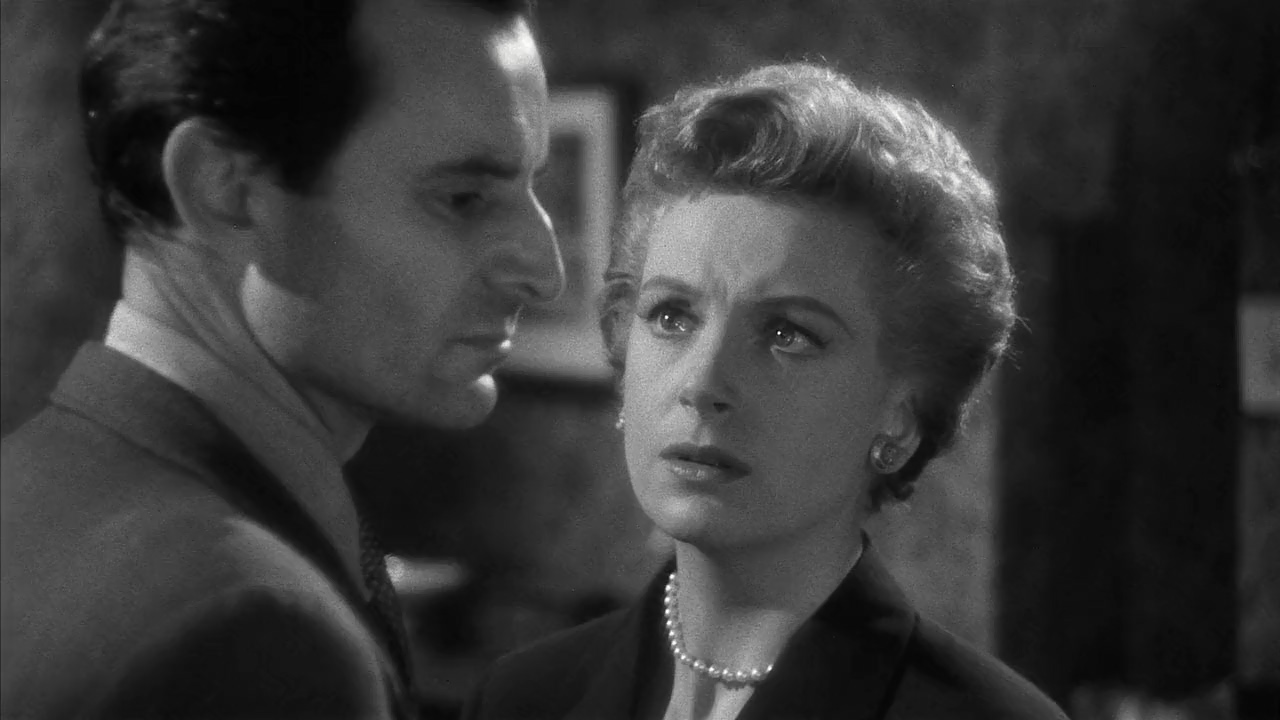
* Looking the other way?—Deborah Kerr was nominated for Oscars six times (finally getting an Honorary one at 73 in 1994)—Edward, My Son (1949), From Here To Eternity (1953), The King And I (1956), Heaven Knows, Mr. Allison (1957), Separate Tables (1958) and The Sundowners (1960). We’d agree with most of those (especially ‘Eternity, ‘Allison‘ and ‘Sundowners‘) but have to wonder how the Academy managed to overlook two of her very finest, The Innocents in 1961 and this outstanding piece of work from 1955.
 Movies ala Mark