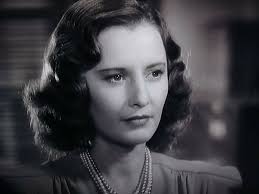
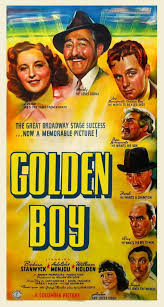
GOLDEN BOY was a big deal on Broadway in 1937, Clifford Odet’s most famous play running 250 performances and featuring new talents like Frances Farmer, John Garfield, Lee J. Cobb, Elia Kazan and Howard da Silva. Columbia Studios laid down a hundred grand for the rights with the idea of a Frank Capra vehicle starring Jean Arthur. Capra decided to make Mr. Smith Goes To Washington instead and so Rouben Mamoulian directed the 1939 adaptation that was fashioned by a quartet of screenwriters. He lobbied for a frosh in the lead role, a fella who’d had two unaccredited bit parts, and thus won 20-year-old William Holden his first starring role. Pros Barbara Stanwyck, 31, and Adolphe Menjou, 48, smoothly took the other leads, and Cobb was brought along from the play, albeit in a different role.
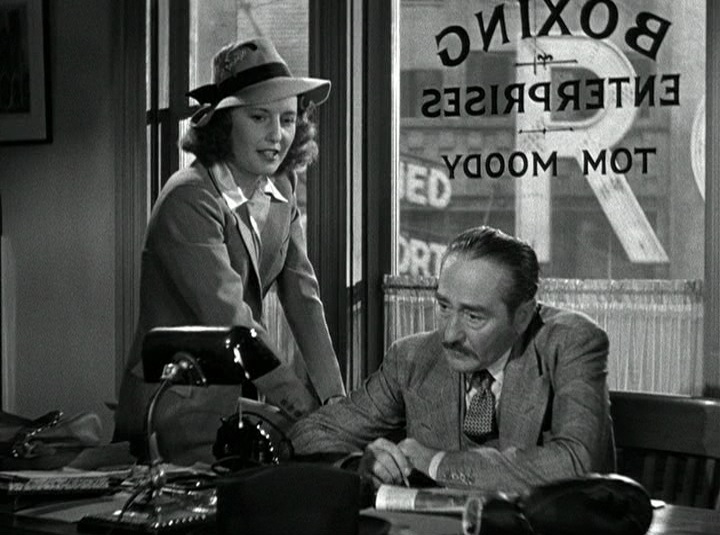
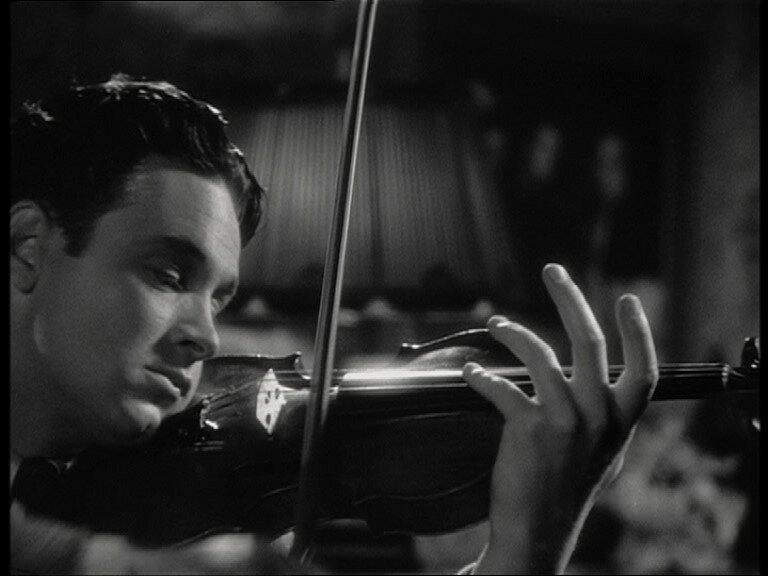
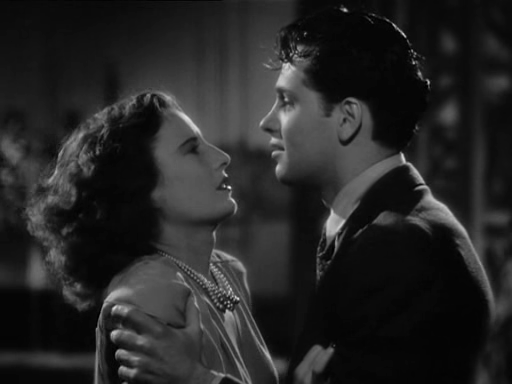
On the eve of his 21st birthday ‘Joe Bonaparte’ (Holden) makes a fateful choice. Years of practicing have made him a violin virtuoso, which delights his proud father (Cobb) but Joe doesn’t see financial success as a musician. He grabs a chance to make quick money with his hands—as a boxer—and pesters desperate promoter ‘Tom Moody’ (Menjou) for a shot. Joe’s gift with the civilized delicacy of strings is replaced by a talent for blunt force. Tom’s longtime girlfriend ‘Lorna Moon’ (Stanwyck) sees more than a palooka puncher in the honest and earnest Joe, Tom sees him as a meal ticket and gangster ‘Eddie Fuselli’ (Joseph Calleia) smells blood money. Instinctual yet impulsive, driven but naive, conflicted between family and fortune, inclination and need, desires and hurts, fought-over fighter Joe is fiddling way over pay grade.
LORNA: “I’ll make him fight.” TOM: “How?” LORNA: “Oh, I’m a dame from Newark, and I know a dozen ways.”
The screenwriters, vets and new blood, were Sarah Y. Mason (Little Women, Stella Dallas), Lewis Meltzer (his first script, later Texas and The Man With The Golden Arm) Daniel Taradash (first assignment, later From Here To Eternity, Picnic, Hawaii) and Victor Heerman (Mason’s husband/writing partner, also did Magnificent Obsession). They condensed the play’s hefty 165 minutes into 99 minutes of screen time. *
“A man hits his wife, and it’s the first step to fascism.”
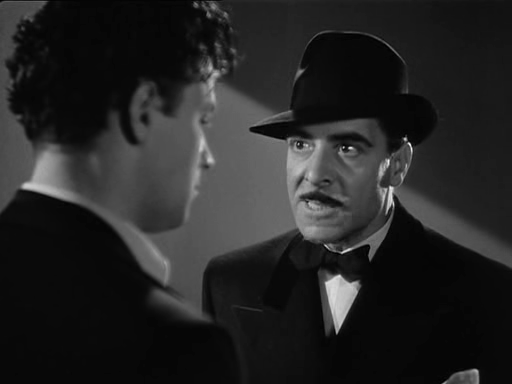
There is ample good dialogue, though the handling of it varies. Cobb (just 27, made up to look 50) lays on an ‘earthy’ Italian accent as the Papa: it may have seemed fresh and vital at the time but comes off close to caricature today. He’s outdone (outshouted) by the even hammier Sam Levene, as the husband of Joe’s sister: every time Levene gets near a line he belts it so it can be heard across the nearest border. As Moody’s right-hand man, Edward Brophy is also on the rambunctious side but at least he’s entertaining. Much better is confidently dangerous Calleia (he nicked another plum role that year in Five Came Back) as the shark-like hood. Menjou’s in good form. Holden, while a mite green, is impressive: his rough edges were rapidly polished off thru his subsequent work in Our Town, Arizona and Texas. Best of all, as in many other properties that she boosted a notch, is Stanwyck, whose naturalism is present in every gesture, expression and speech. **
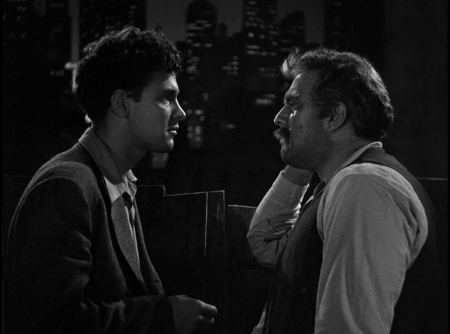
The climactic bout that wraps it up was pretty savage for the time; the shots of the crowds frenzied bloodlust reactions are superb. Box offices tallied $3,000,000, 75th place among 1939’s wave of winners. Victor Young’s score pulled an Oscar nomination (one of his 22 nominations).
With Beatrice Lynn, William H. Strauss, Don Beddoe, James ‘Cannonball’ Green (as ‘Chocolate Drop’), Charles Halton, Stanley Andrews, Charles Lane, Robert Sterling, Minerva Urecal and Dave Willock.
* Though Odets groused over the studio-imposed ending (his was basically crushing) and critics feel compelled to mewl about the screenplay’s softening of the material, their key-stroked fist bumps of ideological fidelity conveniently gloss over how the anti-Capitalist lights of the Group Theater comradely managed to thread greed’s needle and palm corporate cash—the $100,000 that Columbia czar Harry Cohn forked over would come to $2,300,000 in 2026. That’s a lot of coffee and bagels for heated discussions of the profit motive.
** The producers (coarse Cohn at the top and William Perlberg getting hands-on credit) were initially cool on Holden and wanted him dismissed. Stanwyck championed him, and he later credited her with saving his job and likely giving him a career. Perlberg would produce four more Holden hits, including The Country Girl and The Bridges AtToko-Ri. Cohn could mollify his near-muff with the profits from those pictures, Picnic and The Bridge On The River Kwai.
 Movies ala Mark