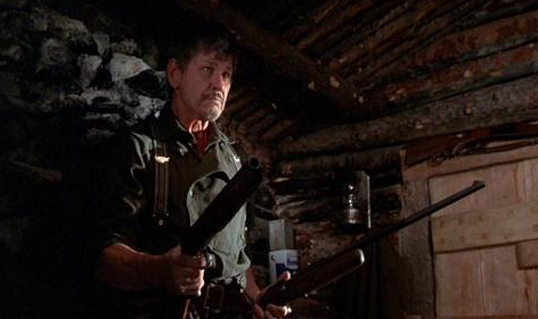
DEATH HUNT, about as much fun as its lazily blunt title, is a 1981 misfire that mangles a true story, wastes its doleful, paycheck collecting stars and blew a ton of money in the process, 97 rote and unpleasant minutes not redeemed by snowy mountain scenery.
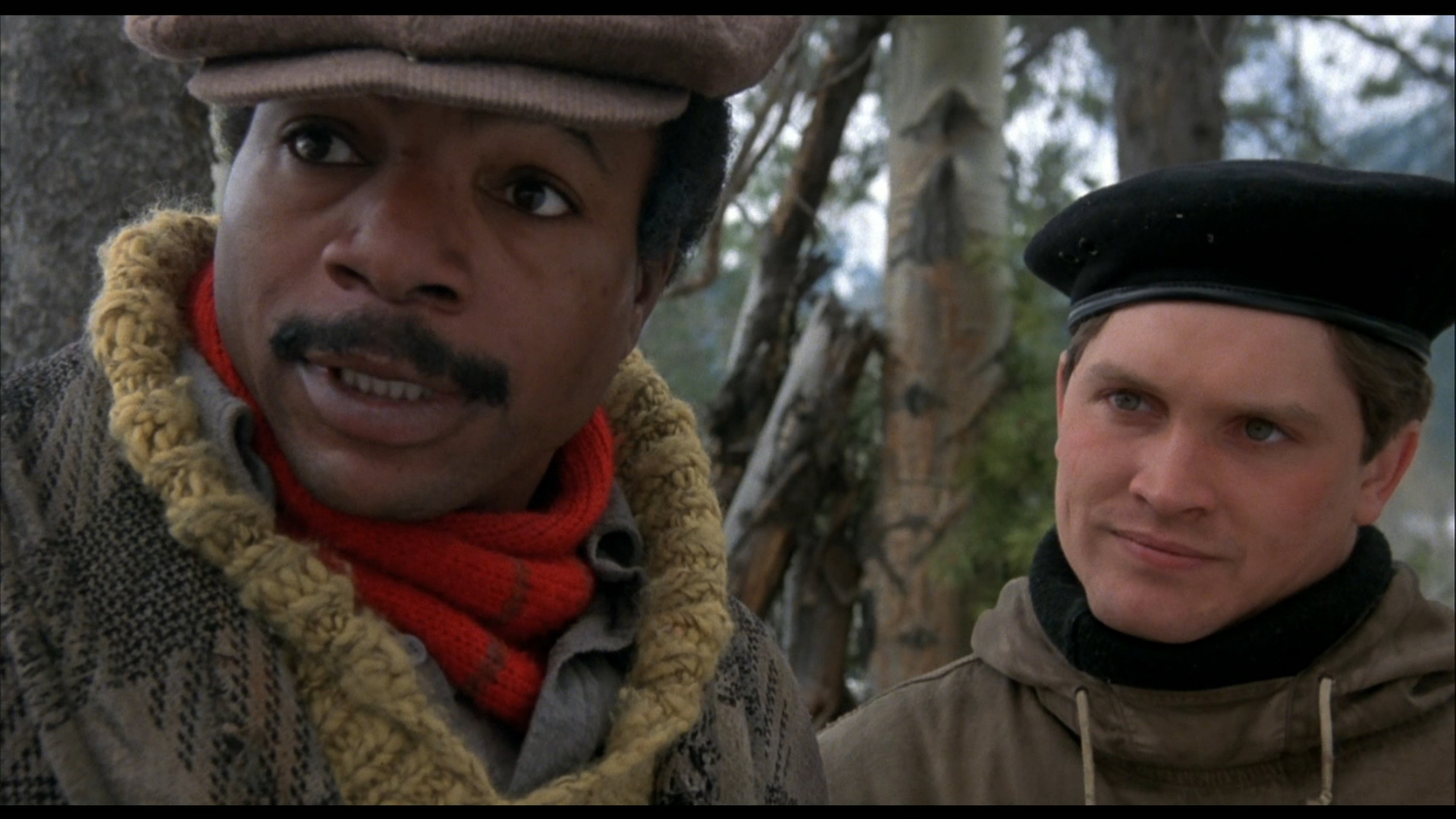
Canada, the Yukon Territory, 1931. American trapper and loner Albert Johnson (Charles Bronson) force-rescues a badly mauled dog from its brutal owner ‘Hazel’ (Ed Lauter, playing another dick like in The Longest Yard). When Hazel and some scurvy pals follow Johnson to his cabin with murderous intent, Johnson kills one in self-defense. Sergeant Edgar Millen (Lee Marvin), in charge of the local RCMP post, is tasked to investigate and hopefully defuse the situation. Going with him are a naive new constable (Andrew Stevens) repelled by the the gruff, boozy Millen and assortment of gross locals; Millen’s amiable buddy (Carl Weathers), a veteran tracker; and mean Hazel and his motley group of cruds. This ends in a full-fledged firefight, with Johnson decimating the posse. He escapes, they follow—convinced Johnson is the legendary killer ‘The Mad Trapper of Rat River’—and as the pursuit turns into an epic trek into the wilderness winter, the story receives nationwide attention. Millen is sympathetic to the wronged Johnson, but duty demands.
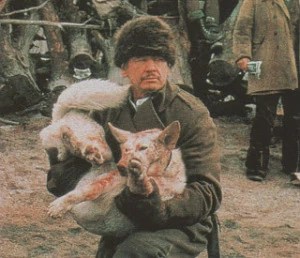
As John Wick would later demonstrate, hurting a man’s dog is not a good idea
Directed by Peter Hunt, the handling follows the long tradition of taking a true story (Johnson, Millen, the winter chase across the Richardson Mountains) and goosing it with extraneous subplots: Angie Dickinson, 49, in an unconvincing cameo as a widow playing footsie with Millen, explosions, strafing from a WW1 biplane and ten times the body count. Done right (The Wind And The Lion, for example), fact-fudging in service of a adventure story from an out-of-the-ordinary situation, time and place can be flavorful and fun, even thrilling. Unfortunately that’s not the case with this dull slog, which is off-putting from the start, hobbled by bad writing and characters either wearily clichéd or just plain moronic. *

Screenwriting partners Michael Grais and Mark Victor would next deliver a big hit with Poltergeist but they tooled a coarse, derivative tanker in this mutt. At 59, Bronson could still manage the hard case stuff, but other than his physical fitness there’s nothing interesting in either the character or how he plays him. Marvin, 46 and looking older than Bronson, puts in a minimum amount of energy. Stevens works energetically, Weathers coasts; the script helps no-one. Composer Jerrold Immel, who primarily serviced TV (themes for shows like Dallas and Knot’s Landing) tries to signify ‘import’ with his score but it feels as generic as the writing and direction. Marvin drily observed “The closest it gets to the facts is the snow.”

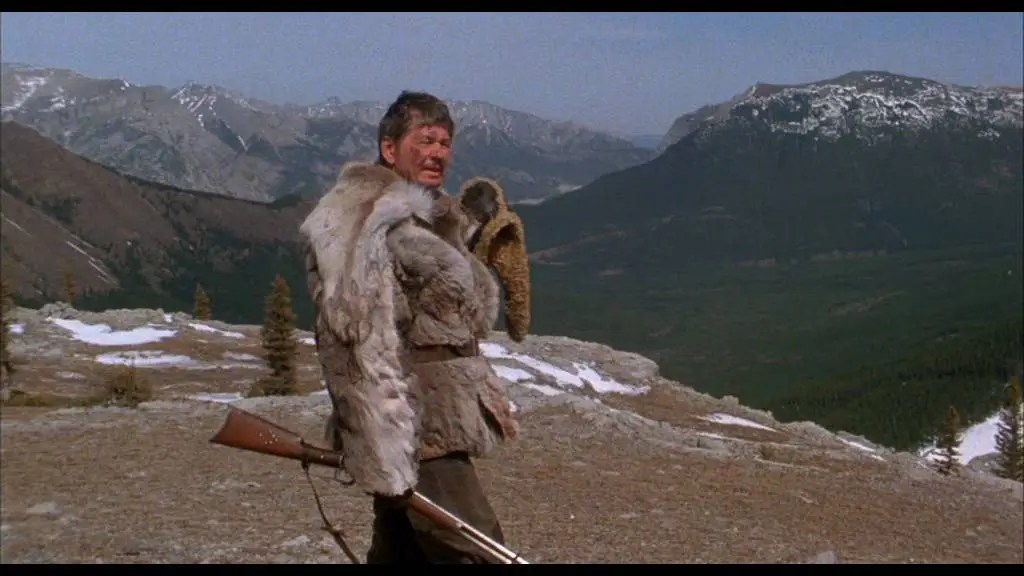
The location shooting near Banff in Alberta at least provides some authentic and rugged visuals, the sound effects crew gives the gun battles a decent charge, and aviation buffs might enjoy seeing a Bristol F.2b Fighter replica, on skis and outfitted with an upper wing-mounted machine gun. It crashes, and so did the film, stalling at #96 in ’81, grossing only $5,000,000 against a production tag of $10,000,000. For Bronson, after a hard won, good run, this was one of several big-budget adventures that failed to make back their investment, notably the underrated The White Buffalo and the dissapointing Caboblanco, a dud other than Jerry Goldsmith’s seriously cool title theme.
With Scott Hylands, Henry Beckman (he’s good, as the real—mythical?—Mad Trapper), William Sanderson, Maury Chaykin, Len Lesser and Dick Davalos.
* Maybe stay in your lane?—as an editor Peter Hunt excelled—the first five 007 classics, plus Sink The Bismarck!, Damn The Defiant! and The Ipcress File. He did swell with his initial go as a director, On Her Majesty’s Secret Service, but then went slack with Gold and Shout At The Devil : they’re both better than Death Hunt.
 Movies ala Mark