
CAPE FEAR grossed around $5,000,000 in 1962, successful enough at 51st place to readily cover its moderate outlay, if not enough to be called a big hit, such as its stars Gregory Peck and Robert Mitchum respectively enjoyed that year with To Kill A Mockingbird and The Longest Day. Those memorable classics drew more attention, awards and money and still command respect, but anyone who caught Cape Fear in theaters, or later at home, found its 106 minutes of accumulating dread hard to forget as well; the rep grew well beyond initial acceptance as a proficient B-level suspenser. The story’s ruthless antagonist clued us in: “They ain’t nevah gonna forget it and neither will you, Counselor! Nevah! You’ll nevah forget it.” *
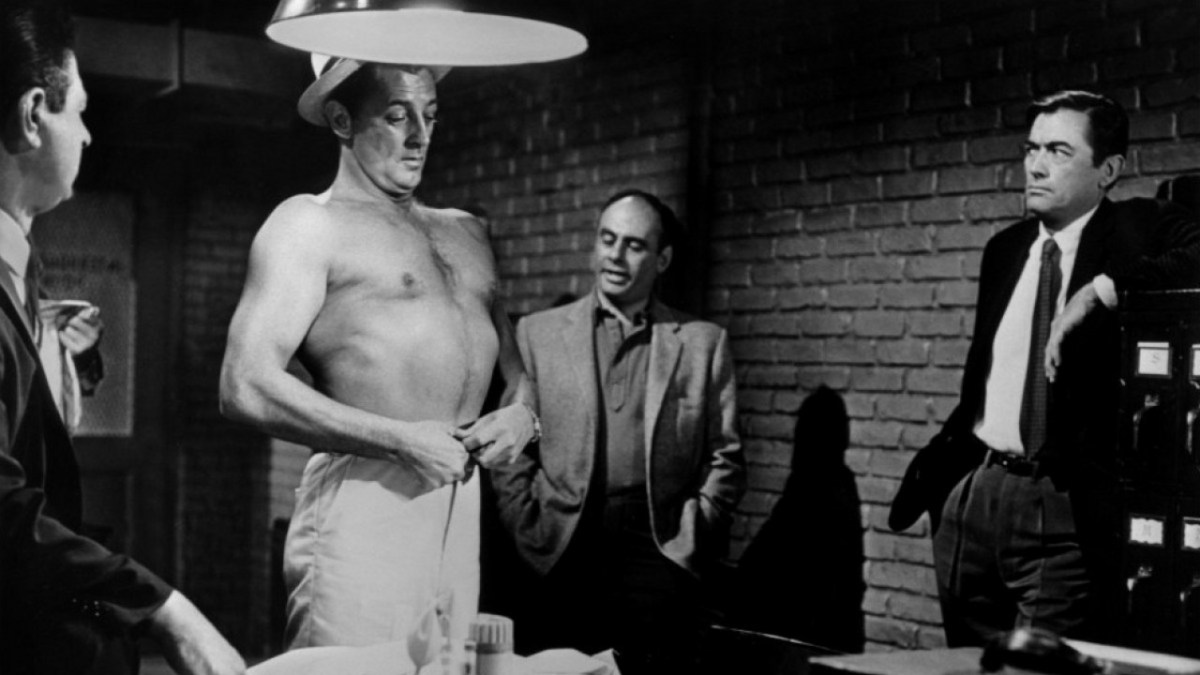
Savannah, Georgia. Attorney ‘Sam Bowden’ (Peck) gets an unwelcome surprise visit from ‘Max Cady’ (Mitchum), who, thanks to Sam’s testimony, spent eight years in prison for rape. Smirks signal spite, and Cady begins to shadow Sam, his wife ‘Peggy’ (Polly Bergen) and their teenage daughter ‘Nancy’ (Lori Martin). The harassment steadily increases from mocking insinuation to outright threats. The police are limited in what they can do, and Cady is shrewd enough to have cover from an unprincipled local lawyer. After Cady brutalizes a bar pickup and gets away with it (she’s too terrified to press charges), Sam tries to fight dirty, hiring thugs to ambush Max. That backfires, and Cady lets Sam know he intends to go after Peggy and Nancy. Now it’s a death match.
“Say, she’s gettin’ to be – uh – gettin’ to be almost as juicy as your wife, ain’t she?”
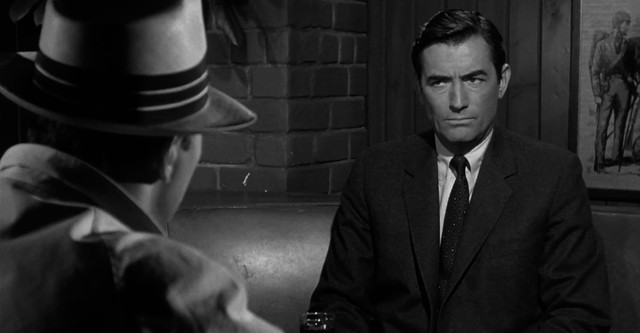
Peck selected John D. MacDonald’s 1957 thriller “The Executioners” as a property for his production company and asked J. Lee Thompson to direct, impressed by his handling of The Guns Of Navarone. They hired James R. Webb (The Big Country, Pork Chop Hill, How The West Was Won) to craft the 224-page novel into a screenplay, then convinced Mitchum to come aboard. Further shrewd picks were cinematographer Sam Leavitt (The Man With The Golden Arm, The Defiant Ones) and Hitchcock vets George Tomasini as editor and Bernard Herrmann for the score.

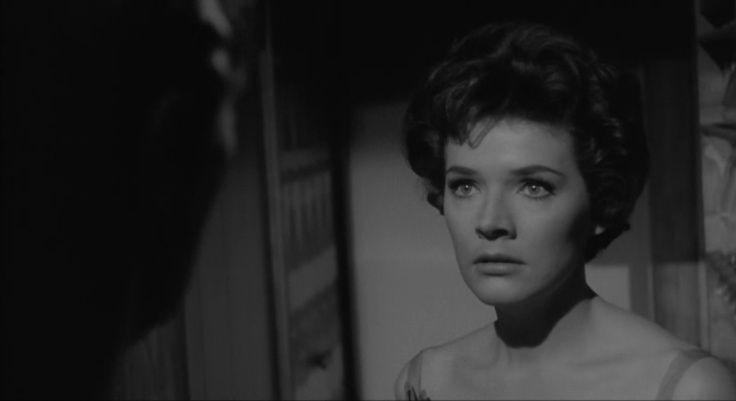
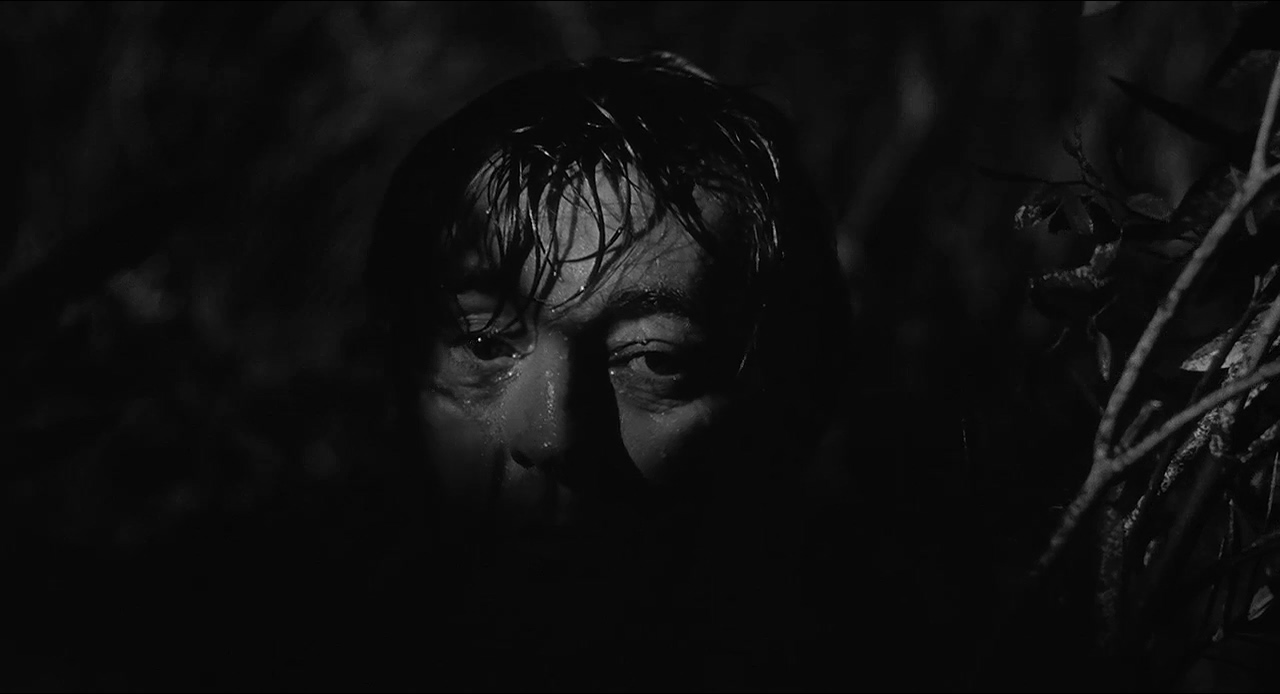
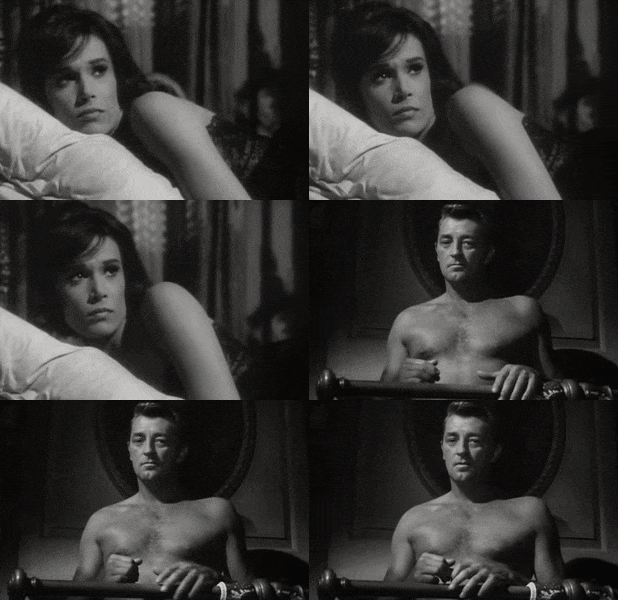
Tension commences with the first notes of Herrmann’s score, French horns sending an unmistakable aural SOS that something wicked this way comes. Something is someone in the case of Max Cady, though ‘thing’ ultimately seems more fitting: in concluding scenes his stealth slither thru a swamp is closer to reptilian than human. Peck and Mitchum, both 45, were each at the top of their game, and while Peck’s style and image glove-fit the intelligent and decent character of Bowden, the audience stand-in for relatable family man civility, he was canny enough as a producer to know the real focus would be on the bad—really bad—guy, who had to be someone of equal star-power status but with a definite and different aura and edge. Bergen, 31, is at her best (her melodramatic wingding in The Caretakers is close); her big scene of paralyzed fright is real enough to make your skin crawl. Martin, 14, does well as the targeted innocent. In sturdy support are Martin Balsam (frustrated police chief), Telly Savalas (private detective who tries to help), Jack Kruschen (Cady’s blowhard shyster) and Barrie Chase, 27, finally given a chance to do more than dance, in a few vivid scenes as the sultry pickup who makes the mistake of thinking a night with Max Cady might be amusing. A sixth sense is there for a reason. **
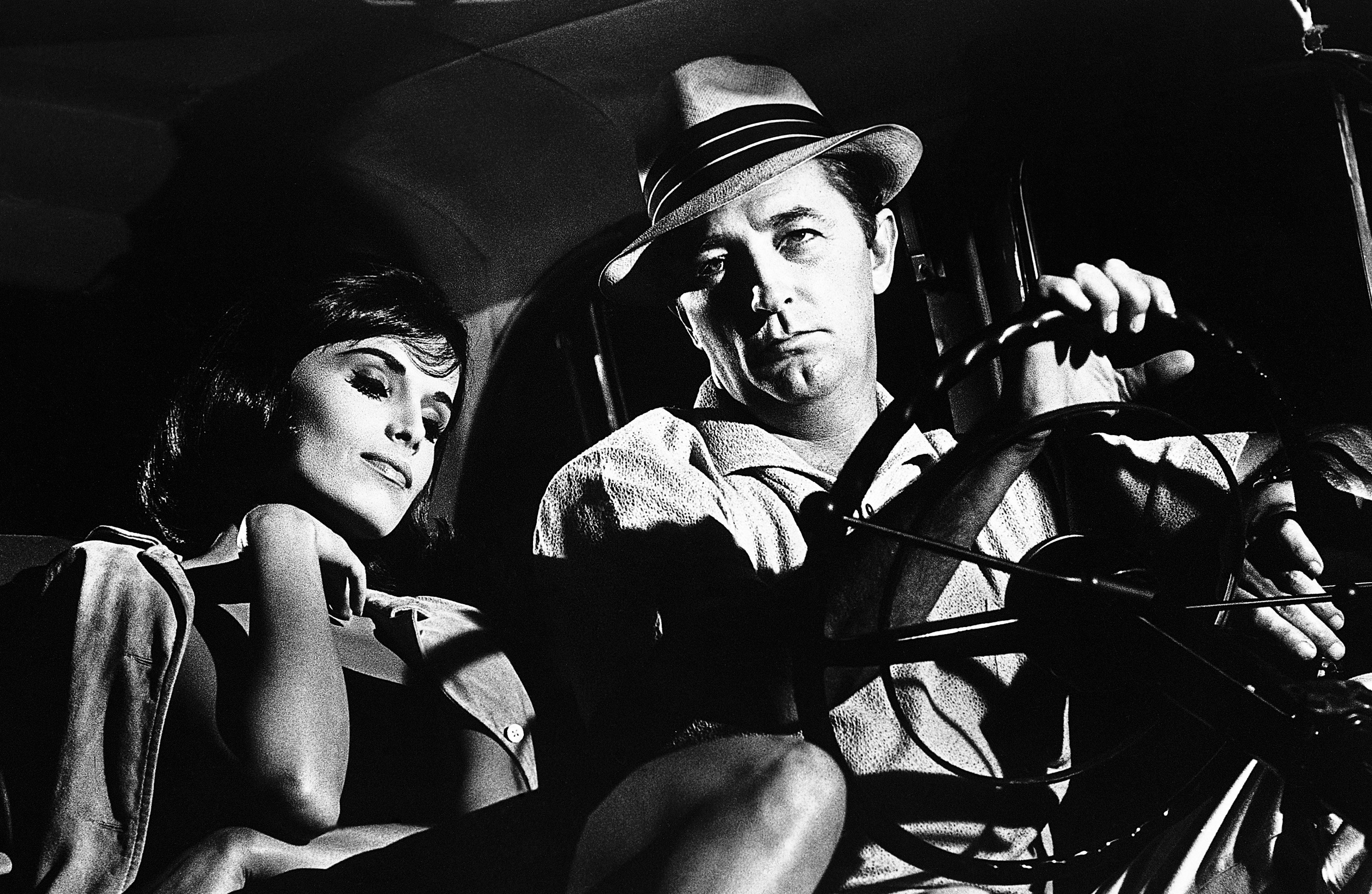
The Max factor—as Peck put it, “It’s Bob’s picture. Best performance he ever gave.” If not, close enough. Some would reasonably argue for his deranged preacher in the stunning The Night Of The Hunter. He was great as good men in Heaven Knows, Mr. Allison and The Sundowners, and rock solid as a calmly tough hero in any number of adventures, war stories, westerns and noir faves. For sure he didn’t dig into a part with as much conviction for another 11 eleven years until the terrific, little seen The Friends Of Eddie Coyle. He was also a criminal in that winner, but life-stiffed Coyle is a creampuff next to world-hating Cady. The masterly nutcase in The Night Of The Hunter is, like the movie, on the surreal side of spooky, but Max’s physically intimidating, nothing-to-lose, at-ease-with-depravity Hell-whelp is tactile, real enough to have come from a case study of some specimen best kept in a cage.
“You shocking degenerate. I’ve seen the worst – the dregs – but you… you are the lowest. Makes me sick to breathe the same air.”
J. Lee Thompson’s output as a director was all over the map, from top notch to terrible: this is from his A-file. Some sequences were filmed in Savannah, others in Stockton, California. Also in the cast: Edward Platt, Paul Comi, Joan Staley, Will Wright and Cindy Carol. Remade in 1991.
 ‘* Cuban Missile Crisis not enough—getting close to Nuclear War was sufficient suspense for most people, but ’62’s unease could also be found in darkened theaters showing Experiment In Terror, Pressure Point, Panic In Year Zero!, Whatever Happened To Baby Jane? and Mondo Cane.
** Luck of the draw—Lori Martin had been working as a child actor for years, and was familiar at the time from a two-season series version of National Velvet. J. Lee Thompson wanted Hayley Mills for the part, but Disney obligations nixed that. She of course would’ve been terrific (no dig at Martin) and the box office would have been ramped up…but would anyone ever forgive Mitchum for threatening Hayley Mills? Sadly, Lori Martin’s story ended in bi-polar disorder and gunshot suicide when she was 62.
Savalas, 39, had done some TV and two small film roles. He was briefly considered for Cady. Telly broke into a higher bracket in ’62, with this private eye job, one as a hard-ass doctor in The Interns and the topper, netting a Supporting Actor Oscar nomination as a cellmate of the Birdman Of Alcatraz. He’d eventually get his ‘memorable psycho’ role five years later as the most unstable of The Dirty Dozen.
 Movies ala Mark
The best of the two versions. Mitchum’s Max Cady is truly chilling.
Agree. The first version was enthralling, the second repelling.