
THE FUGITIVE KIND, seventh of the fifteen feature film adaptations of plays written by Tennessee Williams, backdoor slunk into town in as a particularly dire dive into rot & despair, Southern Gothic Style. He’d been fencing with his modern relocation of the Greek legend ‘Orpheus’ in various stage formats for twenty years. When the movie version arrived in 1960 trumpeted expectations over all the talent involved turned to fading oboes of retreat when critics abjured and crowds abdicated from 123 minutes even murkier and bleaker than Suddenly, Last Summer, the previous year’s exorcism of Tennessean misery.
“Because nobody ever gets to know anybody. We’re, all of us, sentenced to solitary confinement inside our own lonely skins for as long as we live on this earth.”

Evacuating the party life (and jail) as an ‘entertainer’ (cue ‘sexual favors’ talent) in New Orleans, ‘Valentine Xavier’ (Marlon Brando), nicknamed “Snakeskin” for his spiffy reptilian jacket and slippery aura, takes his beloved guitar and drifts into a cancerous burg in the dank ‘Sippi Delta redneck backwash. The sheriff’s a standard issue veiled-threat hulk but his meek wife (Maureen Stapleton) has a heart: she directs Val to mercantile store operator ‘Lady Torrance’ (Anna Magnani), who warily takes on Val as a clerk. His beef-on-the-hoof presence not only intrigues older, love-starved, life-embittered Lady but also lines up a frontal assault by wild thing ‘Carol Cutrere’ (Joanne Woodward), area tramp/drunk/victim/way out. Poised like a vulture over the few glimmers of hope is Lady’s husband ‘Jabe’ (Victor Jory), sick in body, mind and spirit.

The ultimate unappreciated dude, Orpheus of lit antiquity was a poet and musician whose charms, though divine, didn’t prevent his murder from threatened mortals. At 29, Williams made a go at the doomed dreamer in the 1940 play Battle Of Angels. His first to be produced, it flopped. In 1957, reworked as Orpheus Descending, it ran two months, with Stapleton as Lady, Cliff Robertson as Val. By the time stars aligned for a screen version Williams clipped the title from one of his early plays and then shared script chores with Meade Roberts. Brando, 35, was atop a decade of critical and box office success. Italian volcano Magnani, 51, had been brilliant in her two American films, The Rose Tattoo (a Williams piece) and Wild Is The Wind. Woodward, 29, had taken an Oscar for The Three Faces Of Eve and had Dixieland practice in The Long, Hot Summer and The Sound And The Fury. For Stapleton, 34, this was her second credited film; she’d been Oscar-nominated for her superb supporting turn in 1958’s Lonelyhearts, whisking that picture away from Montgomery Clift, Robert Ryan and Myrna Loy. Taking on direction was Sidney Lumet, lauded for 12 Angry Men. Though only one member of the supporting cast shared the playwright’s connective roots in Dixie, the lineup, bedecked with a Manhattan skyline of towering reputations, seemed a lock for another scalding round of prime Williams dramaturgy and performative brilliance. Maybe.

Williams said it was “about unanswered questions that haunt the hearts of people and the difference between continuing to ask them, and the acceptance of prescribed answers that are not answers at all.” Lumet and Meade perhaps should’ve tapped that as a prologue so the audience could more easily decipher what all the florid mini-speeches and heavily pregnant pauses were meant to convey beyond existential frustration and despair. It’s both fascinating and fatuous, weirdly resonant mainly for its striving to bring depth out of opacity. It’s an instant-artifact example of why actors loved ‘traveling to Tennessee’ to see if they could wring truth out of surrealism: the only people that talk in the elliptical way these folks do are Tennessee Williams characters. That can work like a dream—A Streetcar Named Desire, The Rose Tattoo, Cat On A Hot Tin Roof, The Night Of The Iguana. Or it can self-deflate into flailing babble—Suddenly Last Summer, This Property Is Condemned, Boom!, The Last Of The Mobile Hot Shots. This sin-eater expedition, slow walked thru terminal discomfort to a sacrificial dead end, didn’t bewitch critics, who pounced, nor the public, who drifted elsewhere. Even the post-op opinions from those who made it were a collective downer. Expected awards failed to materialize (in a year when Pepe got seven Oscar nominations, ouch) and the ticket tally of $5,400,000 crashed off a production cost of $2,300,000. *

Posited as dangerously seductive and vital, Val, the rebel/poet/he-stud at the crotch heart of the piece, doesn’t make much of a sale in the slouching, scratching, mumbling form of Marlon, more easygoing and disposed to consideration than his blunt force ‘animalistic’ Stanley Kowalski of a decade earlier in Tennessee’s A Streetcar Named Desire, but also markedly less engaged with the material. He doles out enough mannerisms to serve as a template for a variety show Brando impression. The guitar prop/symbol just feels awkward. He did manage to command a record $1,000,000 salary, 43% of the entire budget.
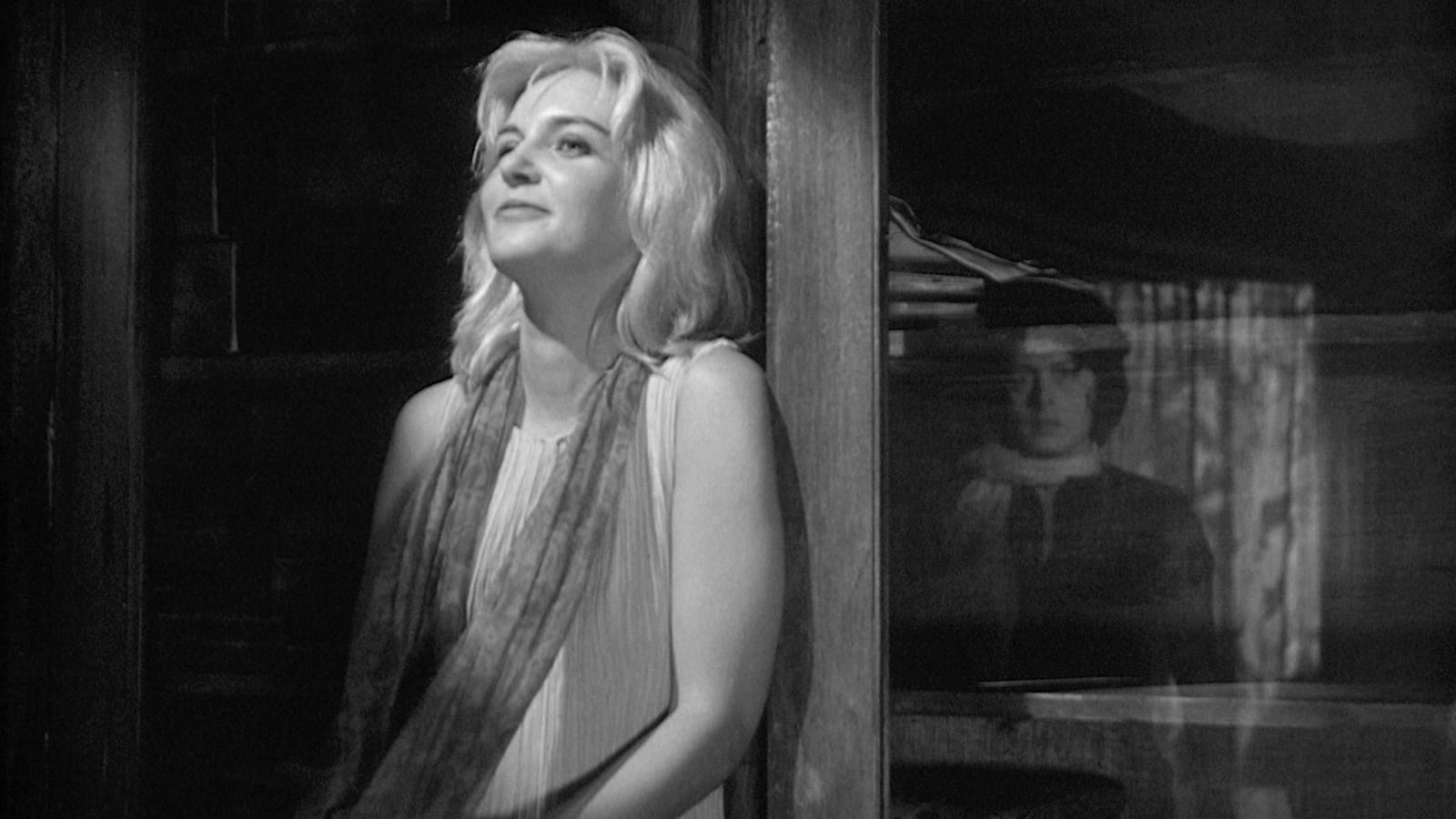
Proven magnificent in her previous triumphs, volatile powerhouse Magnani is mostly sullen and subdued, with only a few slices of theatrical flamboyance to perk her (and us) up from somnolence, the passion from The Rose Tattoo and Wild Is The Wind not fully brought to bear. She’s shaded by the bold rawness coming from Woodward, whose frantically self-destructive character seems determined to jazz up some life force if it kills her in the process. It may not be the biggest, most fully realized performance she ever gave (The Three Faces of Eve in a tie with Rachel, Rachel) but it’s for sure the wildest. Stapleton is fine, even if, like her crushed drudge, she’s cheated by default in getting little screen time. Her sheriff husband comes off as a genuine article, played with territorial imperative by the great R.G. Armstrong (he’d been in the play); born and raised in Alabama, he provides more Southern flavor (the less flattering kind) than the rest of the cast put together. But it’s the oldest pro in the group, Victor Jory, 57, who outshines them all. In a 50-year career he played a wide variety of types: while this was in theaters he was in his second season as a police lieutenant on TV’s Manhunt. He excelled at villains (slave overseer ‘Wilkerson’ in Gone With The Wind) with this one easily the most loathsome, the truly vile Jabe a coiled spring of pure malevolence. He deserved an Oscar nomination.

Even if the overall package is flawed, no offering with this cast and the team behind them can be casually dismissed. While it’s (IMHO) an odd, relentlessly glum mess, there are diamond slivers glittering in the wreckage.
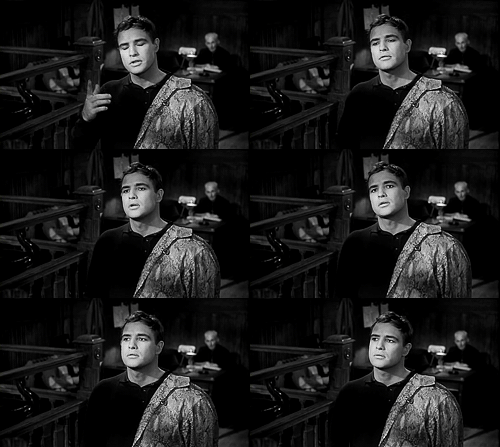
Though set down in Mississippi, it was shot up in New York, in the little mill town of Milton, which had about 7,000 residents at the time. Boris Kaufman (On The Waterfront, The Pawnbroker) provided the excellent black & white cinematography. With John Baragrey (a blank as Lady’s booze ruined ex-lover and Carol’s brother), Virgilia Chew (the spiteful nurse; one of the Broadway cast), Madame Spivy (unsettling, as she was in Requiem For A Heavyweight), Emory Richardson (‘Uncle Pleasant’, who’s supposed to signify something primitive/honest/dignified/insane/???) and Lucille Benson (fluttering local gossip).

* Fugitively speaking—-Brando: “I’ve always thought of Tennessee as one of the greatest American writers, but I didn’t think much of this play or the movie.” Marlon’s 12th movie is often cited as the start of his downtown. The sharp audience drop from Sayonara‘s #3 to Fugitive‘s 52nd was followed by the bad press (undeserved) and insufficient box office results of his director/star effort One-Eyed Jacks (14th in 1961) and worse press and returns for 1962’s Mutiny On The Bounty (5th place but too costly to bring the breadfruit home). For the record I like One-Eyed Jacks and love the absurdly reviled Mutiny On The Bounty—and thought he was excellent! Put that in your canoe and paddle it. After that came ten years of one let-down after another—some deserved, some not—until The Godfather made an irrefusable offer. Even when he willfully struck out (The Island Of Dr. Moreau), Marlon Brando held your attention.
Lumet, on Magnani, who: “was going through a personal crisis and hated being in America and in a film studio. This actress, so honest, authentic, sincere, had reached an age where her sole preoccupation was her appearance ….It was as though all the hardships in her life had taken away all her tenderness, and when she gets mad in the film, she is brilliant! The rest of the time she rings false, looks spiritless.”
Show me the Sidney!—though critics praised Lumet’s debut, the superb 12 Angry Men, that drama, now considered a classic, didn’t make a ripple at the box office, nor did his next two, Stage Struck and That Kind Of Woman. His box office hits (Dog Day Afternoon, Murder On The Orient Express, The Verdict, Network, Serpico) were few compared to those that were little seen, including top-rate works like Long Day’s Journey Into Night, The Pawnbroker, Fail-Safe, The Hill, The Deadly Affair, The Offence , Prince Of The City and Before The Devil Knows You’re Dead.
Roughly received in 1960, reappraisals of The Fugitive Kind show that it has a devoted following. Why not? Who’s to say they’re right or wrong? Great comment from critic David Thomson: “It is about time we yielded our trust in box office, the Academy, and journalistic critics as measures of quality. We have to see the pictures for ourselves.”

 Movies ala Mark