
FLOWER DRUM SONG, 1961’s other Big Musical, was the year’s 1oth most attended picture and was nominated for five Academy Awards. But the cute, jokey and somewhat bittersweet romantic entanglements of tradition and assimilation in San Francisco’s Chinatown (or the Broadway imagined version of it) were sidelined by the hip tragedy of the Manhattan turf-stakes in West Side Story, seizing #1 and wiping the dance floor with ten Oscar wins out of eleven nominations. Leonard Bernstein’s test-your-HiFi triumph endures, weathering better not just due to the superior music, design and direction but because the spotlit prejudice & poverty factors hang on like adaptive viruses, while the more schmaltzy Rodgers & Hammerstein melting pot welcome comes off quaint and awkward. The intentions are noble, the cast more than able, it looks great. Alas, the stereotypes are carbon-dated, the tunes mediocre, and the convoluted plot wears thin in the third act. Still, faults notwithstanding, with sexy Nancy Kwan, sturdy James Shigeta, disarming Miyoshi Umeki, quip-savvy Jack Soo, an array of deft, familiar supporting players and some eye-watering production design it makes for a mostly satisfying entree.
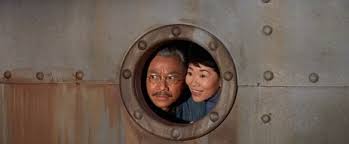
Ship-smuggled Chinese immigrant ‘Mei Li’ (Miyoshi Umeki) and her father make it to San Francisco with the promise of Mei Li’s arranged marriage to US-raised ‘Sammy Fong’ (Jack Soo). But nightclub owner and playboy Sammy has been playboying with foxy showgirl ‘Linda Low’ (Nancy Kwan). Taking temporary residence in the home of tradition-honoring ‘Master Wang’ (Benson Fong), Mei Li becomes enamored with his thoroughly Americanized son ‘Wang Ta’ (James Shigeta), but he’s gaga over Linda. Complications are more numerous than ingredients in Moo Goo Gai Pan, and over the course of more than a dozen songs and dance numbers, after some hurt feelings and misapprehensions, the right mates find their proper destinies.
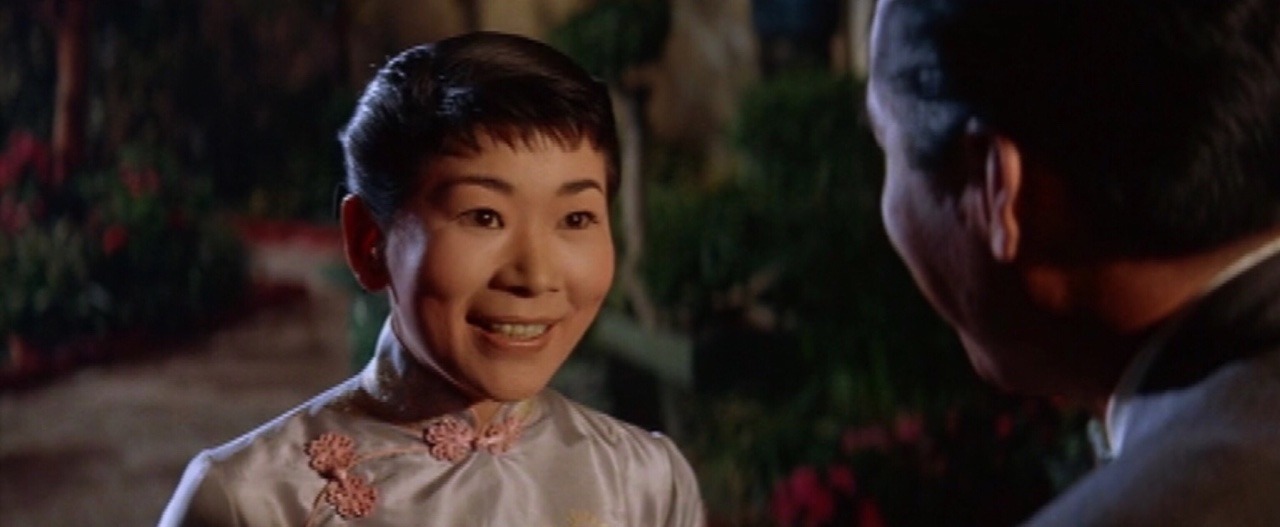
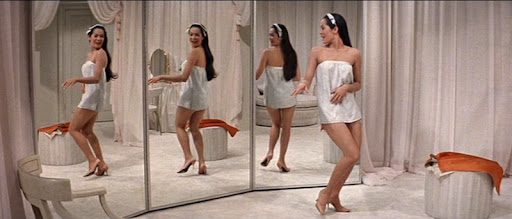
C.Y. Lee’s more serious 244-page 1957 bestseller quickly generated the Rodgers & Hammerstein musical-comedy play, followed three years later by the plushly adorned movie, directed by veteran Henry Koster, produced to a $4,000,000 gleam by Ross Hunter, the R&H melodies orchestrated by Alfred Newman, with Russell Metty manning the camera. As with the play, Joseph Fields penned the script. Like many musicals from the 50’s & 60’s, at a running time of 133 minutes it’s padded longer than necessary and the last act sags to a crawl with three dud numbers in a row. Prior to that, there is some lively dancing, but while the songs are clever enough, none are catchy or memorable, the one standout being “I Enjoy Being A Girl” and that works mainly due to the svelte moves of a half-clad Kwan.

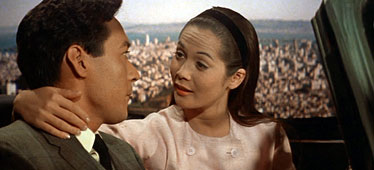
Following up on her bad girl-gone good in her captivating debut with the 1960 fave The World Of Suzie Wong, enchantress Nancy steals the screen in every scene she’s in, though her gold-digging Linda isn’t nearly as sympathetic as Suzie‘s honest hooker. Handsome, readily likable Shigeta makes a sympathetic lead; that year he also featured in Bridge To The Sun and Cry For Happy. Umeki charms again as she did in her Oscar winning Sayonara, and the much-missed comedian Jack Soo has fun as the rascal of the piece. The good vibes from the cast carry the so-so script, only faltering in that weak third act. Vibrant colors in the art direction and set decoration are a major plus; one sequence after another delivers rich eye candy.

The box office: $15,700,000. The Oscar noms: Cinematography, Music Scoring, Art Direction, Costume Design, Sound. Were it up to your humble all-seeing master of MoviesAlaMark to pick & choose what should have been done way back when he was less enraptured by musicals than the monsters of Mysterious Island, we’ll propose that there was ample wiggle room in the Art Direction and Costume Design between this (and the mighty El Cid) to painlessly relieve WSS from a few of its trophies. In, out, let’s get crackin‘.”

Benson Fong, 1916-1987
With Juanita Hall, Reiko Sato, Patrick Adiarte (dancing up a storm), Kam Tong, Victor Sen Yung, James Hong, Cherylene Lee (she’d show up in Donovan’s Reef), Weaver Lee, Nancy Hsueh, Virginia Grey (uncredited), H.W. Gim, and Irene Tsu (one of the dancers, 15, debut, uncredited).
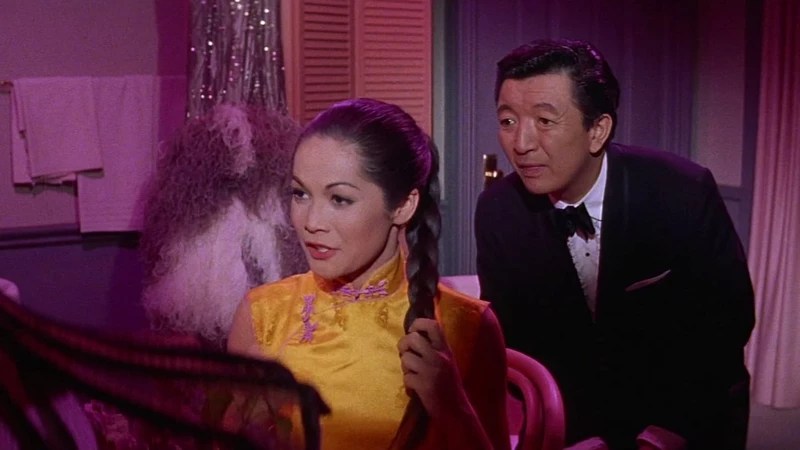
* Mixed to mismatch—Kwan, Chinese/English; Umeki, Japanese; Shigeta, Soo and Sato, Japanese-American; Hall, African-American, and famed as ‘Bloody Mary’ in South Pacific; Adiarte, Filipino, best known for Siamese Prince—later King—Chulalongkorn of The King And I. Let those unimaginably incorrect casting choices from a previous century vex you to distraction if disdain makes you wokehappy and smugly superior. Better yet, release your boundless guilt and do the rest of us a favor with a short step off the Golden Gate Bridge.


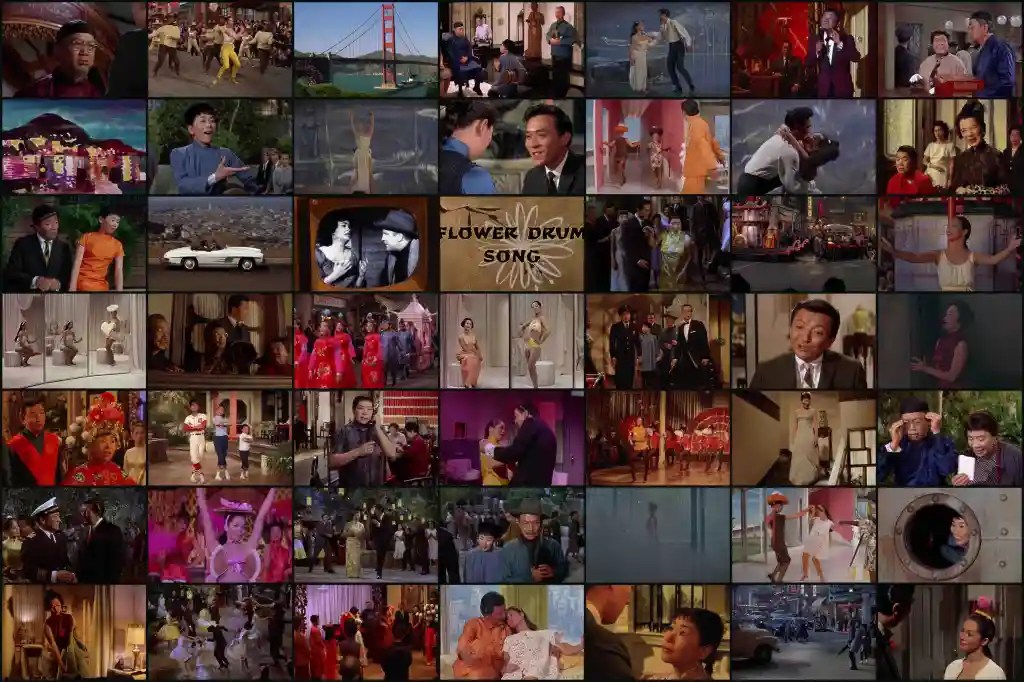
Click to enlarge for clarity
 Movies ala Mark