
THE DAY THEY ROBBED THE BANK OF ENGLAND, dandy crime fiction from 1960 Britain gave a rugged American star his last decent leading man part and afforded a career-making shot one to one of the supporting players, a new face belonging to a rangy Scots-Irish bloke from Yorkshire: a job he handled so adroitly that it spurred being cast in the title role of one of the greatest movies ever made.
O’SHEA: “Robbing grocers’ tills and blowing up public lavatories will not make a nation out of Ireland.” COHOUN: “It disposes of a few Englishmen.”

London, 1901. Irish revolutionaries plot to steal one million pounds of gold bullion from the ultra-secure Bank of England, the heist intended as a political statement. The bank’s location, the position of the vault and its design, and the presence of the Scots Guard call for not merely planning and nerve but expertise. That extra ingredient comes from Irish-American ‘Charles Norgate’ (Aldo Ray), recruited in New York by ‘Iris Muldoon’ (Elizabeth Sellars). Norgate is as keen to renew a fling with Iris (widow of a martyred revolutionary) as he is to break into the Treasury, something his skills as a miner and stateside safecracker have honed. Precise timing, crucial teamwork, brute strength, stamina and all-important luck could bring instant wealth to the participants and a bargaining chip boon to their sacred cause of Irish Independence.
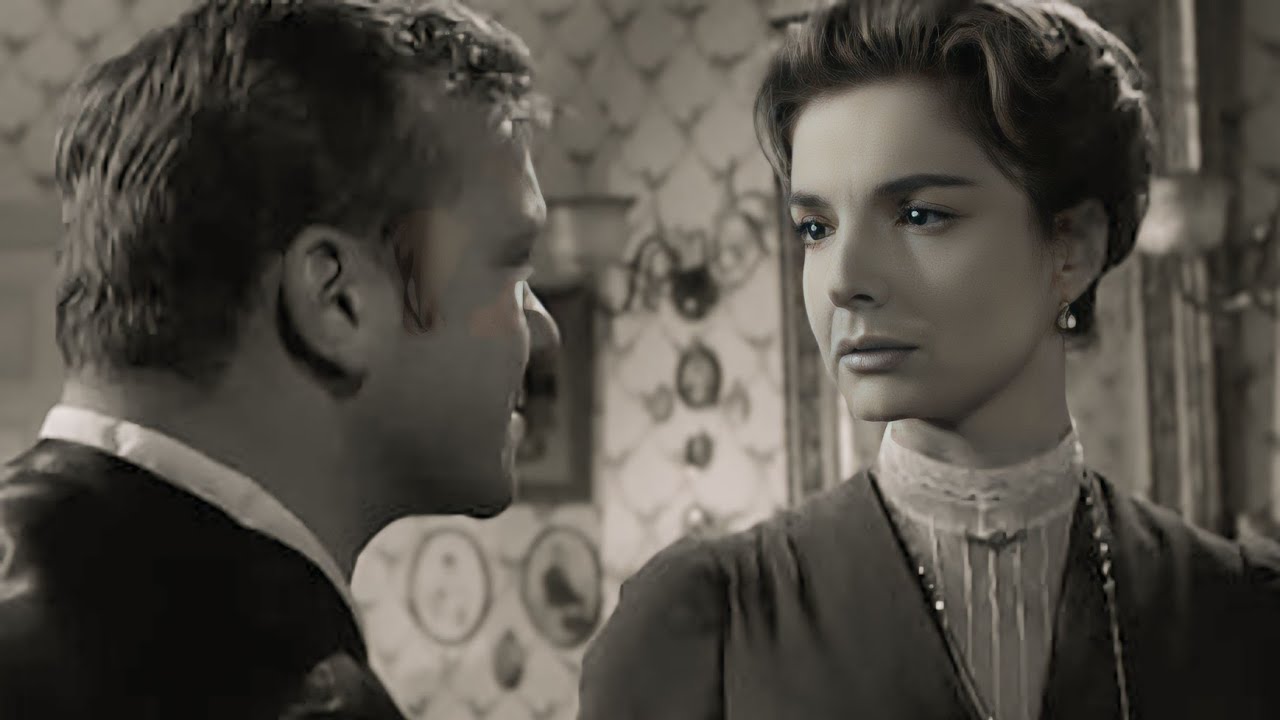
An excellent screenplay by Howard Clewes (The One That Got Away), taut direction from fast-rising taskmaster John Guillermin, fine black & white cinematography by Georges Périnal (The Four Feathers, The Thief Of Bagdad) and a plumb supporting cast make this a 85-minute winner, with the last third dedicated to the exciting caper itself.
FITCH: “There is nothing wrong with soldiering. You see, I’m never called on to think in my profession. And I’d rather like to. Just once. And then I’d know...” NORGATE: “Know what?” FITCH: “Whether I stay a soldier because there’s nothing else I can do, or because I choose to. I’d probably make a fearful hash of it. Thinking I mean.”

At 33, Ray’s days in the sun were poised to flounder from his alcoholism, descending from gritty lead assignments in tough nuts like The Naked And The Dead, God’s Little Acre and Four Desperate Men to occasional TV gigs and later, stray supporting jobs (What Did You Do In The War, Daddy?, The Green Berets) and eventual self-destruct oblivion. Here, likely cast as a bow to the American market, he’s very good here, projecting his typical authority and confidence while dialing back his machismo swagger a few notches to suit the more civilized (on the surface at least) surroundings, attitudes and manners.
Besides Sellars offbeat allure—keen, somewhat remote with a knowing gaze—the others in on the plot include Kieron Moore as ‘Walsh’, the group hothead (brawny Moore did that service in Darby O’Gill And The Little People, The League Of Gentlemen and The 300 Spartans); Hugh Griffith as ‘O’Shea’, the calm orchestrating link to “the Movement“; and—delightful Darby O’Gill himself—Albert Sharpe, as ‘Tosher’, a scavenger who knows the age-old London sewer system from which the thieves will penetrate their objective.
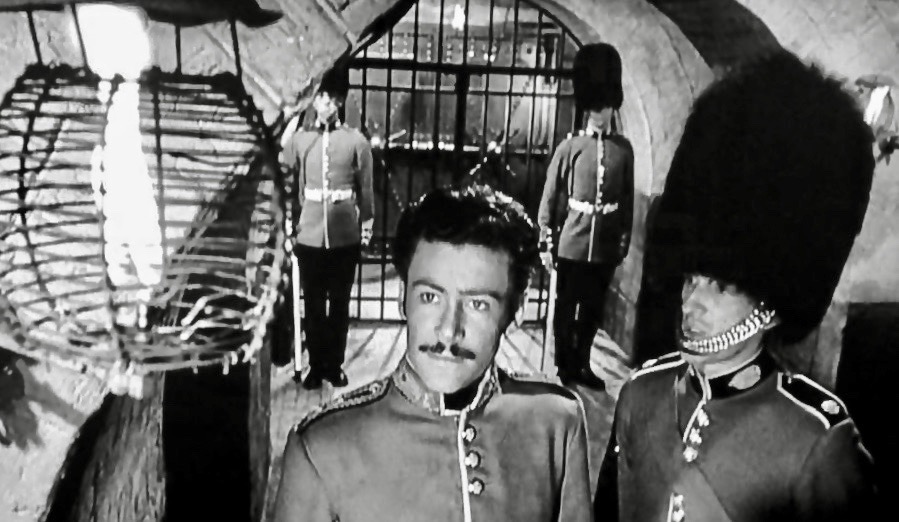
The surprise— in the plot, the character array and the cast is the seemingly shallow Guards officer ‘Captain Fitch’, in the scene-swiping personage of 27-year-old Peter O’Toole. In his first year on screen he’d logged two other parts, amusing as ‘Robin McGregor’ in Disney’s version of Kidnapped, and, his voice dubbed, as a Mountie in The Savage Innocents. His bravura style, intense focus and ability to get more nuance out of one sentence than others could manage in an entire role caught the eye of David Lean, looking for just the right person to cast as the mysterious adventurer, scholar and World War 1 hero T.E. Lawrence. He picked the hell-raiser from Leeds, they spent two years in the desert and gave us Lawrence Of Arabia. And a lot more.
Others in the cast include Joseph Tomelty (plotter ‘Cohoun’), Wolf Frees (accomplice ‘Dr. Hagen’), Miles Malleson (fussy curator of the bank’s records room), John Le Mesurier, Andrew Keir, Arthur Lowe and Geoffrey Bayldon. Done up for a tidy $457,000, the global gross appears to have been $805,000, with the US end of that logging it back in the pack, 141st in import-rich 1960 .

 Movies ala Mark